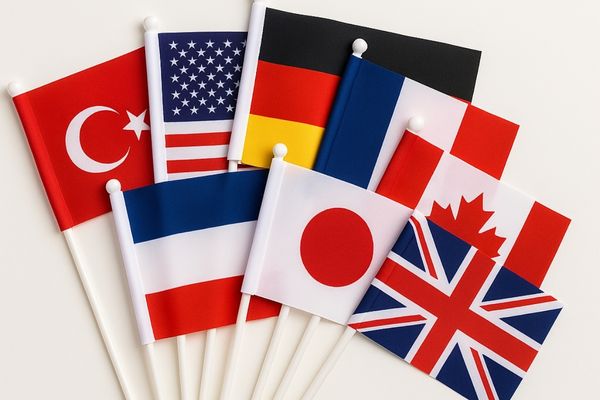
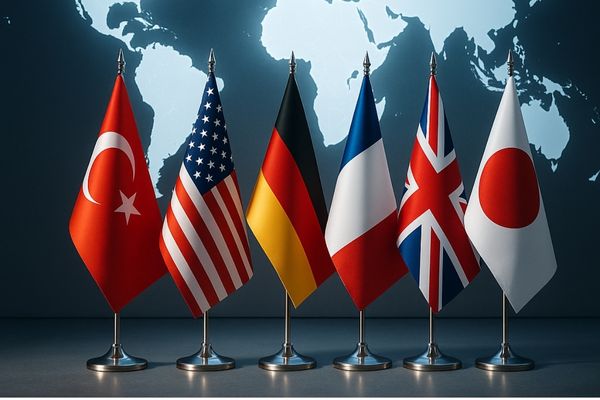

Country bunting is one of the most versatile and visually impactful flag decorations available for events and venues — a single string of national flag pennants can instantly communicate international welcome, cultural celebration, or global reach across an entrance, stage, or exhibition hall. Whether you are dressing a stadium, a trade show booth, a hotel lobby, or a multicultural festival, country bunting flags deliver a professional, festive atmosphere that full-size flags simply cannot match in terms of coverage per dollar spent.
What Is Country Bunting and How Does It Differ from Standard Flags?
Country bunting consists of a continuous string of small triangular or rectangular flag pennants, each printed with a national flag design, connected by a cord or tape and intended to be hung in decorative runs across a space. Unlike a standard pole-mounted flag — which is a single, free-flying national symbol governed by strict protocol under the US Flag Code (4 USC §§ 1-10) — bunting is explicitly recognized as a decorative format and therefore carries far more flexibility in placement, orientation, and layering. This distinction matters for event planners: you can drape bunting diagonally across a stage backdrop, zigzag it through a marketplace tent, or loop it around a reception pillar without the etiquette constraints that apply to a formally hoisted national flag. The pennants themselves typically measure between 6 in × 9 in (15 cm × 23 cm) and 8 in × 12 in (20 cm × 30 cm) per triangle, making each individual flag recognizable at close to mid-range distances while keeping the overall string lightweight and easy to rig. Most professional-grade country bunting is produced on woven polyester with dye-sublimation printing, which saturates every color — including the fine details of coat-of-arms designs — all the way through the fabric rather than sitting on the surface, so the flags look equally clean from both sides.
Choosing the Right Flag Bunting Decoration for Your Event Type
The correct country bunting format depends primarily on your venue size, the number of nations you need to represent, and the visual density you want to achieve. For a large outdoor festival or stadium entrance, longer runs of 50 to 100 ft (15 to 30 m) per string create dramatic corridors of color; for an indoor exhibition stand or boardroom backdrop, shorter 15 to 25 ft (4.5 to 7.5 m) runs are easier to tension and keep tidy. Consider these four key decision factors before ordering:
- Number of countries: Are you representing a fixed set of nations (e.g., G20, EU member states, ASEAN) or a broad "international welcome" with rotating flags? Fixed sets demand exact flag accuracy; decorative international runs give you more flexibility in sequencing.
- Triangular vs. rectangular pennants: Triangular pennants are the classic festival format — lightweight, minimal fabric movement noise, and an inherently festive silhouette. Rectangular pennants carry more flag surface area and are better where flag recognition at a distance is important.
- Indoor vs. outdoor use: Outdoor bunting should be rated for UV resistance (look for 80%+ UV protection) and sewn or heat-welded grommets or loops on the cord attachment points to prevent tearing in wind. Indoor bunting can use lighter-weight fabric and simpler clip or tape attachment.
- String spacing and density: Pennants spaced 1 to 2 in (2.5 to 5 cm) apart give a dense, carnival-style look; 4 to 6 in (10 to 15 cm) spacing reads as more formal and diplomatic. Match spacing to your venue's aesthetic.
Trade show organizers, hotel event directors, and multicultural festival coordinators consistently find that ordering country bunting in pre-assembled string sets — rather than trying to clip individual flags to rope on-site — cuts rigging time by 60 to 70% and produces a far cleaner result. Pre-assembled sets also ensure consistent pennant spacing throughout the run, which is the single biggest visual difference between amateur and professional flag decoration.
Triangular Country Bunting: The Event Industry Standard
 Triangular flag bunting has been the dominant format for event and venue decoration for decades, and for good reason — the pointed pennant shape creates natural visual rhythm along a string, the reduced fabric area means less wind resistance outdoors, and the format reads as simultaneously celebratory and professional without veering into craft-fair territory. The triangular flag bunting format is particularly well-suited to venues that need to convey international hospitality quickly: hotel grand entrances, airport welcome areas, convention center registration halls, and cultural festival main stages all benefit from the dense, colorful canopy effect that a grid of triangular bunting strings creates overhead. From a practical standpoint, triangular pennants weigh roughly 30 to 40% less per linear foot than equivalent rectangular ones, which means lighter rigging hardware, less stress on attachment points, and easier transport and storage — a significant advantage when the same bunting needs to be reused across multiple events in a season. When selecting a triangular bunting product, confirm that the national flag designs conform to FIAV (Fédération internationale des associations vexillologiques) proportion standards so that each country's flag displays at the correct width-to-height ratio even within the triangular pennant silhouette.
Triangular bunting is also the format most compatible with mixed-venue deployment. A single set covering 30 ft (9 m) can be reconfigured from a straight horizontal run to a V-shape drop to a spiral wrap around a column simply by adjusting the attachment points — no cutting or resewing required. This reusability, combined with the low per-run cost, makes triangular country bunting one of the highest-ROI decorating investments for venues that host recurring international events.
How Many Countries Should Your Flag Bunting Decoration Include?
There is no single correct answer — the right number of countries depends on your event's diplomatic and visual goals — but practical guidelines exist. For events where specific national representation matters (international trade fairs, diplomatic receptions, Model UN events, sports championships with qualified nations), you should include only the flags of the nations officially involved; adding non-participating countries is diplomatically awkward and can cause offense. For general international atmosphere at hotels, airports, shopping centers, or multicultural festivals, a curated set of 20 to 50 widely recognized national flags provides excellent visual diversity without overwhelming viewers who are trying to identify specific nations.
When planning coverage for a large venue, the standard industry calculation is: total linear footage of hanging space ÷ average run length per string = number of strings needed, then multiply by flags per string to get your total pennant count. For example, a convention hall with 200 ft (61 m) of drape-worthy ceiling edge, using 25 ft (7.6 m) strings, requires 8 strings. If each string holds 30 pennants, you need 240 pennants total — and if you want to repeat a set of 48 countries, you'll need 5 complete country cycles. Ordering 10 to 15% extra is standard practice to cover damaged pennants, last-minute venue additions, and future reuse. Event planners coordinating multi-nation displays may also find our detailed guidance on international flag display kits for conference centers and convention halls useful for understanding how bunting integrates with full-size pole flags and table flags in a cohesive venue scheme.
Installation, Rigging, and Display Best Practices
Correct installation transforms country bunting from a simple decoration into a genuinely impressive venue feature. The most important principle is consistent tension: a loosely sagging string of bunting looks unprofessional regardless of how high-quality the pennants are, while a properly tensioned string with a gentle, even catenary curve reads as intentional and polished. Use rated anchor hardware (eye hooks, carabiners, or S-hooks rated for at least 3× the bunting string weight) and always test tension before the event, since temperature changes can cause nylon and polyester cords to slacken or tighten noticeably between overnight setup and daytime event temperatures.
For outdoor installations, the maximum recommended unsupported span between anchor points is 20 ft (6 m) for standard-weight triangular bunting; beyond that, mid-span support prevents excessive sag and reduces wind-load stress on the end anchors. Indoors, you can span up to 30 ft (9 m) between points in still-air conditions. When layering multiple horizontal strings at different heights — a technique that creates the rich, layered-canopy look popular at festivals and multicultural fairs — stagger the attachment points by 12 to 18 in (30 to 46 cm) vertically and offset each string horizontally by half a pennant-spacing interval so that the pennants do not overlap from the viewer's sightline below. Schools, universities, and cultural organizations planning ongoing multicultural display programs can also draw on the strategies outlined in our guide to international school and university flag programs for multicultural campuses, which covers display infrastructure that supports both bunting and full-size flags in shared spaces.
Durability, Storage, and Reuse: Getting the Most from Your Country Bunting
High-quality country bunting, properly cared for, delivers a lifespan of 6 months to 2 years of active use outdoors, and 3 to 5 years or more when used primarily indoors or stored between events. The primary enemies of bunting longevity are UV degradation (which fades dye-sublimation prints and weakens polyester fibers), abrasion (where pennants rub against rough surfaces or each other), and moisture retention (which causes mildew in folded, damp storage). To maximize service life, follow these guidelines: rinse outdoor bunting with fresh water after exposure to salt air or heavy rain, allow it to dry completely before folding or rolling for storage, and store rolled rather than folded to prevent permanent crease lines that show on display.
When rolling for storage, roll pennants outward (flag face out) around a cardboard or PVC tube of at least 3 in (7.5 cm) diameter; this keeps the printed surface from creasing against itself. Label each roll with the country sequence so that reinstallation at your next event does not require re-sorting flags — a minor detail that saves significant setup time when managing 10 or more strings. For venues that run country bunting continuously (hotel atriums, airport terminals, permanent exhibition spaces), plan for a full replacement cycle every 12 to 18 months outdoors and every 24 to 36 months indoors, budgeting this into annual décor costs rather than treating it as a one-time purchase.
Triangular Country Bunting Flags
The full collection of triangular flag bunting covering nations worldwide — ready for events, venues, and permanent installations, with bulk pricing for large orders.
Browse Collection →Ordering Country Bunting in Bulk: What Event Planners and Venues Need to Know
Bulk ordering of country bunting is the norm rather than the exception for event planners, hospitality groups, convention centers, and cultural institutions — and ordering correctly the first time avoids the costly last-minute rush shipping that catches under-prepared buyers before major events. When placing a bulk order, provide your supplier with: total linear footage needed, preferred pennant size, list of specific countries required (in order if sequence matters), preferred string length per run, and your event date with delivery deadline clearly stated. Lead times for custom-printed country bunting typically run 10 to 21 business days for standard orders; expedited production is usually available at a premium for timelines under 10 days.
Quality indicators to confirm before ordering in bulk include: dye-sublimation printing (not screen printing, which cracks at fold lines), woven polyester base fabric of at least 75D (denier) for outdoor use, reinforced cord attachment loops rated for repeated tension cycling, and color accuracy verified against official national flag color specifications rather than generic approximations. Many buyers in the US also order bunting sets that include the American flag in the rotation — confirm with your supplier that the US flag pennant in the set meets FIAV proportion standards (ratio of 10:19) and that the stars-and-stripes design is printed with accurate color values (Old Glory Red and Old Glory Blue as defined in the Standard Color Reference of America). For venue operators who also need coordinating full-size flags, table flags, and desk flags alongside their bunting order, the country bunting flags collection provides a broad starting point for building a complete international décor package.
What is the difference between country bunting and a standard national flag? +
How long does country bunting last outdoors? +
How do I calculate how much flag bunting decoration I need for my venue? +
Can country bunting be used both indoors and outdoors? +
Is triangular or rectangular bunting better for events? +
How far apart should bunting anchor points be spaced? +
What lead time should I plan for a bulk country bunting order? +
For event planners, venue directors, festival organizers, and hospitality groups looking to create a genuinely professional international atmosphere, investing in correctly specified country bunting pays dividends across every event it decorates. Start by browsing the full triangular country bunting flags collection to find pre-assembled string sets for the nations you need, or explore the broader country bunting flags collection for rectangular and mixed-format options. For individual product specifications and ordering details, the triangular flag bunting product page covers material specs, available country sets, and string length options in full detail. Bulk pricing is available for corporate, hospitality, and government orders — contact the Asya Bayrak team directly with your event date, country list, and total footage requirements for a customized quote.