









Buying country flags for classroom and school settings comes down to three core decisions: the right size, the right material, and the right display format for your space and budget. Whether you are outfitting a single social studies room or sourcing school flag sets in bulk for an entire district, this guide covers everything educators and administrators need to make a confident, cost-effective purchase.
Schools across the United States increasingly use educational country flags as hands-on learning tools, helping students connect geography, culture, and global civics in a tangible, visual way. A well-curated flag display transforms a plain classroom wall into an interactive world map — and when flags are durable, accurate, and properly displayed, they serve their educational purpose for years. Explore the full range of options in the Country Flags collection at Asya Bayrak to see what fits your school's needs before diving into the details below.
Understanding Flag Size Options for Classroom Displays
For most classroom environments, small country flags in the 4 in × 6 in (10 cm × 15 cm) desk flag size or wall-mounted flags in the 2 ft × 3 ft (61 cm × 91 cm) range are the most practical and budget-friendly choices. Larger formats above 3 ft × 5 ft (91 cm × 152 cm) are better suited for auditoriums, gymnasiums, or main lobbies rather than standard classrooms.
Desk flags and small display flags in the 4 × 6 in format are ideal for tabletop geography centers, individual student projects, or bulletin board arrangements where dozens of nations need to be represented without overwhelming the room. They are lightweight, easy to store, and simple for students of all ages to handle. Wall flags in the 2 × 3 ft format strike the best balance between visual impact and space efficiency — a row of 20 nations can fit along a standard classroom wall without crowding. For library displays, main office lobbies, or cultural event installations, the 3 × 5 ft (91 × 152 cm) size adds presence and visibility from a greater distance. When planning a bulk order for multiple classrooms or school buildings, standardizing on one size dramatically simplifies installation hardware, storage requirements, and future reorders.
Choosing the Right Material: Durability vs. Budget
For indoor school displays, knitted polyester and woven polyester are the two most recommended materials because both resist fading under fluorescent lighting, hold printed colors accurately, and withstand frequent student handling without fraying. Printed nylon is a cost-effective third option suitable for short-term projects and cultural fair events.
Knitted polyester flags typically carry an indoor lifespan of 6 months to 2 years under normal display conditions, and quality manufacturing will include double-stitched edges that resist unraveling even after repeated rolling and unrolling. Woven polyester offers a slightly more premium appearance — the weave texture gives flags a classic fabric look that photographs well and holds up to close inspection during presentations. For outdoor installations such as a school's international garden, flagpole courtyard, or sports field international event, look for SolarMax nylon or 2-ply polyester with UV-resistant inks rated at 80% UV resistance or higher, as indoor-grade flags fade significantly within 30–60 days under direct sunlight. Printed paper or plastic stick flags are appropriate only for single-use events like graduation ceremonies or multicultural day celebrations — they are not suitable for permanent classroom display. When purchasing educational country flags in large quantities, request fabric swatches or a sample set before committing to a full order so you can verify print accuracy, especially for flags with complex designs like Brazil, Nepal, or Sri Lanka.
Desk Flags vs. Wall Flags: Which Format Works Best in Schools
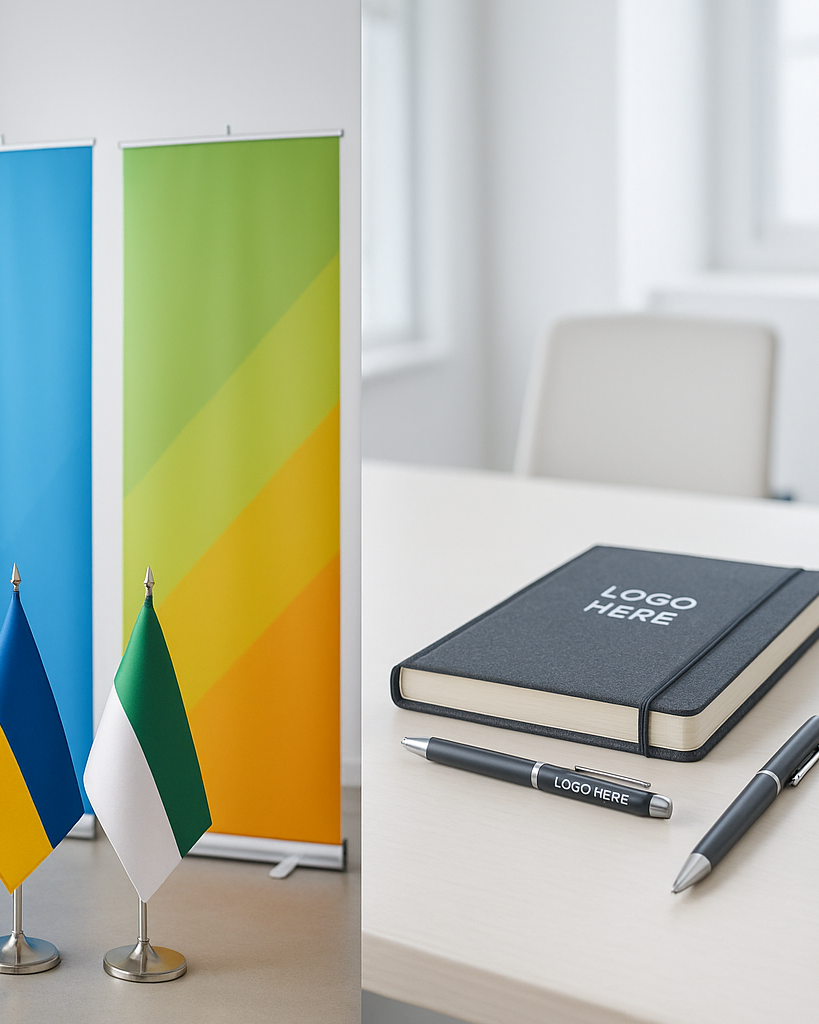
 Desk flags mounted on individual stands bring a professional, organized look to classroom geography centers, front office reception areas, and conference tables used for school board meetings or parent nights. Each flag sits upright on a compact base, making it easy to rearrange groupings by region, continent, or thematic unit without any wall hardware or hanging tools. Teachers running Model UN clubs, International Baccalaureate programs, or world cultures courses find desk flag sets particularly valuable because students can physically pick up, examine, and present a nation's flag during discussions — something wall-mounted flags do not allow. For schools that host visiting delegations or international student groups, a polished desk display using a luxury chrome gold desk flag stand communicates respect and global awareness to guests. Desk flags also offer flexibility for seasonal or rotating displays — a teacher can swap out a set of Asian nation flags for African nation flags depending on the current curriculum unit without any wall damage or installation effort. Browse the complete country desk flags collection to find sets organized by region or available in mixed-world formats.
Wall-mounted country indoor flags, by contrast, are best for permanent installations where visual impact matters more than portability. A corridor display featuring 50 or more nations arranged by continent creates an immersive international environment that reinforces school-wide global awareness, not just subject-specific learning. Indoor wall flags typically come with grommets or pole sleeves and can be installed on vertical display poles, tension rods, or flag brackets — all of which are low-cost and readily available at hardware stores. The key advantage of wall flags over desk flags in high-traffic spaces is that they are out of students' direct reach, reducing wear and the risk of accidental damage. Explore the country indoor flags collection for wall-display options in sizes appropriate for school hallways and classrooms.
How to Buy Country Flags for School in Bulk: A Step-by-Step Process
When you need to buy country flags for school in quantities covering 50, 100, or 200+ nations, placing a single consolidated bulk order from a dedicated flag manufacturer saves significantly more money than purchasing flags individually from general retail sources. Bulk pricing is typically available for orders of 12 units or more per design, and multi-country set orders often qualify for additional volume discounts.
Start by creating a comprehensive list of every country you need — align this with your curriculum map, language programs, student demographics, or the nations covered in your state's required social studies standards. Organize the list by region so you can verify completeness: the United Nations recognizes 193 member states, and most comprehensive school flag sets aim for full UN membership coverage. Next, decide on a single consistent size and material for the entire order so all flags look uniform when displayed together. Submit your list to the supplier with your target delivery date, keeping in mind that custom or less-common nation flags may require 2–4 weeks of lead time. Ask about packaging — school bulk orders are best delivered in clearly labeled sets organized by continent or alphabetical order, which dramatically speeds up sorting and installation once the order arrives. Confirm that each flag meets basic accuracy standards, particularly for nations with seal-based designs or recent redesigns such as Mauritania (updated 2017) or Afghanistan (which has seen multiple changes). For districts with strict procurement requirements, request a formal quote and certificate of compliance with product specifications before issuing a purchase order.
Desk Flags Collection
A curated selection of country desk flags in compact display sizes — perfect for school geography centers, Model UN programs, and front office presentations.
Browse Collection →Display Tips: Making Educational Country Flags Work in Your Classroom
The most effective classroom flag displays pair each flag with a small label showing the country name, capital, and continent — this simple addition converts a decorative element into an active learning tool that students reference throughout the school year. Laminated label cards mounted directly beneath each flag increase engagement and reduce the number of times teachers need to identify which flag belongs to which nation.
For wall displays, arrange flags by continent in a rough geographic layout — Europe in the upper center, the Americas on the left, Asia on the right, Africa in the lower center, and Oceania in the lower right — so the arrangement mirrors a world map students already recognize. Use consistent mounting hardware throughout: matching chrome or brushed-nickel pole brackets create a uniform professional look while keeping installation costs low. Avoid placing flags in direct sunlight from windows, as even indoor-grade polyester will begin to show UV fading within 3–6 months when exposed to direct sun for several hours per day. Rotate your display two to three times per year to align with curriculum units — a unit on Southeast Asia warrants bringing those flags to the foreground, while flags from the current unit's region can be moved to a more prominent position. For schools running Model UN or international debate competitions, invest in a set of high-quality desk flags with weighted metal bases so the display looks polished during formal events and photography. Small country flags on the 4 × 6 in desk format can also be laminated or placed in clear protective sleeves for student-facing activities where flags will be passed around frequently.
US Flag Code Compliance and Flag Display Etiquette in Schools
Under the US Flag Code (4 USC §§ 1–10), when the American flag is displayed alongside international country flags in a school setting, it must be given a position of prominence — typically at the center and highest point of a group display, or to the observer's left when flags are displayed in a line at equal height. Schools are legally and ethically responsible for ensuring the US flag is never subordinated in position to a foreign national flag on American soil.
When displaying a large array of country flags in a classroom or corridor, the standard internationally accepted protocol — consistent with FIAV (Fédération Internationale des Associations Vexillologiques) guidelines — is to arrange nations in alphabetical order by their English name when no specific hierarchy is intended. This is the same protocol used by the United Nations and the Olympics, making it an educational lesson in itself. Each national flag should be displayed at the same height and in the same size to convey equal respect, which reinforces the civic value of equality among nations. State-specific education regulations may add additional requirements — for example, some states mandate that the state flag be displayed alongside the US flag in all public school classrooms, so check your state's education code before finalizing your display plan. Torn, badly faded, or inaccurate flags should be replaced promptly, as displaying a flag with incorrect colors or design is considered disrespectful to that nation — a concern that matters especially in schools where students from those countries may be enrolled. When retiring worn-out country flags, there is no specific federal regulation governing foreign flag disposal as there is for the US flag, but treating all flags with dignity and recycling or privately disposing of them is considered best practice.
Budgeting for School Flag Sets: What to Expect on Cost
Small country desk flags in the 4 × 6 in (10 × 15 cm) format typically range from $1.50 to $4.00 per flag when ordered individually, with bulk pricing often dropping to $0.80–$2.00 per flag for orders of 50 or more. Wall-mounted indoor flags in the 2 × 3 ft (61 × 91 cm) format range from $6.00 to $15.00 per flag depending on material quality, with bulk school orders of 100+ flags frequently qualifying for custom pricing.
A full 193-nation UN-member set of 4 × 6 in desk flags will run approximately $200–$400 at retail pricing before bulk discounts, making it one of the most cost-effective global geography investments a school can make per-student across a multi-year lifespan. Display hardware — stands, brackets, rods — adds an additional 10–25% to the total project cost depending on the installation format chosen. When submitting for school budget approval or grant funding, frame the investment as a multi-year curriculum resource: a quality polyester indoor flag properly displayed and handled has a realistic school lifespan of 2–4 years, making the per-year cost per classroom extremely low compared to textbooks or digital subscriptions. Title III funds (English Language Acquisition grants) and multicultural education budget lines are common funding sources schools use to purchase educational country flags, so coordinate with your district's grants coordinator before placing an order. Administrators purchasing for multiple buildings should request a formal volume quote, as manufacturers typically offer 15–30% discounts for orders exceeding $500–$1,000 in total value.
What size country flags work best for classroom wall displays? +
Can I order school flag sets in bulk for an entire district? +
What material should I choose for educational country flags used indoors? +
How should I display the US flag alongside international country flags in a school? +
Are desk flags or wall flags better for a Model UN program? +
How long do indoor school display flags typically last? +
What funding sources can schools use to purchase country flag sets? +
Do small country flags for display come with stands included? +
Building a strong, accurate, and durable country flag display for your school is one of the most cost-effective investments in global literacy you can make as an educator or administrator. Start by browsing the complete Country Flags collection to compare sizes, materials, and regional sets, then explore the Country Indoor Flags collection for wall-display solutions built specifically for interior school environments. For Model UN programs, front office presentations, and formal school events, the luxury chrome gold desk flag stand pairs beautifully with any country desk flag to create a professional display that honors every nation represented. Bulk pricing is available for corporate and institutional orders — contact the Asya Bayrak team directly for a custom quote tailored to your school or district's requirements.


