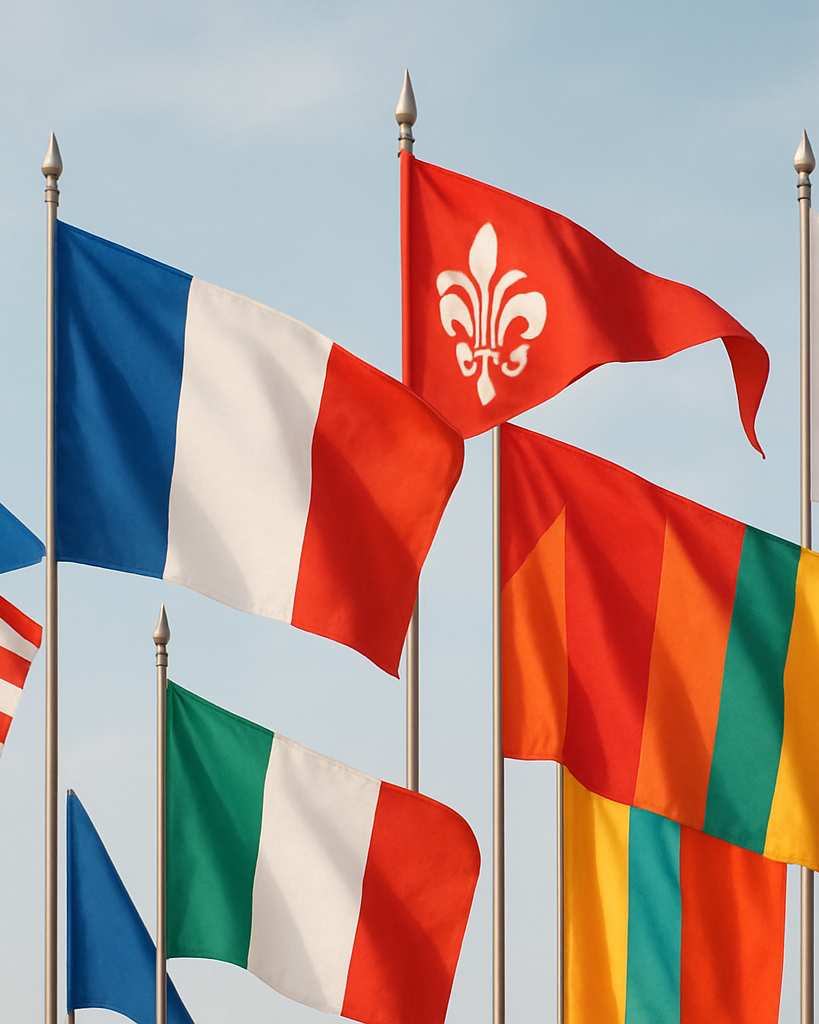
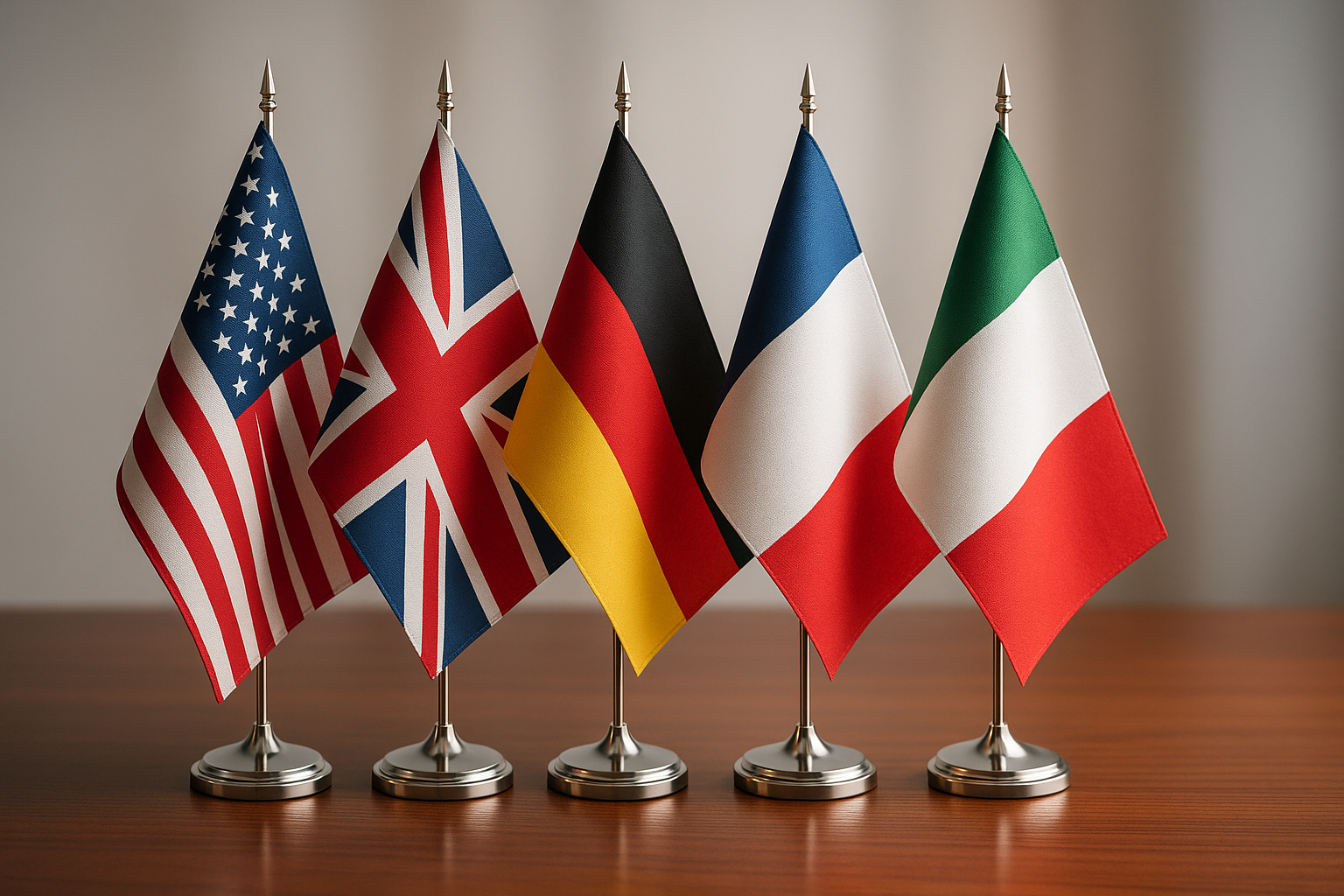




European country flags are among the most symbolically rich and historically layered national symbols in the world, with colors typically representing themes of sovereignty, religion, royal dynasties, and the struggles for independence. From the bold tricolors of France and Germany to the striking cross designs of Scandinavia, the European Countries Flags collection spans over 50 distinct national designs, each carrying centuries of meaning encoded in fabric and color. Whether you are a diplomat, event planner, educator, or simply a flag enthusiast, understanding what these colors mean offers a deeper appreciation of European culture and history.
Why European Flags Look the Way They Do: A Brief Historical Context
The visual design of European country flags evolved primarily from heraldic traditions, medieval battle standards, and revolutionary movements that reshaped the continent between the 17th and 20th centuries. Most modern European national flags trace their design lineage to one of three sources: royal coat-of-arms colors, revolutionary tricolors inspired by France's 1789 upheaval, or the Nordic cross pattern that dominates Scandinavian flags. The FIAV (Fédération Internationale des Associations Vexillologiques) recognizes these regional design families as coherent groupings shaped by shared geography and political history. Understanding these origins makes it far easier to decode the symbolic grammar that flags of Europe share and where they meaningfully diverge.
Heraldic tradition is the oldest influence. Many Central and Eastern European flags—such as those of Austria, Hungary, and Poland—directly adapted the colors of medieval royal shields into horizontal or vertical stripes. The practice of translating coat-of-arms tinctures (the formal heraldic term for colors) into flat flag designs was widespread by the 14th century. By contrast, Western European flags like France's tricolor became revolutionary symbols, and their pattern spread rapidly across newly independent nations in the 19th century. Scandinavian nations, meanwhile, adopted the off-center Latin cross design starting with Denmark's Dannebrog—reputedly the oldest national flag in continuous use, dating to around 1370—which then influenced Norway, Sweden, Finland, and Iceland.
The Meaning of Red in Flags of Europe
Red is the single most common color appearing on European country flags, and it almost universally represents courage, valor, the blood of patriots, or historical struggles for independence. You will find red on the flags of more than 40 of Europe's 50+ nations, making it the dominant color in the region's vexillological palette. In some cases—such as Albania's deep red field bearing a black double-headed eagle—red takes on an almost sacred national significance rooted in centuries of resistance to Ottoman rule. In others, like Switzerland's vivid crimson square flag, it derives from the medieval canton of Schwyz whose red banner became synonymous with Swiss confederation identity.
On the Austrian flag, red carries one of the most famous origin stories in all of European heraldry. According to legend, Duke Leopold V of Austria wore a white surcoat during the Battle of Acre (1191); after the battle, the garment was entirely soaked in blood except for the area beneath his sword belt, revealing a white stripe—an image that supposedly inspired the red-white-red horizontal triband. Whether or not the legend is historically precise, Austria has used this tricolor since at least 1230, making it one of the oldest continuously used flag designs in Europe. The Austria Outdoor Flag faithfully reproduces this iconic red-white-red composition in durable, UV-resistant polyester built for outdoor display.
What Blue and White Symbolize Across European Flags
 Blue and white together form one of the most powerful color combinations in flags of Europe, typically signifying maritime heritage, sky and freedom, religious purity, or royal lineage. Greece's blue-and-white striped flag with a white cross is perhaps the most celebrated example: the nine stripes represent the nine syllables of the Greek independence motto "Eleftheria i Thanatos" (Freedom or Death), while the blue itself has been interpreted as representing the Aegean Sea and the sky. Finland's flag features a blue Nordic cross on white, where blue stands for the country's thousands of lakes and white for snow—an almost perfect geographic metaphor rendered in two colors. Estonia pairs blue, black, and white—blue for sky, black for the soil and historical suffering, white for hope and the aspiration toward a bright future. Whether displayed at a sports venue, diplomatic facility, or cultural institution, European flags carry these layered meanings that reward close attention, and sourcing them from a specialist in the Country Flags collection ensures colors are reproduced with print accuracy that honors those meanings.
White alone carries strong symbolism on several European flags. Portugal's flag uses white alongside green and red, with white historically representing the royal House of Burgundy. On the flag of Georgia, white serves as the base for the famous "Five Cross" design—a large red cross dividing the field into four quadrants, each containing a smaller red cross—where white represents peace and purity in the Orthodox Christian tradition that defines much of the nation's identity. In papal symbolism, the Vatican City flag pairs yellow and white—gold and silver in heraldic terms—representing the spiritual and temporal authority of the Holy See, making it one of the only square national flags in Europe alongside Switzerland's.
Green, Yellow, and Black: Less Common but Deeply Meaningful Colors
 Green, yellow (gold), and black appear on fewer European national flags than red or blue, which makes their presence all the more significant when they do occur. Belgium's striking vertical tricolor of black, yellow, and red—reproduced faithfully in the Belgium Outdoor Flag—draws these colors directly from the Duchy of Brabant's coat of arms, where a golden lion on a black field with red claws was the heraldic symbol of the region. The color order (black-yellow-red from left to right when flown) was established during the Belgian Revolution of 1830, and the vertical orientation was itself a nod to the French tricolor that inspired the independence movement. Germany's flag uses the same three colors—black, red, and gold—arranged horizontally, with roots in the uniforms of the Lützow Free Corps during the Napoleonic Wars and later adopted as the colors of German liberal nationalism in 1848. These colors together across Belgian and German flags represent two distinct national stories that nonetheless share a common palette rooted in 19th-century democratic revolutions.
Green is conspicuously rare on purely European national flags, though it appears prominently on the flags of several nations that straddle Europe and Asia, such as Azerbaijan and Kazakhstan. Within conventionally defined European borders, green features most notably on Portugal's flag, where it was added in 1910 during the transition to the Republic to represent hope. Hungary, too, uses green in its red-white-green horizontal tricolor, where green symbolizes hope alongside red for strength and white for faithfulness. The scarcity of green in traditional European flags reflects the dominance of heraldic traditions that favored "metals" (gold/silver) and "tinctures" (red, blue, black, green, purple)—with green considered a secondary heraldic color used less frequently than red or blue.
Crosses, Eagles, and Coats of Arms: Emblems That Amplify Color Meaning
Many European country flags combine color with powerful emblems—crosses, eagles, shields, and coats of arms—that further concentrate national meaning in a small piece of cloth. The cross is the dominant emblem form in European flags, reflecting the continent's deep Christian heritage. Scandinavia's Lutheran cross flags (Denmark, Norway, Sweden, Finland, Iceland) all use the off-center Latin cross, where the cross symbolizes Christianity as the foundation of national identity. The Greek cross (equal arms) appears on Switzerland's flag and, in the "Five Cross" pattern, on Georgia's. Even the United Kingdom's Union Jack is a superimposition of three crosses: the Cross of St. George (England), the Cross of St. Andrew (Scotland), and the Cross of St. Patrick (Ireland).
Eagles appear with striking frequency on Central and Eastern European flags and coats of arms. Albania's flag—a black double-headed eagle on a red field—uses one of the oldest heraldic symbols in European history, tracing back to the Byzantine Empire. Poland's coat of arms features a white eagle on red. Montenegro's flag bears a golden double-headed eagle on red, derived from Venetian and Byzantine heraldic tradition. Serbia's flag includes a white double-headed eagle as part of its coat of arms. The eagle across these flags generally represents imperial power, sovereignty, and watchfulness—a meaning inherited from the Roman eagle standard (aquila) that legions carried into battle across the continent two millennia ago. For event planners displaying multiple flags of Europe together, understanding these emblematic differences helps ensure correct identification and respectful display—a topic explored in depth in our guide to international flag display kits for conference centers and multi-nation event venues.
How to Display European Flags Correctly in the United States
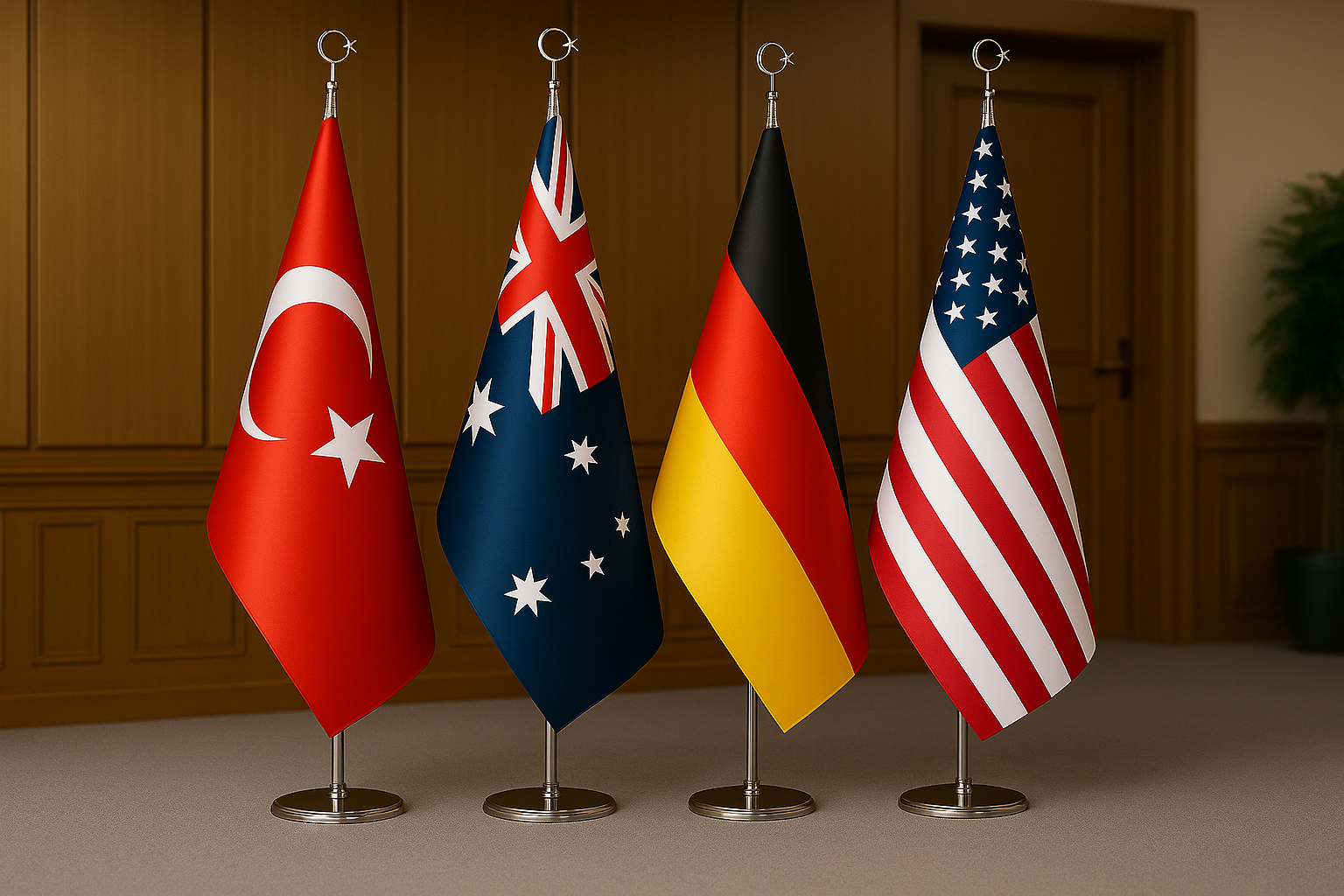
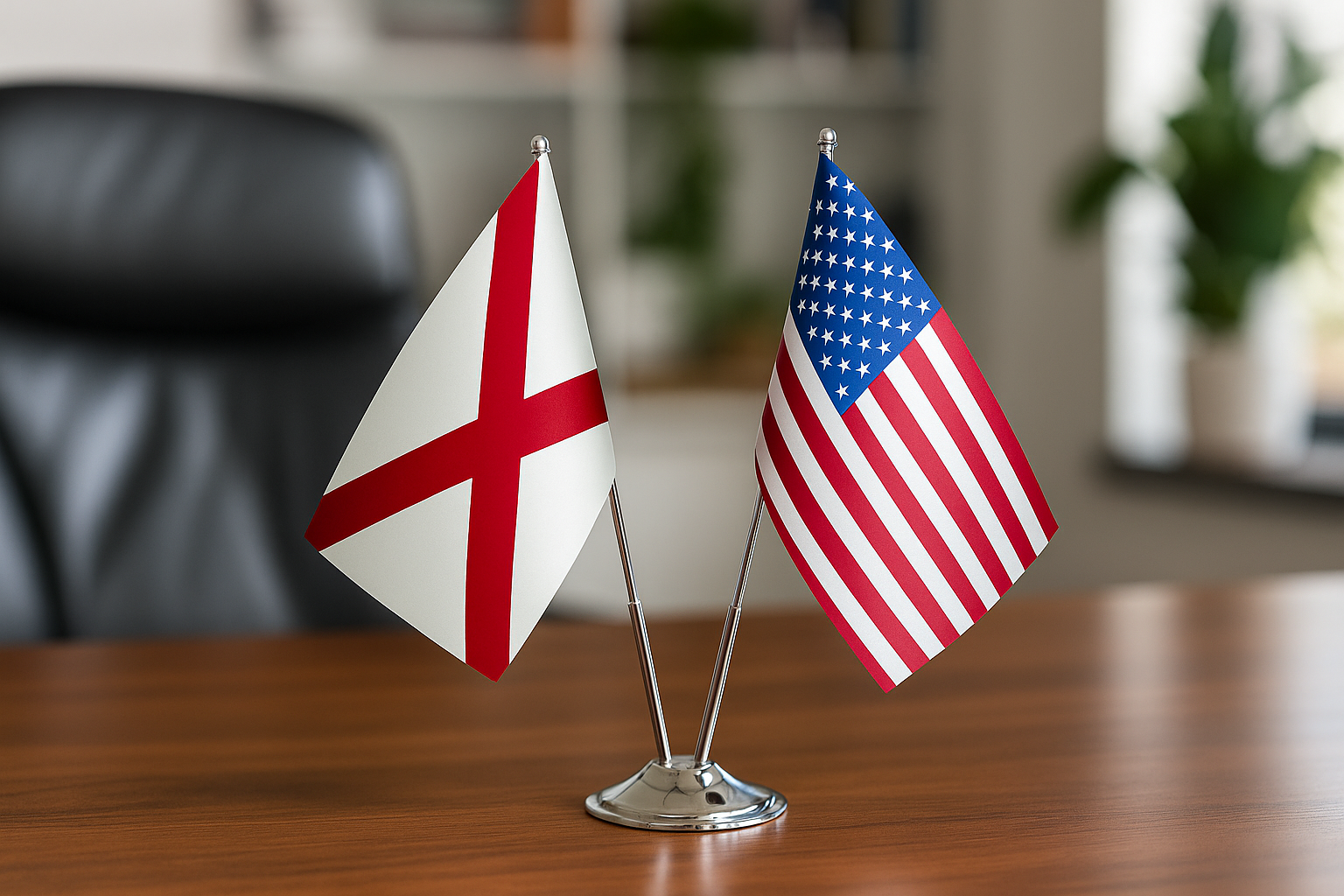
Displaying European country flags in the United States requires following both US Flag Code guidance and the protocol standards of the represented nations. Under 4 USC §§ 1–10, when the US flag is flown alongside foreign national flags, each flag must be flown on a separate staff of equal height, and the US flag must be given a position of honor—typically flown first from the viewer's left. No foreign flag should be flown above the US flag on the same pole on American soil. Standard outdoor flag sizes for European national flags range from 2 ft × 3 ft (61 cm × 91 cm) for desk and table display to 3 ft × 5 ft (91 cm × 152 cm) for standard pole mounting and 4 ft × 6 ft (122 cm × 183 cm) or larger for high-visibility outdoor applications.
Material choice matters significantly for outdoor longevity. High-quality nylon flags with 80% UV-resistant ink printing typically last 6 months to 2 years in continuous outdoor exposure depending on climate and wind conditions, while indoor display flags can last 5+ years when stored properly. For embassies, cultural centers, schools, and conference venues displaying European flags on a permanent basis, heavy-duty 200-denier nylon or 150-denier polyester construction is recommended. If you are coordinating flags for a multicultural educational setting, our detailed guide on international school and university flag programs covers sizing, mounting, and bulk ordering considerations in full.
European Countries Flags Collection
All 50+ European national flags available in outdoor-grade materials, color-accurate printing, and multiple sizes — ideal for embassies, cultural events, schools, and international venues.
Browse Collection →Comparing European Flag Color Patterns: Regional Clusters at a Glance
European country flags cluster into recognizable regional design families that make the continent's vexillological map surprisingly organized once you know what to look for. Scandinavia is the clearest cluster: Denmark (red and white Nordic cross), Norway (red with blue-edged white Nordic cross), Sweden (blue with yellow Nordic cross), Finland (blue cross on white), and Iceland (blue with red-edged white Nordic cross) all share the same fundamental template with color variations. The Slavic tricolor family—derived from the Pan-Slavic colors of white, blue, and red adopted at the Prague Slavic Congress of 1848—includes Russia, Slovakia, Slovenia, Serbia, Croatia, and Czech Republic in various arrangements of those three hues. The Germanic heraldic tradition clusters Germany, Belgium, and Austria around black-red-gold or red-white-red combinations rooted in medieval dynastic shields.
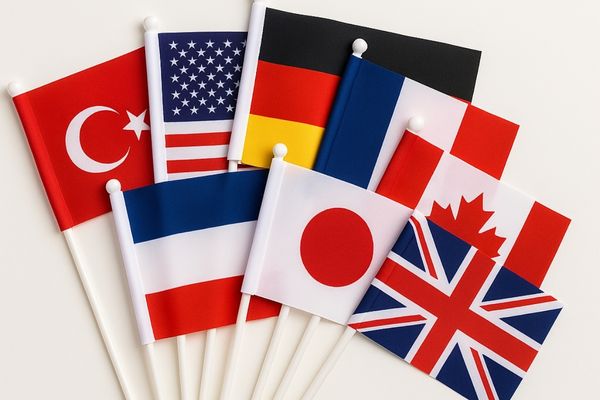
The Benelux countries—Belgium, Netherlands, and Luxembourg—offer a fascinating case of color continuity with arrangement variation. All three use red, white, and blue but in different orientations: Belgium in vertical black-yellow-red, Netherlands in horizontal red-white-blue, Luxembourg in horizontal red-white-light blue (a lighter shade than the Dutch flag). These subtle distinctions matter enormously in diplomatic and event contexts, where misidentification of a national flag can cause genuine offense. For anyone planning a European-themed event or trade exhibition, comparing these flags side by side is excellent preparation—and sourcing accurate reproductions from a specialist manufacturer ensures the differences are rendered correctly in fabric. Just as our article on flags of Africa: meanings and symbols shows how regional color traditions cluster on that continent, Europe demonstrates equally clear geographic groupings in its flag designs.
In conclusion, the colors and emblems of European country flags encode centuries of dynastic history, religious identity, revolutionary aspiration, and geographic pride into designs that remain instantly recognizable across the globe. Whether you need a single flag for cultural display or dozens for a multi-nation event, sourcing from a manufacturer that prioritizes color accuracy and material quality makes a meaningful difference. Explore the full European Countries Flags collection for outdoor-grade national flags across all 50+ European nations, browse individual options like the Austria Outdoor Flag or Belgium Outdoor Flag, or view the complete Country Flags collection for international display needs. Bulk pricing is available for corporate, diplomatic, and institutional orders — contact us directly for volume quotes.