





Faith-based organizations—from churches and mosques to temples and synagogues—can display flags indoors by following a clear protocol: the American flag always occupies the position of honor (to the speaker's right or the congregation's left), flanked by denominational, state, or country flags on proper indoor poles with parade-style bases. Choosing the right size, material, and stand makes all the difference between a respectful, long-lasting display and a setup that looks improvised. Whether you are outfitting a single sanctuary or purchasing wholesale flags for churches across a multi-site congregation, this guide covers every decision you need to make with confidence.
Understanding Indoor Flag Display Protocol for Religious Buildings
The position of honor for the American flag in any indoor setting is defined by the US Flag Code (4 USC §§ 1-10): the flag should stand to the speaker's right, which is the congregation's left as they face the altar, pulpit, or minbar. This rule applies equally to churches, mosques, temples, Hindu mandirs, Buddhist centers, and any other faith-based space—the Flag Code does not distinguish by denomination. Placing the flag in any other position, or allowing another flag to stand higher or at the same position of honor, is considered a breach of protocol under federal guidelines, even though violations carry no criminal penalty for civilian organizations.
For indoor flags for religious organizations, the standard display arrangement typically involves a three-flag grouping: the American flag to the speaker's right on a floor-standing pole, a state or country flag in the center (if space allows), and a denominational or organizational flag to the speaker's left. Many houses of worship opt for a simpler two-flag arrangement—the US flag and one additional flag—to avoid crowding the ceremonial space. In either case, every flag in the grouping should be mounted at the same height, with poles of equal length, so that no secondary flag appears to be elevated above the Stars and Stripes. The indoor flags collection at Asya Bayrak includes pre-matched sets designed specifically for this symmetrical, protocol-compliant layout.
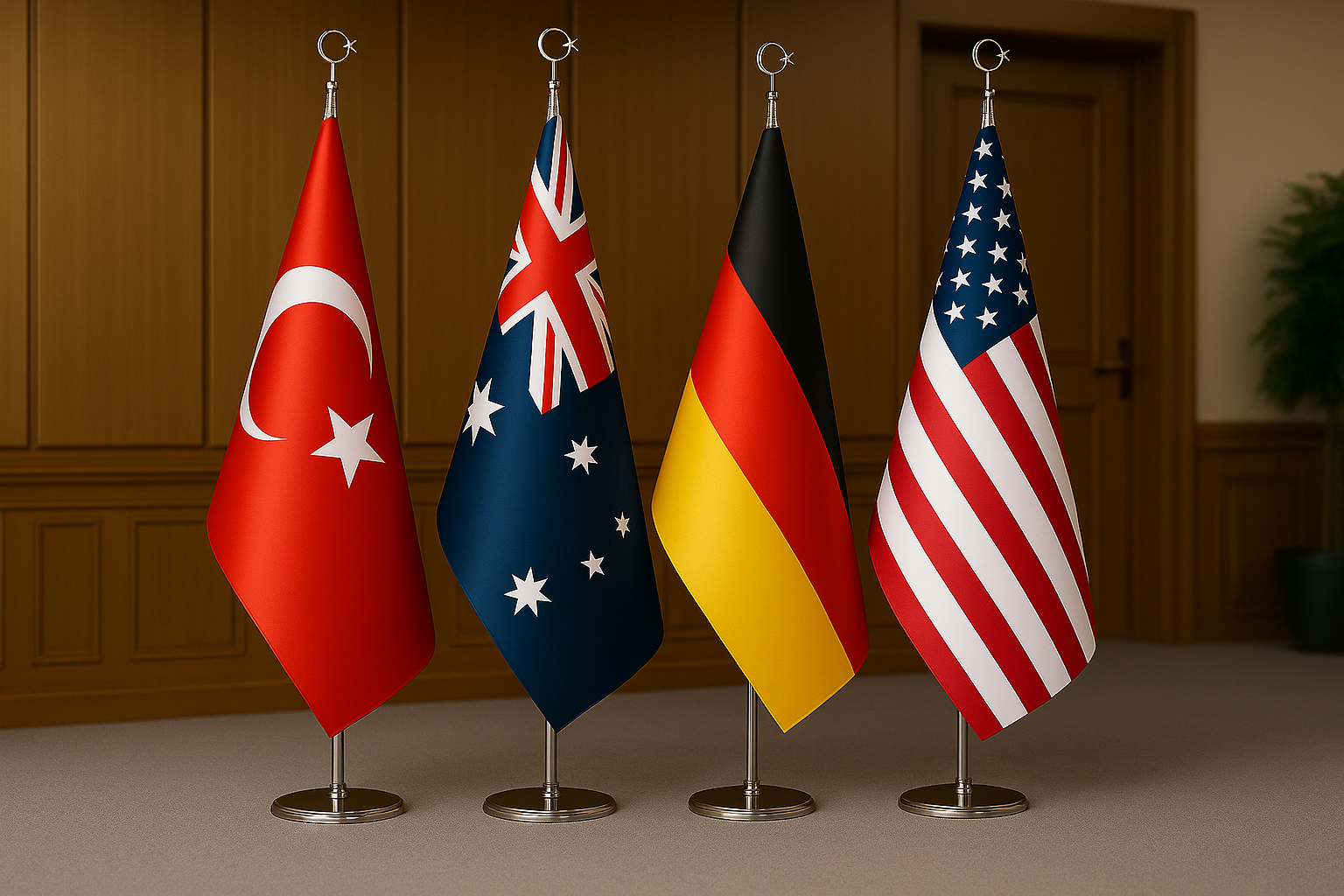
Mosques and Islamic cultural centers that wish to display the flags of member nations alongside the American flag should be aware of FIAV (Fédération Internationale des Associations Vexillologiques) standards, which recommend that national flags of equal sovereign status be displayed at identical heights on poles of equal length. When a mosque hosts an international community—say, a congregation drawing from Turkey, Egypt, Pakistan, and the United States—it is common to display multiple country flags for mosque interiors in a row, with the American flag in the rightmost position of honor when viewed from the congregation's perspective.
Recommended Flag Sizes for Sanctuaries, Fellowship Halls, and Chapels
The most common indoor flag size for religious buildings is 3 ft × 5 ft (approximately 91 cm × 152 cm), which pairs well with an 8 ft (244 cm) pole in spaces with 10–14 ft (305–427 cm) ceilings. For larger sanctuaries with vaulted ceilings of 20 ft (610 cm) or more, a 4 ft × 6 ft (122 cm × 183 cm) flag on a 9 ft (274 cm) pole creates a more proportionate visual presence without overwhelming the altar area. Small chapels, prayer rooms, and meditation spaces typically work best with a 2 ft × 3 ft (61 cm × 91 cm) desk or table flag on a weighted metal base, keeping the display dignified but unobtrusive.
 When selecting an American flag for church display, nylon is the preferred fabric for indoor use because it is lightweight (allowing it to drape gracefully even without airflow), color-fast, and resistant to the UV exposure that can come through large stained-glass windows. A 3 ft × 5 ft nylon indoor flag typically weighs around 5–7 oz (142–198 g) and will maintain its vibrant color for 18 months to 3 years under normal sanctuary lighting conditions. Polyester indoor flags offer a richer, more formal sheen—closer to the look of silk—and are a popular choice for high-ceremony denominations that hold multiple services per week. Gold fringe is an optional decorative element that adds formality to the flag's appearance; it has no regulatory meaning under the Flag Code but is widely used in Catholic, Episcopal, and Orthodox Christian settings to signal that the flag is being used in a ceremonial rather than operational context. Explore the full range of indoor flag sets for religious institutions to find pre-fringed options sized for your specific sanctuary dimensions.
For fellowship halls, multi-purpose rooms, and auditoriums used for community events, the 3 ft × 5 ft size remains the workhorse choice, but organizations that host visiting dignitaries, interfaith panels, or government representatives often upgrade to 4 ft × 6 ft flags to signal the gravity of those occasions. Many faith-based organizations purchase both sizes so that they can reconfigure their display depending on the event. When calculating the number of poles and flags needed for a multi-room facility, a general rule of thumb is one display set per permanent gathering space that holds more than 50 people.
Choosing the Right Poles, Bases, and Hardware for Houses of Worship
Indoor flag poles for religious buildings should be made of solid wood or heavy-gauge aluminum, with a finish (walnut, oak, gold, or silver) that complements the interior décor of the sanctuary. A quality floor-standing base with a cast-iron or weighted steel insert prevents the pole from tipping during services, which is especially important in congregations with active worship styles. Most indoor religious display poles range from 7 ft to 9 ft (213–274 cm) in length, and they typically include a decorative finial—eagle, ball, or cross-style—at the top.
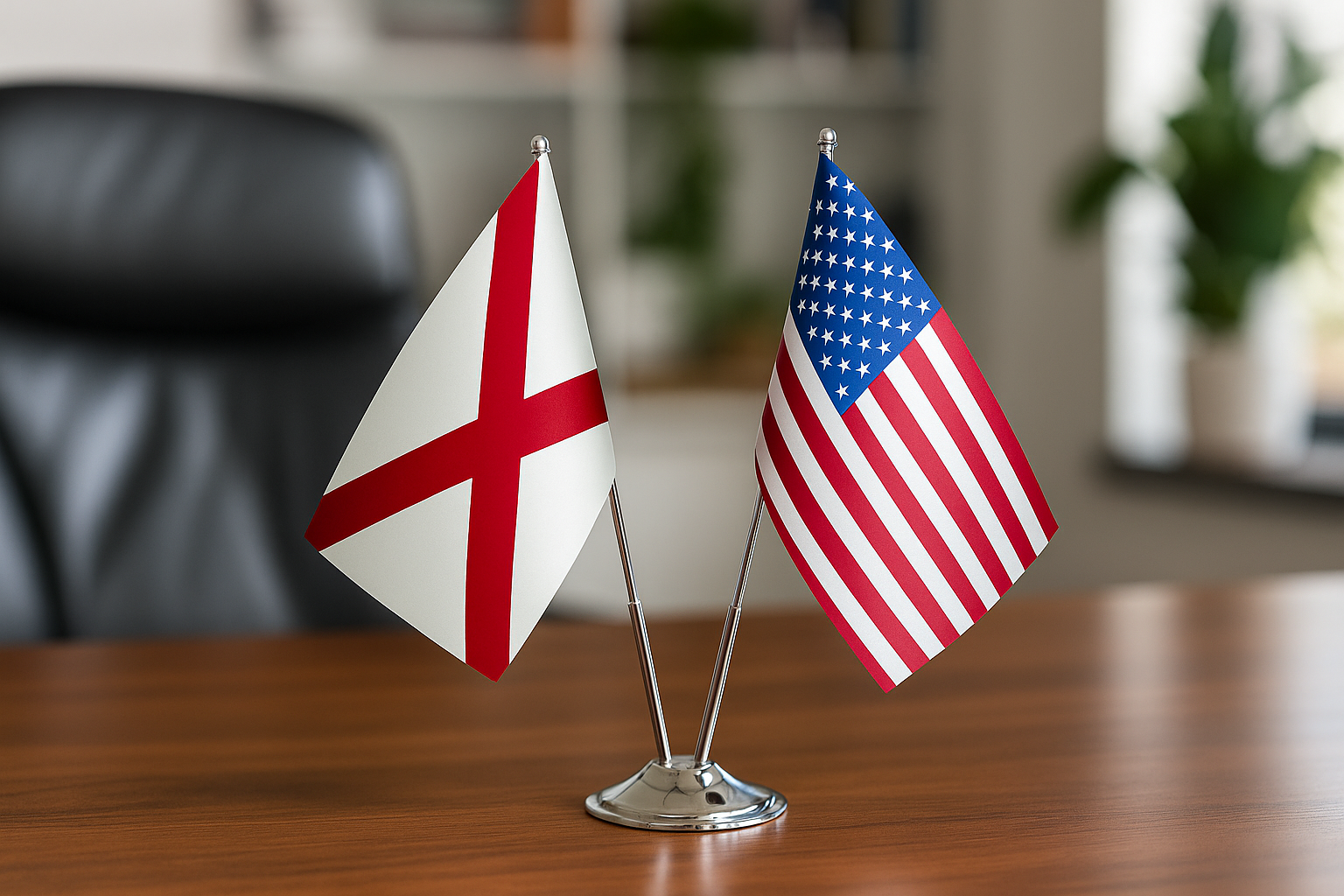
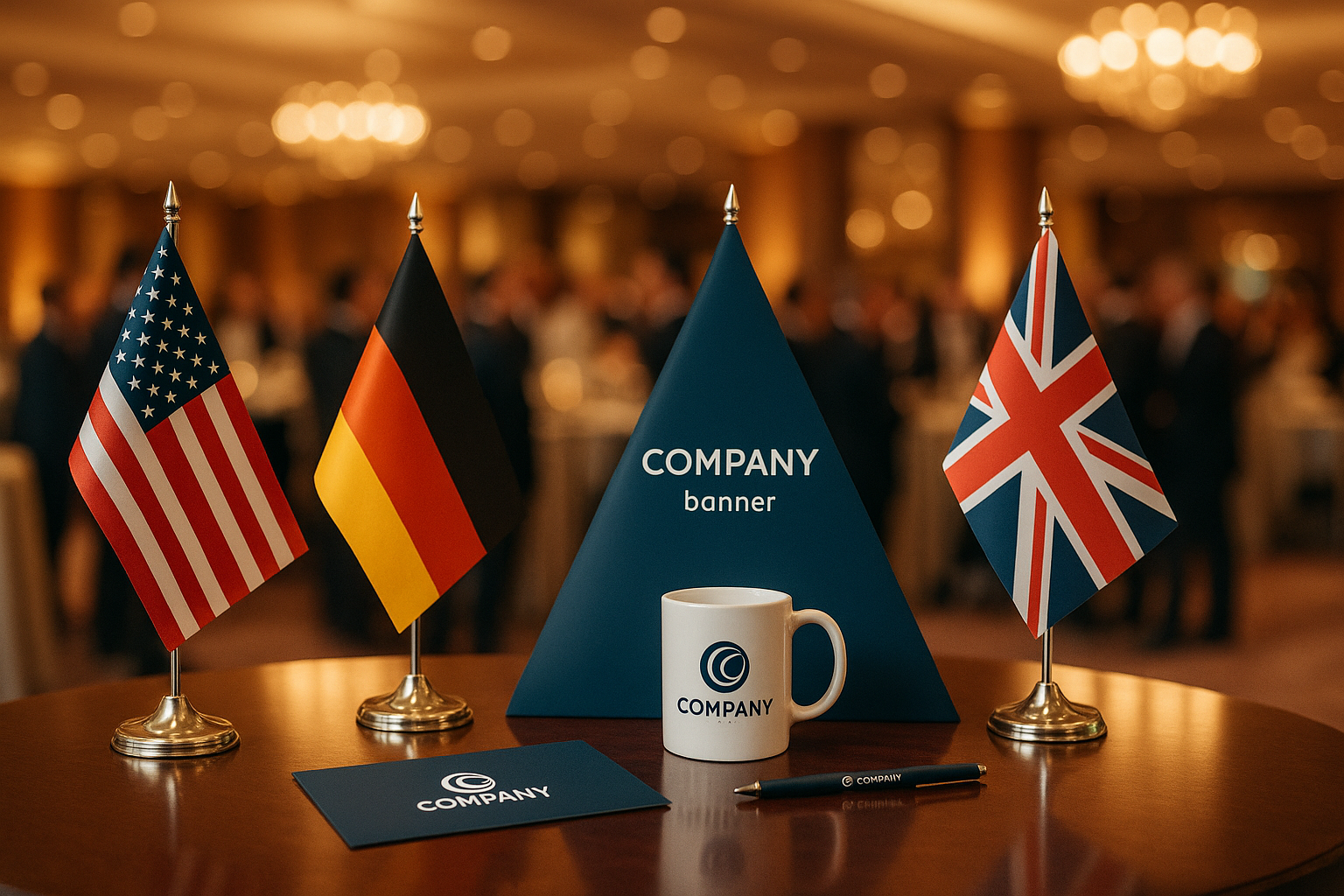
 For smaller worship spaces, conference rooms used by church councils or mosque committees, and the offices of faith-based nonprofit organizations, a weighted desk flag stand provides an elegant, compact alternative to full-length floor poles. The luxury chrome-gold desk flag stand from Asya Bayrak is available in single, double, triple, quad, and five-flag configurations, making it ideal for interfaith offices that need to display multiple national or organizational flags simultaneously at a conference table or reception desk. The weighted metal base ensures stability even when a door opens and creates airflow, and the chrome-gold finish conveys the gravitas appropriate for a faith-based institution without the bulk of a full floor-standing pole set. Many large mosques and temples use these desk stands in their administrative offices to display the American flag alongside the flag of their country of origin and their organizational emblem in a single, coherent arrangement. Browse the complete bases and stands collection to compare weighted options across different finishes and flag-count configurations.
Wall-mounted flag holders and bracket-style pole holders are another popular option for narrow narthexes, foyers, and hallways where floor-standing poles would obstruct foot traffic. These holders allow a flag to project outward at a 45-degree angle from the wall, creating a welcoming visual cue at building entrances. When using wall mounts, the same position-of-honor rule applies: the American flag should be mounted at the highest or most prominent position, with additional flags below or to the secondary side. The poles and holders collection includes bracket-style mounts suitable for masonry, drywall, and wood-frame walls commonly found in older church buildings.
Bulk Buying Guide: Flags for Multi-Site Religious Organizations and Denominations
Faith-based organizations that manage multiple campuses—megachurches with satellite locations, regional mosque networks, Buddhist center chains, or denominational headquarters purchasing for affiliated congregations—can realize significant savings by ordering bulk flags for faith-based organizations rather than purchasing individual sets per location. As a general benchmark, orders of 12 or more flag sets typically qualify for wholesale pricing tiers, while orders of 50 or more sets can reduce per-unit costs by 30–45% compared to single-unit retail pricing.
When planning a bulk purchase, start by standardizing the flag size across all locations. Most denominational purchasing directors choose 3 ft × 5 ft (91 cm × 152 cm) as the standard because it fits virtually any interior space, stores compactly, and ships economically. Create a list that specifies the flag type (American, state, country, or denominational), the pole length, the base type (floor stand vs. desk stand), and any decorative elements (gold fringe, eagle finial) required. Providing this specification sheet to your supplier upfront avoids the cost of re-ordering mismatched components and ensures that every location in your network presents a visually consistent, protocol-compliant display. If your organization also needs custom-printed flags bearing a denominational seal or organizational logo, those can often be included in the same bulk order at a negotiated rate.
International religious organizations—such as the US offices of global faith networks that maintain embassies of sorts in major American cities—should also consider ordering indoor flag sets for religious institutions that include both American flags and the national flags of their home countries. Asya Bayrak's country indoor flags collection covers hundreds of national flags in standard indoor sizes, making it straightforward to assemble a complete multi-national display kit for a single order.
Country Indoor Flags Collection
Hundreds of national flags in indoor-ready sizes, perfect for mosques, temples, and interfaith centers that serve multicultural congregations.
Browse Collection →Maintaining and Replacing Indoor Religious Flags
Indoor flags generally last significantly longer than outdoor flags—typically 18 months to 3 years for nylon and 2 to 4 years for polyester, compared to 6 months to 1 year for outdoor flags in direct sunlight and weather. The primary causes of deterioration in indoor religious settings are UV light through windows (especially in buildings with extensive glass or skylights), dust accumulation in high-traffic sanctuaries, and handling wear from volunteers who regularly mount and remove flags for storage between services.
To maximize lifespan, indoor religious flags should be dry-cleaned or gently hand-washed in cool water (never machine-washed on a hot cycle), dried flat or rolled rather than folded, and stored in a breathable fabric bag rather than a plastic bin. Inspect flags every six months for fraying at the header (the reinforced sleeve through which the pole passes), color fading, and any tears along the fly end. Under the US Flag Code, a flag that is "no longer a fitting emblem for display" should be retired respectfully—many American Legion posts and VFW chapters offer flag retirement ceremonies that faith communities are welcome to participate in. Bulk-purchasing organizations benefit from establishing a rotating replacement schedule: if you have 20 locations and each flag lasts approximately 2 years, plan to replace roughly 10 flags per year to keep the entire network looking fresh.
Flag Display Etiquette for Special Religious Observances and Interfaith Events
During major religious observances—Christmas Eve, Easter Vigil, Eid al-Fitr, Yom Kippur, Diwali, Vesak—many houses of worship increase the prominence of their flag displays by adding additional flags, upgrading to fringed ceremonial versions, or placing floral arrangements at the base of the poles. This is entirely consistent with both the US Flag Code and FIAV standards, provided that the position-of-honor rules continue to be observed and no additional flag is elevated above the American flag.
Interfaith events that bring together multiple religious communities under one roof present a unique protocol challenge: whose denominational flag, if any, should be displayed alongside the American flag? The most diplomatically neutral solution adopted by many interfaith councils is to display only national flags (American plus the flags of nations represented by attendees) and to omit denominational flags entirely for the duration of the joint event. This approach aligns with the diplomatic-display guidelines used at the United Nations and at multi-faith chapels in airports and hospitals. When national flags from multiple countries are displayed together under FIAV standards, they should all be at the same height, the same size, and ordered either alphabetically by country name in the host country's language or by the order in which participating nations joined the organizing body.
Faith communities that host civic events—voter registration drives, naturalization ceremonies, community health fairs—should pay particular attention to flag display protocol for religious buildings during those occasions. Naturalization ceremonies, for example, require that the American flag be prominently displayed and that no other flag appear in an equal or superior position of honor. Working with a supplier who understands both the ceremonial and regulatory dimensions of flag display ensures that your organization is always in compliance, regardless of the event type.
Frequently Asked Questions
What is the correct position for the American flag in a church sanctuary? +
What flag size is recommended for a standard church or mosque interior? +
Can a mosque display the flags of multiple countries indoors alongside the American flag? +
What is the minimum order quantity for wholesale flags for churches? +
How long do indoor flags last in a religious building, and how should they be maintained? +
Is it appropriate to add gold fringe to an American flag displayed in a church? +
What type of base or stand works best for indoor religious flag displays? +
Do the same flag display rules apply during interfaith events at a religious venue? +
Equipping your house of worship with the right flags, poles, and stands is an investment in both spiritual dignity and civic respect. Whether you need a single American flag for church display, a complete multi-flag set for a mosque's interfaith events, or a denomination-wide bulk order of indoor flag sets for religious institutions, Asya Bayrak has the inventory and expertise to fulfill every requirement. Start by exploring the indoor flags collection for sanctuary-ready sets, browse the country indoor flags collection for national flag options suited to multicultural congregations, and check the bases and stands collection for weighted floor and desk options that complement any interior. Bulk pricing is available for corporate and organizational orders—contact the Asya Bayrak wholesale team to receive a custom quote for your faith community's full flag display program.


