




Flags for open house events, model home grand openings, and property developer showcases are one of the most cost-effective marketing tools in real estate — they drive foot traffic, build brand recognition, and create a festive atmosphere that invites buyers in. Whether you need towering sail flags for roadside visibility, custom outdoor pole flags for a model home community entrance, or bulk string pennants for a weekend open house blitz, the right flagging strategy can measurably increase walk-in rates and on-site dwell time. This guide covers everything real estate professionals need to know about selecting, ordering, and deploying outdoor flags for grand openings, property sales events, and ongoing community branding.
Why Flags Are a Real Estate Marketer's Secret Weapon
Real estate event flags generate immediate curb appeal and directional awareness at a fraction of the cost of digital ads or print signage — studies in retail environments show that flags and banners can increase impulse foot traffic by up to 30%. Unlike yard signs that blend into a busy streetscape, a 15 ft (4.6 m) sail flag catches peripheral vision from hundreds of feet away, giving buyers a clear signal that something exciting is happening at your listing or development site. For property developers managing multiple model homes simultaneously, flags provide a unified brand identity across an entire community, making every entrance look intentional and polished. Real estate agents who use feather flags for open house weekends consistently report that buyers who might have driven past a sign-only setup stop when they see movement and color from a flag display.
Choosing the Right Flag Style for Your Real Estate Event
The best flag style for your property event depends on your site layout, wind conditions, and branding goals — sail flags and feather flags dominate open house marketing because of their height and motion, while outdoor pole flags excel at permanent development entrances. Here is a breakdown of the most popular options and where each one performs best:
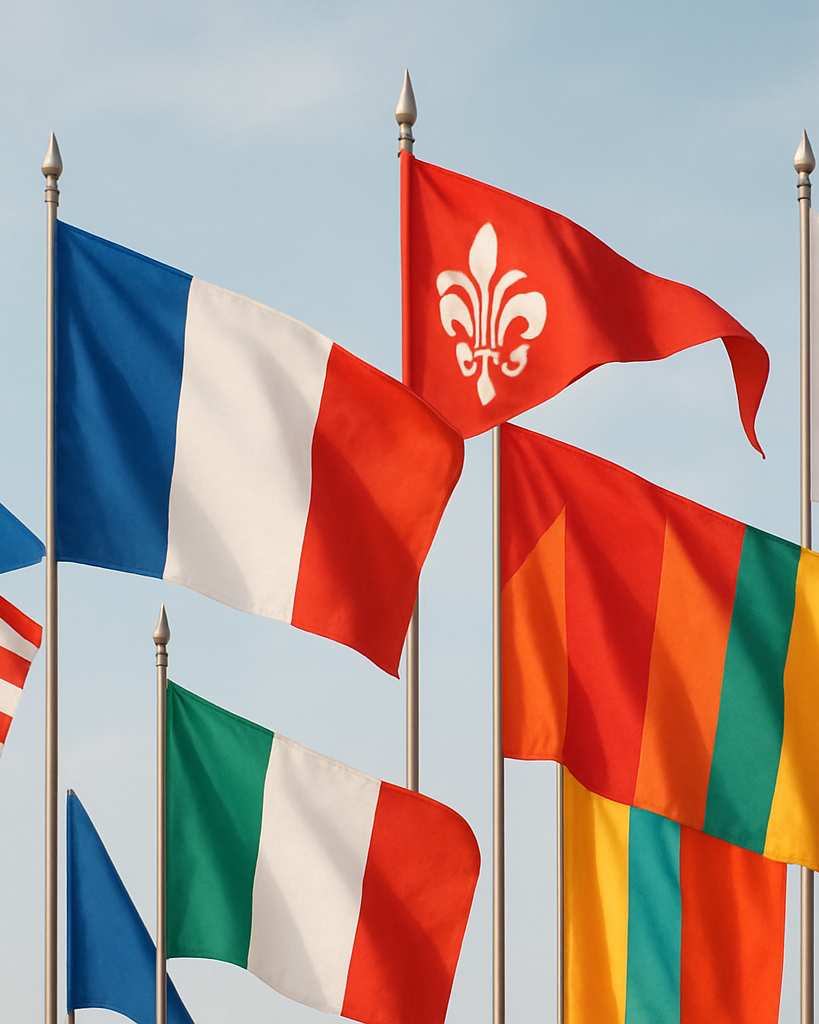
- Sail Flags (Feather Flags): Tall, tapered, and aerodynamic, these are the go-to choice for roadside placement at open houses and model home events. Available in heights from 8 ft to 20 ft (2.4 m to 6.1 m), they flex gracefully in light wind, creating constant motion that catches the eye. Explore the full range in the sail flags collection for options suited to single-agent open houses through large-scale developer launches.
- Outdoor Pole Flags: Horizontal-fly flags mounted on permanent or semi-permanent poles are ideal for subdivision entrances, sales office facades, and model home community gates. They convey authority and permanence, reinforcing a developer's brand every day — not just on event weekends.
- Vertical Pole Flags: Printed on both sides and mounted vertically, these are excellent for lining a driveway or pathway into a model home, creating a branded corridor effect that guides buyers from the street to the front door.
- String Pennants: Classic triangular pennants strung between poles or across a parking area add festivity and color for grand opening celebrations and weekend sales events at a very low cost per linear foot.
- Beach Flags: A subset of sail flags with a distinctive curved top, beach flags real estate branding applications include high-density urban open houses where wind is unpredictable — their shape keeps them readable even in gusts.
For most single-property open houses, a set of 2–4 feather flags placed at the street intersection nearest the listing plus one at the driveway entrance is the standard formula. For model home communities and developer grand openings, a multi-flag system combining sail flags, vertical pole flags, and string pennants creates maximum visual impact across the entire site perimeter.
Outdoor Flag Materials and Durability for Real Estate Use Cases
 Outdoor flags for grand openings and real estate events are most commonly made from 110–150 gsm knitted polyester, which balances print vibrancy, wind resistance, and cost for typical event durations of 1 to 4 days per use. High-quality polyester flags with UV-resistant inks are rated to retain color integrity for 6 months to 2 years of continuous outdoor exposure, depending on climate — critical for developers who want to leave flags in place throughout a multi-month sales campaign. For real estate applications, look for flags printed with dye-sublimation technology, which bonds color molecules directly into the fabric rather than sitting on top, preventing cracking and fading even after dozens of outdoor deployments. The poles themselves matter as well: fiberglass poles are lighter and more flexible than aluminum, making them a better choice for locations with frequent wind gusts above 20 mph (32 km/h), while aluminum poles deliver a crisper, more rigid presentation for sheltered entranceways. Ground spikes, cross bases, and water-fillable bases are the three standard mounting systems for outdoor real estate flags — ground spikes are fastest for weekend open houses, while weighted cross bases work on paved surfaces like driveways and parking lots. For a curated selection of logo-printed outdoor pole flags built for these exact durability requirements, the logo-printed outdoor pole flags collection offers multiple size and hardware configurations.
When planning outdoor flags for grand openings in real estate, also consider local wind ordinances and HOA sign regulations. Many municipalities treat flags differently from rigid signs under zoning codes — flags often qualify for exemptions from sign permit requirements, which is a significant logistical advantage for agents who need to deploy quickly across multiple listings on the same weekend. Always confirm local rules before installation, particularly for flags taller than 15 ft (4.6 m) or displays involving more than six flags at a single property.
Custom Branding: Making Your Flags Work Harder for Property Sales
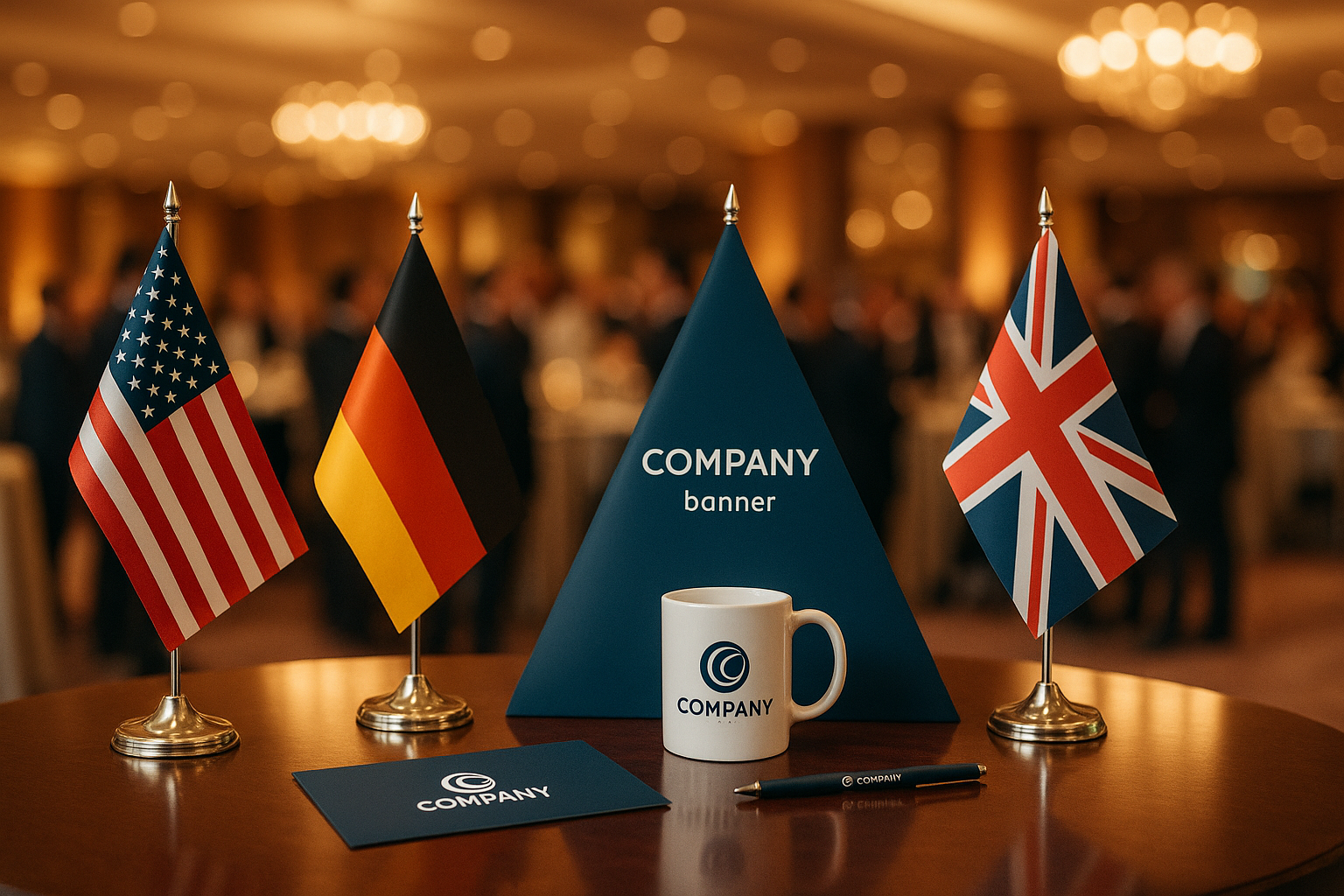
 Custom flags for property sales events should carry your brokerage logo, development brand, or community name at minimum — but the most effective real estate event flags also include a clear call to action such as "Now Selling," "Open House Today," "Grand Opening," or a specific price point or incentive. Research in outdoor advertising consistently shows that signage with a specific message outperforms generic branding-only displays by 2–3x in generating inquiry responses. For property developers, printing flags with the community name and a QR code linking to a virtual tour or registration page can turn a passive visual into an active lead capture tool that works 24 hours a day while flags are displayed. Dye-sublimation printing allows full photographic-quality images, so you can include a rendering of completed homes, a lifestyle image of the community, or even a map graphic showing proximity to major amenities — all at no extra cost per color. Double-sided printing is strongly recommended for real estate event flags placed at street intersections, since buyers approach from both directions and a single-sided flag presents a blank or mirrored reverse to half of all passing traffic. The logo-printed vertical pole flags collection includes double-sided options ideal for driveway lining at model home communities and grand opening events.
When designing custom flags for open house events, keep text large enough to be legible from a moving vehicle. A general rule of thumb: every 1 in (2.5 cm) of letter height provides approximately 30–40 ft (9–12 m) of readability at normal driving speeds. For a flag displayed at a 35 mph (56 km/h) road, your headline text should be at least 6 in (15 cm) tall to be readable before drivers pass the property. Limit your message to one headline, one sub-point, and a contact element — flags are not brochures, and cluttered designs defeat their purpose as instant-recognition tools.
Bulk Flags for Model Home Events and Developer Grand Openings
Bulk flags for model home events deliver the lowest cost per unit and allow property developers to maintain consistent branding across large subdivision launches, multi-community portfolios, and seasonal sales campaigns — typically, ordering 20 or more flags reduces per-flag costs by 35–60% compared to single-unit pricing. Developers who manage 5 or more active communities simultaneously almost always buy in bulk, both for cost efficiency and to ensure visual consistency — mismatched flags from different vendors create a disjointed brand impression that undermines the premium positioning most new-home communities work to establish. Bulk orders also make it practical to maintain a reserve inventory, so that damaged or faded flags can be replaced immediately without a turnaround delay that leaves a sales site unbranded on a critical weekend. For real estate brokerages running open house events across a large territory, a bulk supply of feather flags for open house use — stored flat in a cargo area — means any agent can deploy professional-grade signage to any listing with minimal prep time. Standard lead times for bulk custom flag orders run 7–14 business days for production plus shipping, so developers and brokers should plan orders at least 3 weeks before a major launch date to allow for proofing, revision, and transit time.
String Pennants Collection
Add festivity and perimeter visibility to any real estate grand opening or model home event with colorful string pennants — available in bulk lengths to cover large lots, parking areas, and community entrances affordably.
Browse Collection →Compliance, Safety, and Best Practices for Real Estate Flag Displays
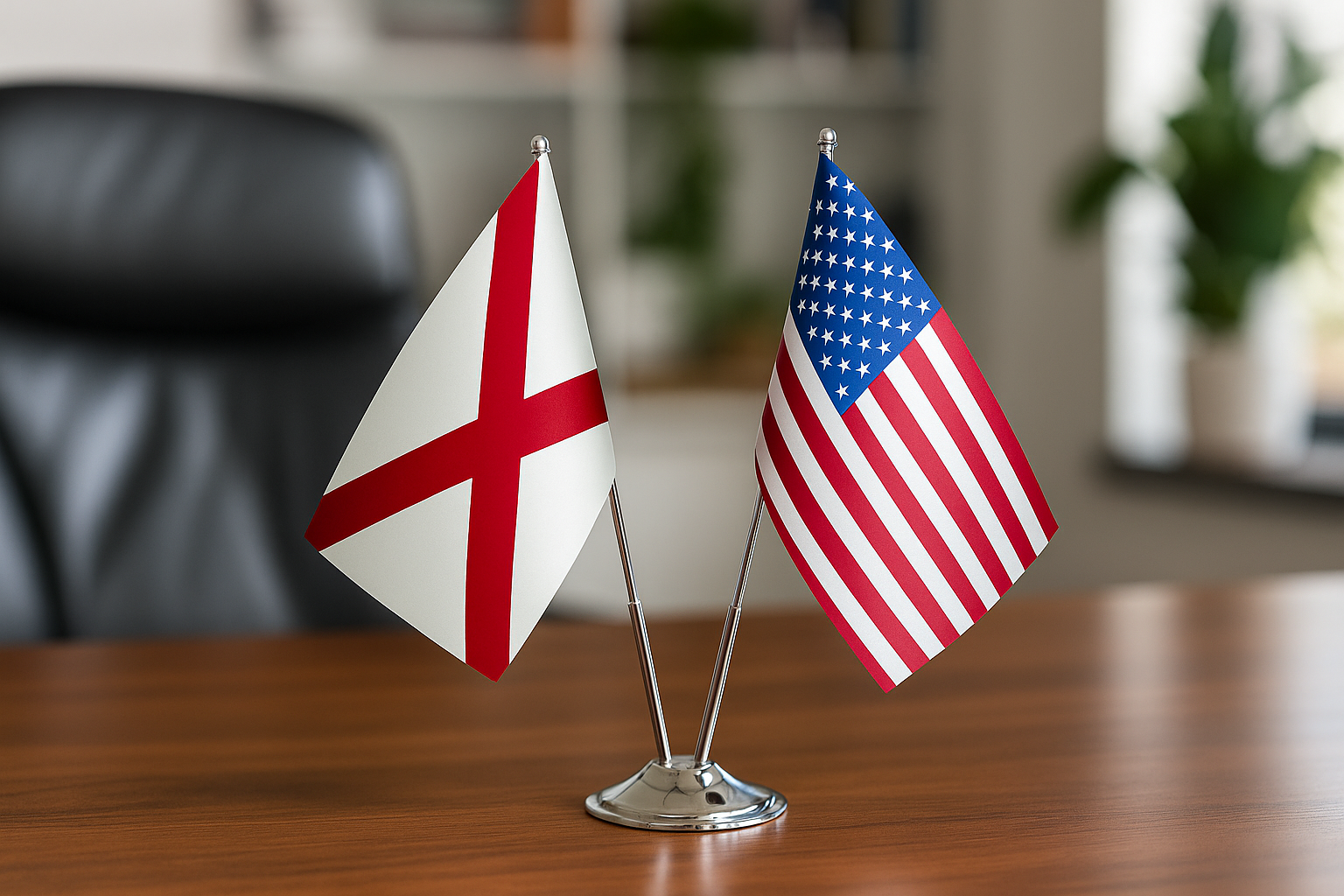
Real estate flag displays must comply with local sign codes, HOA rules, and basic safety standards for pole installation — while flags enjoy broader protection than rigid signs under many municipal codes, failure to secure poles properly can create liability if a flag falls in high wind and causes property damage or injury. Under the US Flag Code (4 USC §§ 1–10), the American flag must always be flown at the same height or higher than any other flag displayed alongside it — a rule that matters for developers who fly both a US flag and branded community flags at their sales office entrance. For sail flags and feather flags, always insert ground stakes to the full recommended depth (typically 18–24 in / 46–61 cm) and check that fiberglass poles show no cracks before each deployment — a failing pole in 30+ mph (48+ km/h) winds can become a hazard. In terms of placement, the Real Estate Settlement Procedures Act (RESPA) and state real estate advertising regulations generally treat flags as directional or on-site signage rather than advertising, but always confirm with your state real estate commission. Remove flags at the end of each open house day rather than leaving them unattended overnight, both to extend fabric life and to avoid HOA complaints or code enforcement notices. For permanent installations at a developer's model home village, consider a flagpole permit — many jurisdictions issue these separately from sign permits and they carry fewer restrictions.
Maximizing ROI: Deployment Strategies That Drive Open House Traffic
The highest-performing open house flag strategies combine multiple flag types in a coordinated placement system that guides buyers from a main arterial road all the way to the front door — this "breadcrumb trail" approach can increase walk-in rates by 40–50% compared to a single flag at the property entrance. Start with your tallest flags (15–20 ft / 4.6–6.1 m sail flags) at the nearest major intersection to create a visual anchor, then use 10 ft (3 m) feather flags at each turn along the approach route, and finish with branded vertical pole flags or string pennants at the property itself to create arrival excitement. For weekend open houses at residential listings, agents report best results deploying flags on Friday afternoon so the display is visible to commuters Friday evening and Saturday morning — that early visibility dramatically increases Saturday morning traffic, which is typically the most buyer-active time block. For property developer grand openings that span multiple days, rotate or refresh flags on day two and three to give returning community visitors the impression of an ongoing, active event rather than a static display. Pair your physical flag display with geo-targeted social media ads using photos of the flag-lined entrance — the flags themselves become marketing content that signals credibility and excitement to online audiences who haven't visited the site yet. Finally, track open house attendance before and after implementing a flag strategy and document the delta — agents who can show a measurable traffic increase are far more likely to get developer clients to approve flag budget line items for future projects.
Frequently Asked Questions
How many flags do I need for a typical residential open house? +
What is the best flag type for a property developer grand opening? +
How long do outdoor flags last when used for real estate events? +
Do I need a permit to display flags at an open house or real estate event? +
Can I order custom flags with my brokerage logo and open house messaging? +
What are the minimum order quantities for bulk flags for model home events? +
Are sail flags the same as feather flags and beach flags? +
How do I display the US flag alongside branded real estate flags at a development site? +
Ready to make your next open house, model home launch, or developer grand opening impossible to miss? Start with the sail flags collection for high-visibility roadside presence, explore logo-printed outdoor pole flags for permanent development entrance branding, or add celebratory energy with string pennants for grand opening events. Bulk pricing is available for corporate real estate teams, brokerages, and property developers managing multiple communities — contact Asya Bayrak for a custom volume quote and artwork consultation tailored to your sales campaign needs.


