
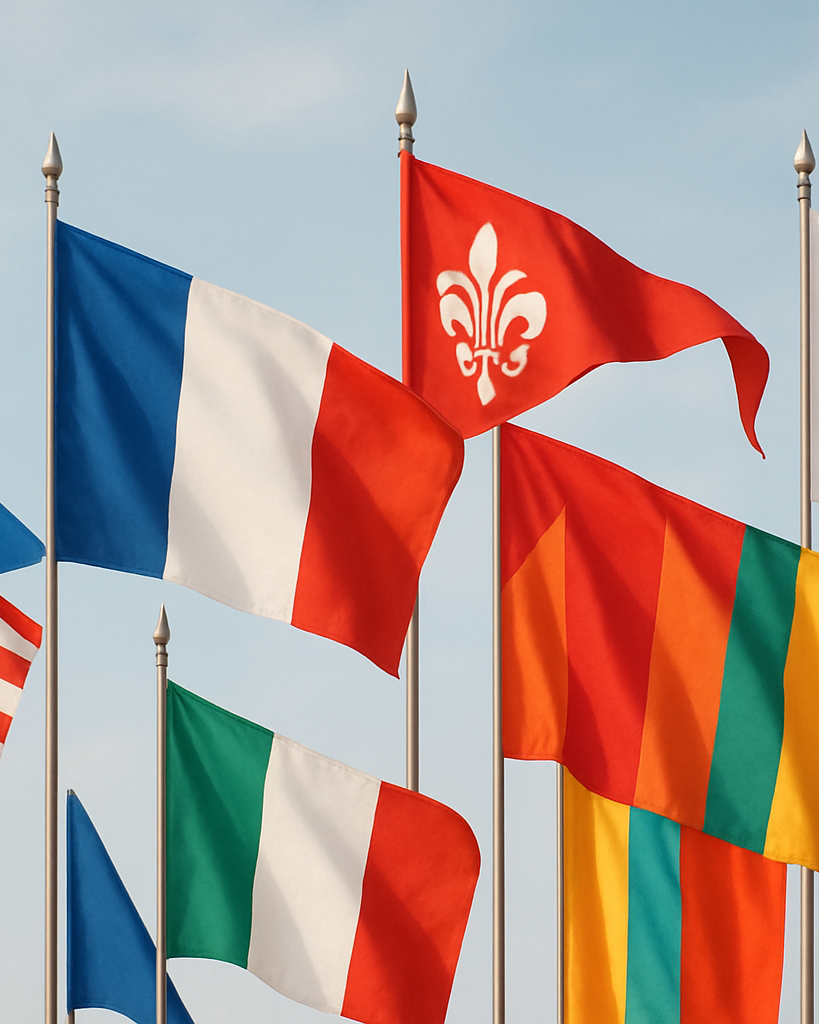
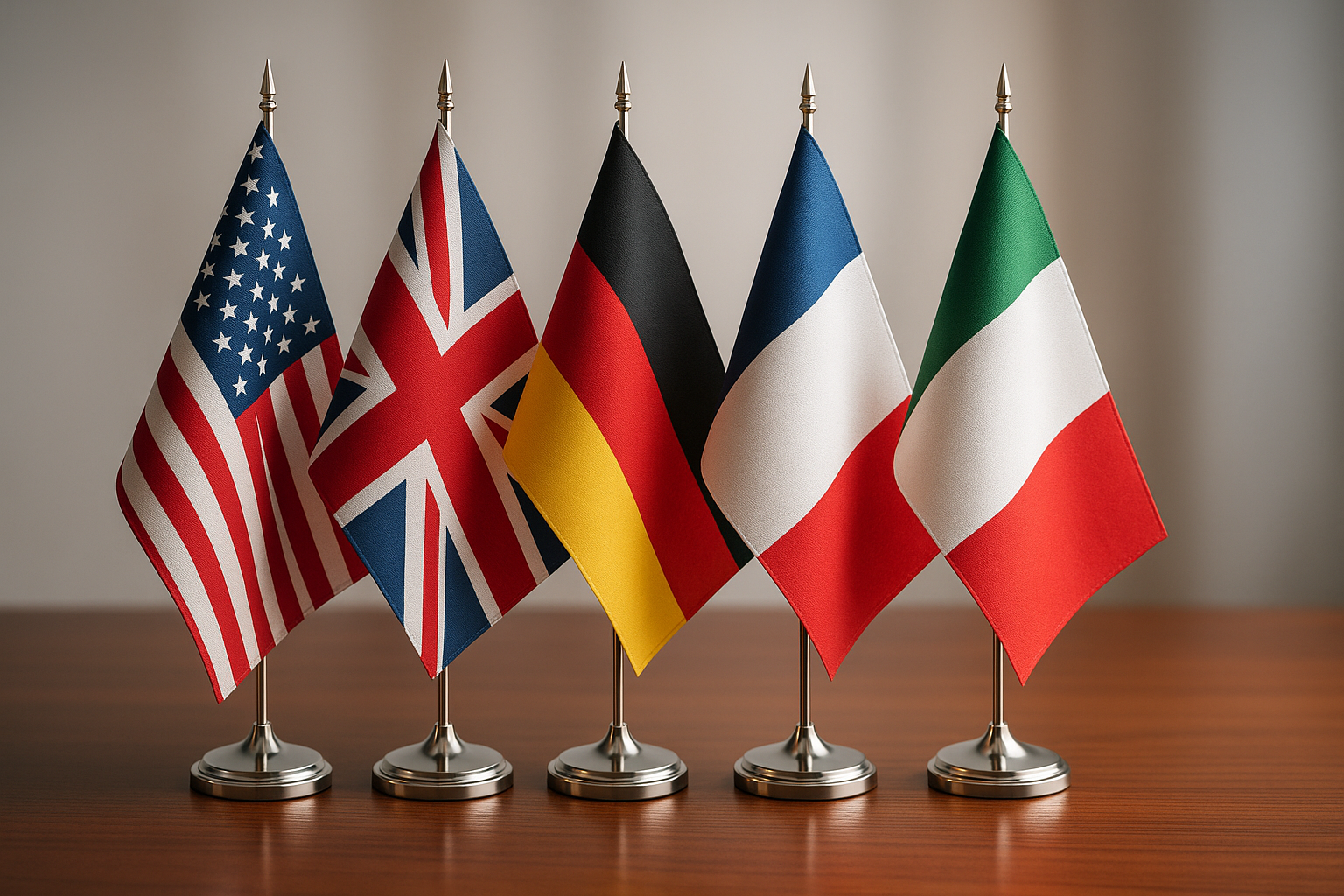

The Ivory Coast flag and the Ireland flag use the exact same three colors — orange, white, and green — but in reverse order, and that single difference is the key to telling them apart. On the Country Flags collection, both flags sit side by side, and even experienced vexillologists do a double-take. Ireland's tricolor runs green–white–orange from hoist to fly, while Ivory Coast's runs orange–white–green. If you can remember which side the green falls on for each flag, you will never mix them up again.
Which Flag Has Green on the Left and Which Has Orange on the Left?
Ireland has green on the left (hoist side) and orange on the right; Ivory Coast has orange on the left and green on the right. This is the single clearest distinction between the two flags, and it holds true in every official display context, from Olympic ceremonies to United Nations seating. When a flag is hung vertically or displayed on a pole, the hoist side — the edge closest to the pole — always carries the first stripe in a flag's traditional color order. So for Ireland, the pole side is always green, and for Ivory Coast, the pole side is always orange. If you see a tricolor with the green touching the pole, it is Irish; if the orange touches the pole, it is Ivorian. That single orientation rule eliminates virtually all confusion in real-world display.
How the Ireland Flag Earned Its Green, White, and Orange Stripe Order
 Ireland's national flag was first presented by Thomas Francis Meagher in 1848, inspired by the French tricolor and designed to symbolize political hope: green represents the Gaelic and Catholic tradition, orange honors the Protestant followers of William of Orange, and white in the center stands for a lasting peace between the two communities. The color order — green nearest the pole — was not arbitrary; green has been associated with Irish identity since at least the 1641 rebellion, long predating the modern flag. The flag was formally adopted as the state flag in the Irish Free State's 1922 constitution and later enshrined in Article 7 of the 1937 constitution, which specifies the tricolor of green, white, and orange. FIAV (the International Federation of Vexillological Associations) records the aspect ratio as 1:2, making the Irish flag twice as wide as it is tall. When you display the Ireland Outdoor Flag, crafted from 110g Raschel knitted polyester for durable outdoor use, the green stripe should always be positioned at the hoist — that is both the constitutional requirement and the FIAV standard.
How the Ivory Coast Flag Ended Up as the Mirror Image
 The Republic of Côte d'Ivoire adopted its tricolor flag on August 7, 1960, the day it declared independence from France, and the stripe order — orange, white, green — was chosen entirely on its own symbolic logic, with no reference to Ireland. Orange represents the savannas of the north and the spirit of national development; white stands for peace and unity; green evokes the forests of the south and the country's agricultural richness, rooted in its status as the world's largest cocoa producer. The similarity to Ireland's flag is a coincidence of shared heraldic colors rather than any deliberate design relationship. Ivory Coast's constitution specifies the aspect ratio as 2:3, making it slightly squarer than Ireland's 1:2 flag — a subtle but measurable difference when the two are displayed side by side. For ceremonial and diplomatic settings, the Ivory Coast Official Indoor Flag features the orange–white–green tricolor reproduced via high-definition sublimation printing on double-layer satin fabric, mounted on a durable chrome or gold metal pole, ensuring the orange stripe is correctly positioned at the hoist in every institutional context. For a full breakdown of what each color represents and the history behind the design, see our detailed article on Ivory Coast flag colors and their order.
Comparing the Two Flags Side by Side for Every Use Case
For outdoor events, sports displays, and high-wind environments, both flags perform equally well when made from 110g Raschel knitted polyester — the key differentiator is simply orientation. If you are flying both flags together, place Ireland's flag so green is nearest the pole and Ivory Coast's flag so orange is nearest the pole; any other arrangement is incorrect under each country's official protocol. For diplomatic receptions and indoor institutional settings, aspect ratio becomes relevant: Ireland's 1:2 flag will appear noticeably more elongated than Ivory Coast's 2:3 flag when hung at the same pole height, so flag stands or display frames should be sized accordingly. For African Union summits or events combining both flags, the distinction in proportions is an important detail that protocol officers frequently check. Sports events — particularly FIFA World Cup matches where both teams have competed — are the most common context where the confusion causes visible problems, because bunting and digital graphics sometimes flip the stripe order inadvertently. The fix is simple: remember green-left for Ireland, orange-left for Ivory Coast.
Lifespan and Practical Display Compared
Both flags, when made from 110g Raschel knitted polyester, carry approximately the same outdoor lifespan of 6 months to 2 years depending on wind exposure, UV intensity, and care. The fabric is 80% UV resistant, which helps maintain the vibrancy of the distinctively different shades of orange and green that define each flag's identity — fading is the first sign of color-order confusion risk, because a washed-out orange can begin to resemble green in certain lighting. For indoor satin versions, the lifespan extends significantly beyond 5 years under normal institutional conditions, since satin flags are not exposed to wind or direct sunlight. The total cost of ownership over three years is therefore lower for indoor satin flags used in permanent embassy or office settings, while outdoor Raschel flags are the more economical choice for seasonal or rotating displays. Similar practical considerations apply to other closely similar flag pairs — our article on the Indonesia vs Monaco flag and the size difference covers how near-identical color schemes affect display decisions in another famous flag pair.
African Countries Flags
The full African Countries Flags collection includes the Ivory Coast flag and dozens of other African national flags for outdoor, indoor, and ceremonial display.
Browse Collection →Four Quick Rules to Never Confuse These Two Flags Again
Experts use mnemonic shortcuts, and the most reliable ones are rooted in each country's geography and culture. First, think alphabetically: Ireland — Green starts the flag, and G comes before O in the alphabet, just as it does in Ireland's stripe order (Green–White–Orange). Second, think of Ireland's most famous color association: the country is called the Emerald Isle, so it makes sense that the green is the first thing you see on the hoist. Third, for Ivory Coast, remember that orange evokes the warm savanna and the country's location in West Africa's sunshine belt — that warmth leads, so orange comes first at the hoist. Fourth, check the aspect ratio when you have both physical flags in hand: if one flag is noticeably longer and thinner, it is the Irish flag (1:2); if the two flags appear similar in proportion but slightly squarer, that is the Ivorian flag (2:3). These four checks together make misidentification essentially impossible in any display, classroom, or sporting context.
Are the Ireland flag and Ivory Coast flag identical? +
Which side is green on the Irish flag? +
Which side is green on the Ivory Coast flag? +
Did Ivory Coast copy the Irish flag design? +
How do I tell the Irish flag from the Ivory Coast flag on a flagpole from a distance? +
Is the orange on the Irish flag the same shade as on the Ivory Coast flag? +
What is the correct way to display both flags together at an event? +
Whether you need a flag for a diplomatic reception, a sporting event, a heritage celebration, or a school display, getting the stripe order right is the first and most important step. Browse the full range of outdoor and indoor options in the Country Flags collection, explore the dedicated African Countries Flags collection for Ivory Coast and neighboring nations, or go directly to the Ireland Outdoor Flag and the Ivory Coast Outdoor Flag for immediate purchase. Bulk pricing is available for corporate orders, diplomatic missions, and event organizers needing multiple units of either or both flags.


