




Outdoor flags for government buildings must meet specific sizing standards, flagpole ratios, and procurement requirements that differ significantly from residential or commercial flag purchases. City halls, county courthouses, and municipal facilities across the United States follow guidelines rooted in the US Flag Code (4 USC §§ 1–10), General Services Administration specifications, and longstanding FIAV display conventions to ensure dignified, proportionate, and durable flag presentations. Whether you are a facilities manager, procurement officer, or purchasing director for a municipal entity, this guide covers everything you need to know — from fly-length calculations to municipal flag bulk order strategies that reduce cost without compromising quality.
Understanding Federal and Municipal Flag Sizing Standards
The correct flag size for a government building is determined primarily by flagpole height, with the US flag's fly length (horizontal dimension) ideally measuring between one-quarter and one-third of the pole's height. While the US Flag Code itself does not mandate specific dimensions, the General Services Administration (GSA) publishes Federal Standard 2-1, which defines approved flag sizes for federal and public buildings — and most state and municipal procurement offices align their outdoor flag sizing standards to these benchmarks.
For practical application, the most widely accepted flagpole-to-flag ratio is 1:4 to 1:6, meaning a 30 ft (9.1 m) pole should fly a flag with a fly length between 5 ft and 7.5 ft (1.5 m–2.3 m). The standard American flag proportions under Executive Order 10834 set a width-to-length (hoist-to-fly) ratio of 1:1.9, so a flag measuring 5 ft × 9.5 ft (1.5 m × 2.9 m) or 6 ft × 10 ft (1.8 m × 3.0 m) would be appropriate for a 30 ft pole. Larger poles of 40 ft (12.2 m) typically require flags sized 8 ft × 12 ft (2.4 m × 3.7 m) or 10 ft × 15 ft (3.0 m × 4.6 m), while 60 ft (18.3 m) poles demand flags of 12 ft × 18 ft (3.7 m × 5.5 m) or larger. Municipalities that install flagpole groupings — a common configuration at city halls where the US flag, state flag, and municipal flag fly side by side — should maintain equal flag dimensions across all three poles for a balanced, professional appearance.
City Hall Flagpole Flag Size: A Practical Reference Chart
Selecting the right city hall flagpole flag size comes down to matching your pole height to the corresponding recommended flag dimensions from the table below — a quick reference that procurement officers can bookmark and share with facilities teams.
Below is a commonly referenced sizing matrix used by municipal procurement offices nationwide:
- 20 ft (6.1 m) pole: 3 ft × 5 ft (0.9 m × 1.5 m) — suitable for smaller municipal lobbies or entrance markers
- 25 ft (7.6 m) pole: 4 ft × 6 ft (1.2 m × 1.8 m) — standard for small-to-mid-size city hall plazas
- 30 ft (9.1 m) pole: 5 ft × 8 ft (1.5 m × 2.4 m) or 6 ft × 10 ft (1.8 m × 3.0 m) — most common configuration for county courthouses
- 40 ft (12.2 m) pole: 8 ft × 12 ft (2.4 m × 3.7 m) — recommended for regional government campuses
- 50 ft (15.2 m) pole: 10 ft × 15 ft (3.0 m × 4.6 m) — used by major municipal complexes and state capitol annexes
- 60 ft (18.3 m) pole: 12 ft × 18 ft (3.7 m × 5.5 m) — appropriate for prominent civic plazas and federal building entrances
- 80 ft (24.4 m) pole: 15 ft × 25 ft (4.6 m × 7.6 m) — large-scale ceremonial installations
Keep in mind that high-wind environments — coastal municipalities, elevated sites, or locations prone to sustained gusts above 40 mph (64 km/h) — should opt for storm flags that are one size smaller than standard, reducing wind load and extending service life. Municipal procurement officers in hurricane-prone counties frequently specify two flag inventories: a standard flag for typical conditions and a reinforced storm-size flag for severe weather seasons.
Material and Durability Requirements for Government Outdoor Flags
 Government outdoor flags face far harsher conditions than decorative or event flags — UV radiation, rain, humidity, salt air in coastal municipalities, and constant mechanical stress from wind cycling all degrade fabric faster than most procurement officers anticipate. The most durable outdoor flags for government buildings are manufactured from 200-denier nylon or 2-ply polyester, both of which offer an estimated service life of 6 months to 2 years depending on wind exposure and sun intensity. Nylon flags dry quickly, resist fading with 80% UV-resistant dye treatment, and fly beautifully in light-to-moderate winds, making them ideal for inland civic locations. Polyester, particularly two-ply heavyweight polyester, withstands sustained winds above 35 mph (56 km/h) and is the preferred material for coastal courthouses and rooftop installations where wind load is consistently high. Government procurement specifications should always include a minimum colorfastness rating and triple-stitched fly-end reinforcement, since the fly hem is the first point of failure on any outdoor flag flown continuously. Explore the USA Outdoor Flag product page for material specifications that meet government-grade durability requirements.
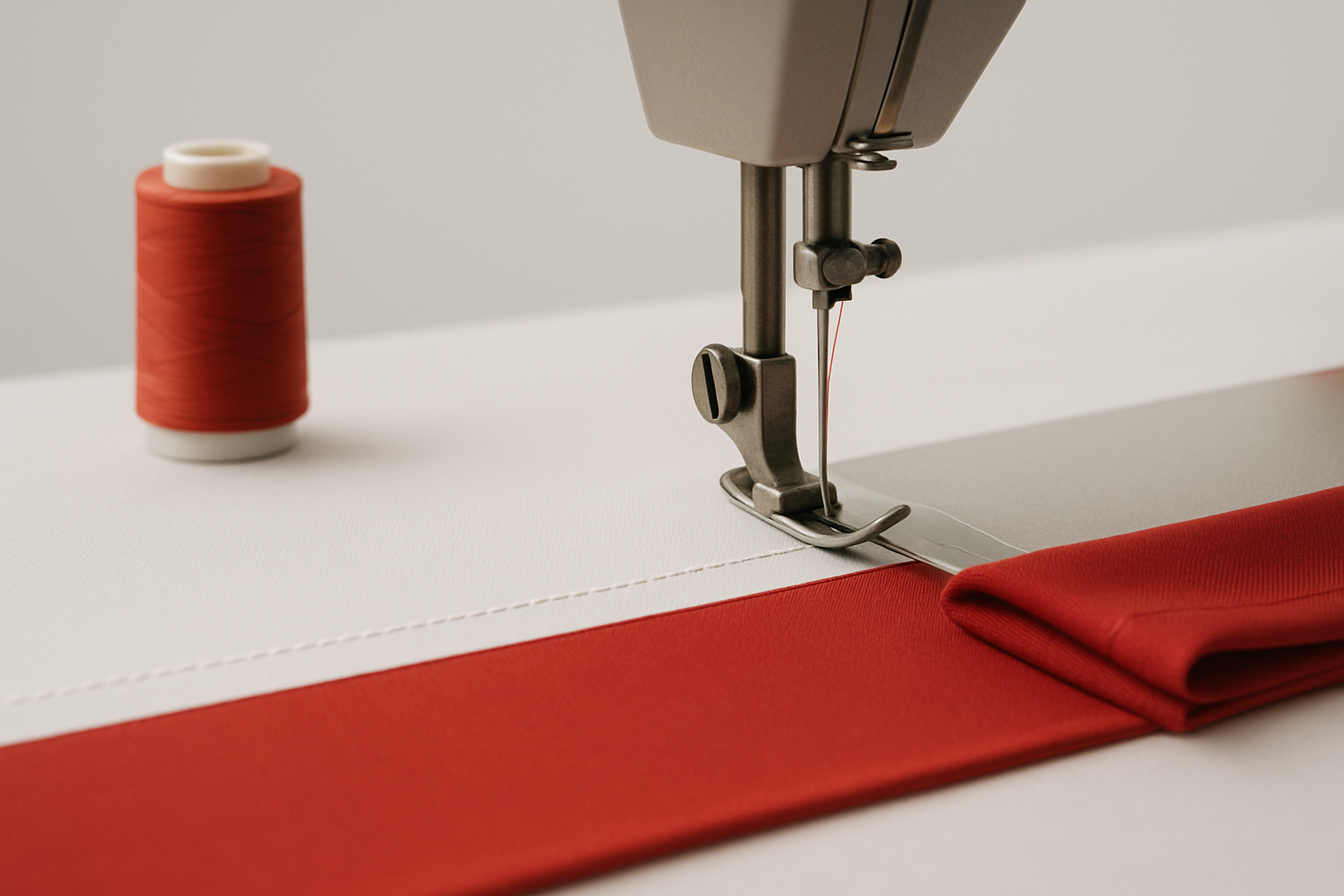
Beyond fabric weight, header construction is a critical specification point for municipal buyers. Brass grommets are the standard hardware for most government outdoor flags, with a minimum of two grommets on the hoist side; larger flags (8 ft × 12 ft and above) often use canvas header with rope-and-thimble attachments that distribute tension more evenly across the hoist edge. Embroidered stars on the canton, rather than screen-printed, add roughly 15–20% to per-unit cost but significantly extend the period before image degradation is visible — a worthwhile investment for flags displayed at high-visibility government locations. Colorfastness to weathering should meet AATCC Test Method 16, Option 3 (xenon arc) at a minimum rating of 4 on the gray scale after 40 hours of exposure.
Wholesale Outdoor American Flags for Government: Procurement Best Practices
 Securing wholesale outdoor American flags for government procurement requires more than simply finding the lowest unit price — it involves aligning vendor capabilities with agency purchasing rules, delivery timelines, and documentation requirements. Most US municipalities procure flags through one of three channels: direct purchase orders under a micro-purchase threshold (typically $10,000 or less), formal competitive bid solicitations for larger contracts, or cooperative purchasing agreements such as NASPO ValuePoint, Sourcewell, or local government cooperatives that pre-qualify vendors. Cooperative contracts are especially useful for county courthouse flags bulk orders because they eliminate the formal bid process while still satisfying competitive procurement requirements. When evaluating flag vendors, procurement officers should request product samples for independent colorfastness testing, ask for certificate of origin documentation (Buy American Act compliance is required for most federally funded projects), and verify that the vendor can provide a consistent supply of the same flag dimensions across multiple purchase orders over a multi-year contract period. The Flagpoles and Accessories collection provides a useful complement to flag procurement, allowing facilities teams to source poles, hardware, and flags from a single supplier — simplifying invoicing and reducing lead time conflicts.
Volume discounts for municipal flag bulk orders typically begin at quantities of 12–24 units and scale significantly at 50+ and 100+ units. A city managing multiple branch offices, fire stations, police precincts, public libraries, and recreational facilities can consolidate flag orders across departments to reach higher discount tiers. Standardizing on two or three flag sizes across the entire municipal fleet also reduces inventory complexity and allows facilities staff to rotate stock without mismatch. Annual replacement budgets should account for an average replacement cycle of 6–9 months for flags flown 24 hours a day and 12–18 months for flags flown sunrise to sunset only, per common facilities management benchmarks.
Logo Printed Outdoor Pole Flags
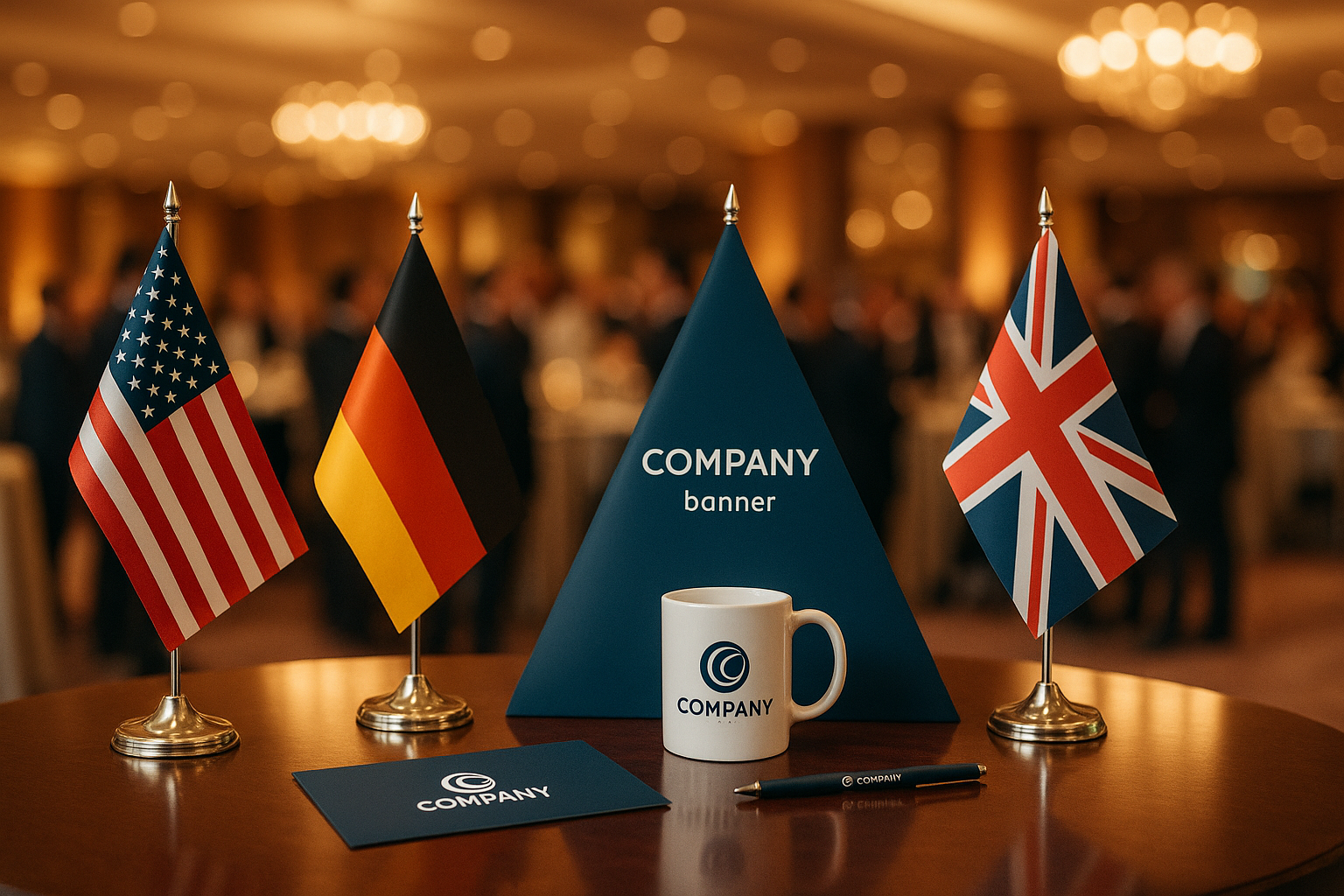
Custom-printed outdoor pole flags for municipal seals, department branding, and ceremonial displays — built to withstand year-round government installation demands.
Browse Collection →County Courthouse and Multi-Flag Display Protocols
For county courthouses and government campuses displaying multiple flags simultaneously, the US Flag Code and FIAV display standards provide clear hierarchy rules that procurement officers must incorporate into specifications. The American flag must always occupy the position of honor — to the flag's own right when viewed from the front, which means the observer's left — and must be equal in size to or larger than any other flag displayed on an adjacent pole at the same height.
Tri-pole installations at county courthouses typically display the US flag in the center position (with the center pole being the tallest or all poles being equal height), flanked by the state flag and the county or municipal flag. When all poles are equal height, the US flag flies from the central pole; when poles are of different heights, the US flag occupies the tallest pole. All flags in a multi-flag array should be the same size to maintain visual balance — mismatched dimensions create a disorganized appearance that reflects poorly on the institution. For county courthouse flags bulk procurement, it is standard practice to specify three identical sets: a primary set in service, a secondary set in on-site storage for rapid replacement, and a third set held at a central municipal warehouse for system-wide distribution. This three-set system ensures continuous dignified display without procurement delays during peak replacement periods.
Indoor Government Flag Displays: Complementing Your Outdoor Program
Indoor ceremonial flags for city council chambers, courtrooms, and executive offices require a separate procurement track from outdoor flags, with different size standards, fringe specifications, and display hardware requirements. Indoor government flags are typically sized at 4 ft × 6 ft (1.2 m × 1.8 m) mounted on 8 ft (2.4 m) staffs with ornamental finials, and they are almost always made from heavier polyester or rayon with gold fringe — a treatment that is appropriate indoors per Flag Code interpretation but would be impractical outdoors.
Municipal procurement programs that coordinate both indoor and outdoor flag inventories benefit from consolidated supplier relationships. The Indoor Flags collection and the State and City Indoor Flags collection provide government-appropriate options for council chambers, lobbies, and official offices. For executive and conference room presentations where a compact, premium display is required, a dedicated desk-stand solution such as the Luxury Chrome Gold Desk Flag Stand delivers the polished, weighted-base presentation appropriate for mayoral offices, courtrooms, and senior government meeting rooms. Coordinating indoor and outdoor procurement under a unified government flag procurement guide simplifies budget tracking and ensures visual consistency across all public-facing government spaces.
Building Your Government Flag Procurement Specification Document
A well-structured procurement specification is the foundation of any successful government flag procurement guide and protects the agency from substandard product delivery. Every municipal or county flag specification document should include at minimum: fabric type and weight (e.g., 200-denier nylon or 2-ply 300-denier polyester), colorfastness standard and minimum gray-scale rating, embroidery versus printing specification for stars and insignia, header and grommet material (solid brass, minimum 1.5 in / 3.8 cm diameter), stitching requirements (minimum 4-stitch lockstitch per inch on all seams, triple-stitched fly hem), flag dimensions for each pole height in the municipal inventory, country of origin documentation, and delivery timeline with penalty clause for late delivery during flag holidays (Memorial Day, Flag Day, Independence Day, Veterans Day).
Including a sample-and-approval stage in your solicitation — where the awarded vendor submits production samples before the full run is manufactured — reduces the risk of receiving non-conforming product. Government procurement officers managing large portfolios of outdoor flags for government buildings across dozens of locations benefit from assigning a flag inventory number to each location and tracking replacement dates in a simple spreadsheet or facility management system. This data-driven approach identifies which locations have unusually high flag wear rates (indicating a wind or hardware problem) and allows procurement to be triggered proactively rather than reactively after a flag is already in poor condition.
Frequently Asked Questions
What is the correct flag size for a 30 ft flagpole at a city hall? +
How long do outdoor government flags typically last before replacement? +
Does the Buy American Act apply to government flag purchases? +
What is the proper order of flags on a three-pole government display? +
At what order quantity do bulk pricing discounts typically begin for municipal flag orders? +
Should government outdoor flags use embroidered or printed stars? +
Can municipal flags with city seals or logos be ordered in bulk for outdoor use? +
What fabric is best for outdoor government flags in high-wind coastal locations? +
Equipping city halls, county courthouses, and municipal buildings with properly sized, durable, and procurement-compliant outdoor flags is both a matter of civic pride and legal obligation under the US Flag Code. From calculating the correct city hall flagpole flag size to structuring a multi-year municipal flag bulk order contract, the details covered in this guide give facilities managers and procurement officers the framework to make confident, defensible purchasing decisions. Browse the USA Outdoor Flag product page for government-grade specifications and sizing options, explore the Logo Printed Outdoor Pole Flags collection for custom municipal seal flags, and visit the Flagpoles and Accessories collection to source hardware alongside your flag inventory. Bulk pricing is available for corporate and government orders — contact our procurement team for a custom quote tailored to your agency's size, location, and annual flag volume.