
The South Korean flag — known as the Taegukgi — follows a precise 2:3 width-to-length ratio as specified by South Korean national law, and its official colors are defined by exact Pantone and KS (Korean Standards) codes. Whether you are selecting a flag for an embassy, a school, or a backyard pole, understanding these proportions and color standards ensures you display the Taegukgi with accuracy and respect. Explore our full Asian Countries Flags collection for officially proportioned South Korea flags in every format.
What the official Taegukgi proportions actually are
The Taegukgi has an official width-to-length ratio of 2:3, meaning a flag that is 2 ft (61 cm) tall will always be 3 ft (91 cm) wide. This ratio is codified in South Korea's Ordinance on the Specification of the National Flag (대한민국 국기법 시행령), which was most recently revised in 2011, and it aligns broadly with FIAV (Fédération internationale des associations vexillologiques) standards for aspect ratios in the 2:3 family. Every element inside the flag — the Taeguk circle, the four trigrams, and their positioning — is calculated as a fraction of the flag's shorter dimension (width), so any correctly proportioned Taegukgi will automatically place every symbol in the right location regardless of the flag's physical size.
The white field occupies the full rectangle. The Taeguk circle (음양, Yin-Yang) is centered on the flag and has a diameter equal to one-half of the flag's width. Each of the four trigrams (괘, Gwae) — Geon (☰, top-left), Gon (☷, bottom-right), Gam (☵, top-right), and Li (☲, bottom-left) — is placed at a standardized distance from the center and at a prescribed angle. The trigram line width and bar lengths are also specified as fractions of the flag width, which is why a poorly printed flag that distorts any of these fractions will immediately appear "wrong" to a trained eye. For competitive events, diplomatic settings, or any official ceremony, verifying the 2:3 ratio before purchase is the single most important quality check you can perform.
What the official Taegukgi colors are — Pantone values and KS codes
The official colors of the South Korean flag are white (baekdang), red (hong), blue (cheong), and black (heuk), each assigned specific Korean Standards (KS) color codes as well as widely referenced Pantone equivalents. The white background is a neutral white (KS A 0062: N9.5), representing purity and peace. The red of the upper Taeguk semicircle is defined as KS A 0062: 6.5R 4/14, widely approximated as Pantone 186 C — a strong, saturated red with no orange cast. The blue of the lower semicircle is KS A 0062: 5PB 3/12, approximated as Pantone 294 C — a deep, slightly navy blue that is distinctly cooler than royal blue. The four trigrams are rendered in pure black (KS A 0062: N1).
For print production, the CMYK equivalents most frequently cited in professional vexillological references are: Red — C:0, M:100, Y:72, K:0; Blue — C:100, M:51, Y:0, K:32; Black — C:0, M:0, Y:0, K:100. RGB digital approximations are Red: #CD2E3A, Blue: #003478, though slight variations appear between sources. The key practical point is that the red must lean toward crimson rather than scarlet, and the blue must read as deep indigo-navy rather than a bright medium blue. Flags that substitute a lighter "sky blue" for the official deep Pantone 294 C navy are the single most common color error seen in commercially produced Taegukgi. Always request a color proof or check the Pantone specification when ordering flags for diplomatic or institutional use.
Standard Taegukgi sizes and where each one is used
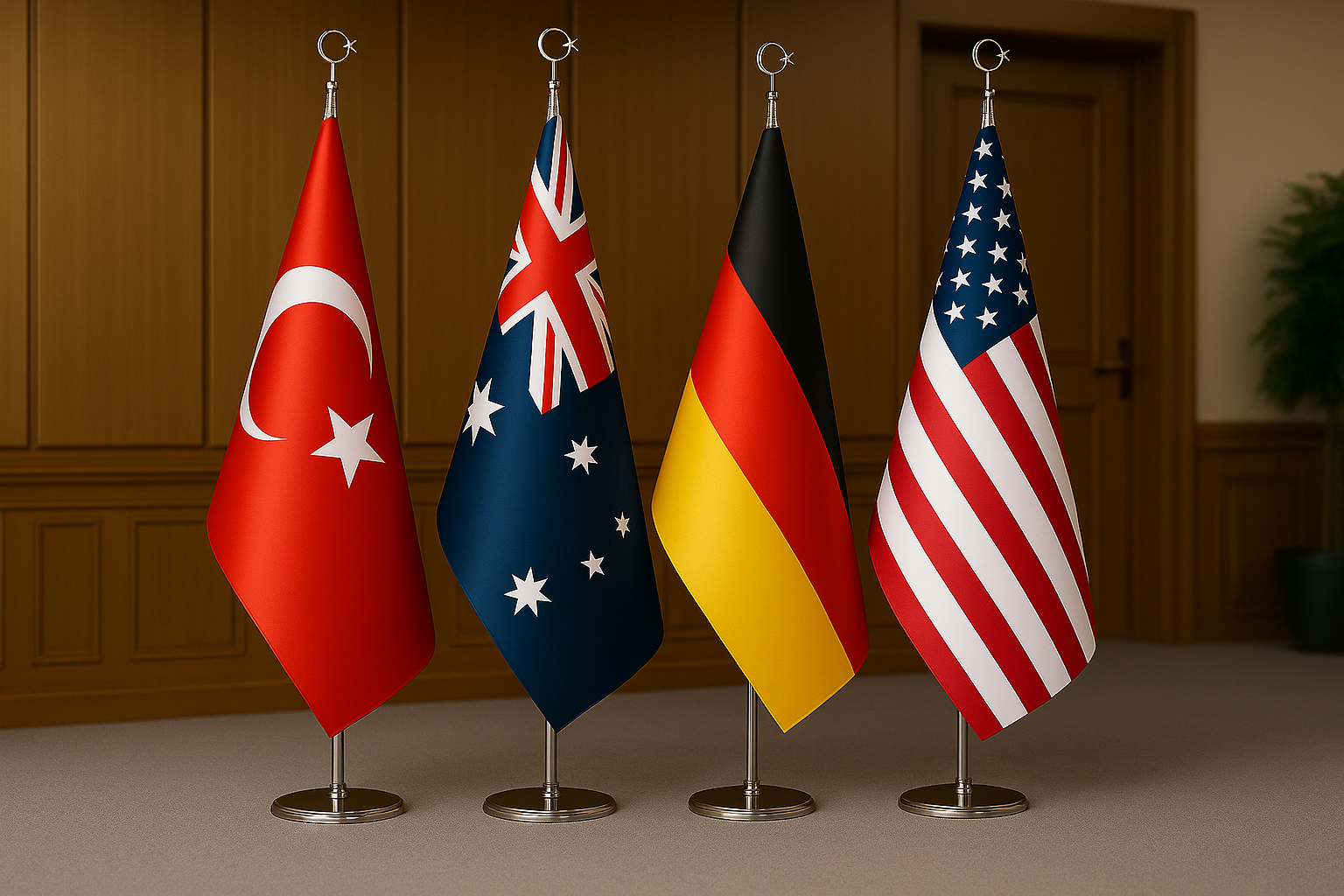
 South Korea flags are produced in a range of standard sizes that mirror the conventions used across most national flags worldwide. The most common outdoor sizes are 2×3 ft (61×91 cm), 3×5 ft (91×152 cm), 4×6 ft (122×183 cm), and 5×8 ft (152×244 cm). The 3×5 ft size is by far the most popular for residential flagpoles, sports venues, and community events, as it is large enough to be clearly visible at 20–30 ft (6–9 m) but manageable in moderate wind. For embassy buildings and government facades, the 4×6 ft or 5×8 ft formats are standard. Our South Korea Official Indoor Flag, crafted from double-layer satin fabric on a durable chrome metal pole, is built for the demanding standards of embassies, diplomatic missions, and government offices where color accuracy and finish quality are non-negotiable.
Indoor ceremonial flags are most commonly produced at 3×5 ft (91×152 cm) mounted on an 8 ft (244 cm) pole, which suits standard ceiling heights in meeting rooms, lobbies, and chambers. Desk flags for conference tables and reception desks typically measure 4×6 in (10×15 cm) or 5×8 in (13×20 cm). For a quick reference guide on how these proportions compare across Asian nations, our India Flag Prices and Standard Sizes article walks through the same size logic for another major Asian flag, which can be useful if you are outfitting a multi-country display.
How to choose the right size for your pole height and viewing distance
The correct flag size is primarily determined by pole height and the distance from which the flag will be viewed. A well-established guideline — used by professional flag installers and government procurement offices — is that the flag's fly length (the longer horizontal dimension) should equal approximately 25% of the pole's total height. This means a 20 ft (6 m) pole calls for a flag roughly 5 ft (152 cm) on the fly side, making 4×6 ft (122×183 cm) the ideal match. A 25 ft (7.6 m) pole pairs well with a 5×8 ft (152×244 cm) flag.
 Viewing distance is the second variable. Flags are legible at a viewing distance of roughly 1 ft (30 cm) per inch of flag width, so a 36 in (91 cm) wide flag (3×5 ft) is clearly readable at distances up to 36 ft (11 m). Beyond that distance, the Taeguk circle and especially the fine trigram lines begin to blur — which is why the 4×6 ft or 5×8 ft size is preferred for large public plazas or building facades seen from across a street. Our South Korea Outdoor Flag is made from 110g Raschel knitted polyester, engineered to retain color vibrancy and structural integrity through extended outdoor exposure while maintaining the precise proportions required by Korean national standards. In high-wind coastal or rooftop locations, the lighter Raschel knit also reduces wind load stress, extending flag lifespan from the typical 6–12 months to closer to 18–24 months depending on conditions.
Indoor, outdoor, and desk Taegukgi formats compared side by side
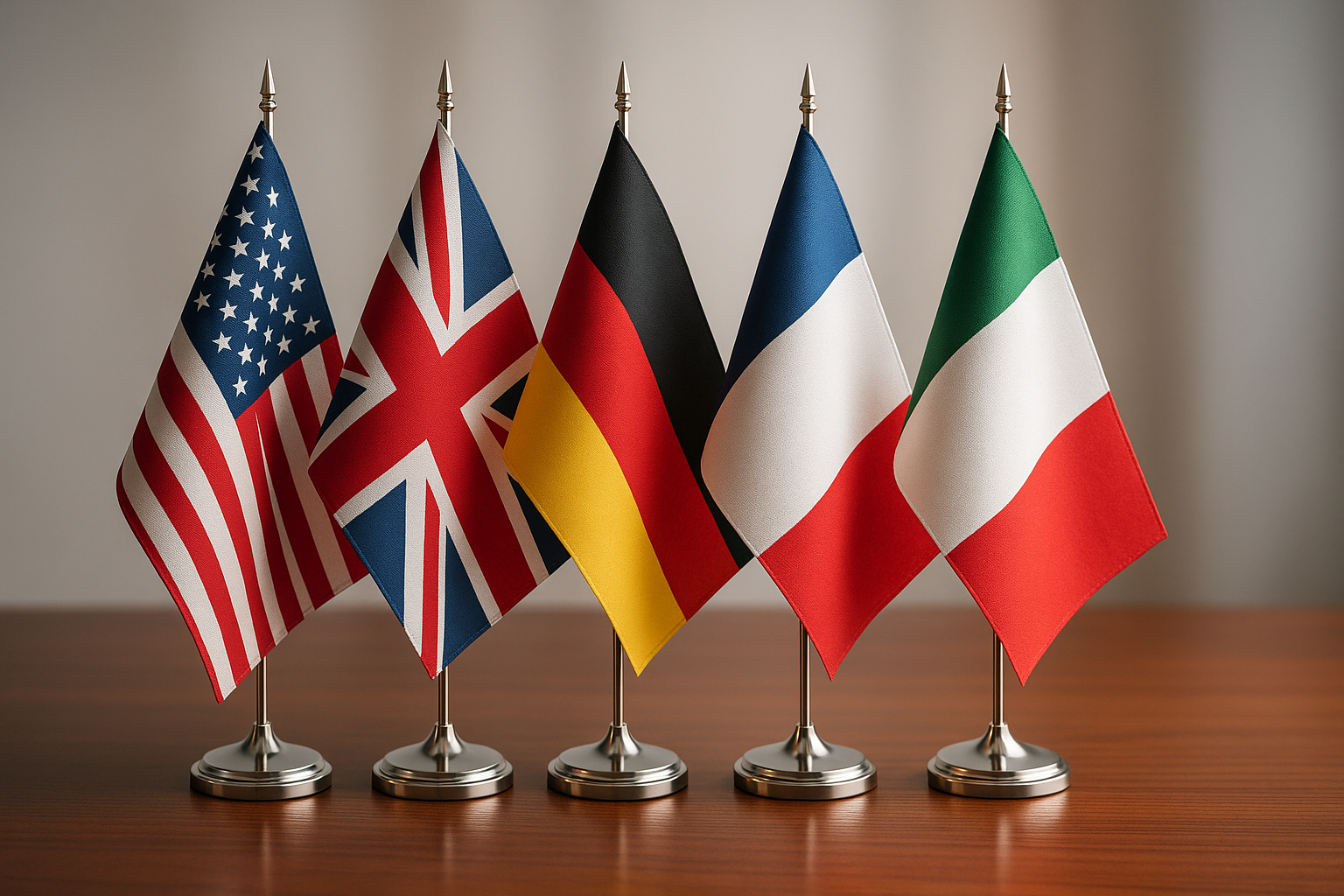
The three primary Taegukgi formats — outdoor, indoor, and desk — differ not just in size but in fabric construction, mounting system, and intended viewing environment. Outdoor flags are the largest, designed for wind resistance and UV exposure, and typically attach to a pole via a header and grommets or sleeve. Indoor ceremonial flags are constructed from heavier, drapery-grade fabrics like satin that present beautifully under artificial light, mounted on a pole with a decorative finial, and almost never flown outdoors. Desk flags are the smallest format, measuring around 4×6 in (10×15 cm), and are mounted on a chrome or gold-finish metal pole with a weighted base — ideal for conference tables, reception counters, and personal office displays.
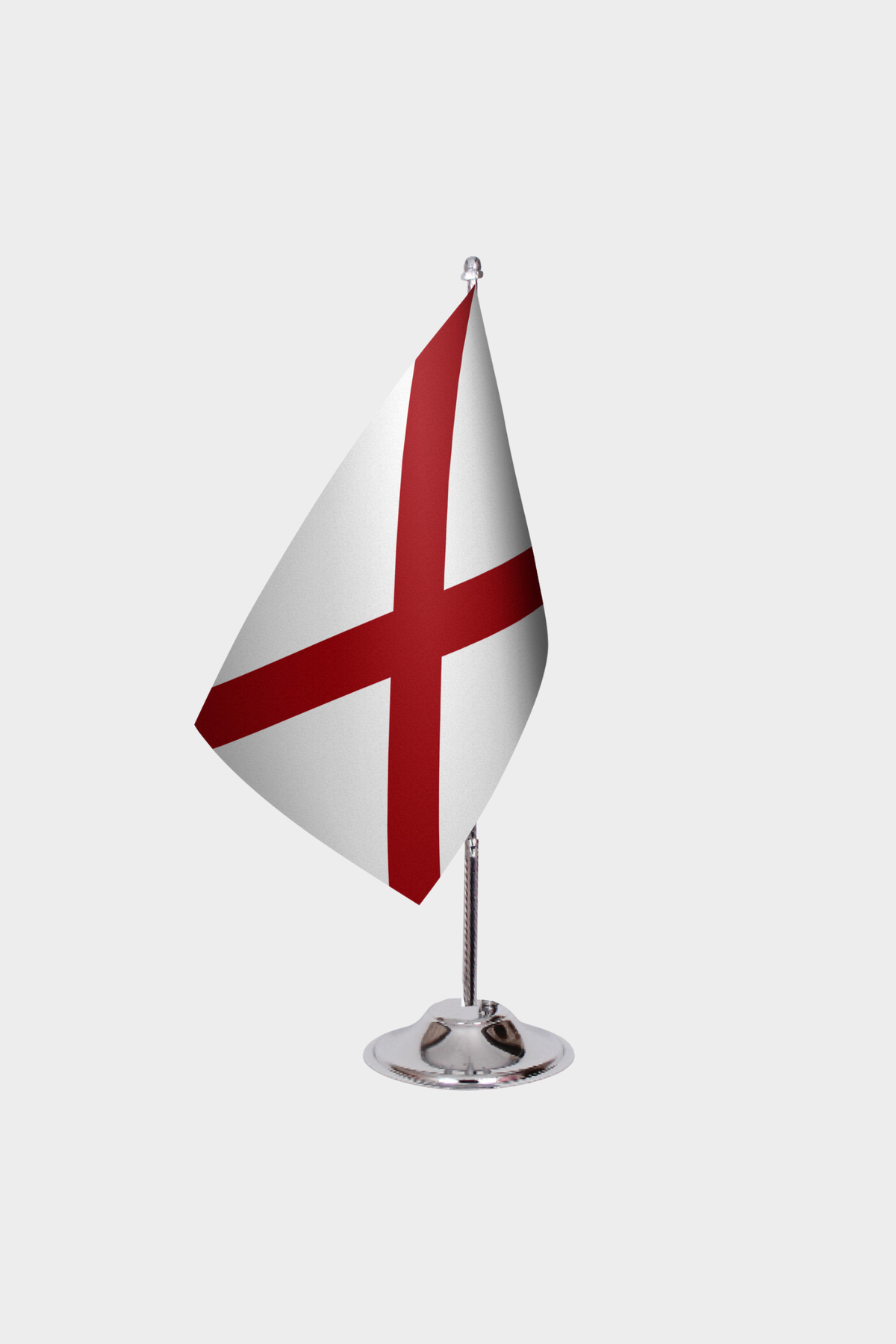
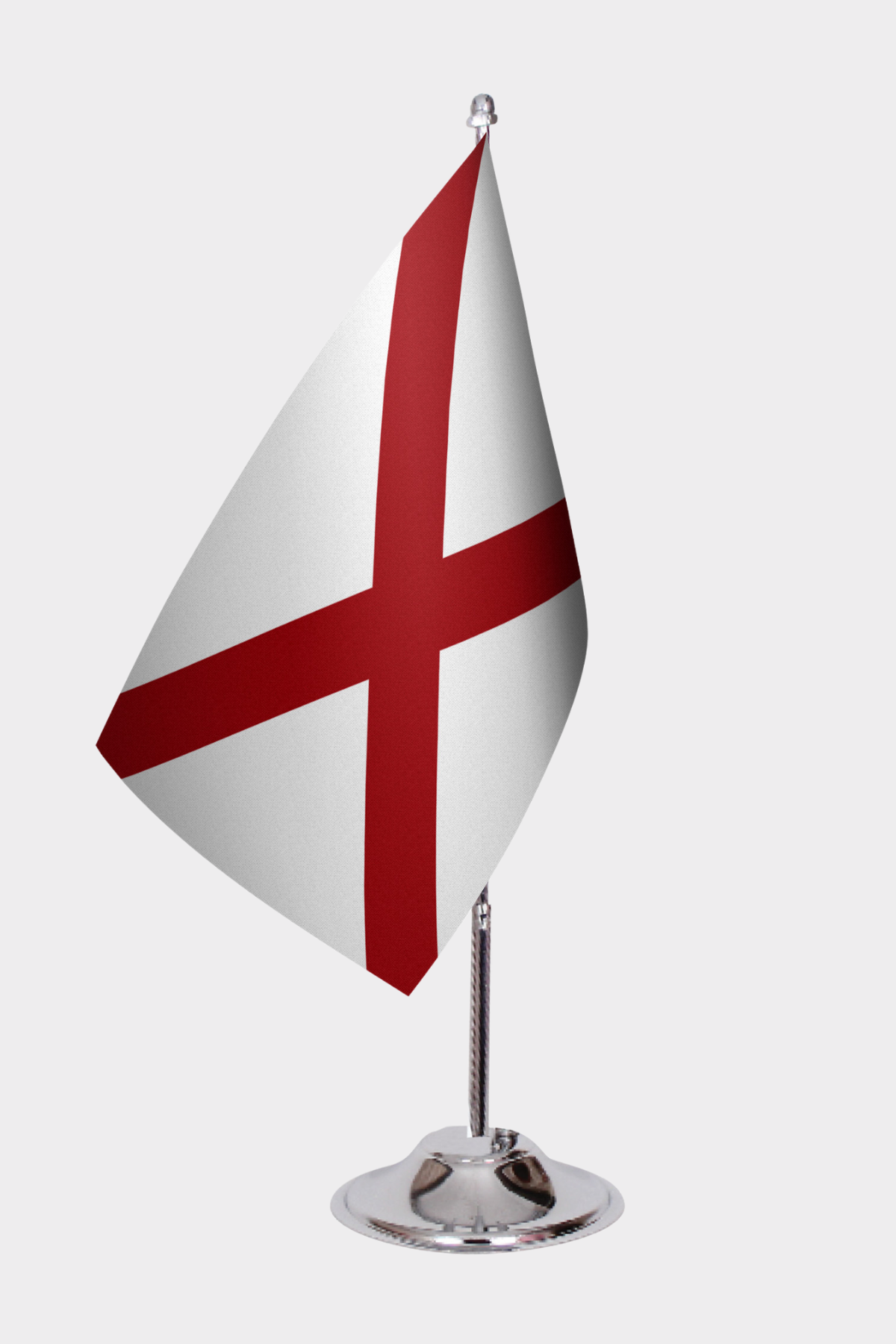
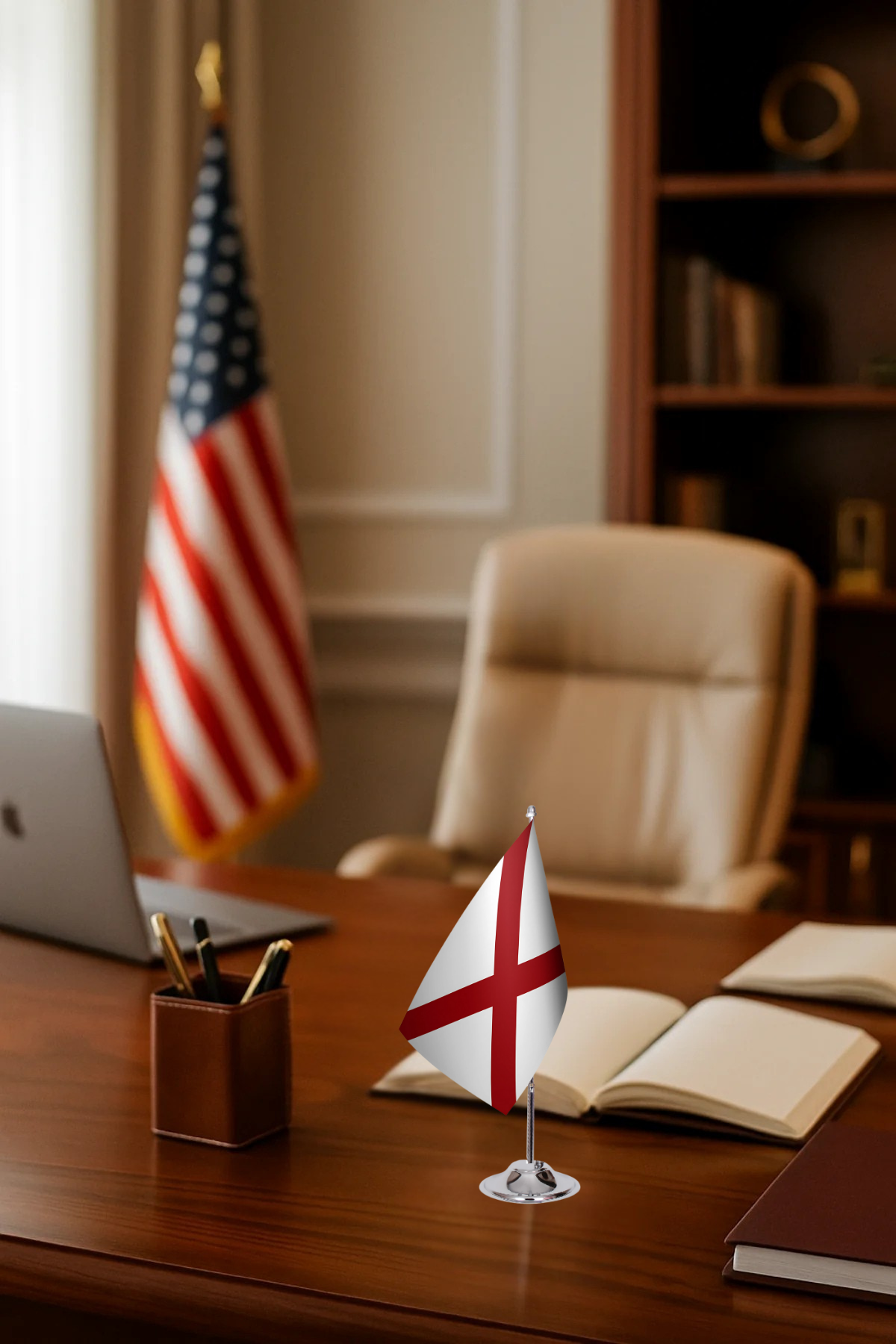
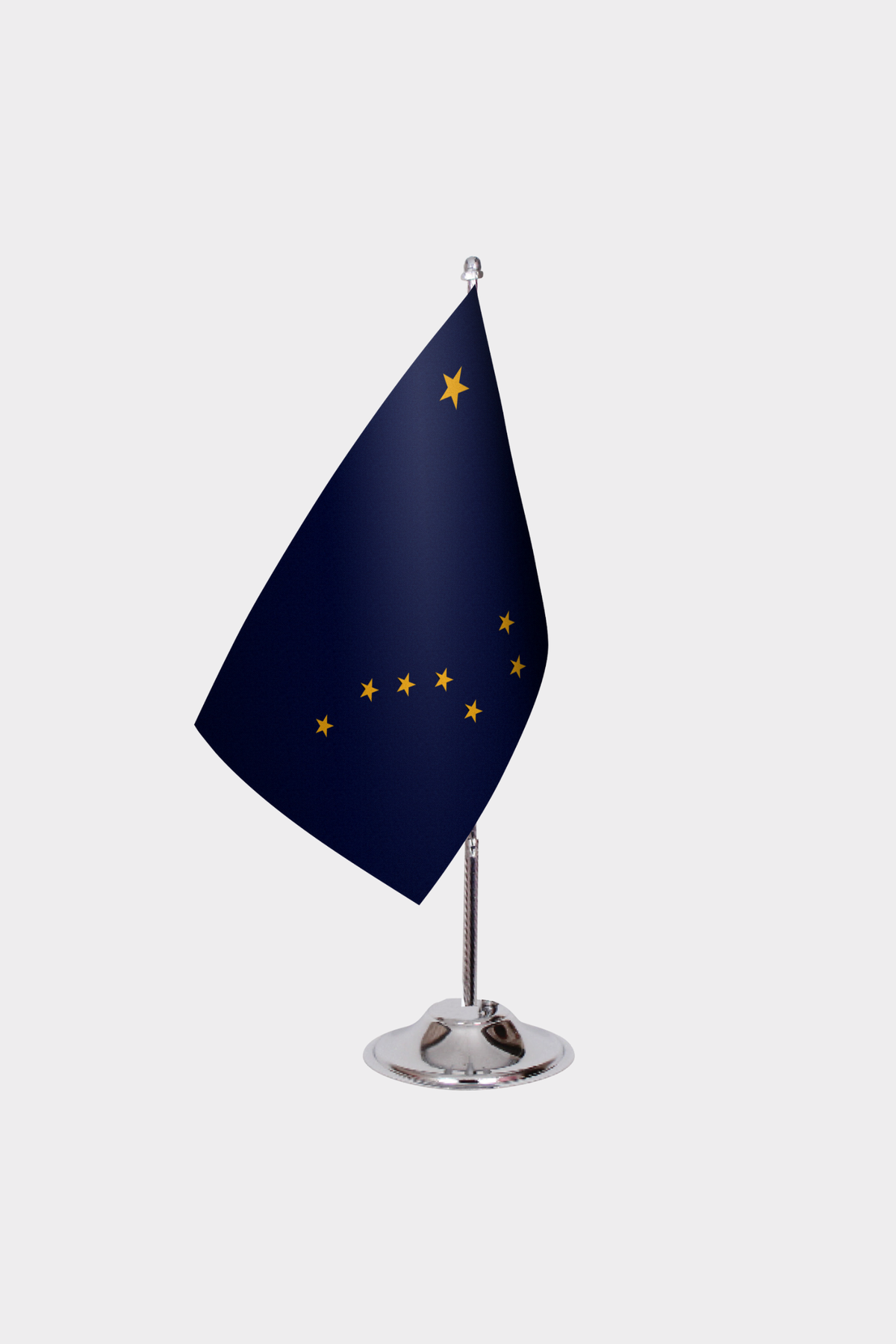
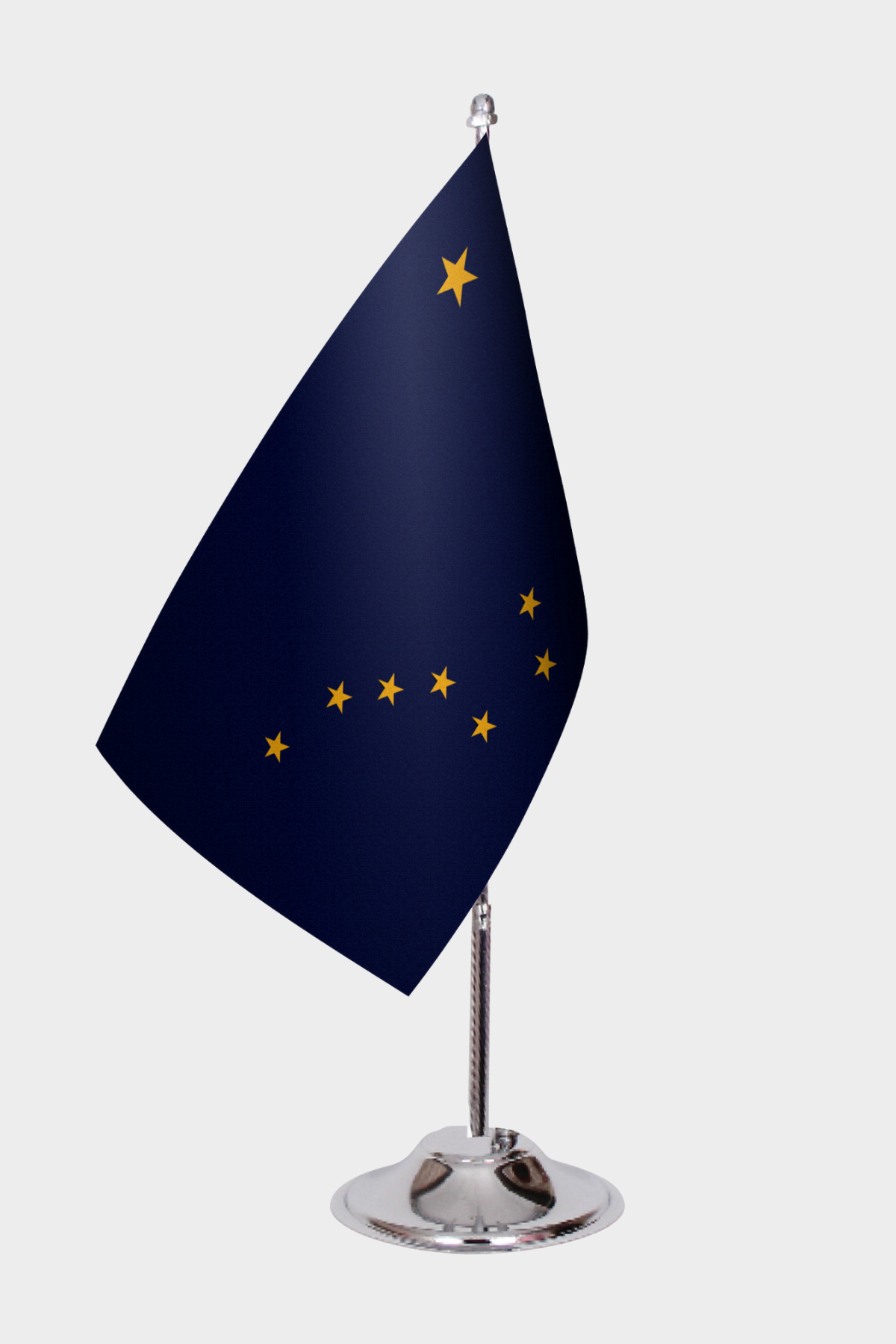
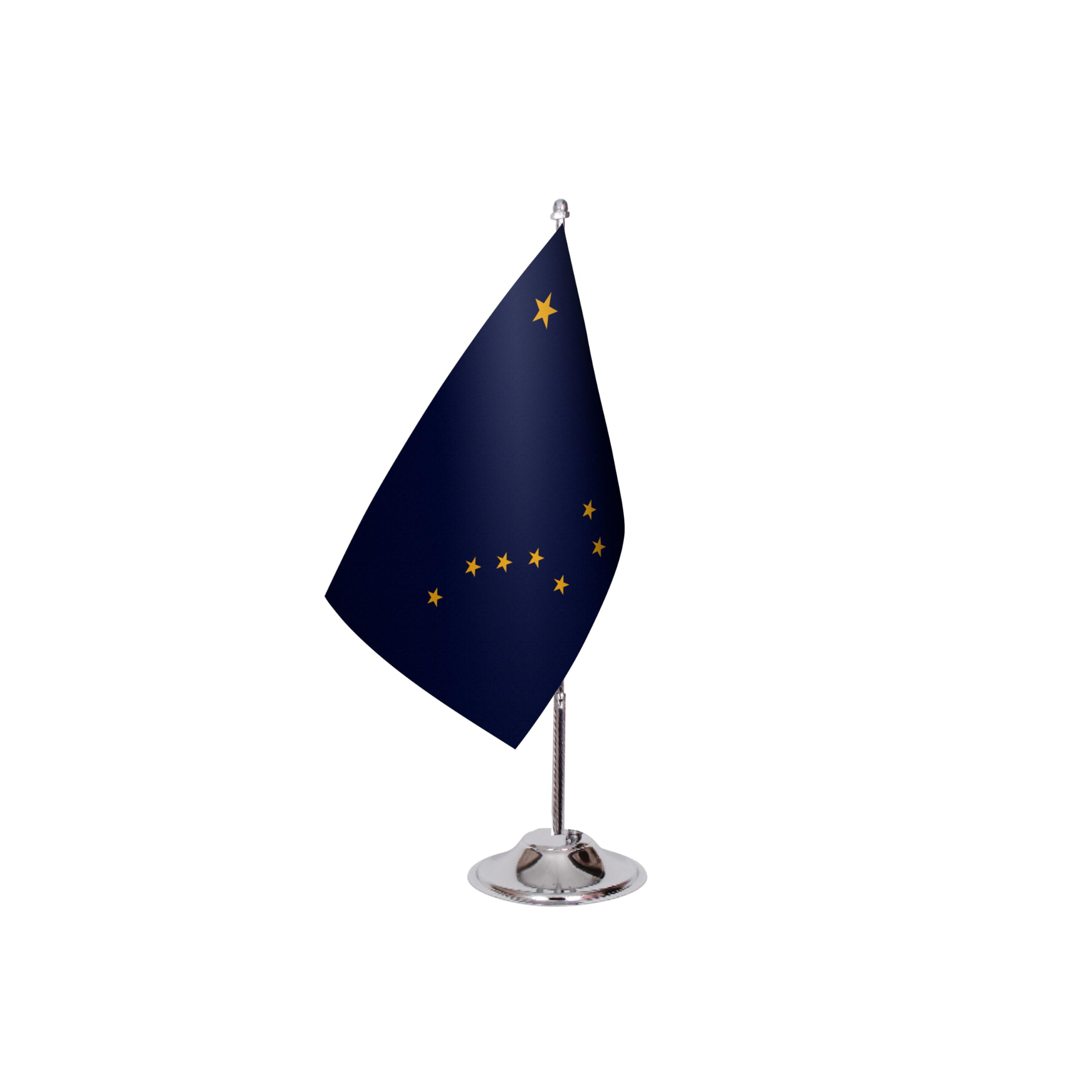
Our South Korea Desk Flag features the official white field with Taeguk symbol and four trigrams reproduced faithfully on a chrome metal pole, available in Silver Chrome or Gold finish — a refined choice for any setting where South Korean identity or diplomatic relations are represented at the table level. For multi-country ceremonial displays, pairing a desk Taegukgi with other Asian national desk flags from our Country Flags collection ensures consistent sizing and finish across the set.

Asian Countries Flags
Every flag in this collection is manufactured to correct national proportions and color standards — ideal for diplomatic offices, cultural events, and multi-country displays across the Asia-Pacific region.
Browse Collection →Sizing mistakes that make a Taegukgi look wrong — and how to avoid them
The most damaging sizing mistake is choosing a flag that is too small for its pole, which causes the Taeguk and trigrams to become visually indistinct and makes the flag appear to "disappear" when flying. A 2×3 ft (61×91 cm) flag on a 25 ft (7.6 m) commercial pole is a common error in retail and restaurant settings — the flag looks like a small patch of color rather than a recognizable national symbol. Always apply the 25% rule: your flag's fly length should be at least one-quarter of your pole height.
A second frequent mistake is using an incorrect aspect ratio. Because the Taegukgi's internal geometry is locked to the 2:3 ratio, a flag produced at 2:4 (a 1:2 ratio) will appear stretched horizontally and the Taeguk circle will look ovoid rather than round. This distortion is visually obvious and constitutes an inaccurate representation of the national flag. Always verify that the flag you purchase is listed as 2:3 ratio — not "standard rectangular" — before ordering. A third mistake is under-sizing indoor ceremonial flags: a 2×3 ft indoor flag on an 8 ft pole looks proportionally stunted; the correct indoor standard is 3×5 ft on an 8 ft pole.
How the Taegukgi's design affects printing and embroidery accuracy
The trigrams of the Taegukgi — with their thin parallel bars and precise broken/unbroken line combinations — are among the most technically demanding elements to reproduce accurately in both printing and embroidery. In screen printing, bar widths as narrow as 3–4 mm on a 3×5 ft flag require high mesh count screens to prevent ink bleed, which can cause the broken and unbroken bars of each trigram to visually merge. In high-definition sublimation printing, the main risk is color drift: the deep Pantone 294 C blue can shift toward a brighter cobalt if the ink profile is not precisely calibrated, and the Pantone 186 C red can shift orange if the cyan channel is too low.
For embroidered Taegukgi applications — on uniforms, patches, or promotional items — thread color matching is critical. The red should be matched to Madeira or Isacord thread equivalents for Pantone 186 C (typically Madeira 1305 or Isacord 1840), and the blue to Pantone 294 C equivalents (typically Madeira 1012 or Isacord 3355). The trigram bars, at small embroidery scales, often need to be simplified or slightly thickened to remain legible — this is an accepted practice in vexillological embroidery when the reproduction scale makes fine-line accuracy physically impossible. For readers interested in how these same embroidery and printing challenges apply to other national flags, our article on Portugal Flag Prices and Pole Options explores similar complexity in a flag with detailed internal geometry.
What is the correct aspect ratio of the South Korean flag? +
What Pantone colors are used in the South Korean flag? +
What did the old Korean flag look like before the current Taegukgi design? +
How difficult is it to embroider the Korean flag accurately? +
Where can I buy an officially proportioned South Korean flag? +
What size South Korean flag do I need for a 20 ft pole? +
What do the four trigrams on the South Korean flag represent? +
Displaying the Taegukgi correctly — at the right proportion, with accurate colors, and in the right size for your setting — is both a matter of national respect and a practical quality standard. For outdoor display, our South Korea Outdoor Flag in 110g Raschel knitted polyester delivers the durability and color vibrancy needed for extended pole display. For embassy, government, or institutional settings, the South Korea Official Indoor Flag on a chrome metal pole provides the dignified presentation those environments demand. For conference tables and reception areas, the South Korea Desk Flag in chrome or gold finish offers a professional and accurate desktop representation. Bulk pricing is available for corporate, diplomatic, and institutional orders — contact us to discuss your volume requirements and custom specifications.