



The official flag of the European Union follows a fixed aspect ratio of 2:3 (width to length), with a circle of 12 gold stars centered on a blue background — and every standard display size scales from that same ratio. Whether you are flying the EU flag outside a government building, displaying it at a conference, or placing it on a desk, the size you choose determines how well the flag reads from its intended viewing distance. If you are shopping for a ready-made EU flag, the Country Flags collection covers the most common outdoor and display sizes with proper color and construction standards.
Standard EU Flag Sizes and Where Each One Is Used
The European Union flag comes in five widely recognized standard sizes, each designed for a specific display context. According to the European Parliament's official guidelines and the Council of Europe's specifications, the flag's proportions are always 2:3, meaning a flag that is 3 ft (91 cm) tall will be 4.5 ft (137 cm) wide. Here is how those sizes break down in practice:
- 2 ft × 3 ft (61 × 91 cm) — Small outdoor flag; used on short poles at entrances, garden displays, and retail storefronts. Best viewed from within 20–30 ft (6–9 m).
- 3 ft × 5 ft (91 × 152 cm) — The most popular all-purpose size in the United States. Suitable for 20–25 ft (6–7.6 m) poles and readable at up to 60 ft (18 m).
- 4 ft × 6 ft (122 × 183 cm) — Medium outdoor/indoor ceremonial size; ideal for lobbies, boardrooms, and government reception areas alongside national flags.
- 5 ft × 8 ft (152 × 244 cm) — Large outdoor flag for tall flagpoles (25–40 ft / 7.6–12 m). Common at embassies, international organizations, and EU institutions.
- 6 ft × 10 ft (183 × 305 cm) — Extra-large display format for buildings, stadiums, or multi-flag installations viewed from 100 ft (30 m) or more.
The 12 gold stars on the EU flag are not linked to the number of member states — they represent unity and completeness, a symbolism established in 1955 by the Council of Europe. At every size, each star is inscribed in a circle whose diameter equals one-ninth of the flag's height, and the entire ring of stars has a diameter equal to two-thirds of the flag's height. These proportional rules must be respected at every scale for the flag to comply with FIAV (Fédération internationale des associations vexillologiques) standards.
How to Choose the Right EU Flag Size for Your Space
The correct size depends on three factors: the height of your flagpole, the distance from which people will view the flag, and whether the flag will be used indoors or outdoors. A flag that is too small on a tall pole looks lost; a flag that is too large can wrap around the pole and obscure the design.
A reliable rule of thumb used by professional flag installers is that the flag's length (the longer dimension) should be approximately one-quarter of the pole's height. On a 20 ft (6 m) pole, that suggests a flag about 5 ft (152 cm) long — pointing to the 3 ft × 5 ft standard. For viewing distance, multiply the flag's length by 100 to get the approximate maximum readable distance in feet. A 3 ft × 5 ft flag is comfortably readable at distances up to about 500 ft (152 m) in good light.
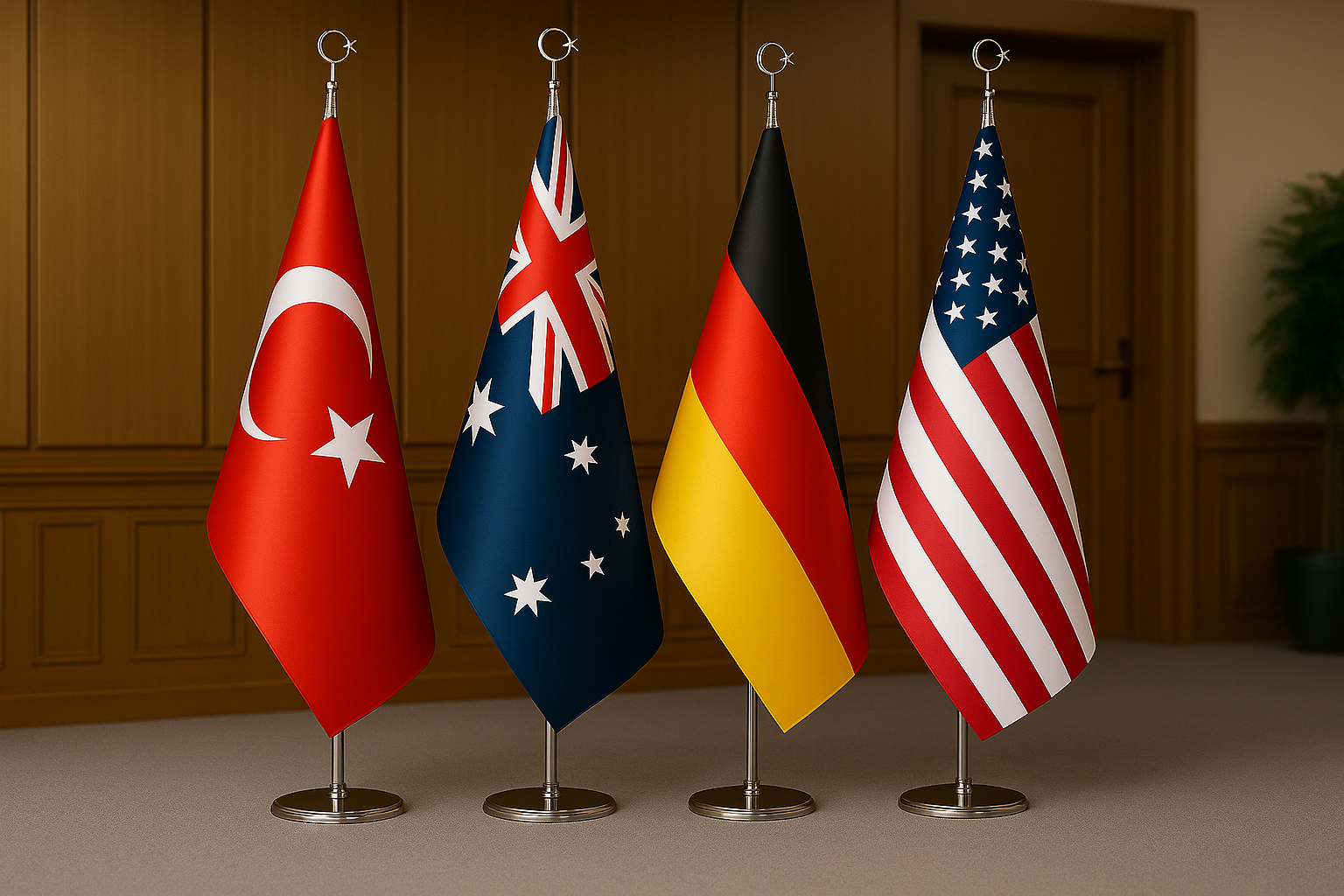
 Indoors, the calculation is different because lighting is controlled and viewing distances are shorter. Conference rooms and ceremonial halls typically use 4 ft × 6 ft flags on 8 ft (2.4 m) indoor poles, which keeps the flag's fly end from touching the floor when mounted on a standard indoor base. If you only need a small EU flag for a presentation table or a portable display, the European Union Handheld Flag is a practical solution — it measures approximately 4 in × 6 in (10 × 15 cm) and comes pre-mounted on a staff for immediate use. Wind load is another outdoor consideration: larger flags in high-wind environments need heavier pole gauges and reinforced header stitching to prevent premature wear along the hoist edge.
The Relationship Between Pole Height and Flag Size
Flagpole height is the single most reliable starting point for selecting an EU flag size. Industry standards followed by commercial flag manufacturers suggest that the flag's fly length (the longer edge) should equal 25–33% of the pole's total height — a ratio that ensures visual balance without excessive stress on the hardware.
Here is a quick reference table:
- Pole: 15 ft (4.6 m) → Recommended flag: 2.5 ft × 4 ft (76 × 122 cm) or the 2 ft × 3 ft size
- Pole: 20 ft (6 m) → Recommended flag: 3 ft × 5 ft (91 × 152 cm)
- Pole: 25 ft (7.6 m) → Recommended flag: 4 ft × 6 ft (122 × 183 cm)
- Pole: 40 ft (12 m) → Recommended flag: 5 ft × 8 ft (152 × 244 cm)
- Pole: 60 ft (18 m) and above → Recommended flag: 6 ft × 10 ft (183 × 305 cm) or larger
When the EU flag is flown alongside national flags — as it typically is at EU member state institutions — all flags in a multi-flag display should be the same size and flown at the same height, per Council of Europe protocol and general diplomatic courtesy. This is particularly relevant for US-based organizations, government contractors, and multinational corporations that display both a national flag and the EU flag together. Flying them at equal height avoids any implication of precedence under standard international flag etiquette.
Indoor, Outdoor, and Desk Flag Sizes Compared
Indoor, outdoor, and desk EU flags are not interchangeable — they differ in size, fabric weight, finish, and mounting hardware. Outdoor flags use heavier-weight woven polyester (typically 200–300 denier) with UV-resistant inks rated for 80% UV blocking, while indoor ceremonial flags are often made from lighter knitted polyester or nylon with a more lustrous finish suited to indoor lighting.
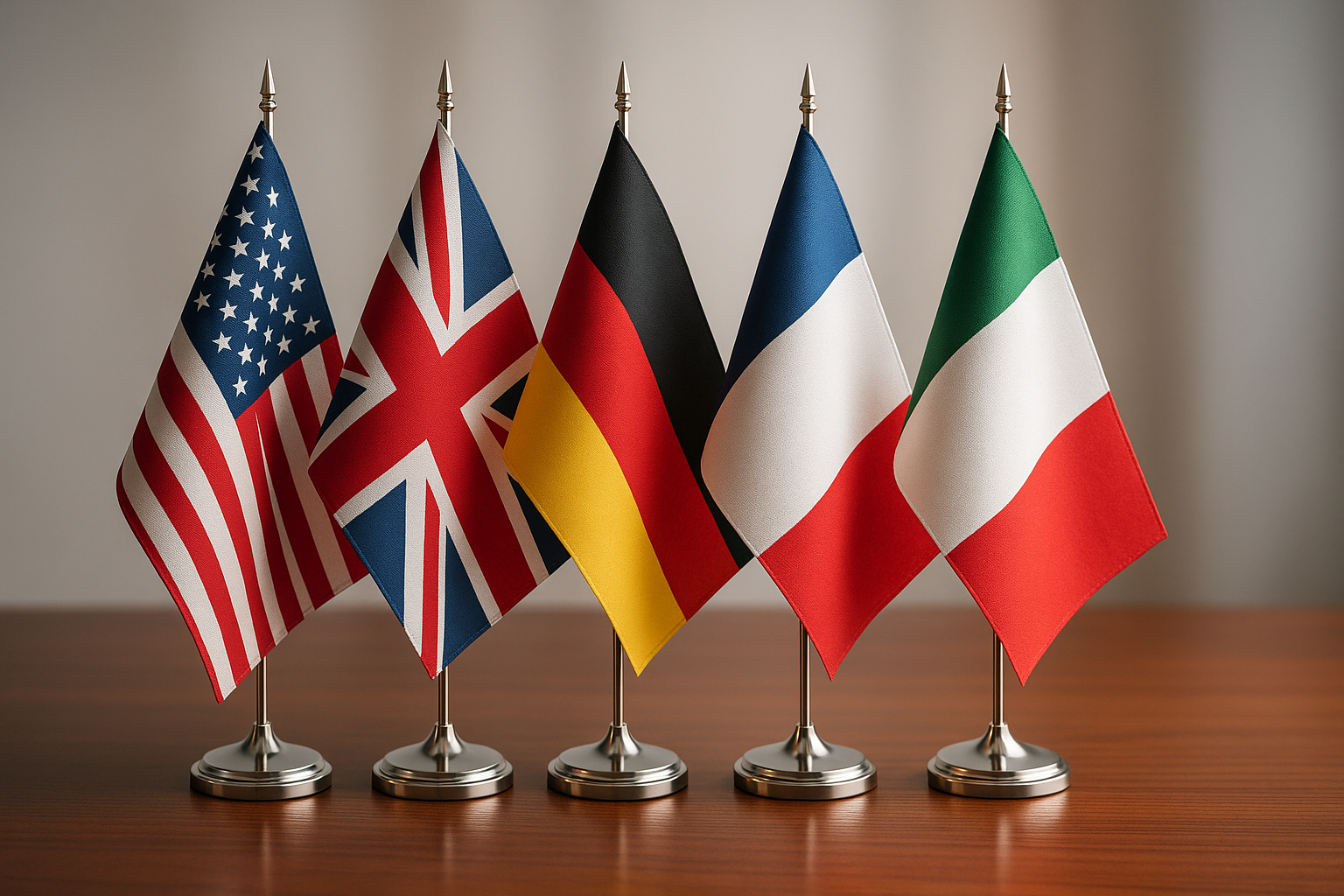
Outdoor EU flags in the 3 ft × 5 ft or 4 ft × 6 ft range have a typical lifespan of 6 months to 2 years depending on wind and UV exposure in the installation location. Indoor ceremonial flags on fixed poles can last 5+ years because they are not subject to weather stress. Desk flags — the miniature versions used on office desks, reception counters, and conference tables — are typically 4 in × 6 in (10 × 15 cm) mounted on a 10 in (25 cm) staff, or occasionally 3 in × 5 in (7.6 × 12.7 cm) for smaller tabletop arrangements. You can browse tabletop EU options in the Country Desk Flags collection, which carries consistent sizing and base options across multiple nations.
For those conducting research on how these specifications compare to other major international flags, our guide on The United Arab Emirates Flag: History and Official Sizes follows the same sizing framework and offers useful context for diplomatic display settings.

Country Flags Collection
A comprehensive selection of international flags — including the EU flag — available in standard outdoor sizes with quality construction for long-term display.
Browse Collection →Common EU Flag Sizing Mistakes to Avoid
The most frequent sizing error is choosing a flag based on the pole's total height rather than its usable fly zone — the portion above any decorative finial, bracket arm, or halyard hardware. Always measure the effective flying height of your pole before ordering.
Here are the most common mistakes, and how to avoid them:
- Selecting a flag that is too narrow for the pole. The EU flag's hoist (the shorter edge attached to the pole) must be proportional. Using a 2 ft × 3 ft flag on a 25 ft (7.6 m) pole makes the 12-star emblem invisible at normal viewing distances.
- Ignoring the 2:3 ratio when ordering custom sizes. The Council of Europe's official specifications require the 2:3 ratio strictly. A non-standard ratio (such as 1:2) will distort the star ring and violate EU institutional display guidelines.
- Mixing flag sizes in a multi-flag display. When the EU flag is displayed with the flags of EU member countries — or alongside the US flag at a transatlantic event — all flags must be the same size. Using different sizes implies rank or hierarchy, which runs counter to diplomatic protocol.
- Using an outdoor flag indoors under strong spotlights. Heavy outdoor polyester absorbs heat under indoor spotlights and can fade faster than indoor-grade fabric. Match the fabric weight to the environment.
- Confusing the EU flag with the Council of Europe flag. Both use the same 12-star design on a blue field, but they are separate organizations. The Council of Europe adopted the design in 1955; the European Communities formally adopted it in 1986. The flags are visually identical, which can cause confusion in mixed institutional displays.
If you are sourcing flags for a multi-nation display that includes several European countries, the guidance in What Size Spain Flag Do You Need? walks through similar pole-to-flag ratio logic that applies consistently across European national flags and can help you standardize sizing across a full installation.
Frequently Asked Questions
What does the flag of the European Union look like? +
What is the official aspect ratio of the EU flag? +
Do all European Union countries have their own flag alongside the EU flag? +
What size EU flag should I buy for a 20 ft flagpole? +
Can I display the flags of all European Union countries together? +
What is the correct shade of blue for the EU flag? +
How long does an outdoor EU flag last? +
Choosing the right EU flag size comes down to three things: your pole height, your viewing distance, and whether you are displaying it indoors or outdoors. The 3 ft × 5 ft outdoor flag covers the majority of US commercial and institutional applications, while the 4 ft × 6 ft size suits taller poles and larger ceremonial spaces. For tabletop and conference use, miniature desk flags are the appropriate choice. Browse the full Country Flags collection for standard outdoor sizes, explore Country Desk Flags for office and tabletop options, or order the compact European Union Handheld Flag for events and portable displays. Bulk pricing is available for corporate orders, diplomatic missions, and event organizers requiring multiple flags across EU member nations — contact us directly for volume quotes.
For every standard size in one place, see US Flag Sizes Explained in Inches and Feet.