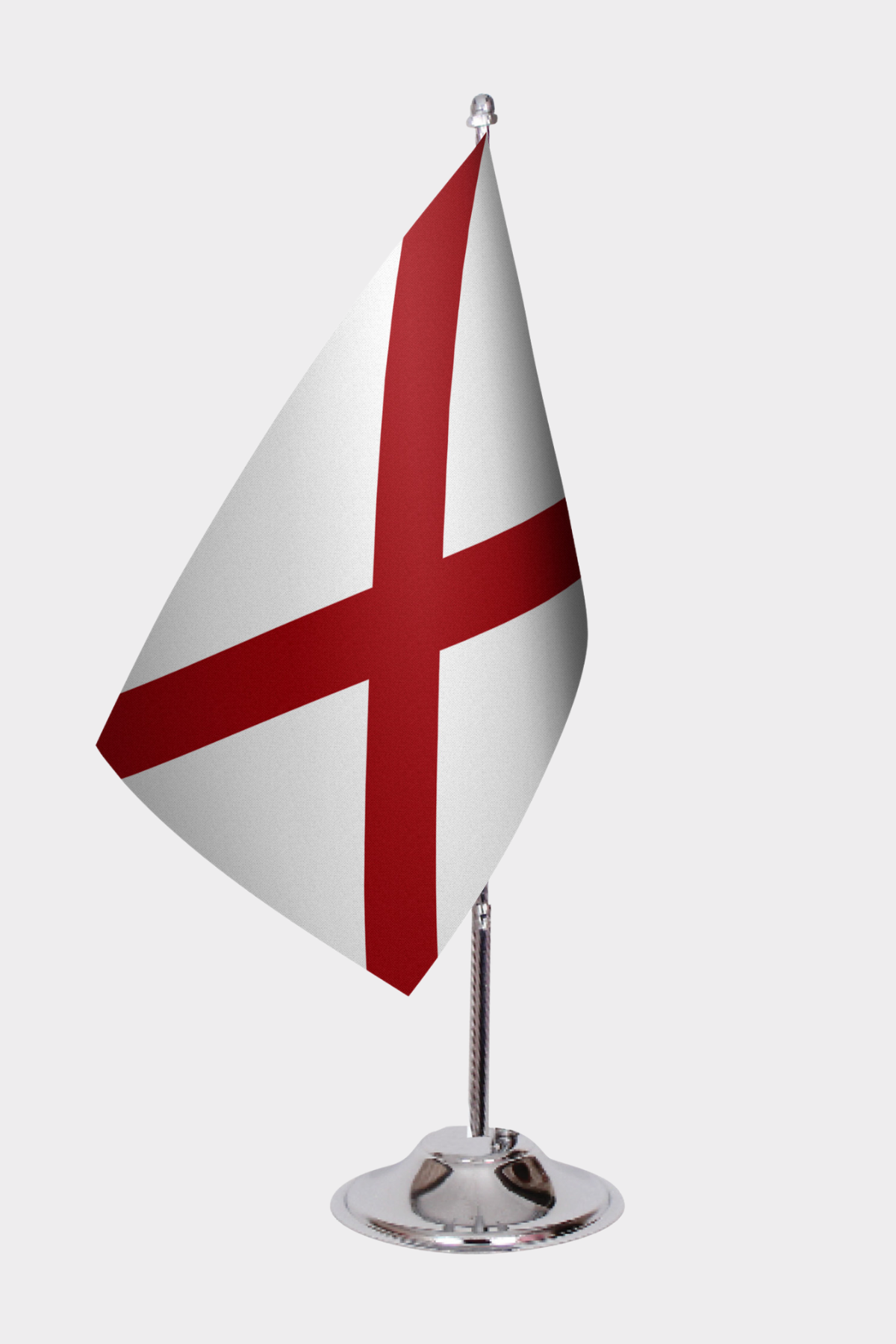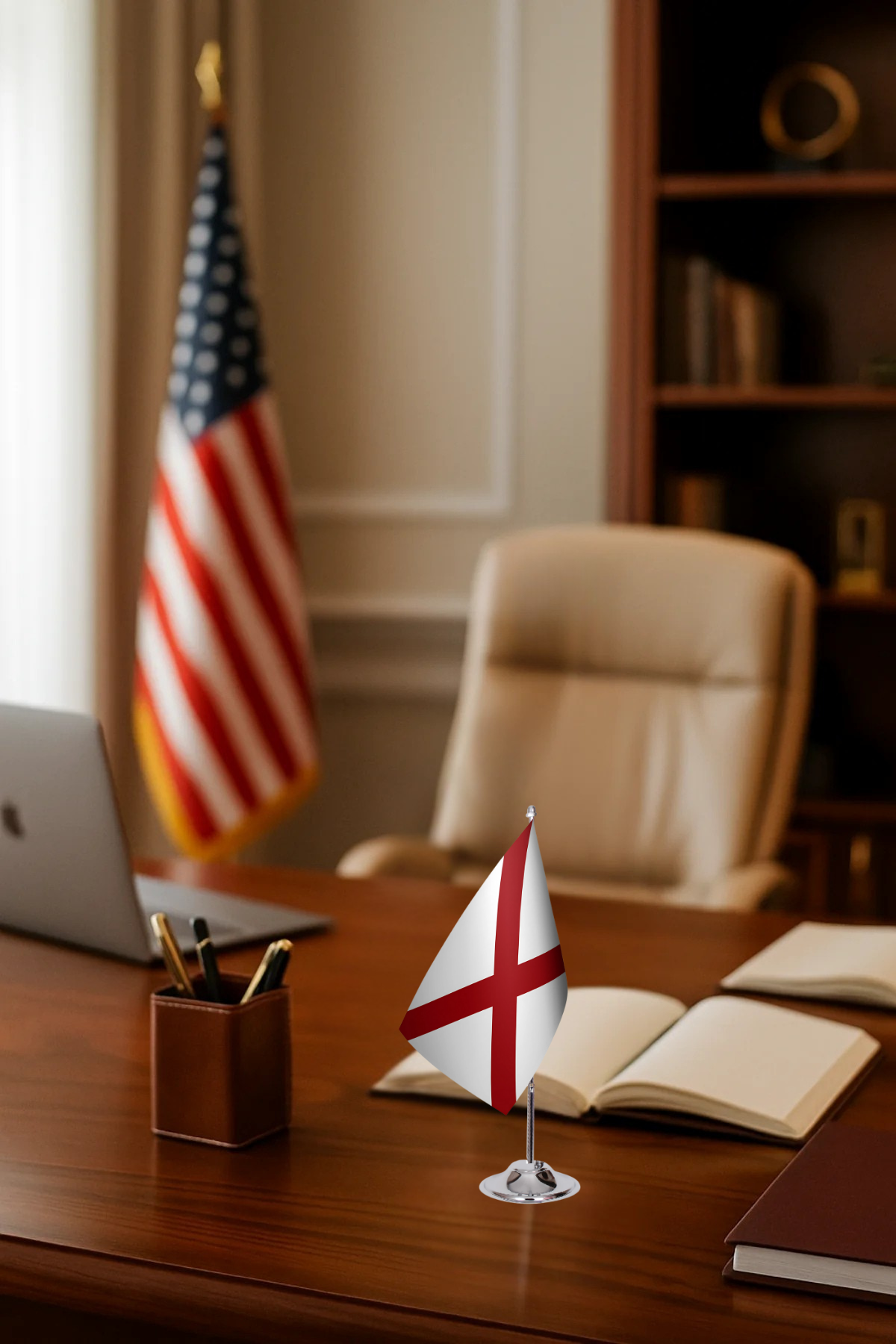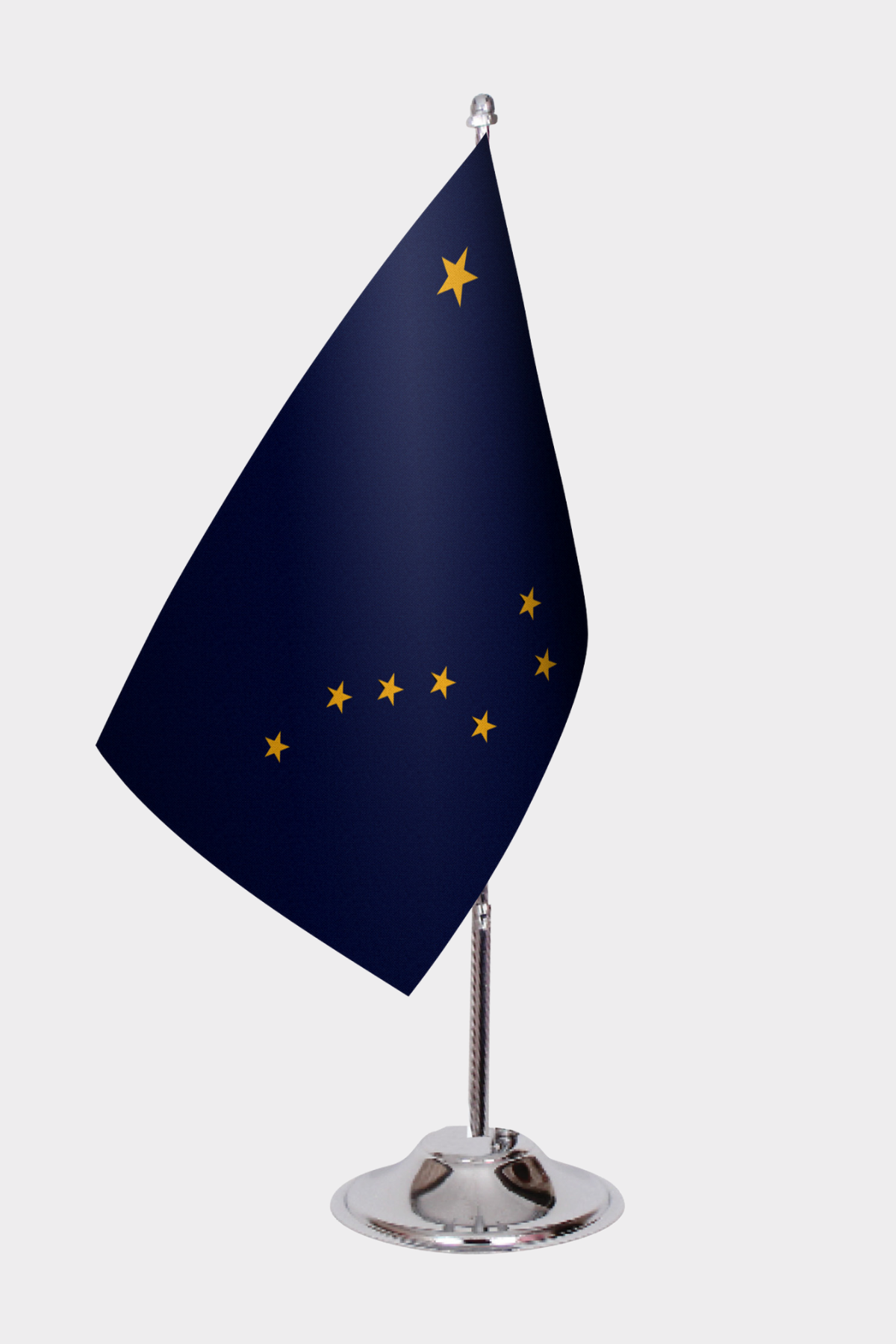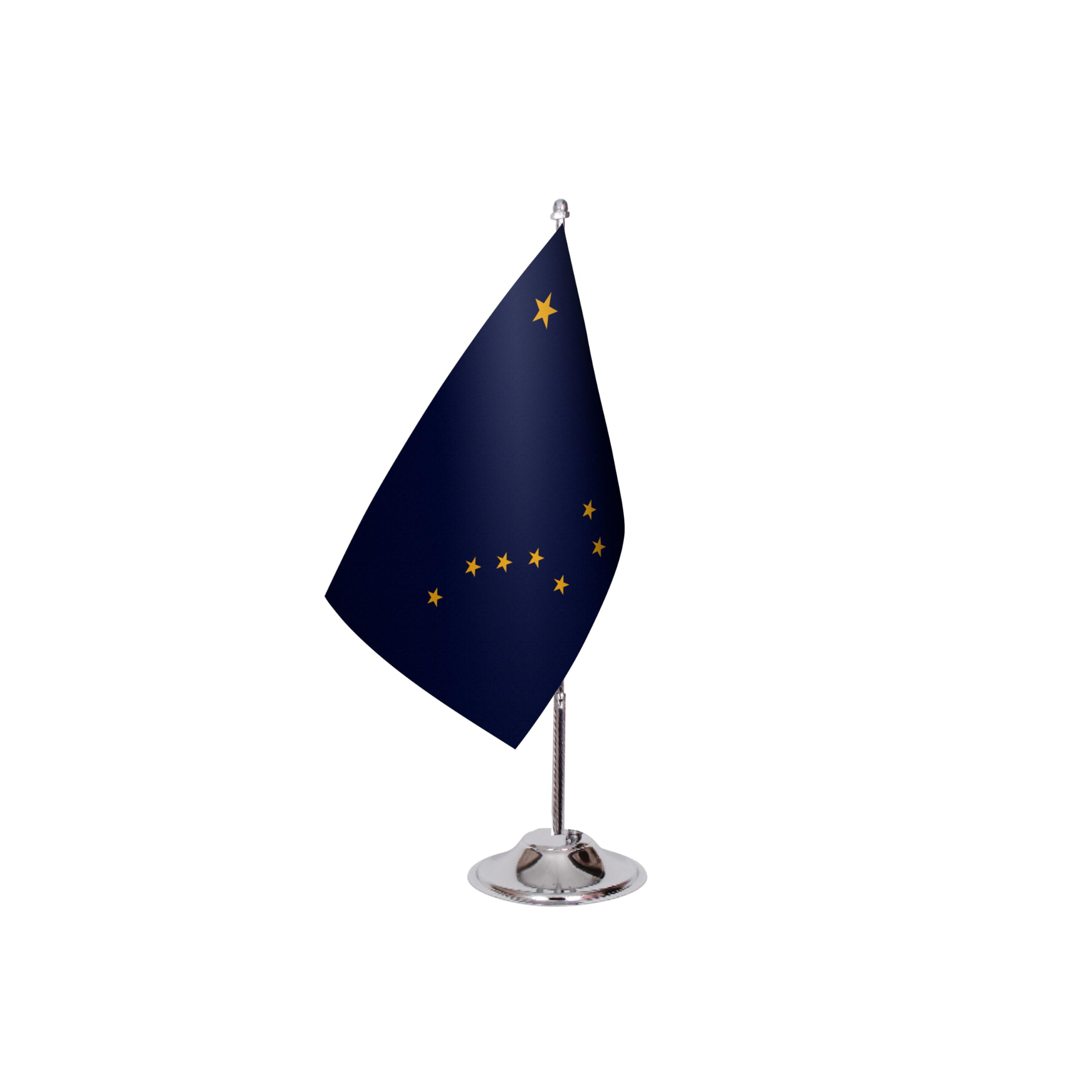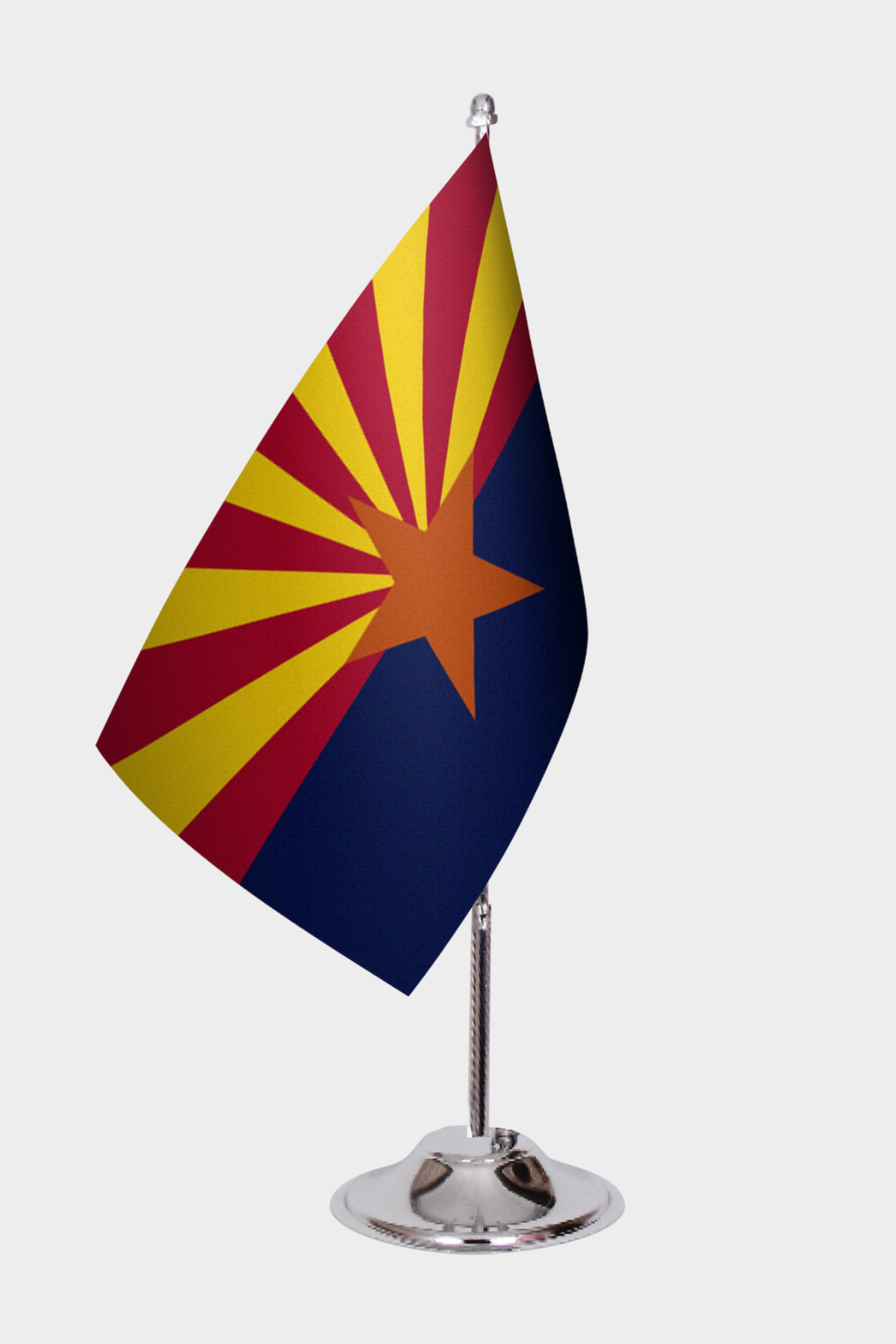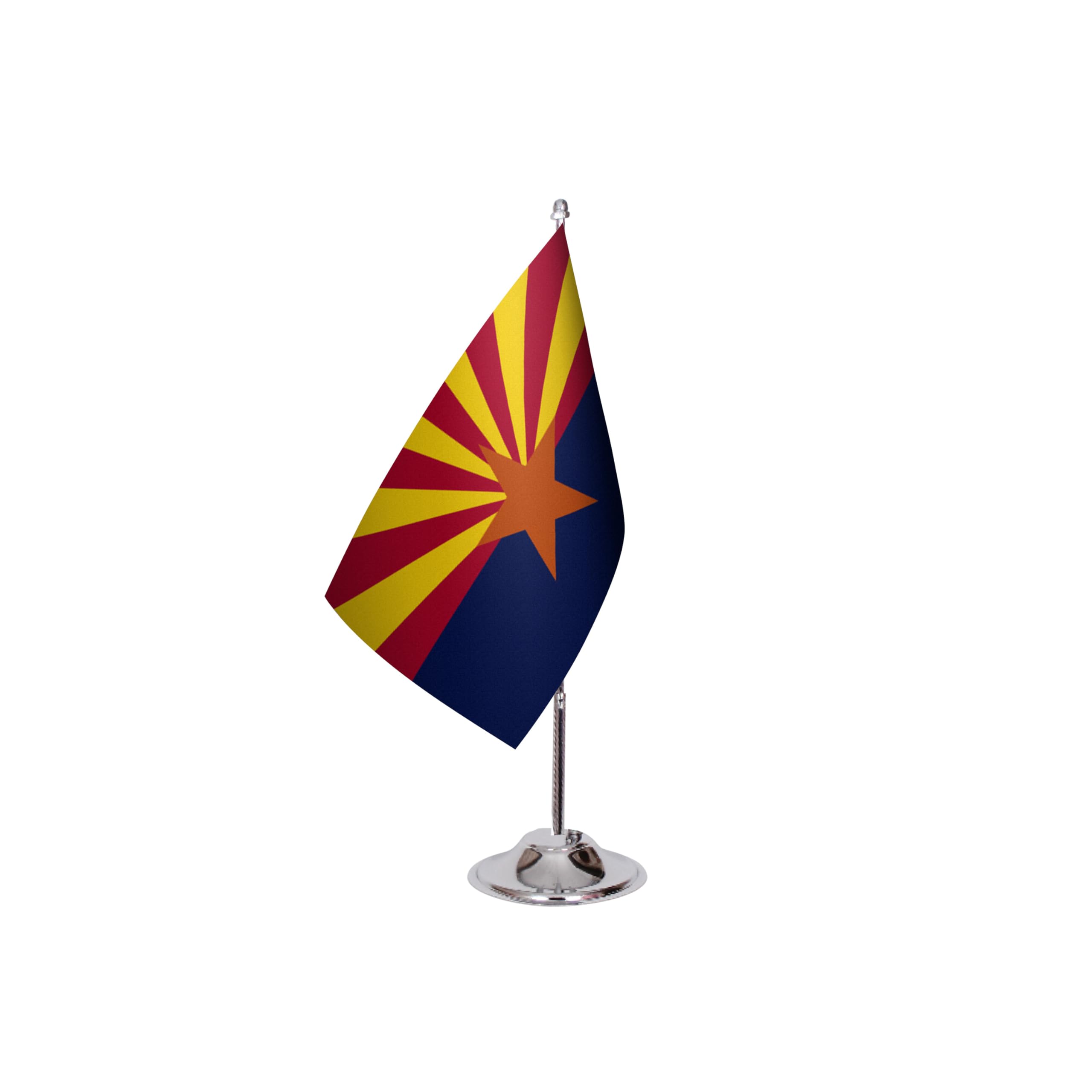
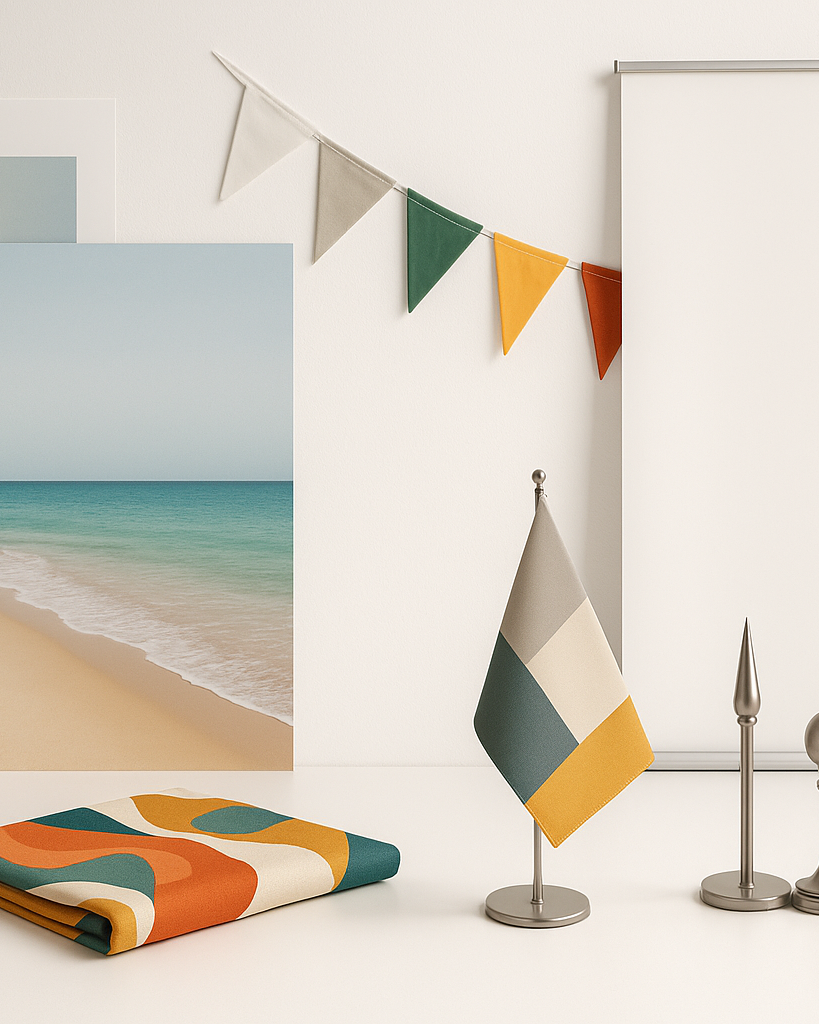


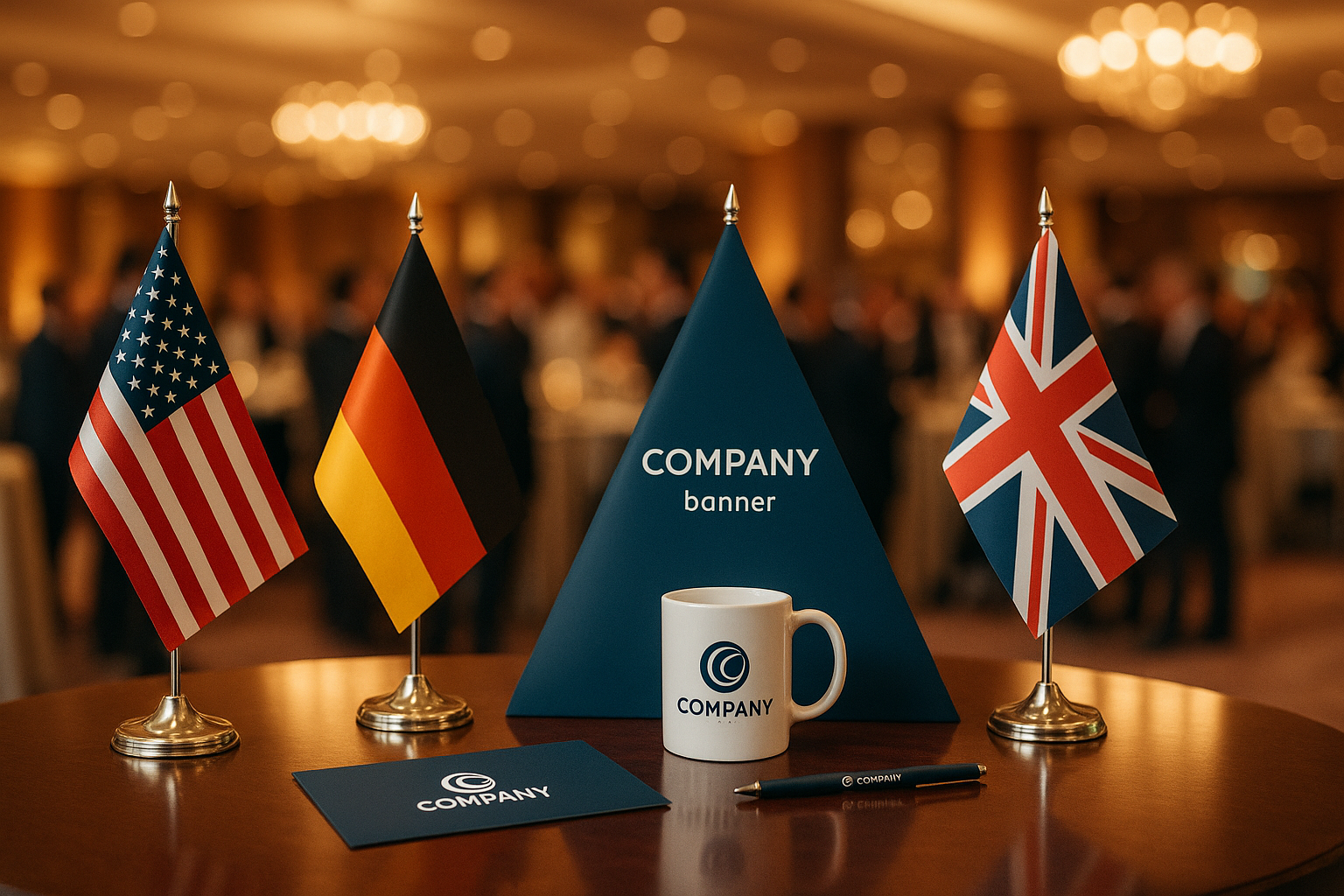

A table flag and a desk flag are essentially the same product — a small, freestanding flag mounted on a base and designed for placement on a flat surface — but the two terms carry subtle differences in context, size convention, and professional usage that matter when you're sourcing flags for an office, conference room, or ceremonial setting. Browse the full desk flags collection to see how these compact display pieces span everything from national colors to corporate identifiers, and read on for a precise breakdown of how each term is used in practice.
How "Table Flag" and "Desk Flag" Are Defined in the Industry
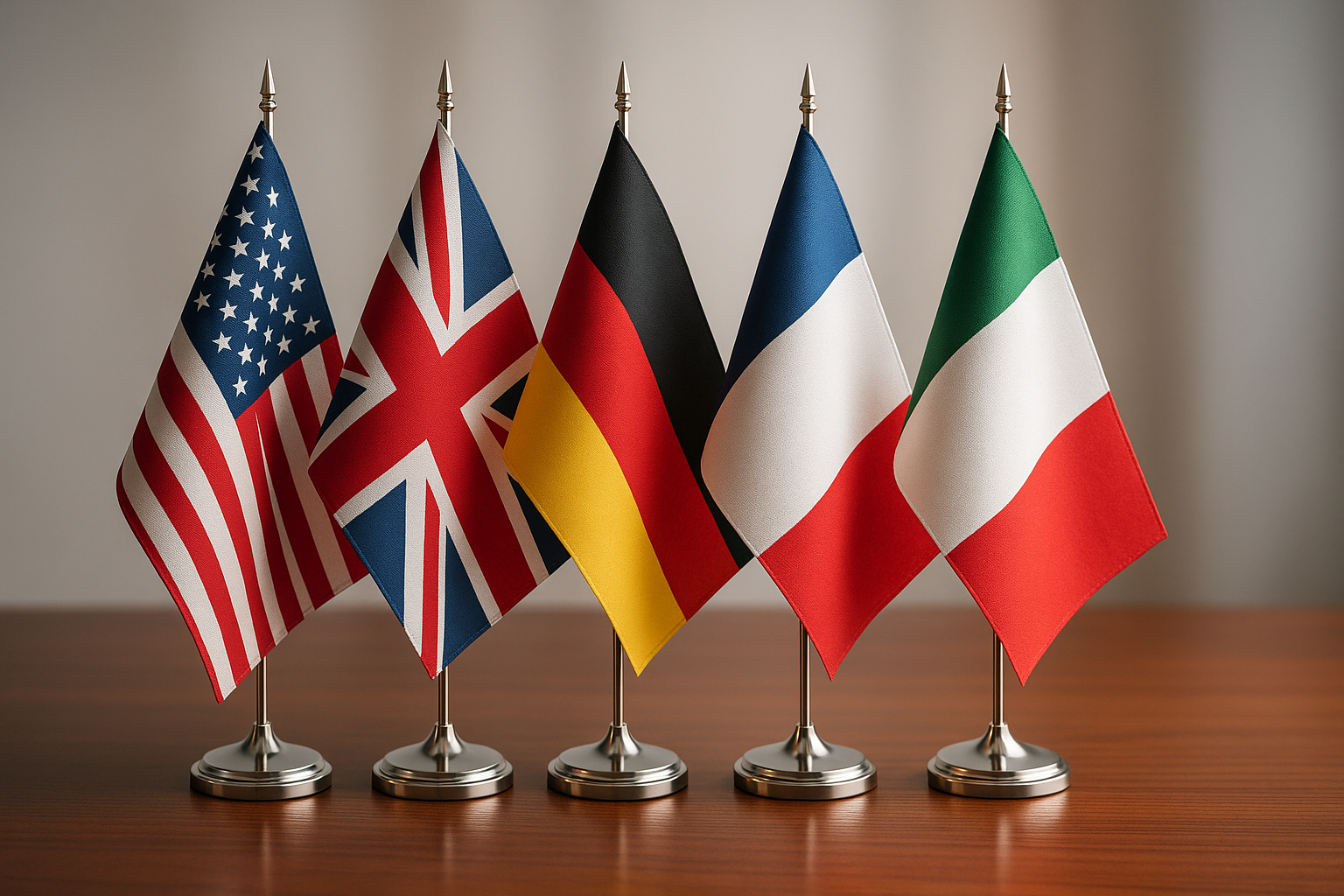
The terms are largely interchangeable in everyday language, but in professional procurement and flag manufacturing, table flag typically refers to a flag intended for larger horizontal surfaces — conference tables, reception counters, trade show tables — while desk flag more often describes a compact unit scaled to a single workstation or executive desk. Both formats share the same core construction: a flag panel attached to a staff or pole, seated in a weighted base. The distinction is primarily one of scale and context, not construction category. Industry bodies such as FIAV (Fédération Internationale des Associations Vexillologiques) do not formally differentiate the two terms, which is why buyers frequently use them synonymously. For practical purchasing decisions, size, base weight, and display purpose are far more meaningful specifications than the label on the product listing.
Standard Sizes: What Dimensions Apply to Each Format
Most desk flags measure 4 in × 6 in (10 cm × 15 cm) on the flag panel, mounted on a staff roughly 10 in (25 cm) tall — a size that fits comfortably on any standard workstation without obstructing sightlines. Table flags, by contrast, are more commonly specified at 5 in × 8 in (13 cm × 20 cm) or even 6 in × 9 in (15 cm × 23 cm), with proportionally taller staffs in the 12–15 in (30–38 cm) range, making them visible across a wider conference table. Some manufacturers produce a middle-ground "presentation" size at 4 in × 6 in that they market as either term depending on the base style. When ordering for formal diplomatic or government settings, it is worth specifying the exact panel dimensions in your purchase order, because a 2-inch difference in flag width can look noticeably inconsistent when multiple flags are lined up side by side. The US Flag Code (4 USC §§ 1–10) does not prescribe sizes for indoor or desk formats, so the dimension standards you see in catalogs are manufacturer conventions rather than legal requirements.
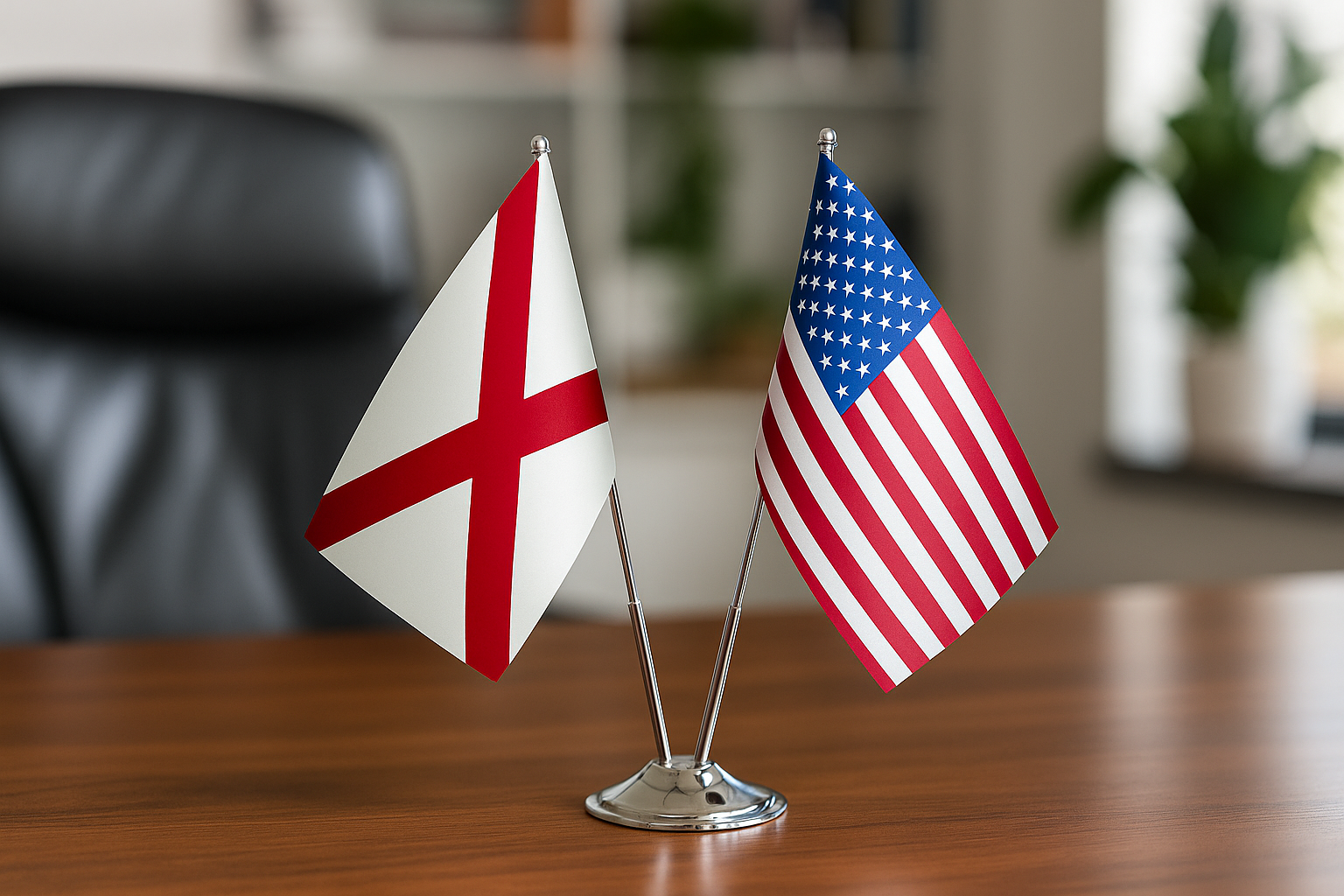
 The Deluxe United States Table Flag is a strong example of where the "table flag" label points to a premium, presentation-grade product — heavier base, gold fringe on the panel edges, and a staff finish suited to executive environments. This particular flag ships with a weighted base that keeps it stable on polished conference surfaces without a secondary mount or adhesive pad. The panel dimensions are generous enough to be legible from across a standard boardroom table, yet compact enough that it doesn't compete with documents, laptops, or presentation equipment sharing the same surface. If your procurement requirement specifies "desk flag" but you need this level of finish, the physical product is identical — only the terminology on the invoice changes.
Base Styles and What They Signal About Use Case
The base is the single most reliable indicator of whether a flag is intended for a desk or a larger table setting. Desk flag bases are typically small — 2–3 in (5–8 cm) in diameter — made from injected plastic, chrome-plated zinc alloy, or brushed aluminum, and designed to sit discretely on a crowded workspace. Table flag bases tend to be wider and heavier, sometimes 4–5 in (10–13 cm) across, constructed from solid brass, cast iron, or weighted resin, to prevent toppling when placed on a surface where people may reach across repeatedly. Marble and onyx bases occupy the top tier of both categories and are almost always reserved for executive offices, diplomatic suites, and ceremonial presentation settings. When you are ordering for a government council chamber or a multilingual boardroom — scenarios covered in depth in our guide on country desk flags for international conferences and convention centers — specifying base weight in grams (or ounces) alongside panel dimensions is best practice to ensure uniformity across a large order.
Which Term Do Buyers Use, and When Does It Matter?
In day-to-day purchasing, the term "desk flag" dominates online search and B2B catalog language, while "table flag" appears more frequently in diplomatic, government, and hospitality procurement specs. If you're ordering for a real estate brokerage, a school principal's office, or a single-employee workspace, searching "desk flag" will surface the widest range of options. If you're outfitting a hotel concierge desk, a trade show booth, or a council chamber where multiple national or state flags will be lined up in a row, "table flag" is the descriptor more likely to yield the larger, heavier, presentation-grade products you need. Municipal and government buyers specifically will find our municipal and county government flag procurement guide useful, as it addresses how these formats fit into broader indoor display protocols for city halls and council chambers. For corporate buyers, the practical answer is simple: specify both the panel size and the base material in your RFQ, and the terminology becomes secondary.
Desk Flags Collection
Browse national, state, and custom desk flags in a range of sizes and base styles — from compact 4×6 in units for individual workstations to presentation-grade table flags for boardrooms and ceremonial settings.
Browse Collection →Materials and Print Quality: What to Look for in Either Format
Both table flags and desk flags are manufactured using the same fabric and printing technologies — the format name does not dictate quality. The most common material for either type is polyester, which holds printed colors well, resists fraying at the edges, and is cost-effective for bulk orders. Premium presentation flags — typically marketed under the "table flag" label — use heavier-weight polyester (100–150 gsm), sometimes with gold or silver fringe sewn along three sides. Embroidered designs, while rare in this size category, are occasionally specified for ceremonial military or diplomatic flags where the tactile quality of the finish matters. Printing is almost universally done via dye-sublimation for this size range, which produces saturated, fade-resistant color across the full panel; expect 80%+ UV resistance on quality polyester even for indoor products, as ambient light in office environments does cause slow color degradation over 2–5 years of continuous display. Staff and pole finishes range from plain white plastic (entry-level) to lacquered wood, anodized aluminum, and gold-tipped spears (presentation-grade), and the staff finish is usually what justifies the price difference between a basic desk flag and a deluxe table flag more than the fabric itself.
Ordering in Bulk: Key Specifications for Corporate and Government Buyers
When placing bulk orders for either table flags or desk flags, standardizing your specifications across the entire order is the most important step to ensuring visual consistency. Minimum order quantities for custom-printed desk flags typically start at 10–25 units from most flag manufacturers, while stock national or state flags are available in single units. For large institutional orders — government offices, hotel chains, conference centers, international organizations — specifying the following in your purchase order will prevent substitution errors: flag panel dimensions (width × height in inches), staff length and diameter, base material and weight (in ounces or grams), fringe requirement (yes/no, color), and staff tip style. Lead times for custom runs are typically 10–21 business days depending on quantity and complexity, while stock desk flags often ship within 2–5 business days. Bulk pricing is available for corporate orders, and submitting a consolidated specification sheet covering all variants in a single RFQ will generally secure better per-unit pricing than placing separate small orders.
Frequently Asked Questions
Is there a real difference between a table flag and a desk flag? +
What is the standard size for a desk flag or table flag? +
What base material should I choose for a formal or diplomatic setting? +
Does the US Flag Code say anything about how to display the American flag as a desk or table flag? +
How long do desk flags and table flags typically last? +
What is the minimum order quantity for custom desk or table flags? +
Can I order desk flags for every country for a multilingual conference or convention center? +
Whether you call them table flags or desk flags, the specifications that matter are panel dimensions, base weight, staff finish, and fabric quality — not the product label. For a polished American display, the Deluxe United States Table Flag delivers the presentation-grade finish appropriate for executive offices and formal settings. For national flags from around the world, state flags, or custom corporate identifiers, the full desk flags collection covers the complete range of sizes and base styles. If you're outfitting a multi-seat conference room, a government council chamber, or a real estate office with a cohesive flag display, consolidating your order by base style and panel size before you submit an RFQ will streamline fulfillment and ensure visual consistency across every surface. Bulk pricing is available for corporate and institutional orders — contact the Asya Bayrak team with your full specification list for a per-unit quote.