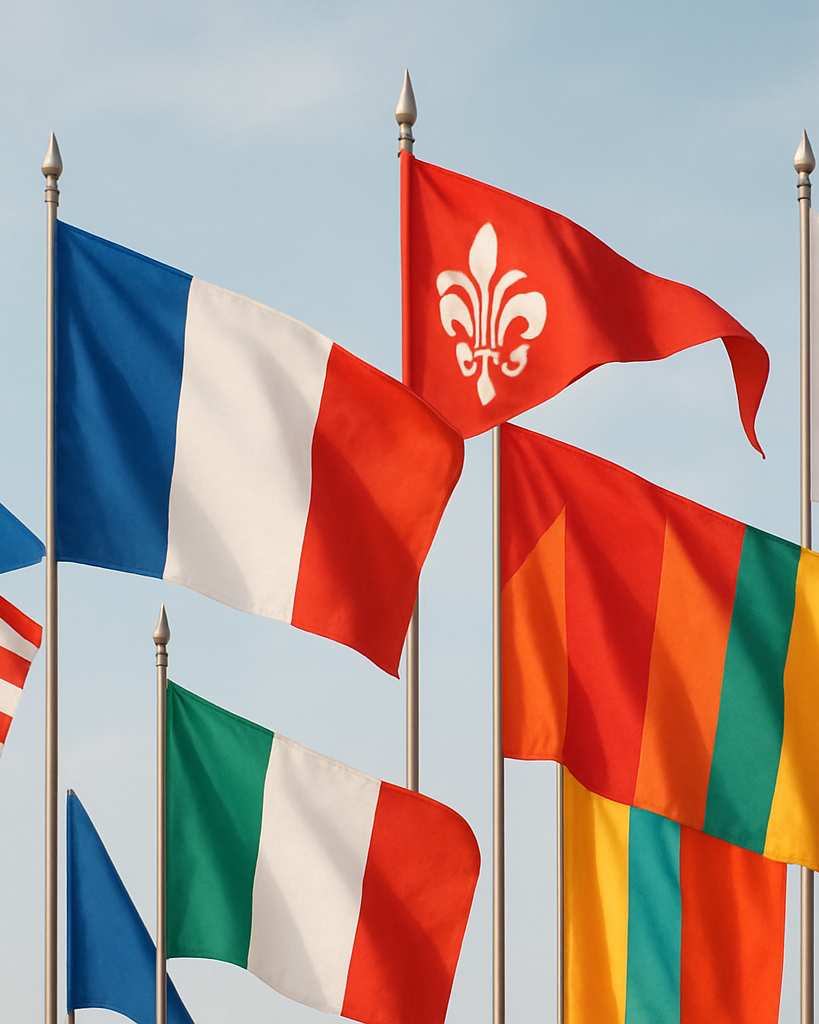
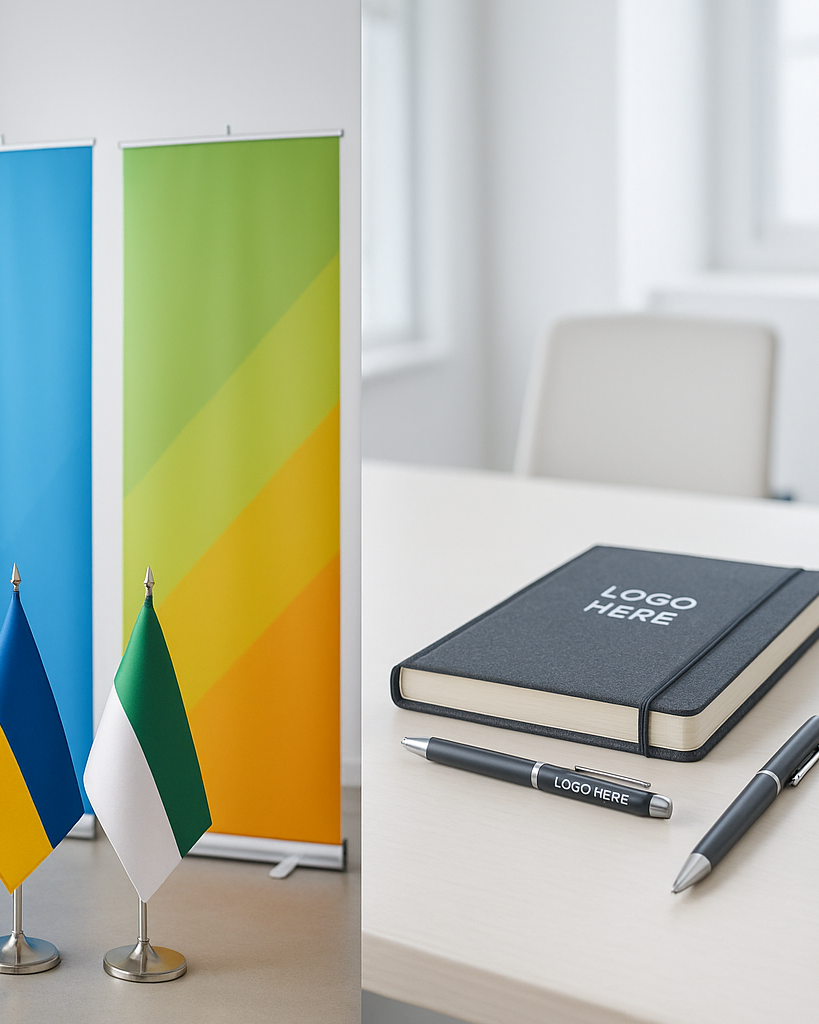

For custom banner printing, dye sublimation produces softer, fabric-friendly colors that last indoors for 2–5 years, while UV printing delivers sharper edge detail on rigid or coated substrates and holds up to 12–18 months of direct outdoor exposure. Choosing between them comes down to your substrate, environment, and whether you need photographic softness or hard-contrast precision. Browse the full Banners & Posters collection to see how these two technologies translate into real finished products across every format.
Which Printing Method Is Right for You — A Quick Verdict
Dye sublimation is the better default for fabric banners, trade show displays, and anything that needs to be rolled, folded, or touched repeatedly. UV printing wins when you need maximum sharpness on vinyl, tarpaulin, or PVC-coated stock, or when the banner must resist rain, grease, and direct UV rays from day one without any lamination step. If you are printing a soft-fabric roll-up for a conference, choose sublimation; if you are printing a long tarpaulin strip for a fence or railing, UV or solvent output on coated material is the practical answer.
The distinction matters because many buyers treat "banner printing" as a single commodity, then are surprised when colors crack on a fabric piece printed with UV ink, or when a sublimated banner on un-coated vinyl fades in six weeks of outdoor sun. Understanding the process — not just the price quote — protects your budget and your brand.
What Dye Sublimation Does Well, and Where It Falls Short
 Dye sublimation works by converting solid ink into gas under heat (roughly 375–400 °F / 190–205 °C) and bonding that gas directly into the polyester fiber at the molecular level. The result is color that cannot peel, crack, or sit on top of the material — it is part of the fabric itself. This is why sublimated panels feel as soft after printing as they did before, which is essential for retractable displays like the Portable Roll-up Banner Stand that rolls and unrolls dozens of times at trade shows and conferences. Sublimated prints are also completely double-sided readable when the fabric is backlit, a property no UV coating can replicate. Color accuracy on sublimated polyester typically reaches 90–95% of sRGB gamut, making it the right choice for photographic gradients, skin tones, and brand palettes that require smooth transitions rather than sharp block separations.
The weaknesses are real, though. Dye sublimation only works on polyester (or polyester-coated substrates) — print the same file on cotton, vinyl, or most tarpaulins and the ink simply will not gas-transfer correctly, leaving washed-out, unstable color. White cannot be printed at all in sublimation because the process relies on the substrate's own white base; any "white" in your design must be the material itself. Finally, very fine text below about 8 pt tends to soften slightly because the gas diffuses a fraction of a millimeter at the edges, which is almost invisible in large-format work but can matter for legal-text disclaimers or dense data tables.
What UV Printing Does Well, and Where It Falls Short
 UV printing cures ink instantly under ultraviolet lamps mounted on the print head, meaning the ink sits on top of the substrate in a hard, glass-like layer rather than bonding into fibers. This gives it two major advantages: it can print on almost anything — vinyl, tarpaulin, PVC, foam board, wood, metal — and it can lay down a true opaque white, enabling printing on dark or transparent backgrounds. The Advertising Tarpaulin Banner is a classic UV-method candidate: 100 cm (39 in) wide tarpaulin in lengths from 100 cm to 500 cm (39–197 in) for fences, railings, and above-door positions where weather resistance is non-negotiable. UV inks are also rated 80–95% UV resistant out of the press, meaning outdoor color stability of 12–18 months without additional laminate, and 2–3 years with a UV-protective overlaminate. Line sharpness is outstanding — edges resolve cleanly at 1,440 dpi on smooth substrates, which is why UV is the standard for banner text, barcodes, and high-contrast logos where every pixel must be crisp.
The downsides start with flexibility. Because UV ink sits on the surface as a cured polymer layer, bending or rolling the substrate can cause micro-cracking over time, especially in cold temperatures below 40 °F (4 °C). This makes UV-printed tarpaulin a poor choice for retractable roll-up mechanisms — the repeated coiling stress fractures the ink layer within weeks. UV is also heavier per square foot because of the cured ink mass, and on fabric substrates the hand feel changes from soft to slightly stiff or plasticky. On very porous or textured materials, ink adhesion can be inconsistent without primer coating, adding a step and cost to production.
Matching the Printing Method to Your Actual Use Case
Outdoor fence or railing banners, event perimeter signage, and any installation exposed to rain or direct sun for more than a few weeks should default to UV or solvent printing on tarpaulin or coated vinyl — the cured ink layer physically blocks moisture and UV degradation in ways fabric sublimation cannot. Indoor trade show and conference displays, retractable stands, hanging fabric installations, and any banner that will be touched, rolled, or transported repeatedly are natural fits for dye sublimation on polyester. Ceremonial and institutional settings — think portrait displays in schools or cultural centers — often call for premium fabric output because the soft texture reads as more dignified than the harder surface of UV-printed vinyl.
For events that move between indoor and short outdoor runs (a weekend market, a pop-up store), sublimated polyester with a water-resistant coating is a workable middle ground, delivering roughly 6–9 months of light outdoor exposure. If your use case spans both a trade show floor and an outdoor activation, the pragmatic answer is two substrates: a sublimated fabric banner for the booth, and a UV-printed tarpaulin strip for the exterior signage. For anyone comparing display hardware options, the article on retractable banner stand vs. X-frame for trade shows goes deeper on the structural side of this decision.
Banners & Accessories
Complete banner systems — from printed panels to stands and hardware — so every display arrives ready to install.
Browse Collection →How Lifespan and Total Cost Compare Between the Two Methods
Dye sublimation fabric panels last 2–5 years indoors with normal light levels and regular handling, fading gradually rather than cracking or peeling. UV-cured prints on tarpaulin or coated vinyl average 12–18 months unlaminated outdoors, or 2–3 years with a UV overlaminate, after which they typically chip at stress points rather than fade evenly. On a pure per-impression basis, sublimation setups favor medium-to-large runs because the transfer paper and heat press process adds fixed time; UV flatbed or roll-to-roll machines output faster on small quantities with less material waste.
Total cost of ownership tilts toward sublimation for any banner that will be reused across multiple events — the soft fabric stores compactly, survives frequent transport without damage, and does not require replacement until color shift becomes visible at 2–4 years. A UV tarpaulin banner costs less per unit upfront for a one-time outdoor installation, but if you plan to use it indoors afterward it may look worn within a season from handling alone. For anyone pricing a run of custom banners, the guide on standard banner sizes for indoor events covers how dimensions affect material yield and final price per unit — worth reading before you finalize quantity and spec.
 When the goal is a long-term institutional display rather than temporary event signage, fabric output on quality substrates is the clear value leader over time. The Customizable Raschel Fabric Banner is a strong example: Raschel knitted polyester accepts sublimation ink deeply and evenly, producing portrait-grade color fidelity that holds its appearance in schools, cultural centers, and public offices for years without the cracking or yellowing that PVC-based UV prints can develop under fluorescent lighting. The knitted structure also resists fraying at edges and remains dimensionally stable in climate-controlled interiors, meaning hems and grommets stay secure. Because Raschel fabric is lighter than tarpaulin of the same display area, it also ships and stores at a lower cost per unit — a meaningful consideration for organizations that rotate displays seasonally. For institutional procurement at volume, the fabric banner's multi-year lifespan routinely delivers a lower cost-per-display-day than any UV-coated vinyl alternative.
The clearest decision framework: if this banner will be rolled, folded, or displayed indoors for more than one season, invest in sublimated polyester. If it will hang fixed outdoors through rain and UV exposure for up to 18 months and then be discarded, UV-printed tarpaulin is the cost-efficient choice. If you need both, spec them separately — the substrate, not the artwork, determines which process to use.
Can I get a custom banner printed in any size I want? +
Is dye sublimation or UV printing better for a banner used at a trade show? +
How long does custom banner printing typically take to produce? +
What file format and resolution should I send for banner printing? +
Can a custom banner withstand outdoor weather year-round? +
Does banner printing quality look different up close versus from a distance? +
Is bulk custom banner printing more cost-effective, and how do I order it? +
Whether your next project is a fabric display for a corporate event, a tarpaulin strip for a storefront, or a series of institutional portrait banners, the right substrate and print method make the difference between a display that lasts seasons and one that fails after weeks. Explore the full Banners & Posters collection for options across every format, and browse Banners & Accessories for stands, hardware, and complete display systems. For specific product recommendations — from the Portable Roll-up Banner Stand for trade show use to the Advertising Tarpaulin Banner for outdoor runs — the product pages include full specification details. Bulk pricing is available for corporate, institutional, and event organizer orders; contact us directly for a volume quote tailored to your print method, size, and quantity.