


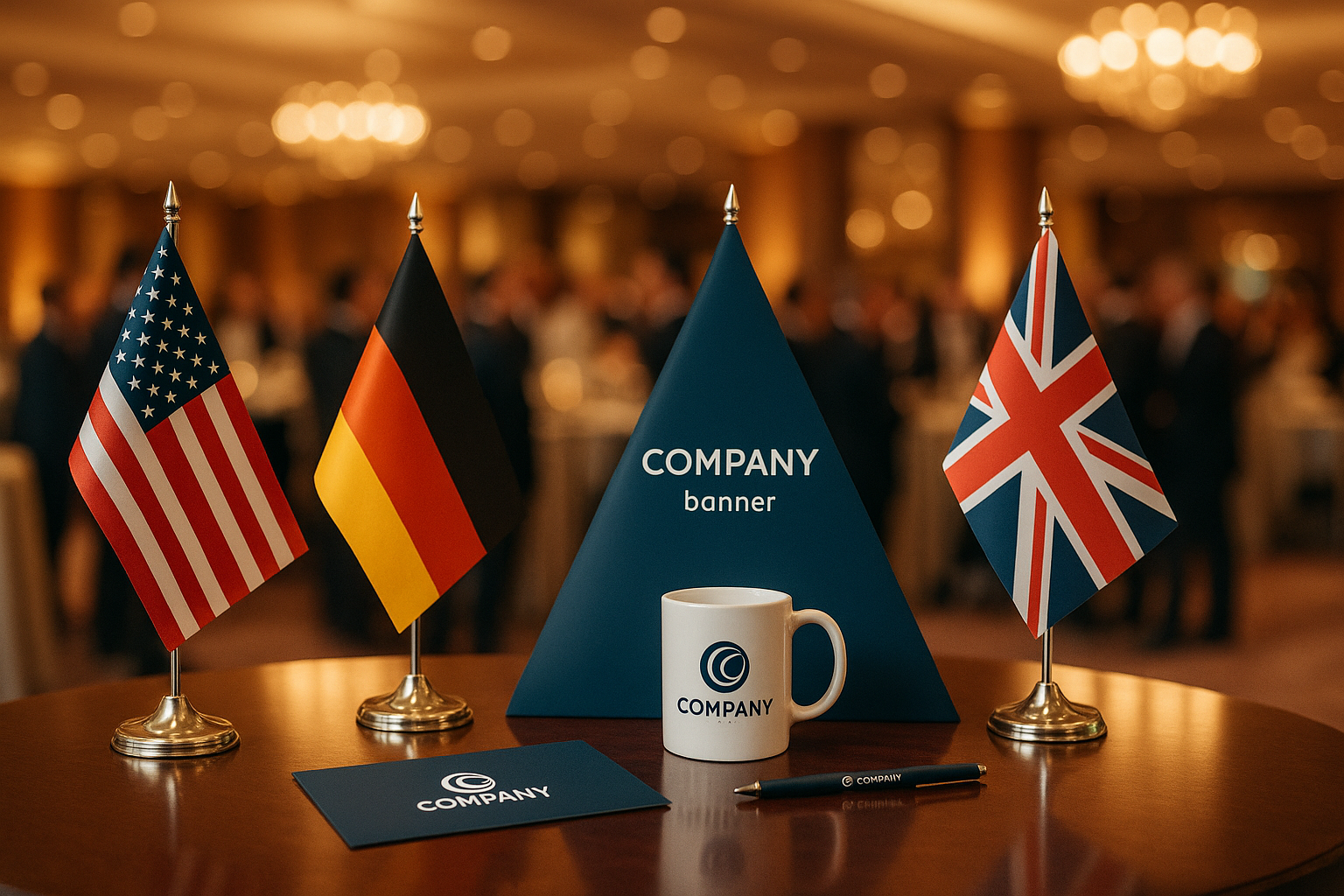

The most common standard banner sizes for indoor events are 2×6 ft (61×183 cm), 3×6 ft (91×183 cm), and 4×8 ft (122×244 cm) — with the right choice depending on your venue ceiling height, viewing distance, and whether the banner hangs, stands, or mounts on a pole. Browse the full range of options in the Banners & Posters collection to see size variants and fabric choices side by side. Picking the wrong size is one of the most expensive mistakes event planners make — a banner that reads clearly at 10 ft (3 m) becomes invisible at 30 ft (9 m), and one that looks dramatic in a convention hall can overwhelm a small conference room. This guide walks you through every standard indoor banner size, how to match size to your space, and the most common mistakes that waste your print budget.
Standard Indoor Banner Sizes and Where Each One Is Actually Used
Indoor event banners follow a handful of industry-standard dimensions that have evolved around typical venue ceiling heights, booth widths, and audience viewing distances. The most widely used sizes are 2×6 ft (61×183 cm), 3×6 ft (91×183 cm), 2×8 ft (61×244 cm), 4×8 ft (122×244 cm), and 5×10 ft (152×305 cm), each serving a distinct setting.
- 2×6 ft (61×183 cm): The go-to size for trade show booths, step-and-repeat backdrops in tighter spaces, and pull-up/retractable banner stands. This is the most portable format and fits comfortably in any indoor venue with a standard 8 ft (244 cm) ceiling.
- 3×6 ft (91×183 cm): Popular for conferences, lobbies, and product launch events. The extra width gives designers more room for logos, taglines, and QR codes without crowding the layout.
- 2×8 ft (61×244 cm): Preferred for pole banners and hanging displays in venues with 10–12 ft (305–366 cm) ceilings, such as hotel ballrooms and convention halls. The tall, narrow format draws the eye upward and works well in corridors.
- 4×8 ft (122×244 cm): Standard stage backdrop and photo wall size. Two or three panels at this size create a seamless branded background for speakers, award ceremonies, or press events.
- 5×10 ft (152×305 cm): Reserved for large indoor venues — arenas, exhibition halls, and multi-day expos — where viewing distances exceed 40 ft (12 m). At this scale, fabric banners are strongly preferred over vinyl because they resist wrinkles when suspended.
Desk and tabletop banners occupy the opposite end of the scale: 11×17 in (28×43 cm) and 24×36 in (61×91 cm) are common for registration tables, info kiosks, and product display counters. These smaller formats are almost always printed on rigid substrates or foam board, though fabric versions exist for a premium look.
How to Choose a Banner Size Based on Your Space, Pole Height, and Viewing Distance
The single most reliable rule is the 1-inch-per-10-feet standard: for every 10 ft (3 m) of viewing distance, your headline text should be at least 1 inch (2.5 cm) tall. Work backward from that number to determine the minimum banner height you need before even thinking about width.
Start by measuring your venue's usable wall height or the span between your suspended anchor points. Subtract at least 12 in (30 cm) from the floor and 6 in (15 cm) from the ceiling to keep the banner clear of foot traffic and HVAC fixtures. The remaining vertical space sets your maximum banner height. For pole banner systems, your pole height directly caps your banner length — a 7 ft (213 cm) pole typically accommodates a banner no longer than 5.5 ft (168 cm) once brackets, caps, and ground spikes are factored in. Next, estimate peak viewing distance: the distance from your banner to the farthest point in the room where a visitor will need to read it. A 30 ft (9 m) viewing distance requires 3-inch (7.6 cm) headline text, which comfortably fills a 3×6 ft banner. A 60 ft (18 m) viewing distance in a large expo hall pushes you toward a 5×10 ft format. Finally, consider horizontal real estate — how wide is the wall, booth back, or hanging span? A single 3×6 ft banner in a 20 ft (6 m) wide booth looks lost; two 3×6 ft banners flanking a center display, or one 6×8 ft span, fills the space with authority.
 When you already own a stand and only need a fresh graphic, ordering a Roll-up Print Only is the cost-effective path — you get a new season's design without replacing hardware. Roll-up prints for indoor events are almost universally produced at 33.5 in × 79 in (85×200 cm) or 47 in × 79 in (120×200 cm), which are the two dominant cassette sizes in the industry. Fabric roll-up prints hold color accuracy much longer than PVC films under indoor lighting, and because they are lighter, the tension mechanism in the cassette experiences less wear. If your event rotates branding quarterly, investing in a quality fabric print that swaps into the same cassette is significantly cheaper per cycle than purchasing a full stand-and-print combo each time. Always confirm cassette width with your hardware supplier before ordering replacement prints, as cassette widths vary by ±0.5 in (1.3 cm) between manufacturers.
The Ratio Between Pole Height and Banner Size for Indoor Pole Displays
For indoor pole banners, the standard design ratio is a banner height roughly 60–70% of the total pole height, leaving the remaining 30–40% as visible pole above and below the banner for bracket mounting and visual breathing room. A 7 ft (213 cm) pole, for example, pairs best with a banner measuring 4.5–5 ft (137–152 cm) tall.
Pole banners for indoor use typically run 24–30 in (61–76 cm) wide and 60–72 in (152–183 cm) tall. This narrow-tall ratio — roughly 1:2.5 — is optimized for corridor placement, aisle markers at expos, and entrance flanking where the banner must be visible from the side as well as head-on. The vertical format also aligns with the natural eye movement of a walking visitor. Wider pole banners — 36 in (91 cm) or more — are used in lobbies and open-floor settings where the viewer approaches from a distance rather than walking parallel to the display. If you plan to hang customized banners from a ceiling grid rather than a freestanding pole, the aspect ratio shifts toward square or landscape formats: 4×4 ft (122×122 cm) and 3×5 ft (91×152 cm) are common for ceiling-hung indoor event banners because they read equally well from multiple approach angles. For retail and storefront displays, our guide on choosing vertical or horizontal pole banners for a store covers additional orientation considerations that apply equally to indoor venue settings.
Indoor, Outdoor, and Desk Banner Sizes Side by Side
Indoor banners are consistently smaller than outdoor equivalents at every comparable use case, because indoor viewing distances are shorter, lighting is controlled, and there is no wind load to engineer against. A fabric banner sized at 3×6 ft (91×183 cm) is considered large for an indoor lobby but mid-range for an outdoor festival perimeter.
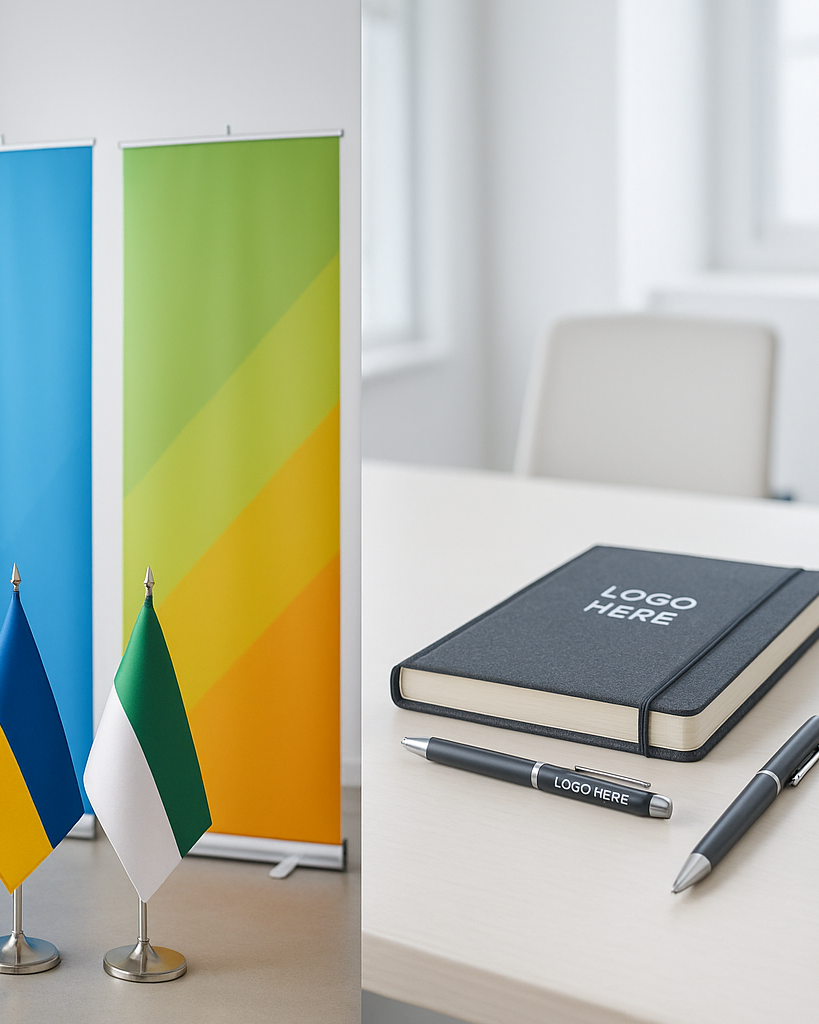
 The Portable Roll-up Banner Stand is the most versatile indoor display solution because it sets up in under two minutes, requires no tools, and travels in a shoulder bag that fits in overhead luggage compartments — a genuine advantage when your events span multiple cities. The stand accommodates banner widths from 31.5 to 47 in (80–120 cm) and extends to a display height of 79 in (200 cm), which is tall enough for nearly any standard indoor venue ceiling. Because the graphic retracts fully into the cassette between events, the print is protected from dust, handling damage, and UV exposure in storage — extending the usable lifespan of a quality fabric print to 2–3 years under typical event rotation. For pricing context across different banner materials and sizes, the companion article on custom banner prices by size and material breaks down cost per square foot so you can budget accurately before ordering.
Desk and tabletop displays follow a completely separate size logic. Standard tabletop banner frames run 24×36 in (61×91 cm), 18×24 in (46×61 cm), and 11×17 in (28×43 cm). These formats are used for registration desks, product demo tables, and directional signage at room entrances. Fabric versions in these small sizes offer a wrinkle-free, premium finish that foam board cannot match when a brand needs to look polished under close-up inspection. The size difference between indoor and outdoor banner categories also affects material choice: indoor fabric banners can be printed on lighter woven polyester (typically 110–150 g/m²) because they face no moisture or UV stress, whereas outdoor banners require heavier, coated fabrics or vinyl substrates rated for at least 80% UV resistance.

Banners & Accessories
Complete banner hardware and accessory solutions — stands, poles, brackets, and finishing hardware to pair with any indoor fabric banner size.
Browse Collection →Common Sizing Mistakes That Waste Your Print Budget
The most common indoor banner sizing mistake is ordering a banner sized for the wall rather than for the viewer — a 5×10 ft banner in a 12×12 ft breakout room is overwhelming and unreadable at close range, while a 2×4 ft banner in a 5,000 sq ft exhibition hall disappears entirely. Size for viewing distance first, then fit within your available wall space.
- Ignoring ceiling clearance: Venues with drop ceilings, sprinkler systems, or lighting rigs often have a true hanging clearance 18–24 in (46–61 cm) lower than the stated ceiling height. Always confirm the usable hang point before finalizing banner height.
- Designing for the print, not the format: Landscape-format artwork squeezed into a portrait banner (or vice versa) forces heavy cropping or awkward white space. Confirm your banner's aspect ratio with the printer before beginning design.
- Underestimating hem and grommet zones: Standard fabric banners include a 1–2 in (2.5–5 cm) hem on all sides. If your design bleeds to the edge, critical text or logos placed within 2 in (5 cm) of the border risk being hidden in the fold or punched through by grommets.
- Ordering a single large banner instead of modular panels: A single 8×10 ft (244×305 cm) fabric banner is difficult to ship, store, and hang without professional rigging. Two 4×8 ft panels achieve the same visual footprint and travel in a fraction of the space.
- Choosing vinyl when fabric is appropriate: Indoor environments with air conditioning create airflow that causes rigid vinyl banners to ripple and billow even when hung flat. Fabric banners, especially knit polyester, hang with natural tension and eliminate this problem without extra ballast.
- Forgetting resolution at size: A file that looks sharp at 2×4 ft becomes pixelated at 4×8 ft if the DPI was not adjusted for the larger output. Standard print-ready resolution for fabric banners is 100–150 DPI at final size (not at a scaled-down thumbnail).
Frequently Asked Questions
Can I order a customized banner in a non-standard size, or do I have to pick from preset dimensions? +
How heavy is a standard fabric banner, and can one person hang it without help? +
What pole and bracket hardware do I need for a standard 24×72 in indoor pole banner? +
How do I store a fabric banner between events so it does not wrinkle or crease? +
What is the minimum order quantity for customized indoor event banners? +
Do fabric banners work with standard retractable roll-up cassette stands, or do they require special hardware? +
How far in advance should I order banners for an indoor event to allow for printing and shipping? +
Choosing the right banner size before you go to print saves money, avoids last-minute re-orders, and ensures your brand looks intentional rather than accidental at every event. Start with your viewing distance, work backward to minimum text size, then match that to the closest standard format in the Banners & Posters collection. For pole banner hardware, stands, and finishing accessories, the Banners & Accessories collection has the hardware to complete any indoor display setup. If you need a replacement graphic without buying a new stand, the Roll-up Print Only option keeps costs down between event cycles. Bulk pricing is available for corporate orders across all banner sizes — contact us with your event schedule and quantity for a tailored quote.