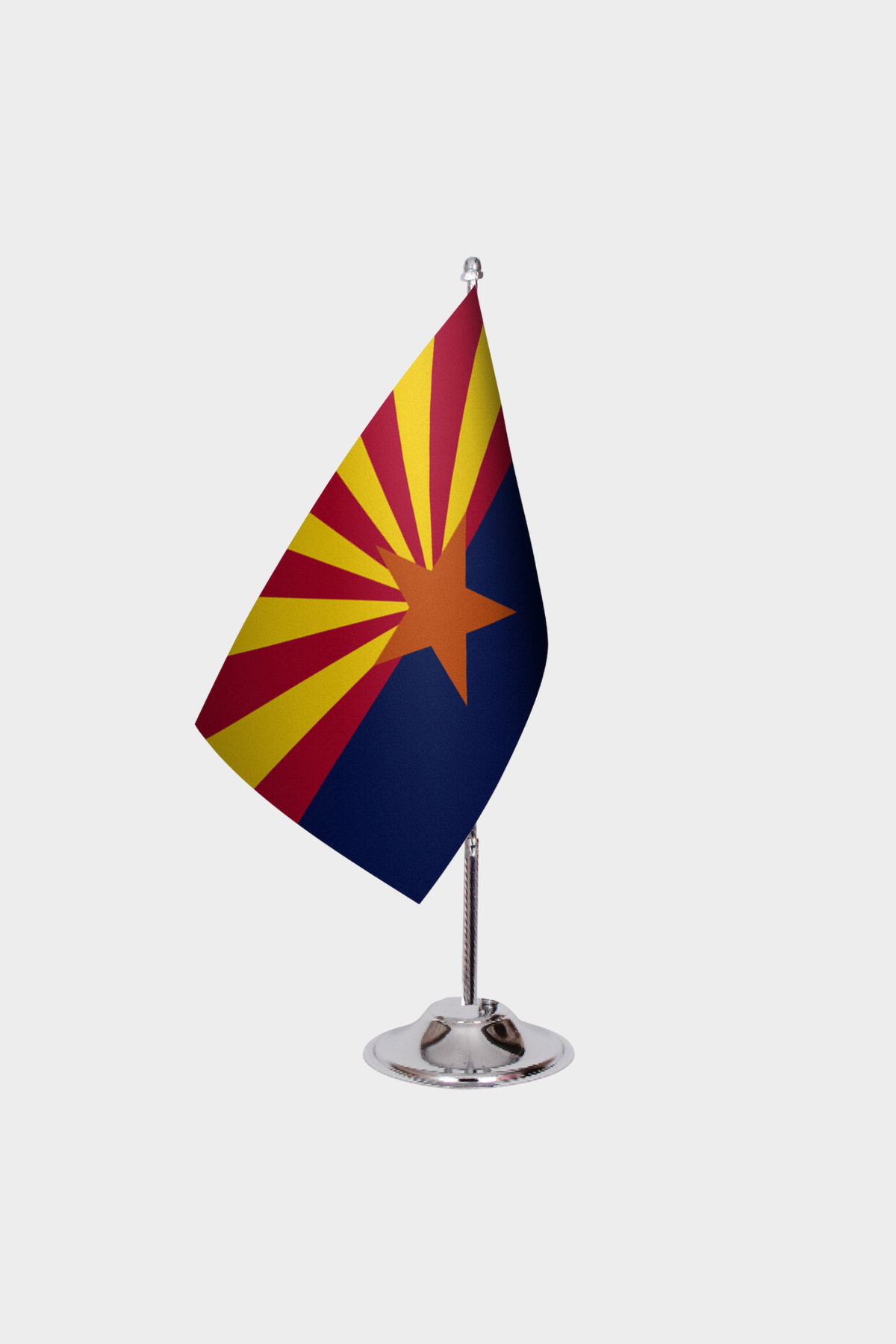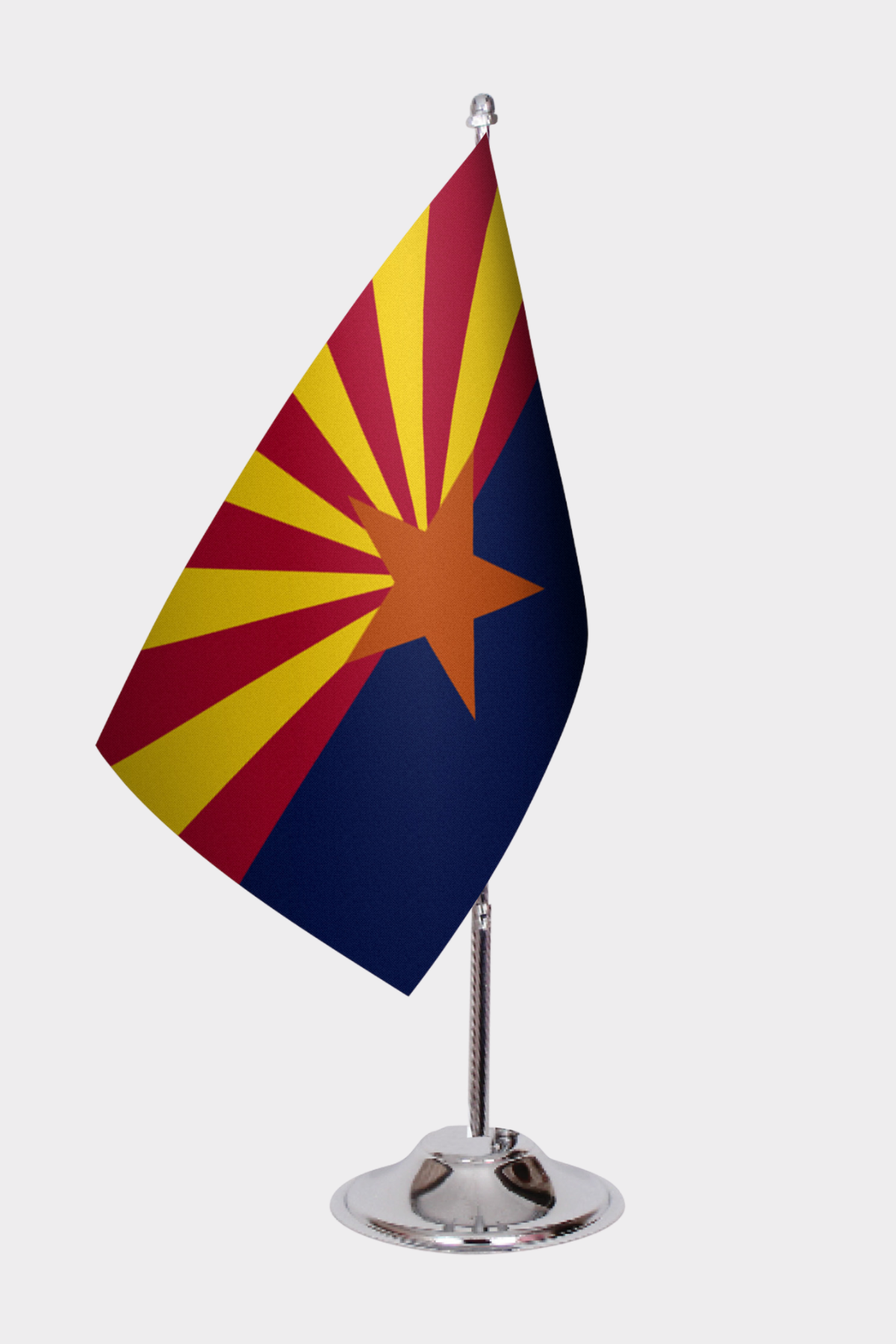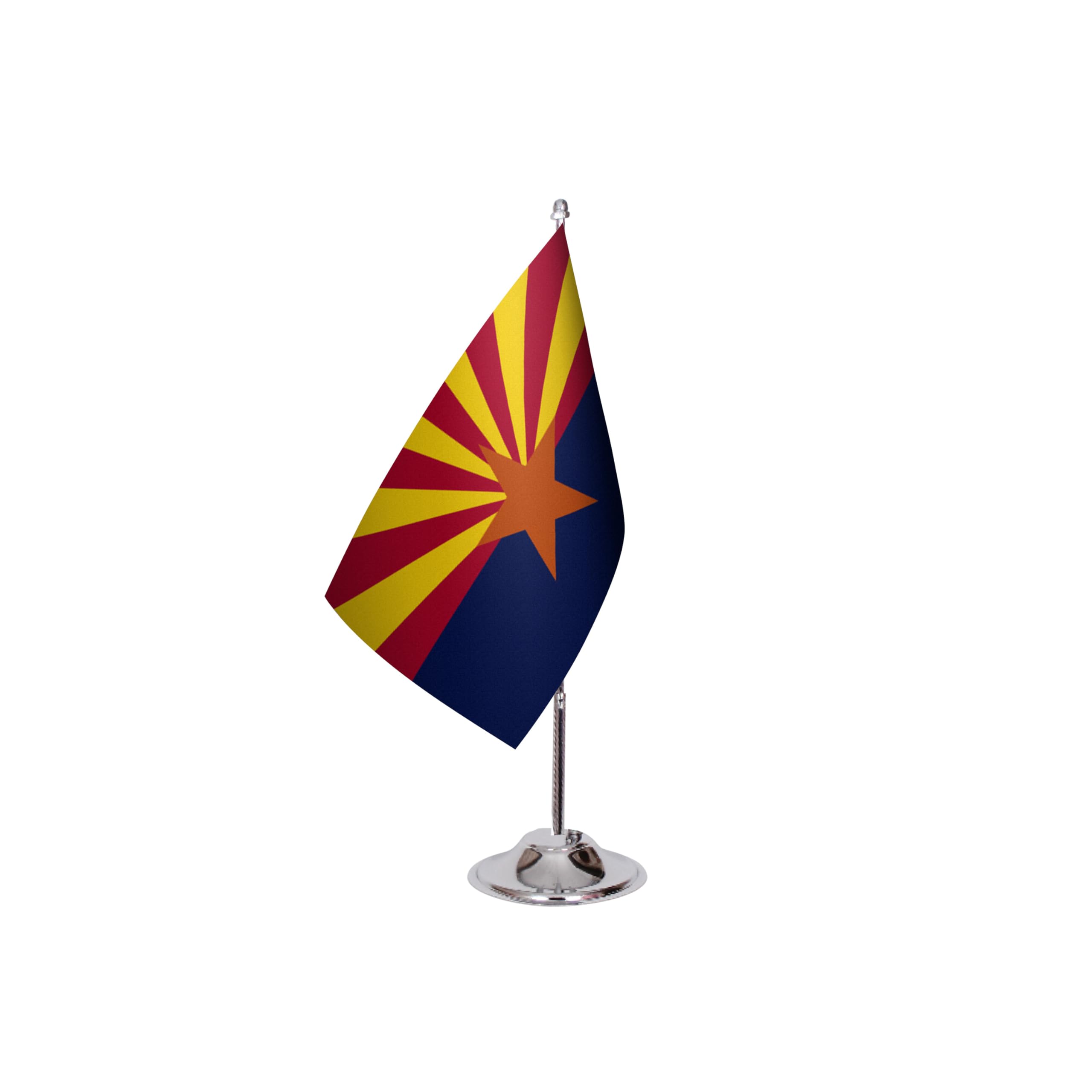
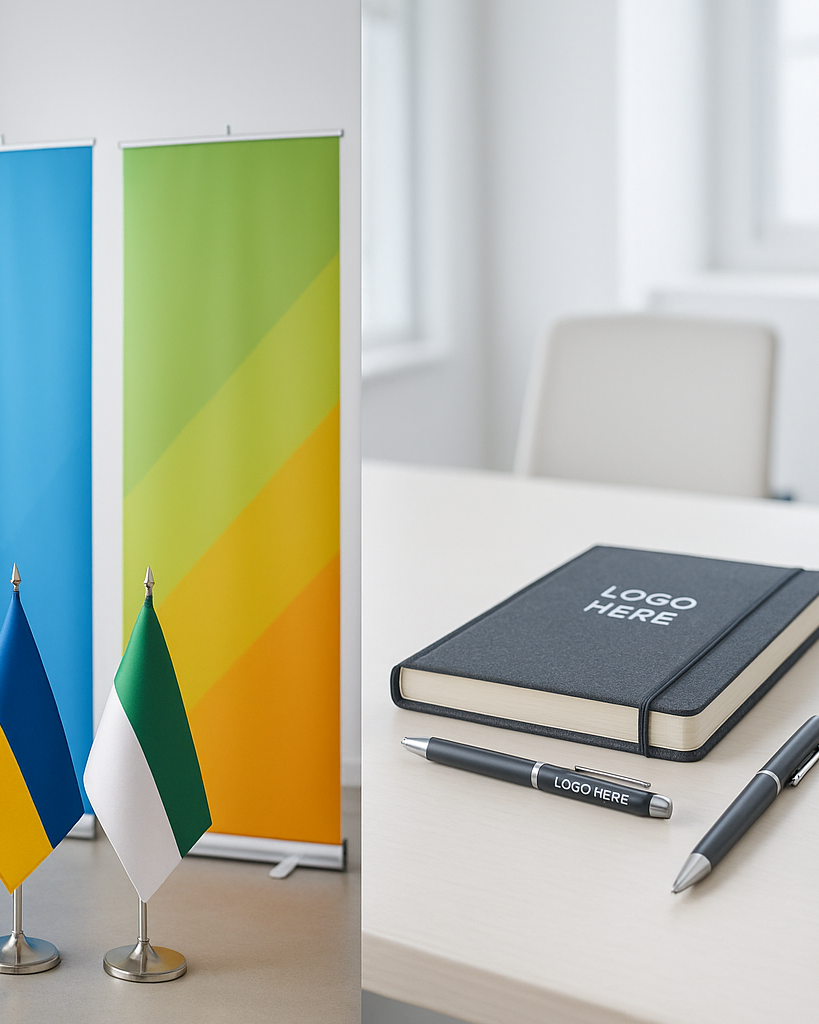

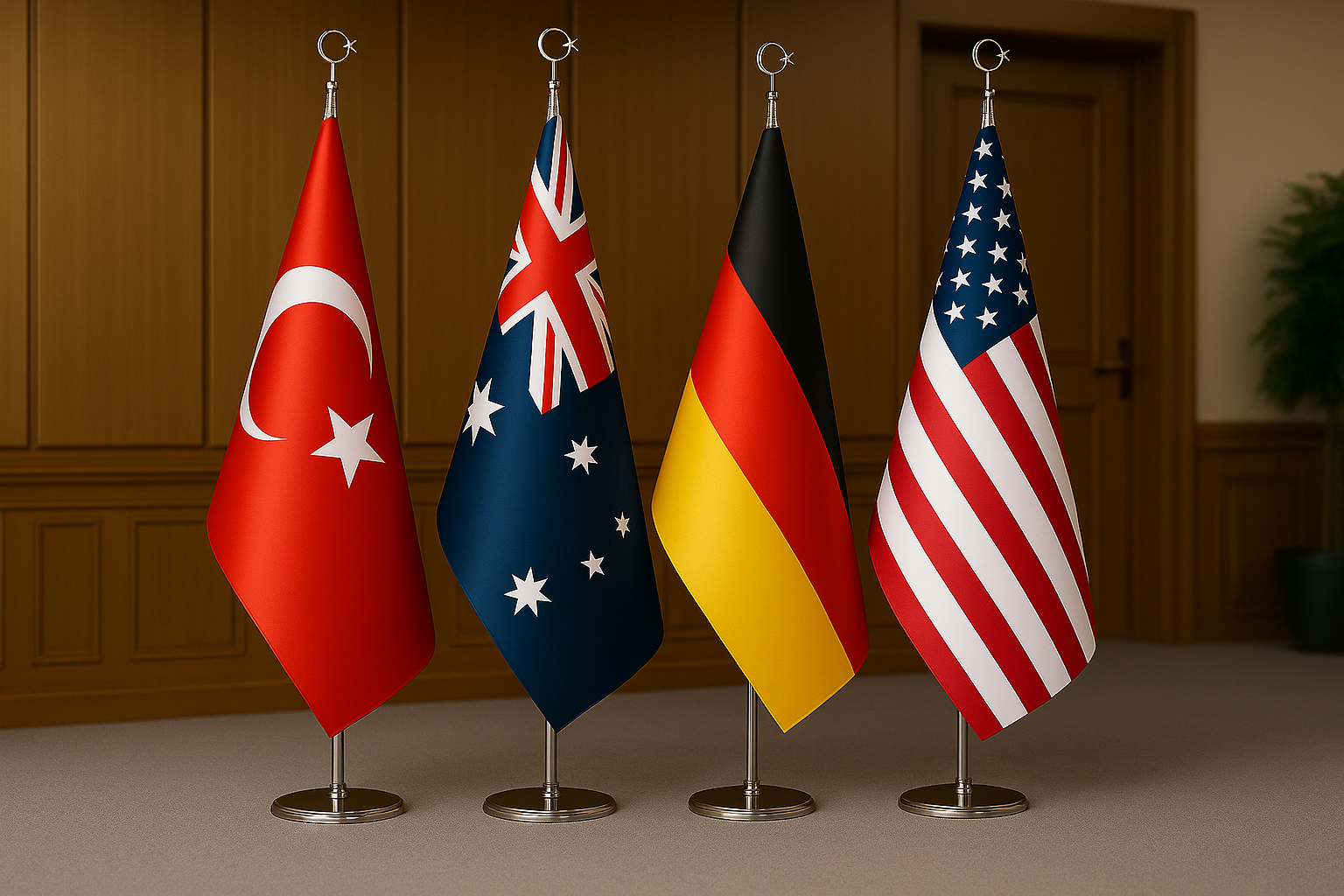


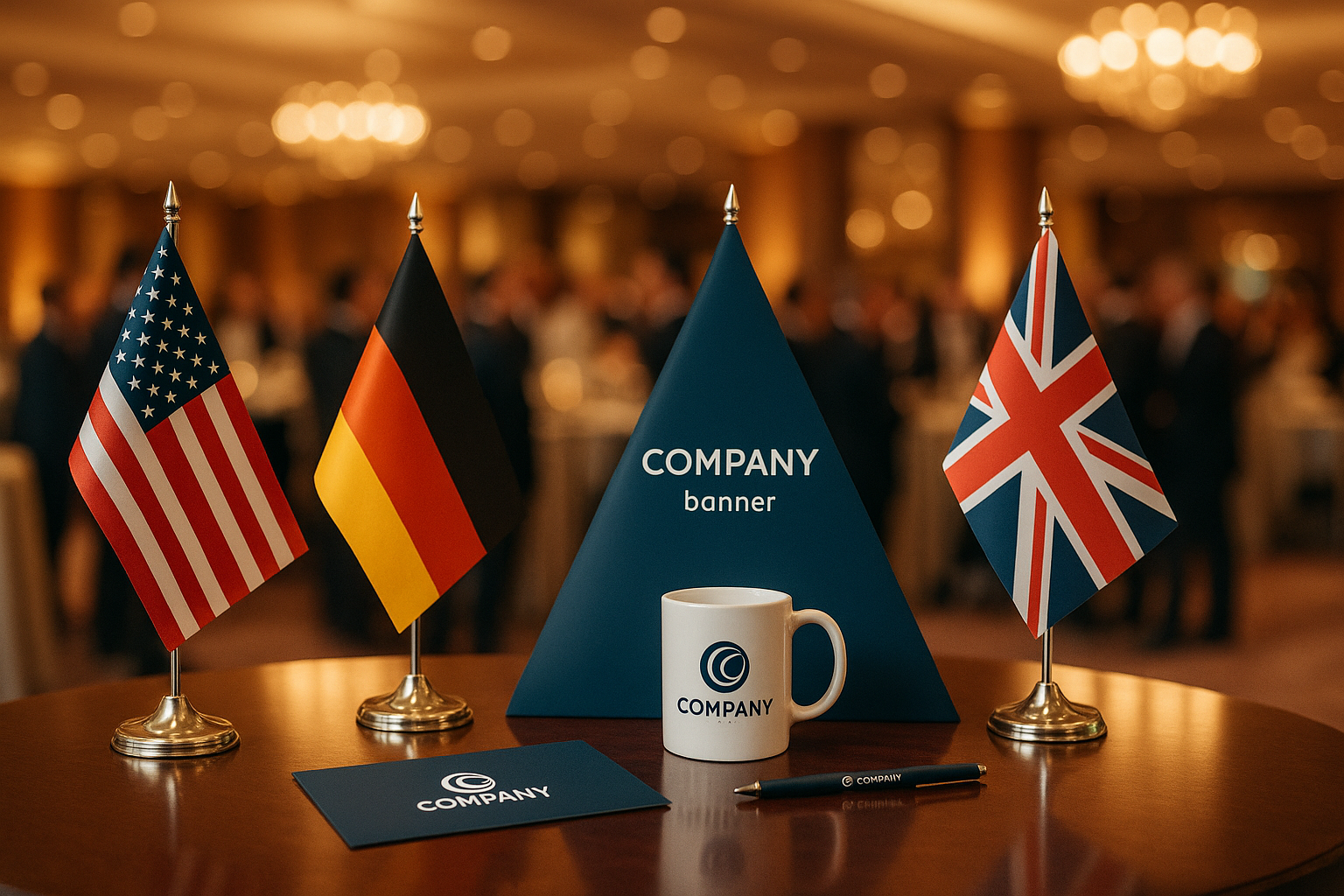

For a retail store, a vertical pole flag wins on sidewalk visibility and tight footprint, while a horizontal pole flag wins for traditional façade mounting and ceremonial use — the right choice depends on your building type, wind exposure, and how far away you need to attract attention. Browse the full Vertical Country Flag collection to see the formats most commonly used by retail businesses across the United States.
Quick Verdict: Which Flag Format Suits Your Store?
Vertical flags are the better default for most retail storefronts — they project outward from the building, move in the lightest breeze, and pull pedestrian attention from a distance without requiring overhead clearance. Horizontal flags are the stronger choice when your store has a wide façade, a tall flagpole already installed, or when brand protocol demands a traditional, ceremonial look.
The distinction matters most at the point of purchase: a vertical flag banner mounted on a sidewalk pole or a bracket extending from the storefront wall is visible to drivers and walkers approaching from the side, while a horizontal flag flying from a rooftop pole is best seen from a distance directly in front. If your store sits in a strip mall, a busy pedestrian corridor, or a downtown block where buildings are flush with the sidewalk, the vertical format consistently outperforms the horizontal one for real-world visibility. Stores in open-lot settings — standalone buildings with parking lots — can use either format effectively, and many combine both for maximum coverage. Understanding which scenario matches your location is the fastest way to a confident decision.
Strengths and Weaknesses of Vertical Pole Flags
Vertical flags outperform horizontal flags for street-level retail visibility because their tall, narrow silhouette stands out against building facades and moves dramatically even in low wind, creating constant motion-based attention. That said, they require a bracket, ground socket, or pole system to stand correctly, and improper mounting is the most common reason they underperform.
 The vertical format's biggest structural advantage is its aspect ratio: a flag that is roughly 1 ft wide and 3 ft tall (30 × 90 cm) or 2 ft wide and 6 ft tall (60 × 180 cm) channels wind along its length rather than catching it like a sail, which dramatically reduces stress on grommets and stitching. This is why vertical flags typically survive high-wind coastal and Midwestern locations better than wide horizontal banners of equivalent area. For branded retail use, the Logo Printed Pole Flag is a purpose-built option that puts your store's name, logo, or promotional message on a format engineered for sidewalk or bracket mounting — giving you a flag and a sign in one. On the downside, a vertical flag hanger or bracket must be properly rated for the wall material (brick, EIFS, wood frame) or you risk hardware failure; consult your landlord or a signage contractor before drilling into a leased storefront. Vertical flags also require periodic repositioning after heavy wind events, as the flag can wrap around the pole — a spring-loaded or rotating pole system solves this but adds a small amount to your setup cost.
The weaknesses of vertical flags are mostly practical rather than aesthetic. In very heavy sustained wind above roughly 40 mph (64 km/h), a large vertical flag banner can generate significant torque on its mounting bracket. Sizing down — from a 3 ft × 8 ft (90 × 240 cm) flag to a 2 ft × 6 ft (60 × 180 cm) flag — is the simplest mitigation. Visibility at long distance is also slightly lower than a large horizontal flag on a tall pole, because the vertical format presents a smaller frontal area when viewed head-on from far away. For placement strategy beyond the storefront itself, the article on where to use outdoor vertical banners covers venue-specific layouts in depth.
Strengths and Weaknesses of Horizontal Pole Flags
Horizontal flags on a traditional flagpole deliver the strongest long-distance visibility and the most formal, authoritative look — which is why government buildings, banks, car dealerships, and hotels default to them. Their primary weakness for most retail stores is that they require substantial vertical clearance and a permanent pole installation, which many leased storefronts simply cannot accommodate.
 A standard commercial horizontal flag measures 3 ft × 5 ft (90 × 150 cm) to 5 ft × 8 ft (150 × 240 cm) and requires a pole of at least 20 ft (6 m) to look proportionate and comply with local zoning height minimums. That pole needs a concrete footing, a ground sleeve, and often a permit — costs and logistics that accumulate quickly for a retail operator. If your building already has a pole, however, horizontal flags are extremely cost-effective to maintain: standard grommets, simple rope-and-cleat hardware, and widely available replacement flags make the ongoing cost of ownership low. The Vertical Pole Flag is worth examining even if you initially planned horizontal mounting, because its pole system can often be adapted to a ground-mounted configuration that mimics the visual presence of a traditional flagpole at a fraction of the structural investment. Horizontal flags do carry one significant compliance advantage: the US Flag Code (4 USC §§ 1–10) provides clear, well-understood guidance on horizontal display orientation (union to the observer's left when facing the flag), meaning staff training is straightforward. Orientation rules for vertical display are somewhat less familiar and are worth reviewing — our dedicated article on rules for displaying a flag vertically covers these in full.
Choosing by Use Case: Outdoor, High Wind, and Promotional
Match the flag format to the primary job it needs to do: vertical flags dominate in promotional and foot-traffic scenarios, while horizontal flags are superior for permanent institutional display and long-distance landmark visibility.
- Street-level pedestrian retail (boutiques, cafés, salons): Vertical flag banner on a wall bracket or sidewalk pole, 2 ft × 6 ft (60 × 180 cm). Maximum motion, minimum footprint, easy seasonal swap.
- Strip mall or plaza anchor store: Two to four vertical flags flanking the entrance, mounted on ground sleeves or in-ground poles 10–15 ft (3–4.5 m) tall. Creates a visual gateway that draws shoppers from across the parking lot.
- Auto dealership or large-format retailer: Horizontal flags on 25–30 ft (7.5–9 m) poles for landmark visibility, supplemented by vertical flags at the entry canopy for branding at the human scale.
- High-wind coastal or plains locations: Vertical flags with anti-wrap rotating pole hardware, sized conservatively. Horizontal flags in these locations should use heavy-duty nylon rated for sustained 50 mph (80 km/h) winds.
- Temporary promotional use (grand opening, sale event): Vertical flag banners win decisively — they set up in minutes, require no permits in most jurisdictions when bracket-mounted below a specified height, and can be stored flat between uses.
- Patriotic or US flag display alongside branding: The Outdoor Vertical USA Flag is purpose-built for storefronts that want to fly the American flag in a vertical orientation without the overhead clearance a traditional flagpole demands.

Vertical Country Flag Collection
Ready-made vertical flags for every nation, designed for bracket and pole mounting at retail locations — a fast, professional solution for stores serving international customers or celebrating national heritage.
Browse Collection →Lifespan and Total Cost Compared
Vertical flags typically last 6 months to 2 years in continuous outdoor use, and horizontal flags last in a similar range — the real cost difference comes from hardware, installation, and replacement frequency, not the flag itself.
A vertical flag on a wall bracket involves the cost of the flag, a bracket rated for your wall type, and optional ground hardware if you use a sidewalk pole. Because the vertical format presents less surface area to wind, fabric stress is lower per unit area, meaning the flag material degrades more slowly than a comparably sized horizontal flag in the same wind conditions. Replacement flags for vertical setups are straightforward to swap without tools, making the ongoing ownership cost manageable even for small retailers who change their display seasonally. Horizontal flags on permanent poles involve a higher upfront infrastructure investment — pole, footing, hardware — but once in place, the flag itself is the only recurring cost, and standard 3 ft × 5 ft (90 × 150 cm) nylon flags are among the most widely available and economical flag products on the market. For custom-branded flags in either orientation, what drives cost is primarily print complexity, fabric choice (knitted polyester vs. woven nylon vs. mesh), and order quantity — bulk production per unit cost decreases meaningfully at higher quantities, which matters for multi-location retailers. If you are specifying artwork for production, review the guidance on file formats and sizes for flag printing before submitting your design to avoid reprints. UV resistance is another factor: quality outdoor flag fabric carries an 80% or better UV resistance rating, translating to roughly 12–18 months of full-sun color retention before fading becomes noticeable — a metric worth confirming with your supplier regardless of orientation.
When comparing single-sided versus double-sided construction — relevant for both orientations — the double-sided option nearly doubles fabric weight and stitching, extending lifespan by roughly 30–40% but increasing the flag's wind resistance. Our article on single-sided and double-sided custom flags breaks down that trade-off in detail.
Hardware Essentials: Mounts, Brackets, and Pole Systems
The vertical flag hanger you choose determines nearly as much about display quality as the flag itself — a mismatched bracket or undersized pole socket is the leading cause of flags looking limp, tilting, or failing entirely within weeks of installation.
For wall-mounted vertical flag banners, a 45-degree outrigger bracket in 1-inch (2.5 cm) diameter aluminum or powder-coated steel is the retail standard. These brackets typically project 24–36 in (60–90 cm) from the wall, positioning the flag clear of the fascia so it can move freely. For ground-mounted vertical flag pole setups, an in-ground sleeve — a steel tube set in a small concrete footing — allows the pole to be removed and stored without disturbing the mounting, which is ideal for retailers who change their display seasonally. Rotating anti-wrap pole tips are worth specifying for any location that experiences consistent wind above 20 mph (32 km/h), as a flag that constantly wraps around its pole is invisible and degrades faster. The Logo Printed Vertical Pole Flags collection includes options where the pole system and flag are matched from the start, removing the guesswork of compatibility between components. For installation step-by-step guidance — including wall anchoring for different surface types — the companion article on how to hang a flag vertically covers the process from tools needed through to final safety checks.
What is a vertical flag hanger and how does it attach to a building? +
What size vertical flag works best for a typical retail storefront? +
Can I use a vertical flag banner indoors as well as outdoors for my store? +
What is a vertical flag pole and how is it different from a standard flagpole? +
How do I mount a vertical flag pole to a wall bracket on a leased storefront? +
How long does a vertical flag banner last outdoors in continuous use? +
Do vertical flags need to follow US Flag Code rules if displayed at a store? +
For most retail storefronts, the Vertical Pole Flag is the practical starting point — it combines the right aspect ratio, compatible hardware, and outdoor-rated fabric in a format designed specifically for bracket and sleeve mounting at commercial locations. Stores that want to lead with national identity alongside their brand can pair it with the Outdoor Vertical USA Flag for a complete patriotic and promotional display. For fully custom branded applications — logo, tagline, brand colors — the Logo Printed Vertical Pole Flags collection offers made-to-order production in the sizes and quantities that fit your rollout, whether that is a single flagship location or a multi-site chain. Bulk pricing is available for corporate and multi-location orders — contact the Asya Bayrak team directly to discuss volume specifications and lead times.