







A desk flag stays looking sharp for years when you give it the same basic care you would give any fine textile display — gentle cleaning, correct storage, and protection from the conditions that fade and fray fabric. If you are choosing or replacing a flag right now, start with the Desk Flags collection to compare formats, finishes, and national designs before reading on. The guidance below applies to virtually every desk flag on the market, whether it lives on a reception counter, an embassy conference table, or an executive's desk.
How to Wash a Desk Flag Without Damaging It
Hand-washing in cool water with a mild, color-safe detergent is the safest method for most desk flags — machine washing, even on a delicate cycle, risks tangling the fabric around the pole socket or stretching the hem. Remove the flag panel from its pole first. Fill a clean basin with water no warmer than 86 °F (30 °C), add a small amount of pH-neutral detergent, and submerge the flag. Gently agitate it with your hands for one to two minutes, paying extra attention to any visible soil near the hem or the sleeve where the pole sits. Rinse thoroughly until no soap residue remains, because residual detergent attracts dust and can cause the colors to look dull within days.
 After rinsing, roll the flag loosely in a clean, dry towel and press gently — never wring or twist — to remove excess water. Lay it flat or hang it vertically to air-dry away from direct sunlight; a sunny windowsill will begin to bleach even a high-quality dye-sublimation print if the flag is left there while wet. The Deluxe United States Table Flag, designed for offices, embassies, and conference rooms, uses a satin-weight fabric whose rich surface benefits most from this gentle hand-wash approach. Once fully dry — typically within two to four hours indoors — reattach the panel to the pole and smooth out any wrinkles with a cool iron (never hot) over a pressing cloth, keeping the iron moving constantly to avoid scorching. For light surface dust that has not set into the weave, a quick pass with a lint roller or a soft-bristled brush is often all that is needed between deeper washes.
How to Store a Desk Flag So It Keeps Its Shape
Store the flag panel off the pole, loosely rolled around a cardboard tube rather than folded, to prevent permanent crease lines from forming across printed areas. Folding creates sharp pressure points that, over months of storage, can crack dye-sublimation inks and permanently distort woven or knitted fabric. A rolled flag inside a breathable cotton bag or a loosely sealed cardboard sleeve stays protected from dust while still allowing air circulation — airtight plastic bags trap humidity and can encourage mildew, particularly in climates where indoor humidity regularly exceeds 60 %. Store the pole and base separately; nesting a metal pole inside the rolled fabric will cause uneven pressure and may leave a ridge in the print.
Keep stored flags in a cool, dark location with stable temperature and humidity. Attic storage is generally too hot in summer (temperatures above 104 °F / 40 °C accelerate fabric degradation) and too cold and damp in winter. A climate-controlled office cabinet or a drawer away from exterior walls is ideal. If you manage a fleet of flags for a corporate or diplomatic setting — something discussed in depth in our article on table flags for conferences and diplomatic meetings — label each rolled flag on the outside of the tube so the correct flag can be located and deployed without unrolling others unnecessarily.
What Actually Shortens a Desk Flag's Life
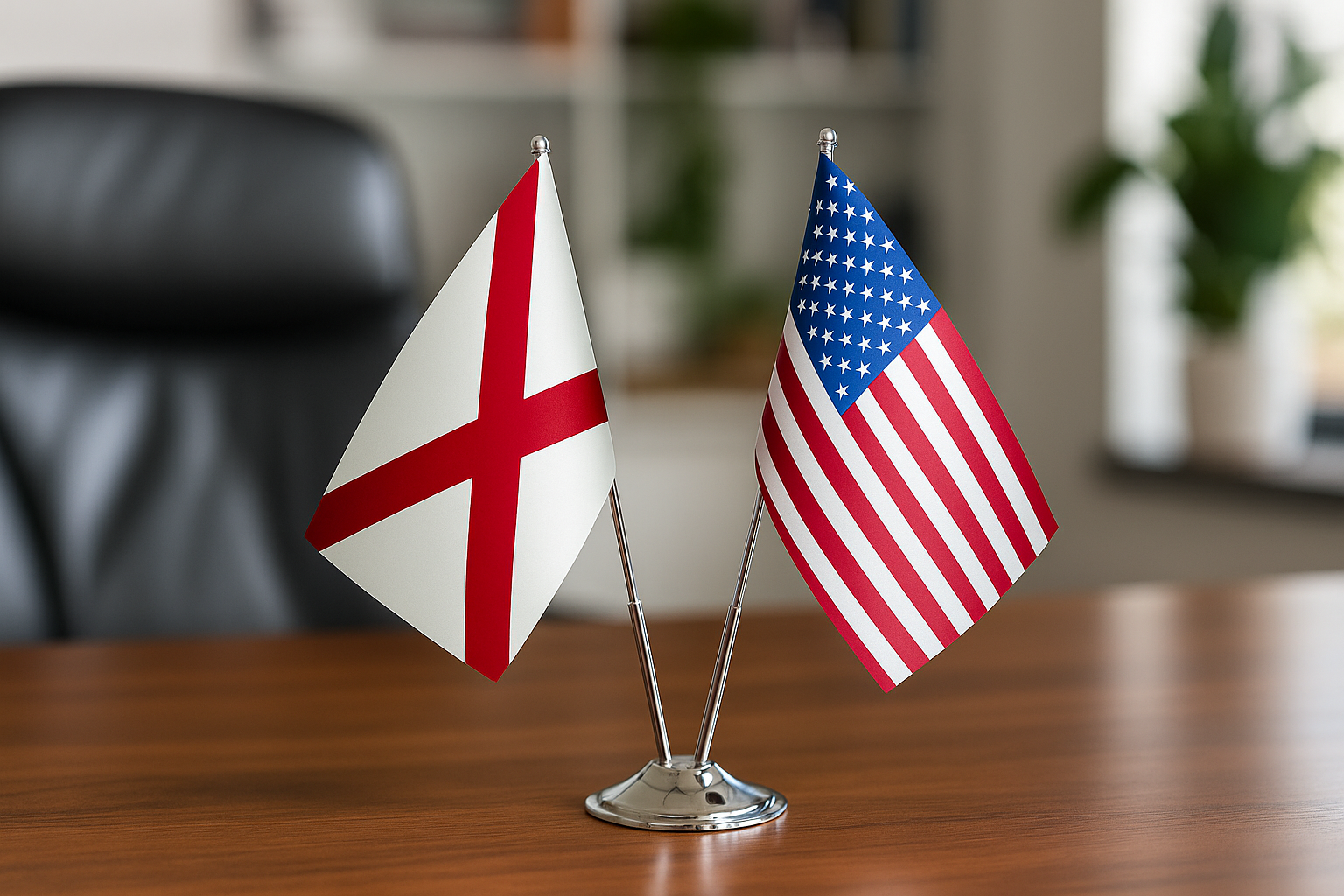
 The three main enemies of a desk flag are ultraviolet radiation, repeated mechanical contact, and airborne contamination. UV exposure is the most underestimated — a desk placed directly in front of a south-facing window can receive the same cumulative UV dose in six months indoors as an outdoor flag receives in twelve months outside. Colors fade, fibers weaken, and fabrics become brittle from the inside out without any visible warning until the damage is severe. Rotating the flag a quarter-turn every few weeks, or simply repositioning the desk so the flag is not in the direct solar path, extends print life significantly. The Premium USA Desk Flag — mounted on a chrome metal pole with a weighted base in silver or gold chrome finish — is a desk centerpiece that deserves this small extra step of UV management. Repeated touching is the second major cause of premature wear: oils and moisture from hands transfer to the fabric and act as a mild solvent on printed inks over time, so establishing a habit of handling only the pole rather than the flag panel significantly reduces this wear. The third factor is airborne contamination: cooking grease, cigarette smoke, and urban particulate matter coat fibers and are abrasive at a microscopic level, which is why flags displayed in reception areas near entrances or in break rooms age noticeably faster than those kept in private offices.
Heating and air-conditioning vents are another overlooked hazard. Constant warm, dry airflow directly onto a flag panel desiccates the fabric over months, making it brittle and prone to fraying along the hem. If the flag must sit near a vent, a simple repositioning of a few inches (5–10 cm) is usually enough to take it out of the direct airstream. For more information on how flags interact with their environment and what causes premature damage, our guide on mini flags for desks, tables, and event centerpieces covers environmental considerations across a range of small-format display flags.
When Is It Time to Replace Your Desk Flag
A desk flag should be replaced when fading, fraying, or physical damage makes it look unprofessional — for a display object whose entire purpose is dignified representation, appearance is the primary functional standard. In a typical indoor office environment with reasonable UV and dust management, a quality desk flag lasts between 2 and 5 years before the colors noticeably shift. Flags in high-traffic reception areas, those positioned near windows, or those that are handled frequently may show wear within 12 to 18 months. Inspect the flag quarterly: hold it at arm's length under natural light and check whether the colors still read as intended, whether the hem stitching is intact, and whether any printed lines (such as stars or fine graphic details) have become blurry or ghosted from repeated washing.
Specific replacement triggers include: fading that makes the flag's colors ambiguous (a faded red that reads as orange on a national flag creates a protocol problem), tears or fraying longer than 0.5 in (1.3 cm), and staining that does not come out after two careful hand-washes. For organizations that need to maintain precise color standards — embassies, government offices, and corporate headquarters — stricter replacement schedules of 12 to 24 months are common practice regardless of visible wear, since gradual color shift can be difficult to perceive day-to-day. If you are unsure whether a desk flag format or a table flag format better suits your institutional needs, our comparison article on table flags and desk flags compared walks through lifespan and total cost across both formats.
How to Retire a Worn Desk Flag with Respect
When a desk flag reaches the end of its usable life, it deserves a respectful retirement rather than simply being discarded in general waste. For US national flags specifically, the US Flag Code (4 USC § 8(k)) states that a flag that is no longer a fitting emblem for display should be destroyed in a dignified way, preferably by burning. Many American Legion posts, VFW chapters, and Boy Scout troops hold formal flag retirement ceremonies and accept worn flags from the public — this is the most common and culturally appropriate route for a retired US flag of any size, including desk flags.
For flags of other nations displayed in diplomatic or corporate settings, check whether the country's embassy or consulate has a protocol preference; many appreciate being notified rather than having national symbols quietly discarded. If no ceremonial option is available, wrapping the flag in plain paper and disposing of it separately from general recyclables — rather than mixing it with office trash — is a practical and respectful minimum. Keep a note of the replacement date when you retire a flag; this creates a simple maintenance log that helps predict future replacement cycles, particularly useful for organizations managing multiple flags across different offices or conference rooms. For further reading on flag use in professional environments, our article on logo desk flags for reception desks and trade booths covers deployment and rotation practices in commercial settings.

Desk Flags Collection
Browse national, state, and custom desk flags built for professional display — from executive offices to embassy conference tables.
Browse Collection →Can I put a desk flag in the washing machine? +
How often should I wash a desk flag? +
Can I iron a desk flag to remove wrinkles? +
How long does a desk flag typically last? +
What is the best way to store a desk flag when it is not in use? +
Does sunlight really damage indoor desk flags? +
How should a worn US desk flag be properly retired? +
Consistent desk flag care is straightforward once you understand what actually causes wear — UV exposure, mechanical contact, airborne contamination, and improper storage account for nearly all premature flag deterioration. Whether you are maintaining a single flag on an executive's desk or managing a fleet across a conference center, the same principles apply. When a flag has reached the end of its life, the USA Desk Flags collection and the broader Country Desk Flags collection make it easy to find an exact replacement with the finish and mount style you need. For a professional-grade replacement that suits offices and official settings, the Deluxe United States Table Flag is a consistently popular choice. Bulk pricing is available for corporate orders, making it practical to replace multiple flags on a consistent schedule without inflating per-unit cost.


