
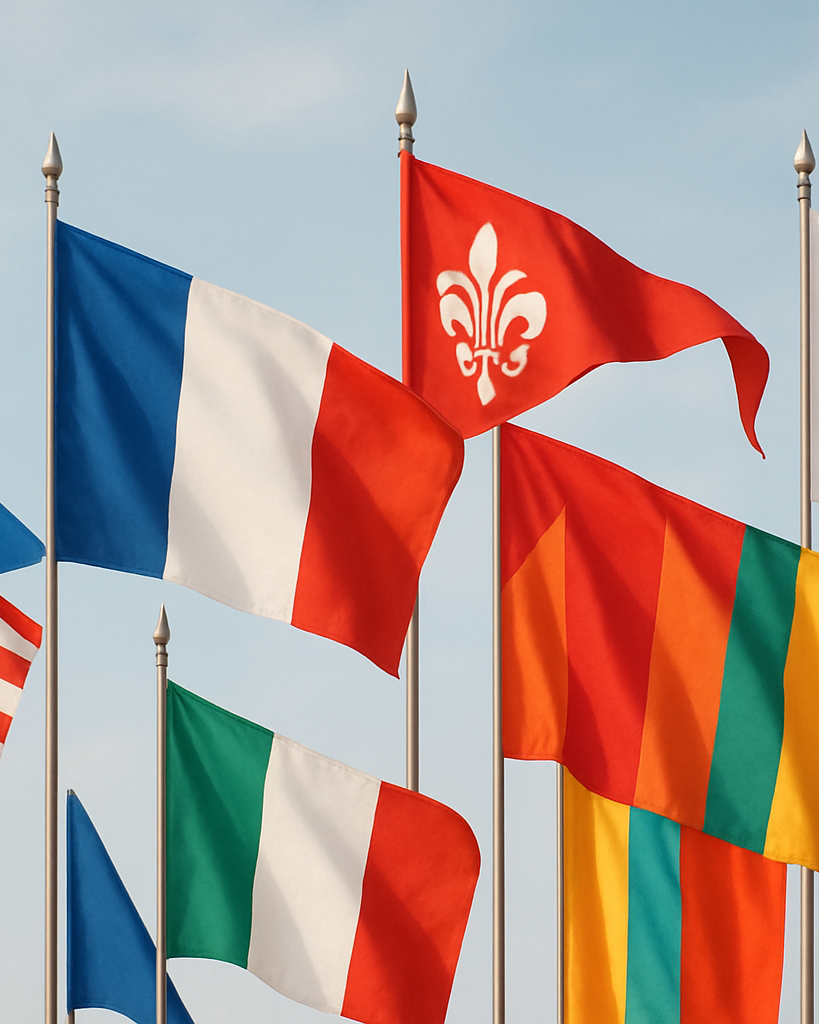
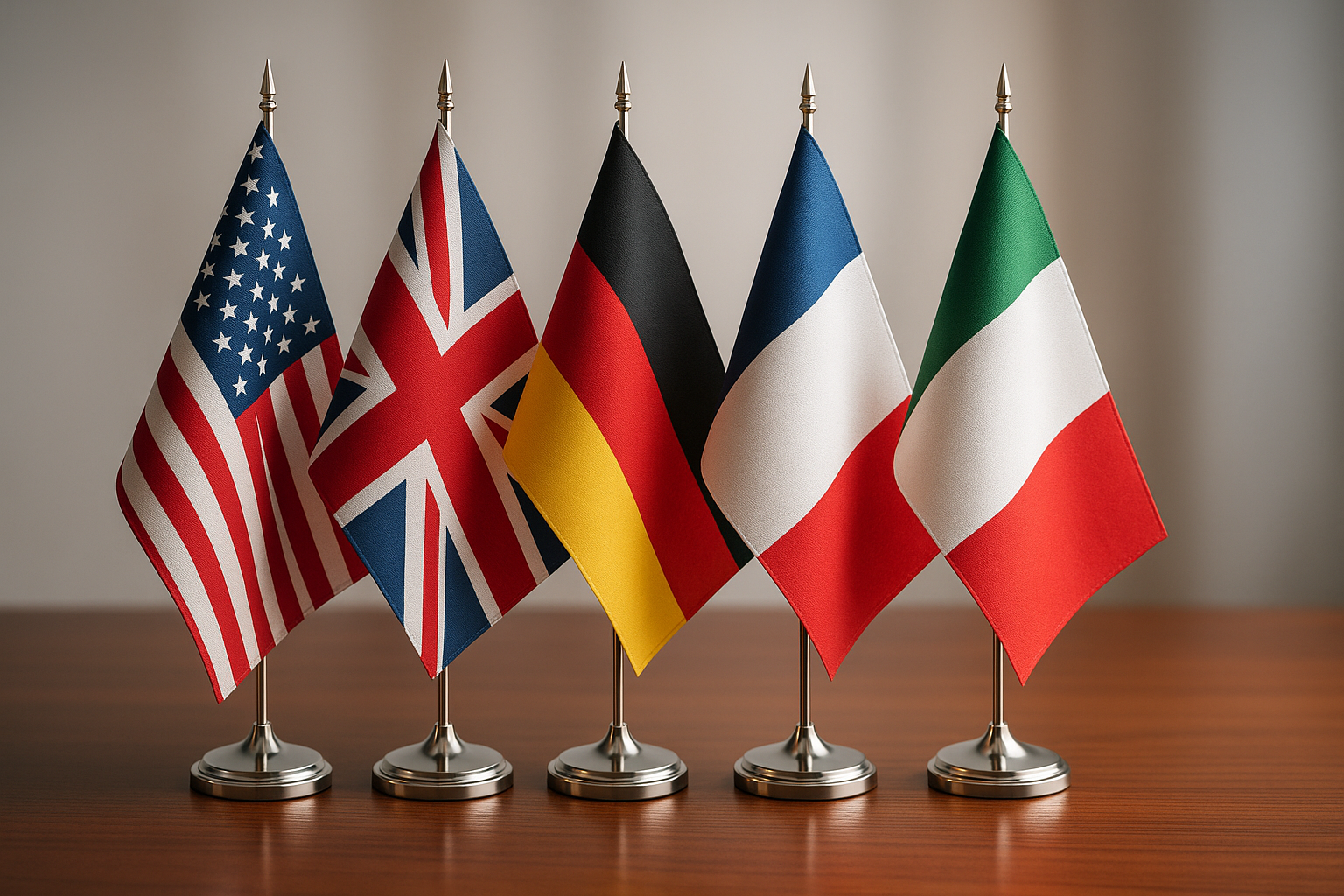

More than 20 countries fly red, white, and blue flags — which makes telling them apart one of the most common questions in vexillology. The key differences lie in stripe orientation (vertical vs. horizontal), stripe order, proportions, and any additional symbols or coat of arms. If you need a physical flag for display, Asya Bayrak's Country Flags collection covers the full range, from the French tricolore to the Dutch tricolor and beyond.
Which red, white, and blue flag belongs to which country at a glance
The fastest way to tell these flags apart is to check whether the stripes run vertically or horizontally, then note the order of colors from left to right or top to bottom. Vertical stripes instantly narrow the field to France, the Netherlands Antilles, and a handful of others, while horizontal stripes cover a larger group including the Netherlands, Russia, Luxembourg, Croatia, Slovenia, Serbia, Slovakia, the Czech Republic, and Paraguay, among others. Once you know the orientation, stripe order and any added emblem settle the question in seconds. Below is a country-by-country breakdown of the most commonly confused flags.
 France is the benchmark for red, white, and blue vertical stripe flags. Its tricolore places blue on the hoist side, white in the center, and red on the fly — equal bands, no emblem, and an aspect ratio of 2:3 in most practical uses. Adopted in its current form in 1830, the colors are rooted in the French Revolution: blue and red were the colors of Paris, white represented the royal house of Bourbon. The flag's simplicity is deceptive — rotated 90 degrees it looks nothing like any horizontal stripe flag, but confusion with the similar-looking Chad flag (which differs only in its deeper blue shade) is genuine even among flag enthusiasts. Our France Outdoor Flag, crafted from 110 g Raschel knitted polyester, renders those three bands in vivid color for outdoor display anywhere wind and weather are a factor. Having a correctly reproduced physical reference is one of the most reliable ways to train your eye to distinguish blue shades and stripe ratios between similar flags.
How vertical stripe flags differ from one another
Among red, white, and blue flags with vertical stripes, France stands alone as the major national example with equal-width bands and no central device. Chad's flag is visually nearly identical but uses a noticeably darker, indigo-leaning blue — a distinction FIAV (Fédération internationale des associations vexillologiques) standards document carefully but that is very hard to spot on a cheap print. The French overseas collectivity flag of Saint-Martin and several historical flags of French-influenced regions also use vertical tricolores. If you encounter a vertical red-white-blue flag with a crest, coat of arms, or central symbol, it most likely belongs to a regional or historical entity rather than France itself. The rule of thumb: a clean, equal-width vertical blue-white-red with no emblem is France.
How horizontal stripe flags in these colors compare to each other
 Horizontal stripe flags using red, white, and blue form a larger and more confusing family, so stripe order is everything. The Netherlands runs red on top, white in the middle, blue on the bottom — the oldest tricolor still in continuous use, dating to the late 16th century. Russia reverses the bottom two bands: white on top, blue in the middle, red on the bottom. Luxembourg looks almost identical to the Netherlands but uses a lighter, sky blue and has slightly different proportions (1:2 vs. the Dutch 2:3). Croatia adds a red-white-blue order topped by a distinctive red-and-white checkerboard coat of arms in the center. Slovenia and Slovakia both place their national coats of arms on the hoist side of an otherwise similar-looking flag, which is the fastest visual cue to distinguish them. Serbia's flag is red on top, blue in the middle, white on bottom — the reverse of Russia's — and also carries a coat of arms. Paraguay is the only country whose obverse and reverse carry different emblems, making it unique even within this group. Our Netherlands Outdoor Flag, woven from 110 g Raschel knitted polyester, faithfully reproduces the Dutch horizontal stripe order and proportions, making it an excellent side-by-side reference if you are studying these distinctions.
Matching the right flag to the right display setting
Once you have identified the flag you need, the display environment determines the product type. Outdoor settings — building facades, flagpoles, sports venues, festival grounds — demand a flag that handles UV exposure, wind load, and rain. Indoor settings — embassies, government offices, school classrooms, event stages — call for a presentation-grade flag that holds its color under artificial lighting and projects institutional authority. For the same red-white-blue national flag, these two environments genuinely require different constructions, and buying the wrong type shortens usable life significantly.
For outdoor use, Raschel knitted polyester at 110 g/m² is the workhorse fabric: it allows wind to pass through its open weave, reducing stress on the fabric and the pole hardware, while remaining vibrant for a typical lifespan of 6 months to 2 years depending on climate and exposure. The France Outdoor Flag and the Netherlands Outdoor Flag are both built on this 110 g Raschel fabric. For indoor ceremonial or diplomatic display, our satin-fabric indoor flags use high-definition dye-sublimation printing on a double-layer construction mounted on a chrome metal pole — the France Official Indoor Flag and the Netherlands Official Indoor Flag are built exactly to this standard, making them appropriate for embassies, diplomatic missions, and institutional lobbies.
European Countries Flags
Browse the full range of European national flags — including every red, white, and blue combination — available in outdoor and indoor versions.
Browse Collection →What the lifespan and total cost look like across different flag types
Raschel outdoor flags typically last 6 months to 2 years; indoor satin flags, kept out of direct sunlight and handled with care, can last 5 years or more. The practical cost comparison favors buying the right flag for the right environment over buying a single multipurpose flag and replacing it frequently. A Raschel outdoor flag flown 24 hours a day in a coastal or high-wind location will degrade faster than the same flag on an interior-courtyard pole in a mild climate — proper installation, UV index, and salt-air exposure are the main variables. For school events and multicultural displays where flags rotate frequently, our related guide on using world flags at a school event covers practical logistics, sizing, and simultaneous display rules worth reading before you order.
Quick reference guide to the most confused red, white, and blue flags
The table below summarizes the fastest visual identification cues for the flags most commonly mixed up. No single cue is foolproof — stripe color shade requires a calibrated display or a physical reference — but orientation plus stripe order resolves about 90% of confusion cases before you need to look at shade or proportion.
- France — Vertical stripes, blue | white | red (left to right), no emblem, equal bands.
- Netherlands — Horizontal stripes, red | white | blue (top to bottom), no emblem, 2:3 ratio.
- Russia — Horizontal stripes, white | blue | red (top to bottom), no emblem on the standard national flag.
- Luxembourg — Horizontal stripes, red | white | light blue (top to bottom); the blue is distinctly lighter than the Netherlands'.
- Croatia — Horizontal stripes, red | white | blue (top to bottom), coat of arms in center.
- Slovenia — Horizontal stripes, white | blue | red (top to bottom), coat of arms on hoist side.
- Slovakia — Horizontal stripes, white | blue | red (top to bottom), coat of arms on hoist side (positioned slightly left of center).
- Serbia — Horizontal stripes, red | blue | white (top to bottom), coat of arms on hoist side.
- Czech Republic — Horizontal red and white with a blue triangular wedge on the hoist — the triangle makes it immediately identifiable.
- Paraguay — Horizontal stripes, red | white | blue (top to bottom), different emblems on each side.
Russia's Russia Outdoor Flag, also crafted from 110 g Raschel knitted polyester, is a good physical companion to the Netherlands flag when training an eye for the difference between white-blue-red and red-white-blue stripe order — holding the two flags side by side makes the distinction unmistakable in a way that a screen comparison often does not.
How to make sure you are ordering the correct flag for your purpose
Confirm three things before placing an order: the country name (not just the color scheme), the display environment (outdoor pole vs. indoor stand), and the size you need in feet or centimeters. For outdoor poles, standard US sizes run from 2 ft × 3 ft (61 cm × 91 cm) up to 5 ft × 8 ft (152 cm × 244 cm) for most national flag applications. For indoor ceremonial stands, the pole and flag are typically sold as a set. If you are sourcing flags for a multicultural classroom, an international trade event, or a diplomatic reception, browsing the full European Countries Flags collection lets you compare all available options in one place. For flag care practices that extend usable life regardless of which red-white-blue flag you choose, the principles in our care guide for fade-free flags apply broadly to any Raschel or satin national flag.
How many countries have red, white, and blue flags? +
Which countries have a red, white, and blue horizontal stripe flag? +
Which country has a red, white, and blue vertical stripe flag? +
What is the difference between the French and Dutch flags? +
How do you tell the Netherlands and Luxembourg flags apart? +
What is the red, white, and blue flag with a coat of arms in the middle? +
Is the Russia flag the same as the Netherlands flag? +
Whether you are sourcing flags for diplomatic display, an international event, a classroom, or a heritage celebration, getting the right flag starts with knowing exactly which red, white, and blue design you need. Browse the complete Country Flags collection for every national flag in both outdoor Raschel and indoor satin versions. For European flags specifically, the European Countries Flags collection lets you compare all options side by side. If you need individual flags, the France Outdoor Flag, Netherlands Outdoor Flag, and Russia Outdoor Flag are all ready to ship. Bulk pricing is available for corporate, institutional, and government orders — contact us with your quantity and delivery requirements.


