




The Saltire (St. Andrew's Cross) is Scotland's official national flag, recognised internationally and appropriate for any formal, diplomatic, or everyday display, while the Lion Rampant is a royal standard historically reserved for the monarch — yet both are proudly flown by Scots worldwide. If you're shopping for a Scotland flag from our European Countries Flags collection, understanding which design fits your context will help you fly it correctly and respectfully. This guide breaks down the history, protocol, appropriate use cases, durability considerations, and cost differences between these two iconic Scottish symbols so you can make an informed choice.
Which Scottish Flag Should You Choose, and Who Is Each One For?
The Saltire is the right choice for the vast majority of people — private citizens, businesses, schools, and event organisers. It is Scotland's official national flag under heraldic law and is flown at Scottish Government buildings, sports events, and cultural celebrations worldwide. The Lion Rampant, by contrast, is technically the Royal Standard of Scotland and was historically restricted to use by Scottish monarchs; today, Scottish Rugby officially adopted it for supporter use, making it a fixture at sporting events. As a quick rule: Saltire for official or everyday display, Lion Rampant for sporting fan contexts or cultural celebration.
What Makes the Saltire Strong — and Where It Falls Short
The Saltire — a white diagonal cross on a deep azure (Pantone 300) blue field — is one of the oldest national flags in the world, with origins dating to at least the 9th century AD and possibly earlier. Its claim to St. Andrew, patron saint of Scotland, gives it deep religious and national significance. Because it is Scotland's de jure national flag, it is the appropriate choice for embassies, consulates, government offices, schools, cultural centres, and any formal diplomatic setting. Internationally, the Saltire is also instantly recognisable as a component of the Union Jack, which adds an extra layer of brand familiarity for global audiences. For outdoor permanent display — corporate entrances, hotel forecourts, sporting venues — the Saltire's bold two-colour geometry holds up exceptionally well in print: high-contrast designs like this typically retain legibility and colour vibrancy for the full 6-to-24-month outdoor lifespan of a quality polyester flag. The main limitation of the Saltire is precisely its formality: at a rowdy Scotland vs. England rugby match, it can feel understated compared to the drama of the Lion Rampant.
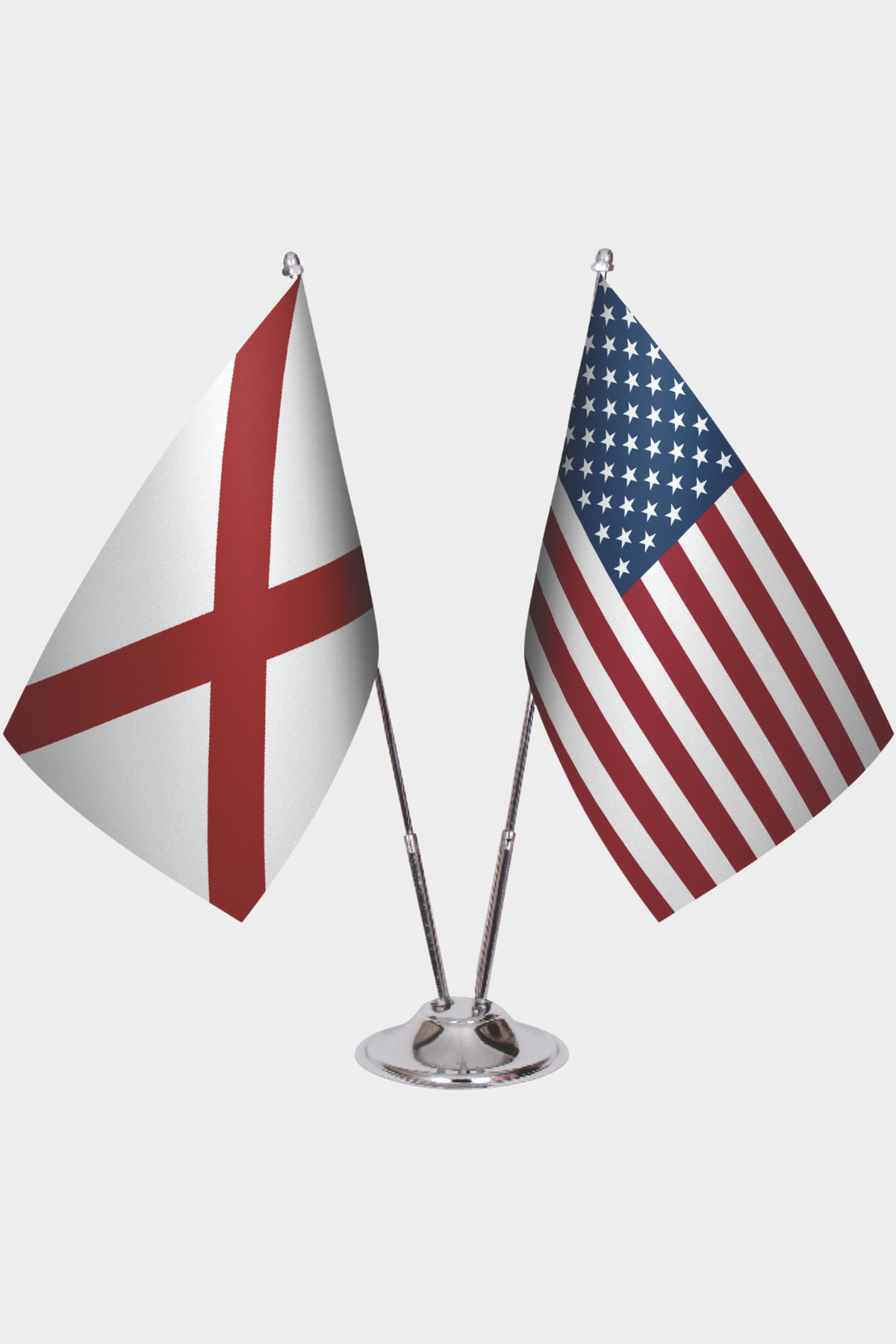
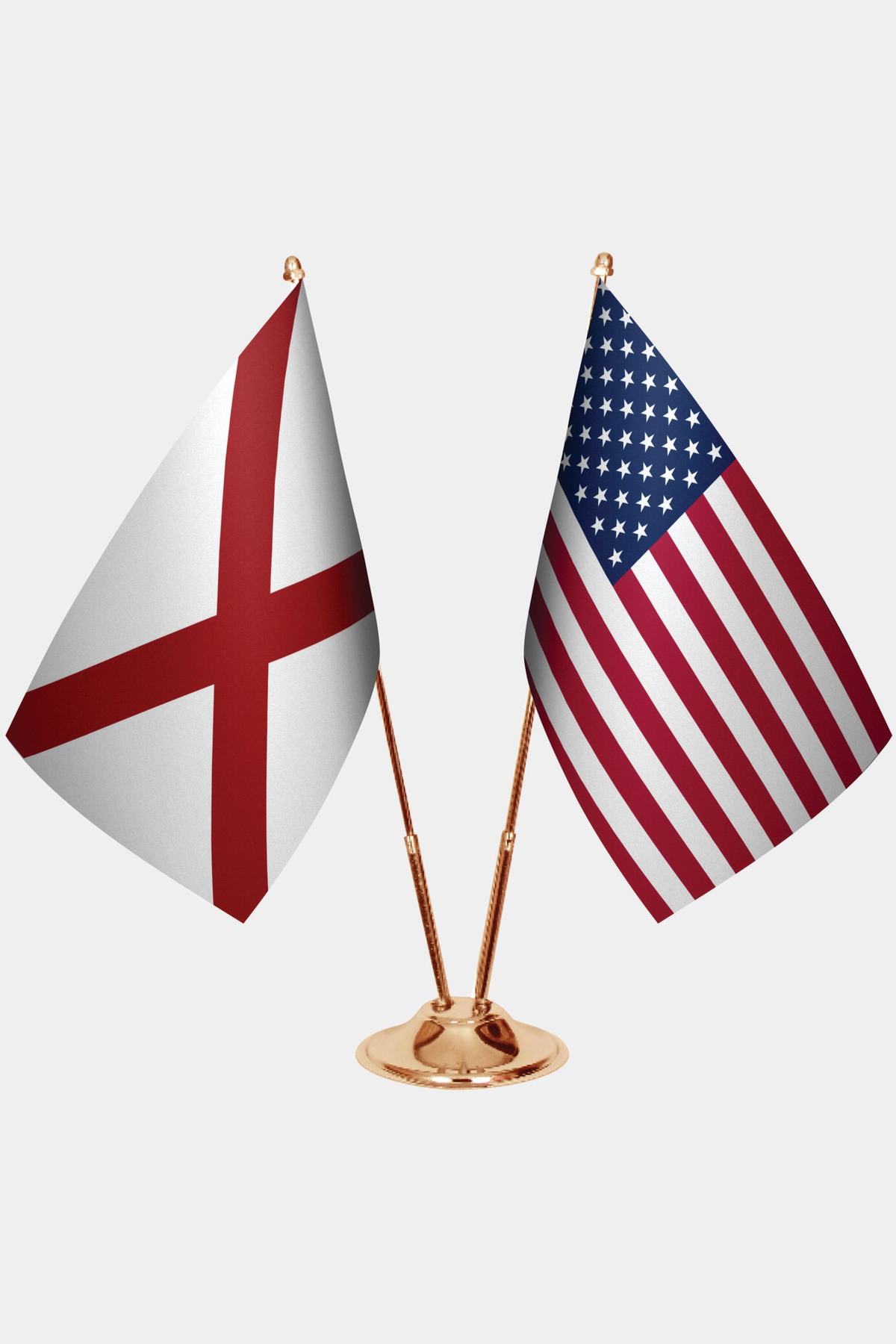
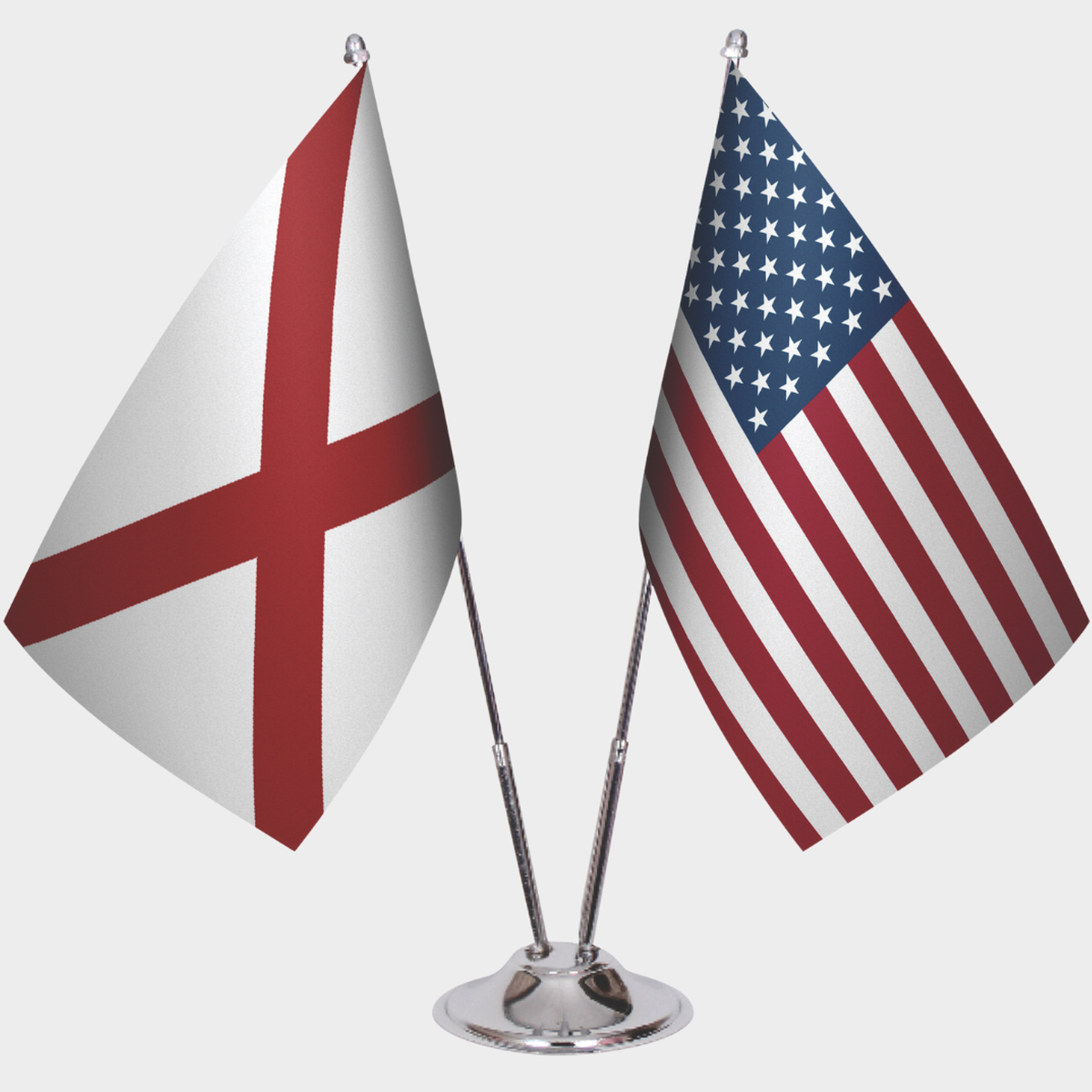
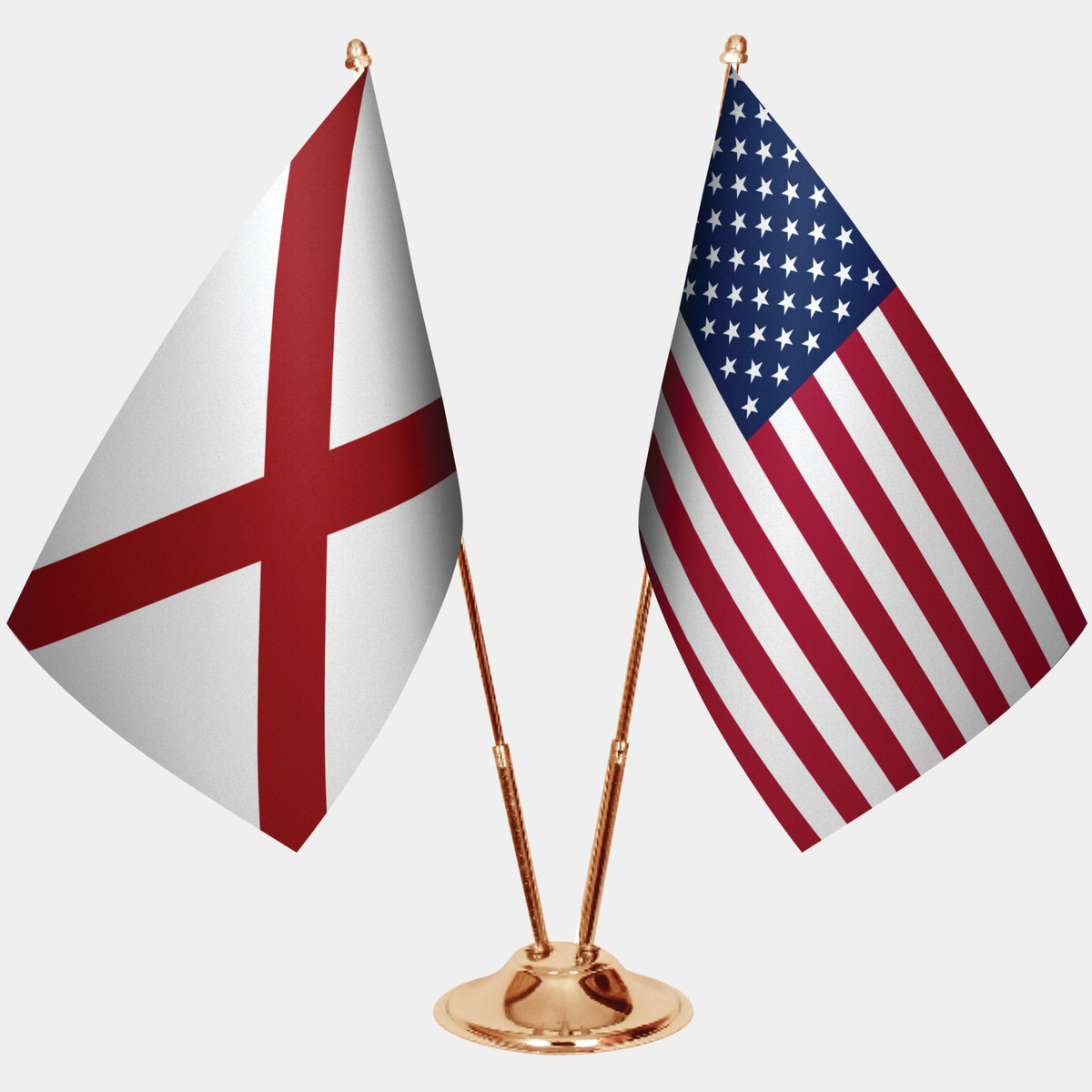
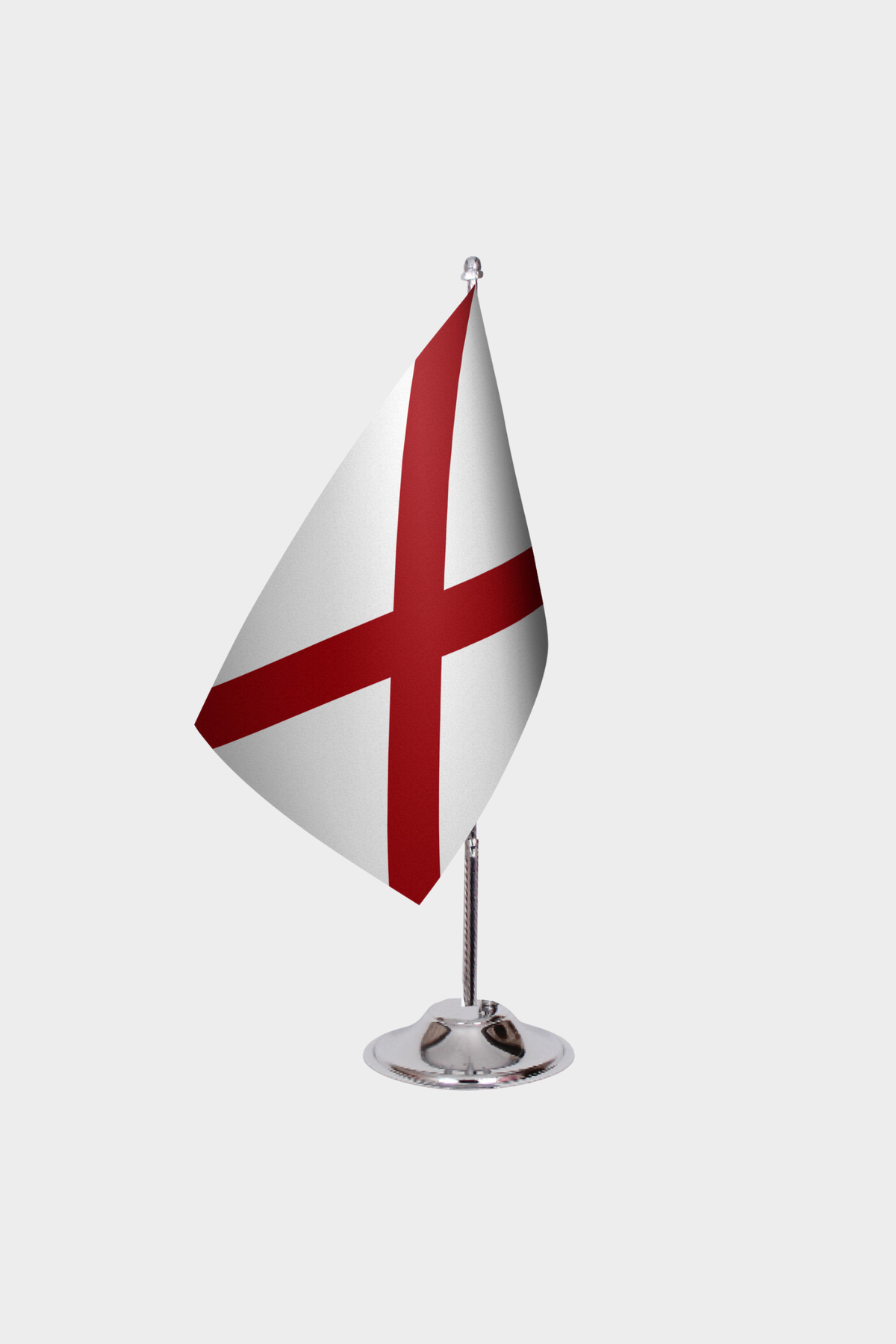
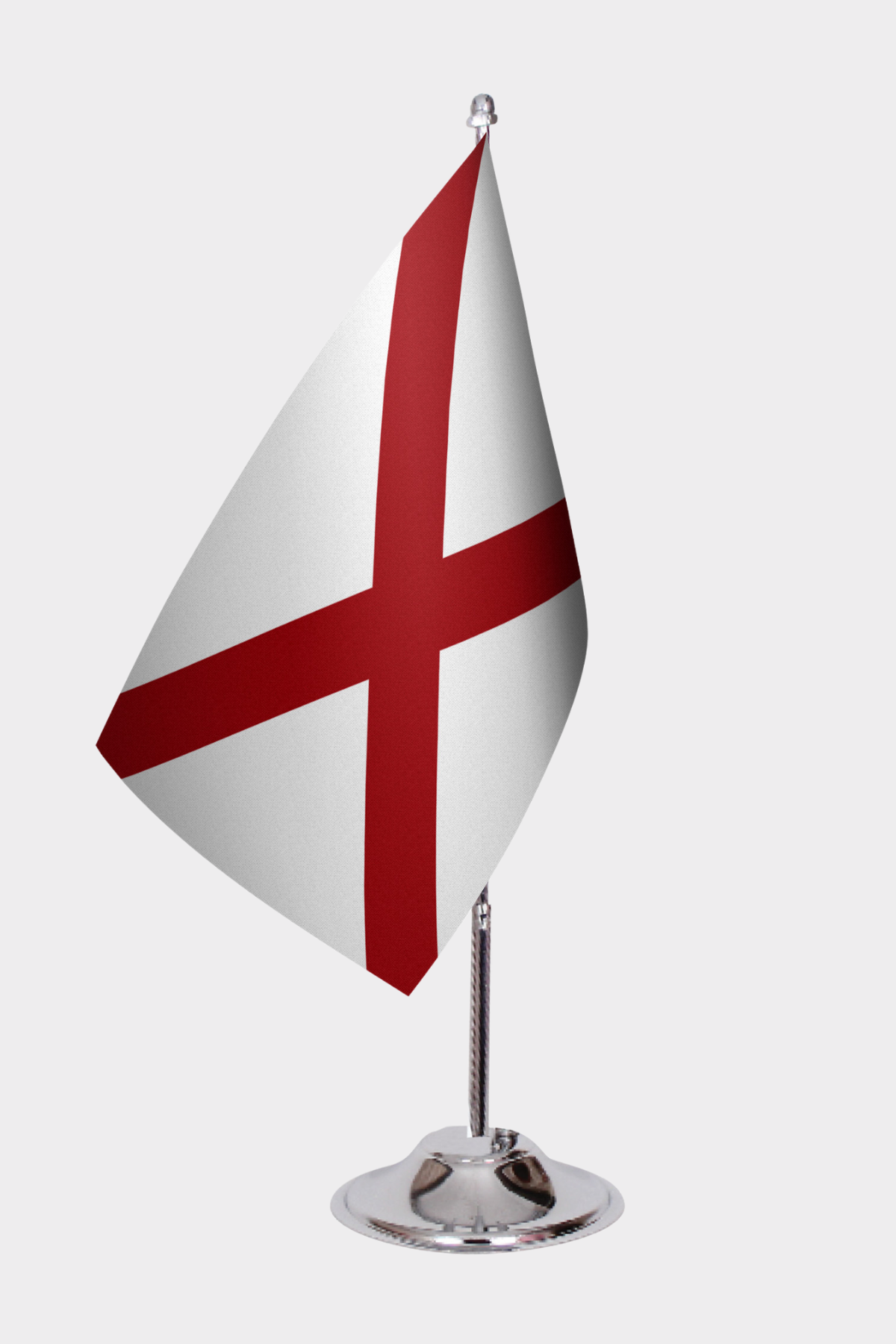
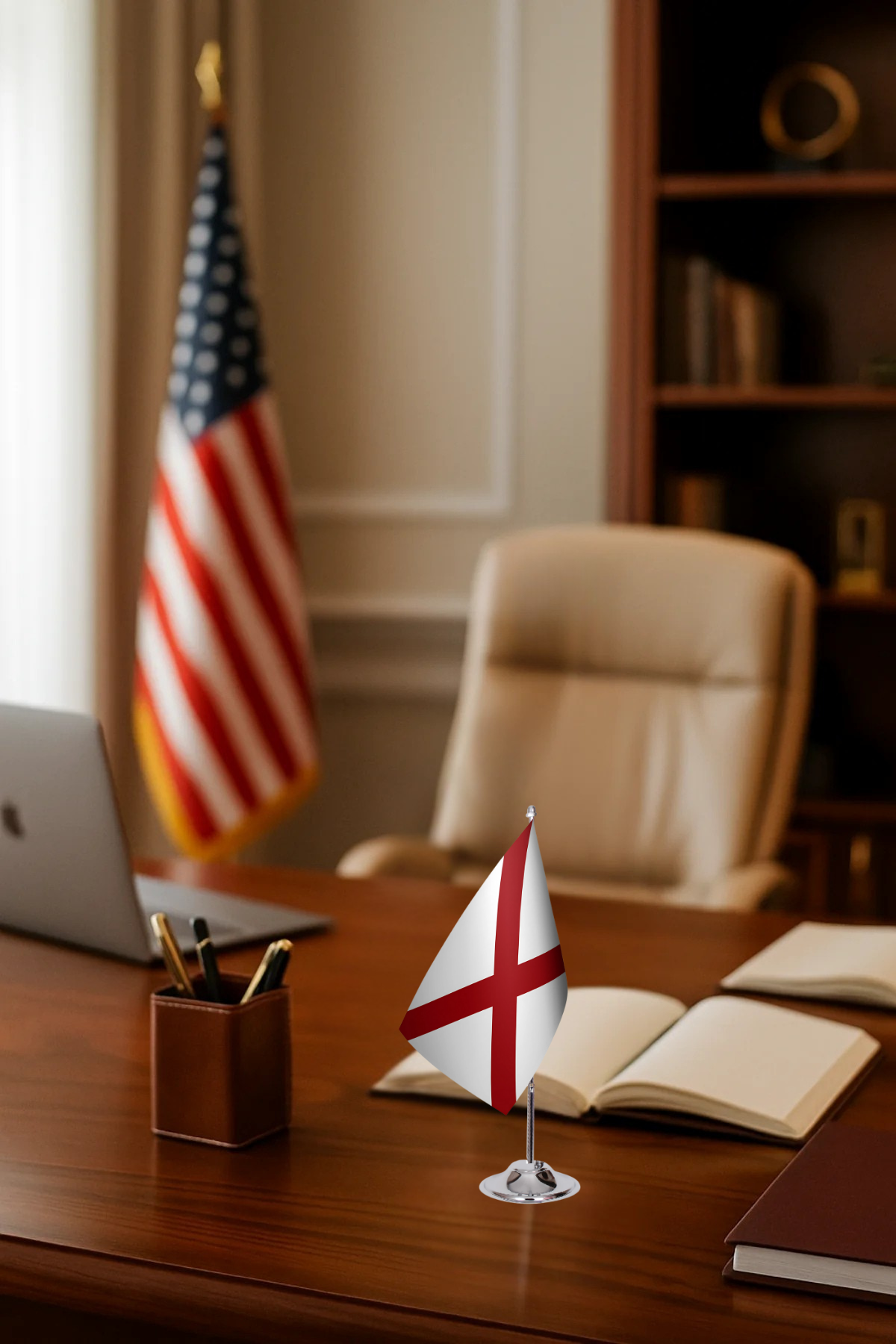
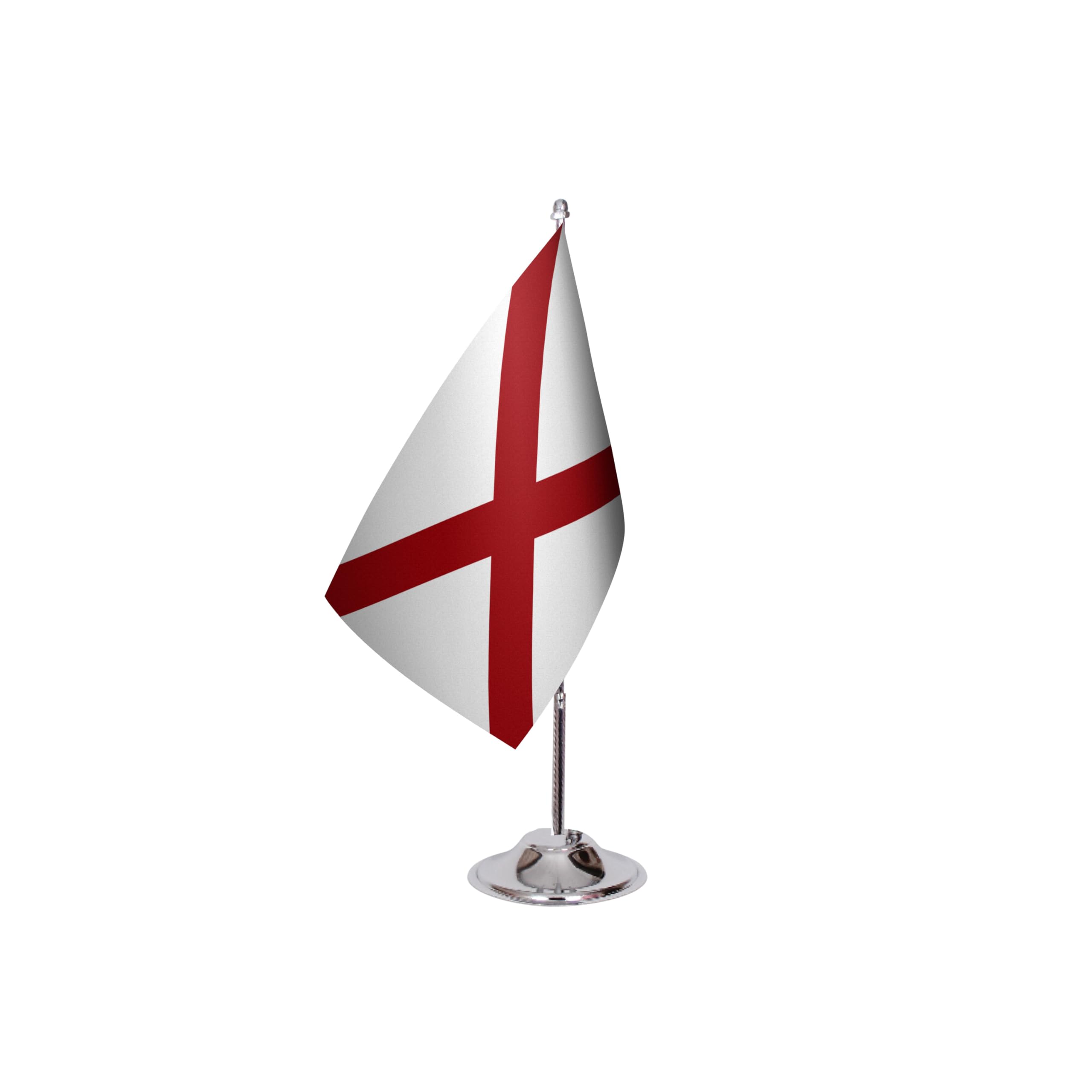
 For indoor and desktop environments where the Saltire truly shines, the Scotland Desk Flag is an excellent option — it features the iconic blue St. Andrew's Cross design and is mounted on a chrome metal pole with a weighted base, available in Silver Chrome or Gold finish. This makes it ideal for diplomatic offices, corporate reception desks, embassy meeting rooms, and cultural centres representing Scotland. The desk flag format communicates official national identity at close range, which is exactly where the Saltire's formal credentials matter most. It's a professional statement piece that fits neatly alongside other national flags in a conference or boardroom setting. Because the Saltire design is a two-colour flag, the colours reproduce sharply at small sizes, making desktop formats particularly effective for this specific design.
What Makes the Lion Rampant Compelling — and Why Protocol Matters
The Lion Rampant — a gold lion on a red field, armed and langued in blue — is a visually dramatic flag that carries centuries of royal Scottish heraldic tradition. It predates the Acts of Union and served as the personal banner of the Kings of Scots, later becoming the Royal Standard. Its strength lies entirely in its emotional power and its deep rootedness in Scottish cultural identity: it reads as bold, fierce, and unmistakably Scottish in a way that resonates strongly at sporting events, parades, and cultural festivals. Scottish Rugby's adoption of the Lion Rampant as the official supporter flag effectively legitimised its widespread civilian use in a fan context. The key weakness is protocol: under the Royal Arms of Scotland, flying the Lion Rampant as a national flag is technically contrary to a 1672 Act of the Scottish Parliament, which reserved it for royal use. In practice, enforcement is essentially non-existent for private citizens, but businesses, government bodies, and diplomatic missions should avoid using it in place of the Saltire. A second practical drawback: the Lion Rampant's four-colour complexity (red, gold, blue detailing, white background) means it requires higher print quality to reproduce crisply, and fine heraldic detail can degrade faster on lower-specification outdoor fabrics.
 For large-scale outdoor Saltire display, the Outdoor Vertical Scotland Flag is engineered specifically for high-traffic outdoor environments where visibility and durability are non-negotiable. It is purpose-built for settings like gas stations, corporate entrances, embassies, dealerships, hotels, and event venues — exactly the contexts where the Saltire's official national flag status is most relevant. The vertical format maximises street-level visibility along building facades and feather pole systems where horizontal flags would hang limp in still air. If you're representing Scotland in an outdoor commercial or institutional context, this is the format that will make the strongest visual impact at the greatest distance. The Saltire's bold diagonal geometry is one of the most effective flag designs for vertical display because the white cross remains fully visible regardless of wind direction.
Matching Each Flag to Your Specific Use Case
Your display context should drive the decision more than personal preference. Here is how each flag maps to real-world scenarios:
- Formal outdoor display (embassy, government office, school): Saltire only. The Lion Rampant is inappropriate for official institutional settings.
- Corporate and hospitality (hotel, conference centre, business premises): Saltire. It signals national identity without the protocol complications of the royal standard.
- Sports events (rugby, football, Highland Games): Either flag is widely accepted. The Lion Rampant is the traditional supporter banner; the Saltire is equally valid and more formal.
- Cultural parades and festivals (St. Andrew's Day, Burns Night, Tartan Day in the US): Both flags appear together routinely. Handheld formats of either design work well here.
- Home display (garden pole, wall mount): Both are appropriate. Many Scottish households fly the Saltire as a point of national pride; the Lion Rampant is more common among those with a strong sporting or cultural identity emphasis.
- Diplomatic and ceremonial protocol: Saltire exclusively, in accordance with international flag protocol standards aligned with FIAV (Fédération internationale des associations vexillologiques) guidance for national flags.
For events and parades where you need a portable, crowd-friendly format, the Scotland Handheld Flag is crafted from 90gr Raschel polyester fabric and mounted on a stick — designed for durability and vibrant colour reproduction, making it practical for cheering at international sports competitions, marching in cultural parades, or decorating for Scottish heritage events. For a more permanent home or office wall installation, the Scotland Wall-Mounted Telescopic Flagpole Set includes both a high-quality Scotland flag and a durable aluminium telescopic pole with a sturdy wall bracket — a complete kit for exterior or interior wall display at homes, offices, embassies, and cultural centres.

European Countries Flags
Our European Countries Flags collection includes Scotland flags in multiple formats — from desk flags to full outdoor vertical sets — all manufactured to professional display standards.
Browse Collection →How Long Each Flag Lasts and What Each One Really Costs You
Over a full display cycle, the Saltire is generally the more cost-effective flag to maintain. Its two-colour design (white on blue) requires fewer ink passes in production and places less stress on dye systems during outdoor UV exposure. A quality outdoor polyester Saltire can be expected to last 6 months to 2 years depending on exposure intensity, wind frequency, and care practices — figures consistent across the flag manufacturing industry for standard outdoor flags. The Lion Rampant, with its four-colour heraldic complexity including fine gold and blue detailing, is more susceptible to colour fade discrepancies: red and gold pigments typically fade at different rates, which means a Lion Rampant flag can begin to look degraded before the field colour loses intensity. In practice, budget for replacement cycles roughly 20–30% more frequently for Lion Rampant flags in high-UV, high-wind locations compared to equivalent-spec Saltire flags. Initial unit costs are typically comparable between the two designs at equivalent size and fabric specification. However, if you are purchasing in quantity for a hotel forecourt, events company, or Scottish heritage organisation, the cumulative difference over two to three replacement cycles can be meaningful. Bulk pricing is available for corporate and institutional orders, and the simpler Saltire print process can sometimes allow for faster production lead times at volume. For a broader look at how different national flag designs compare in terms of flag proportions and production standards, our article on why the Nepal flag is not a rectangle offers useful context on how design complexity affects manufacturing.
FAQ
Is it illegal to fly the Lion Rampant as a private citizen? +
Which Scotland flag should I fly at a rugby or football match? +
What is the Nova Scotian flag and how is it different from the Scotland flag? +
What flag do Ulster Scots or Scots-Irish communities typically fly? +
What is the correct shade of blue for the Scottish Saltire? +
Can I fly the Scotland flag in the United States without any restrictions? +
How do I know which size Scotland flag to order for my flagpole? +
Whether you fly the Saltire for its official national flag status or the Lion Rampant for its cultural and sporting drama, choosing the right format is just as important as choosing the right design. Explore the full range of Scotland flag options — from desk displays to large outdoor verticals — in our European Countries Flags collection, or browse our broader Country Flags collection if you need to pair a Scotland flag with other national flags for a multi-flag display. For event and parade needs, the Scotland Handheld Flag offers crowd-ready portability, while the Scotland Wall-Mounted Telescopic Flagpole Set delivers a complete, professional installation for permanent displays. If you are also navigating international flag protocol for business settings, our guide on placing the Chinese flag at business meetings covers the same kind of protocol principles applied to another context. Bulk pricing is available for corporate, hospitality, and institutional orders — contact us directly for volume quotes.