








Indoor flags typically need replacement every 2 to 5 years under normal display conditions — but fading colors, fraying edges, or a torn header are signs you should act sooner regardless of age. Knowing exactly when and how to care for your indoor flags collection will keep your ceremonial display looking polished and protocol-compliant for years longer than average. Whether you display an American flag in a government office, a country flag in a conference room, or an organizational banner in a community center, the guidance below applies directly to your situation.
Can You Wash an Indoor Flag — and What Is the Correct Method?
Yes, most indoor flags made from nylon or polyester can be hand-washed or machine-washed on a gentle cycle with cold water and mild detergent — but you must always check the manufacturer's care label first. Aggressive washing is one of the fastest ways to shorten a flag's lifespan, so technique matters as much as frequency.
For standard nylon or polyester indoor flags, fill a clean basin with cold water and a small amount of color-safe, phosphate-free detergent. Submerge the flag and gently agitate it by hand — never scrub or twist the fabric, as this stresses the weave and can distort printed or embroidered details. Rinse thoroughly until the water runs completely clear, then roll the flag in a clean dry towel to absorb excess moisture before air-drying flat or hanging it loosely indoors away from direct sunlight. Machine washing is acceptable for durable polyester flags on a delicate or hand-wash cycle inside a mesh laundry bag, but avoid spin cycles above 600 RPM. Never put an indoor flag in a tumble dryer on high heat — low-heat or air-dry settings only, since heat degrades synthetic fibers and can melt embroidery thread or metallic fringe. If your flag carries decorative gold fringe — common on ceremonial sets — read our detailed guide on caring for fringed indoor ceremonial flags before washing, as fringe requires special handling to avoid tangling or tarnishing.
 For flags with specialty finishes like the Glitter Executive Flag, standard machine washing is not recommended — the metallic coating and decorative elements require spot cleaning only with a lightly dampened cloth. Dampen a clean microfiber cloth with cool water and a single drop of gentle soap, then blot — do not rub — the soiled area. Allow it to air dry completely before re-hanging, as rehanging while damp can leave water marks or cause the fabric to stretch slightly out of shape. For dusty surfaces with no staining, a soft-bristle brush or a lint roller is often all that is needed between deeper cleans. Specialty ceremonial flags should be cleaned no more than two to three times per year unless visibly soiled, since each cleaning cycle puts minimal but cumulative stress on decorative materials.
How to Store an Indoor Flag Correctly Between Uses
Store an indoor flag loosely rolled around an acid-free tube or folded using the traditional military tri-fold, then placed in a breathable cotton bag — never sealed in plastic, which traps moisture and promotes mildew. Proper storage can add one to two full years to a flag's usable life.
Before storage, make sure the flag is completely dry — even slight residual dampness can cause mold growth within days inside a sealed container. Remove the flag from its pole, smooth out any creases, and roll it around an archival-quality cardboard or PVC-free tube at least 3 in (7.6 cm) in diameter so the fabric does not crease tightly at the center. Wrap the rolled flag loosely in acid-free tissue paper for an additional layer of protection against humidity and contact stains. Store the wrapped flag horizontally in a cool, dry location with a stable temperature between 60°F and 70°F (15.5°C and 21°C) and relative humidity below 50%. Avoid basements, attics, or storage rooms next to HVAC equipment, where temperature swings and moisture levels can fluctuate dramatically. For organizations managing multiple flags, label each storage tube with the flag type and last-used date so rotation is simple and no single flag stays in storage so long that it becomes brittle from inactivity.
What Factors Shorten an Indoor Flag's Lifespan
The four primary enemies of indoor flags are interior UV light from windows and skylights, air pollutants and particulate matter in high-traffic spaces, physical abrasion from contact with poles or hardware, and improper handling during display or removal. Identifying which of these applies to your setting lets you take targeted action before damage accumulates.
Even interior UV exposure is significant: south- or west-facing windows can deliver enough ultraviolet radiation to fade flag colors measurably within 6 to 12 months. If your display location receives direct window light for more than 4 hours per day, use UV-filtering window film or rotate the flag quarterly to equalize exposure. In high-traffic environments like lobbies, convention centers, or meeting halls, airborne dust, cooking fumes, and cleaning product vapors settle into fabric fibers and accelerate dye degradation — more frequent gentle cleaning (three to four times per year) is appropriate in those settings. Physical abrasion is an underappreciated cause of early wear: if the flag sleeve fits too tightly on the pole, or if the fabric rubs against a wall or furniture during display, fraying begins at contact points within months. Always confirm that pole hardware — finials, brackets, and ferrules — is smooth and free of burrs that could snag fabric. For organizations and civic groups displaying flags in high-traffic community spaces, our article on indoor flag care standards for high-traffic community spaces covers institutional maintenance schedules in more detail.
 The USA Official Indoor Flag is constructed from heavyweight nylon specifically engineered for stable indoor environments, but even durable fabric will degrade prematurely if displayed in rooms with aggressive HVAC airflow that causes constant motion and friction against the pole sleeve. High-velocity air conditioning can make an indoor flag behave almost like an outdoor flag — flapping repeatedly and stressing the header stitching with every air cycle. If your flag is positioned directly in an HVAC airstream, consider repositioning it at least 3 ft (0.9 m) away from the nearest vent, or switching to a heavier-weight fabric that resists light air movement. Ceremonial flags displayed in government offices, courtrooms, or diplomatic settings should be inspected monthly, as these high-visibility environments demand that the flag always appear immaculate. Consistent monthly checks take under two minutes but catch early-stage problems — a loose header stitch, the beginning of color fading, or a small snag — before they become visible defects requiring immediate replacement.

Indoor Flags Collection
Browse ceremonial-grade indoor flags in standard sizes for offices, government buildings, schools, and civic organizations — available in USA, country, and custom options.
Browse Collection →Clear Signs That an Indoor Flag Needs to Be Replaced Now
Replace an indoor flag immediately when you observe any of the following: fraying along more than 1 in (2.5 cm) of any edge, a torn or separated header, visible color fading that distorts the flag's recognizable design, or any hole or tear in the field — no matter how small. The US Flag Code (4 USC § 8(k)) specifically states that a flag that is no longer a fitting emblem for display should be retired, and that standard applies equally to indoor and outdoor flags.
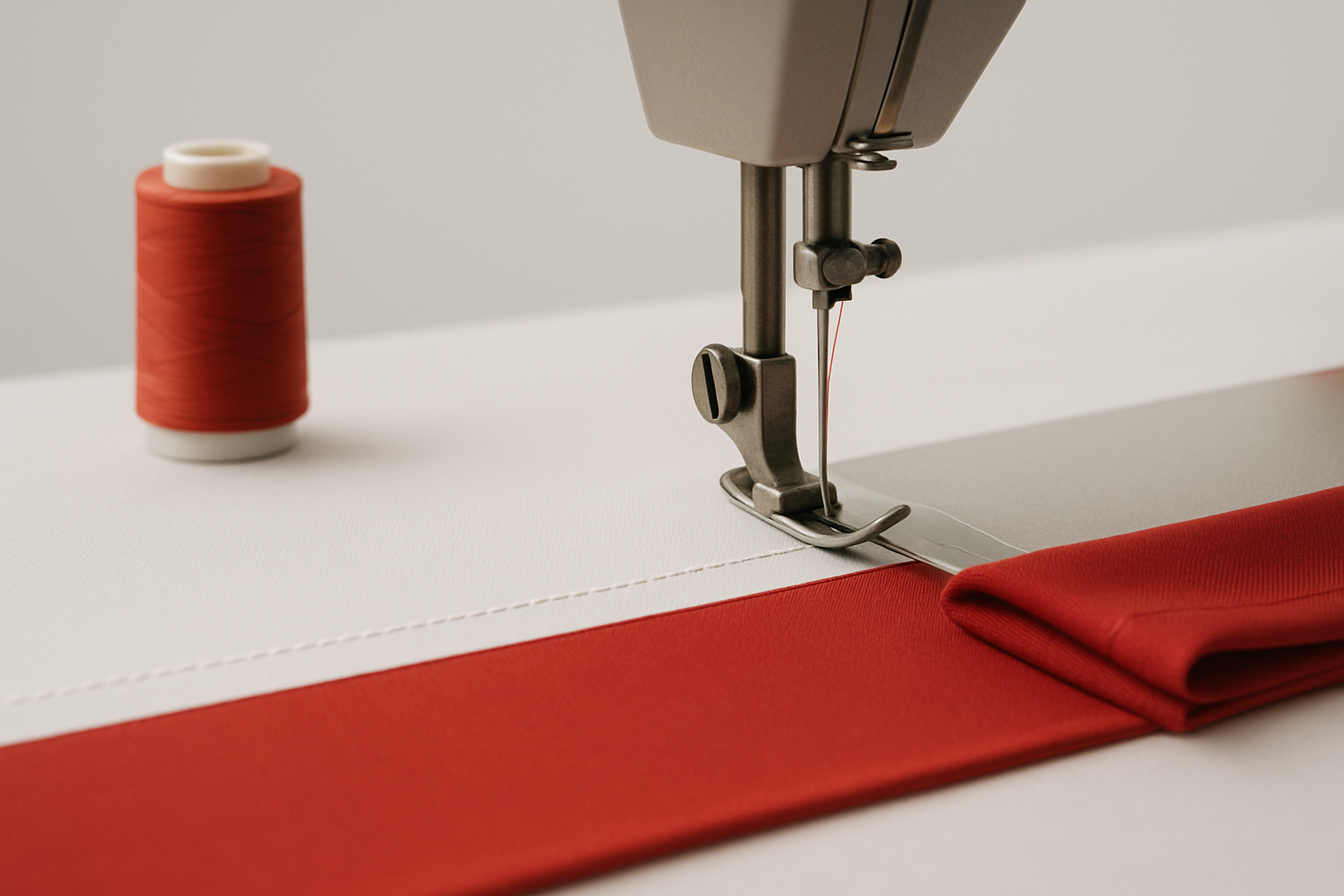
Color fading is often the first indicator most people notice, but it is not always the most urgent one. A header — the reinforced canvas sleeve through which the pole passes — is structurally critical: if stitching separates or the header tears, the flag can slide off the pole unexpectedly during a ceremony or formal display, which is both undignified and a potential safety concern in public settings. Inspect the header seam at every monthly check by running your fingers along it and gently tugging to test tension. Fraying on the fly end (the edge farthest from the pole) is normal wear and is typically the first place a flag shows age; fraying of 0.25 in (6 mm) or less can be trimmed cleanly by a seamstress without compromising the flag's integrity, but once fraying exceeds 1 in (2.5 cm) or reaches the printed or embroidered design, retirement is the correct course. For memorial environments — funeral homes, chapels, and veteran facilities — our comprehensive guide on indoor ceremonial flag sets and display protocol for memorial settings outlines the stricter replacement standards appropriate for those dignified environments.
How to Properly Retire a Worn Indoor Flag
The dignified and legally recognized method for retiring a worn American flag is burning it in a private, respectful ceremony — a practice explicitly acknowledged in the US Flag Code and endorsed by organizations such as the American Legion and Veterans of Foreign Wars. For non-American flags, equivalent respectful disposal methods apply based on the country's own flag code or cultural norms.
The VFW and American Legion post locations across the United States regularly accept worn flags for organized retirement ceremonies, typically held on Flag Day (June 14) or other patriotic holidays. If you cannot attend a ceremony, contact your nearest post and ask whether they accept flag drop-offs — most do. The burning ceremony itself is conducted with full dignity: the flag is folded in the traditional 13-fold triangle (for the American flag), placed on a fire large enough to consume it fully, and attendees stand at attention or salute while it burns. The ashes are then buried respectfully. For indoor flags that are not American flags — country flags, organizational banners, or custom flags — the appropriate disposal method varies. Many countries have their own flag retirement protocols, and when in doubt, consulting the relevant embassy or consulate is the respectful approach. For foreign country flags displayed indoors, FIAV (Fédération internationale des associations vexillologiques) guidelines suggest treating each nation's flag with the same respect as the host country's flag, which means formal disposal rather than ordinary waste disposal.
Never simply throw a worn flag into a trash bin — even for non-American flags, this is widely considered disrespectful in diplomatic, governmental, and ceremonial contexts. If you manage a collection of country indoor flags for a hotel, embassy, or conference facility, consider establishing a documented rotation and retirement schedule so that no flag reaches a state of visible deterioration before it is replaced.
Building a Replacement Schedule That Works for Your Organization
The most effective approach to indoor flag maintenance is a written replacement schedule tied to fixed inspection intervals rather than waiting for visible damage — a proactive protocol prevents the embarrassment of displaying a worn flag during an important event. For most organizations, a 24-month replacement cycle with quarterly inspections is the right baseline.
Start by auditing every flag currently on display: note the flag type, fabric, approximate age, and current condition. Flags older than 3 years should be placed on an accelerated inspection schedule (monthly), while flags under 12 months can be inspected quarterly. Attach a discreet tag to each pole base or storage tube recording the flag's purchase date, last cleaning date, and next scheduled inspection. This simple system works equally well for a single-office display or a network of facilities managing dozens of flags. For high-visibility environments — courtrooms, executive boardrooms, diplomatic reception rooms — set a maximum display life of 18 months regardless of apparent condition, because subtler signs of wear (slight color shift, minor sheen loss on satin fabric) may not be obvious to casual viewers but are noticeable to trained eyes. Pair your replacement schedule with an appropriate Bases & Stands collection review: hardware that holds flags securely and without abrasion extends fabric life and reduces per-cycle replacement costs over time.
How long do indoor flags typically last before needing replacement? +
Can I repair a frayed indoor flag instead of replacing it? +
What is the correct way to wash an indoor nylon flag? +
Does the US Flag Code say anything about retiring indoor flags? +
How should I store an indoor flag when it is not being displayed? +
How do I retire a worn country flag that is not an American flag? +
What size indoor flag is standard for an office or government building? +
Keeping your indoor flags in excellent condition is not complicated — it requires consistent inspection, correct cleaning technique, smart storage, and the confidence to retire a flag when it has served its purpose with honor. If you are ready to replace an aging flag or build out a complete ceremonial display, browse the full Indoor Flags collection for ceremonial-grade options in standard and custom sizes. For a specific national flag, the Country Indoor Flags collection offers options across a wide range of nations including the Chad Official Indoor Flag and dozens of other countries. Pair your replacement flag with the right hardware from the Bases & Stands collection to protect your new flag from the abrasion-related wear that shortens so many flags' lives prematurely. Bulk pricing is available for corporate, government, and institutional orders — contact us directly to discuss volume needs and delivery timelines.


