

The Belgium flag and the Germany flag share the same three colors — black, yellow (gold), and red — but arrange them in completely different orientations, making them easy to tell apart once you know the rule: Belgium runs its stripes vertically (black–yellow–red from left to right), while Germany runs its stripes horizontally (black–red–gold from top to bottom). If you need either flag for display, events, or diplomatic use, the Country Flags collection covers both in multiple formats. This comparison breaks down the visual differences, historical reasons, use-case fit, lifespan, and cost so you can confidently choose — or display both correctly side by side.
Which Flag Is Right for You at a Glance
If you need the flag of Belgium specifically — for a Belgian community event, an embassy reception, or a sports gathering — the vertical black–yellow–red tricolor is your flag, and it is not interchangeable with Germany's horizontal version. Germany's black–red–gold horizontal tricolor is the correct choice for German cultural celebrations, diplomatic contexts, or Oktoberfest events. The two are visually distinct enough that mixing them up causes a genuine protocol error, so identifying the orientation first is the single most important step. Belgium's flag also carries a narrower aspect ratio (13:15, nearly square) versus Germany's wider 3:5 ratio, which adds another visual cue beyond stripe direction. For a deep dive into Belgian flag history, symbolism, and the meaning of each stripe, the sibling article Belgium Flag: Colors, Ratio, and Meaning covers all of that in full detail — this article focuses purely on the practical comparison between the two flags.
What Makes the Belgium Flag Distinctive
 Belgium's vertical stripe layout is its most immediately recognizable feature, and it is the primary differentiator from Germany's flag. The black hoist stripe, golden center stripe, and red fly stripe read left to right when the flag is correctly displayed — a layout inspired by the French Tricolor's vertical format, adopted during Belgium's 1830 revolution. The colors themselves derive from the coat of arms of the Duchy of Brabant: a golden lion with red claws on a black field. Belgium's official aspect ratio of 13:15 makes the flag almost square, which is unusual among European flags and gives it a distinctive stocky appearance on a pole. For outdoor flagpoles, the Belgium Outdoor Flag is crafted from 110g Raschel knitted polyester, delivering vibrant color reproduction and wind resistance suitable for year-round exterior display. The vertical orientation means that on a still day, all three stripes are equally visible from the side, giving the flag excellent readability even at distance.
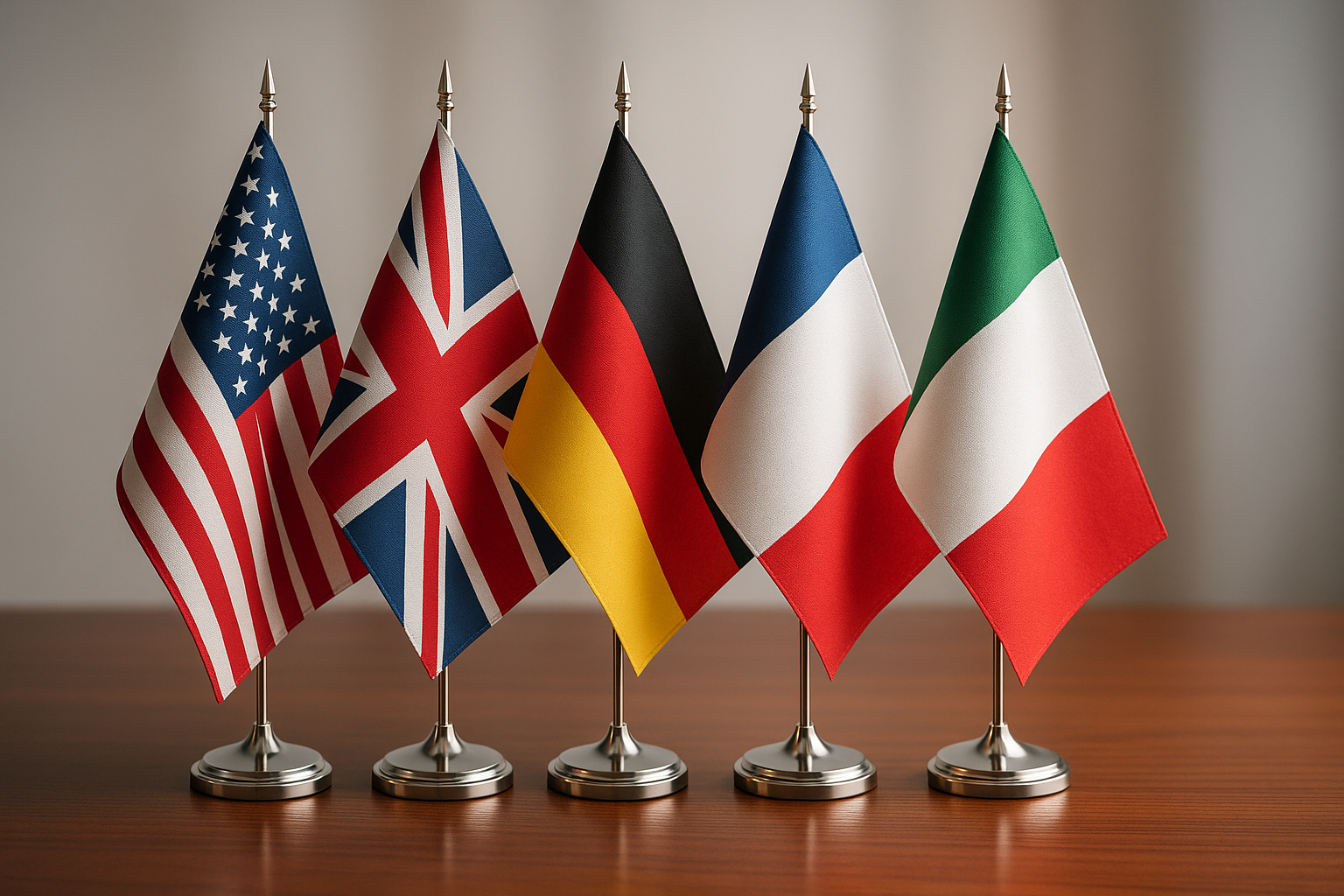
The strengths of the Belgium flag as a display piece are its bold color contrast and compact proportions. Black and yellow create one of the highest-contrast color pairings in vexillology, which means the flag pops visually even in low light or overcast conditions — practically useful for events held indoors or in northern European-style climates. For formal institutional settings, the Belgium Official Indoor Flag features high-definition sublimation printing on double-layer satin fabric mounted on a chrome metal pole, meeting the standard expected by embassies and diplomatic offices. The near-square ratio, however, is a minor drawback in one context: on very tall flagpoles where long, narrow flags fly more dramatically, the Belgian flag's proportions look less striking than a 2:3 or 1:2 ratio flag. For desktop or meeting-room use, the Belgium Desk Flag — mounted on a chrome metal pole with a weighted base — is available in Silver Chrome or Gold finish, making it ideal for diplomatic offices and corporate boardrooms where Belgium's EU headquarters status gives it frequent visibility.
What Makes the Germany Flag Distinctive
 Germany's tricolor is horizontal — black on top, red in the middle, gold on the bottom — and it uses a 3:5 aspect ratio that is wider and more rectangular than Belgium's. The colors trace back to the uniforms of the Lützow Free Corps during the Napoleonic Wars (black coats, red facings, gold buttons), later adopted by German liberal nationalists in 1848 and reestablished as the national flag of the Federal Republic in 1949. A key technical distinction: Germany's third stripe is officially described as gold (a warm, slightly orange-tinted yellow), while Belgium's center stripe is a brighter, more saturated yellow — both visually close but technically different under FIAV standards. The Germany Outdoor Flag is also crafted from 110g Raschel knitted polyester, the same durable material used for the Belgium outdoor version, ensuring consistent quality across both flags for anyone displaying them together at international events. The horizontal stripe format means the flag reads clearly when limp on a windless day — you can still distinguish all three bands — which is a slight practical advantage over vertical tricolors in calm-air conditions.
Germany's flag has a few practical strengths worth noting for display purposes. The wider 3:5 ratio fills a standard horizontal flagpole mount more naturally than Belgium's near-square 13:15 format, and it looks proportionate on the large pole-mounted formats common at government buildings and sports venues. One common confusion point: the flag of the German Empire (1871–1918) used black–white–red, not black–red–gold — so historical contexts require care. The current Federal Republic flag (black–red–gold) is distinct from that earlier version and must not be confused with it in ceremonial or diplomatic settings. For a parallel look at how similar-looking flags from other regions are distinguished, the article Ecuador or Colombia Flag, How to Tell Them Apart uses the same comparison framework applied here.
Choosing Between the Two Based on Your Use Case
Your use case — not aesthetic preference — should drive the choice, because these two flags are never interchangeable in formal settings. For outdoor flagpoles at Belgian consulates, community centers, or European Union events, Belgium's vertical tricolor is required; for German cultural institutions, German-American clubs, or Oktoberfest venues, Germany's horizontal tricolor is correct. Both outdoor flags from Asya Bayrak are made from the same 110g Raschel polyester, so wind resistance, color retention (rated up to 80% UV resistance over the flag's outdoor lifespan of roughly 6 months to 2 years depending on wind exposure and climate), and build quality are equivalent — the decision is purely about which country you are representing.
- Ceremonial and diplomatic settings: The Belgium Official Indoor Flag on a chrome pole with double-layer satin construction is purpose-built for embassies and government offices. Germany's equivalent indoor format should be selected for German diplomatic venues.
- Sports events and parades: The Belgium Handheld Flag, made from 90g Raschel polyester on a stick, is ideal for cheering at international competitions, marching in cultural parades, or community gatherings where portability matters.
- Desktop and conference room display: The Belgium Desk Flag with a weighted chrome base suits boardrooms and reception desks, especially relevant given Belgium's role as host to EU and NATO headquarters.
- High-wind outdoor environments: Both outdoor flags use the same Raschel knitted polyester construction, which resists fraying better than woven polyester in sustained winds — appropriate for coastal or elevated locations in either country's diaspora communities.
- Displaying both flags together: When both flags appear side by side (e.g., at a Belgium–Germany bilateral event or a European Union gathering), position them at equal height per FIAV protocol. The visual contrast between Belgium's vertical orientation and Germany's horizontal layout actually makes them easy to distinguish at a glance — no labeling needed.
European Countries Flags
Browse Belgium, Germany, and dozens of other European national flags in outdoor, indoor, desk, and handheld formats — all in one place.
Browse Collection →How Lifespan and Total Cost Compare
In terms of materials and durability, the Belgium and Germany outdoor flags from Asya Bayrak are identical in construction — both use 110g Raschel knitted polyester — so lifespan differences come entirely from how and where they are flown, not from the flags themselves. Outdoor flags flown continuously in high-wind or coastal environments typically last 6 to 12 months before showing significant fray or color fade; flags flown part-time (taken in at night or during storms) can last 18 to 24 months. Indoor display flags on satin fabric with a chrome pole have an indefinite indoor lifespan under normal institutional conditions, making them a better long-term investment for permanent installations at embassies or corporate offices.
From a total cost perspective, both flags are priced equivalently at each format level (outdoor, indoor, desk, handheld), so the cost decision is not between Belgium and Germany but between formats. Handheld flags are the lowest-cost entry point for events, while official indoor flags on chrome poles represent the highest per-unit cost but the best longevity for permanent display. Bulk pricing is available for corporate or institutional orders — relevant for EU-headquartered organizations in Brussels that routinely need both Belgian and international flags for multi-country events. Replacement cycles are predictable enough that ordering in advance is straightforward: plan for annual outdoor replacement in high-exposure sites, and biennial replacement in sheltered or part-time outdoor locations.
The One Rule That Prevents Every Mistake
The single rule that eliminates Belgium–Germany flag confusion in any setting is this: check the stripe direction before you check the color. Vertical stripes — it is Belgium. Horizontal stripes — it is Germany. Because both flags share black, yellow/gold, and red, color alone is never a reliable differentiator, especially under artificial lighting where yellow and gold can look identical. Secondary checks — Belgium's near-square 13:15 ratio vs. Germany's wider 3:5 ratio, and Belgium's brighter yellow vs. Germany's warmer gold — reinforce the identification but the orientation check alone resolves 99% of real-world confusion situations. Applying this rule consistently matters in diplomatic, sports, and community contexts where the wrong flag is a meaningful error, not just an aesthetic one.
For anyone sourcing either flag in quantity for events, institutions, or retail display, the European Countries Flags collection and the broader Country Flags collection carry both the Belgium and Germany flags across all display formats. Bulk pricing is available for corporate and institutional orders. Whether you need a single Belgium Outdoor Flag for a flagpole or a set of flags for a multinational European event, the format guide above should make the right choice clear.


