
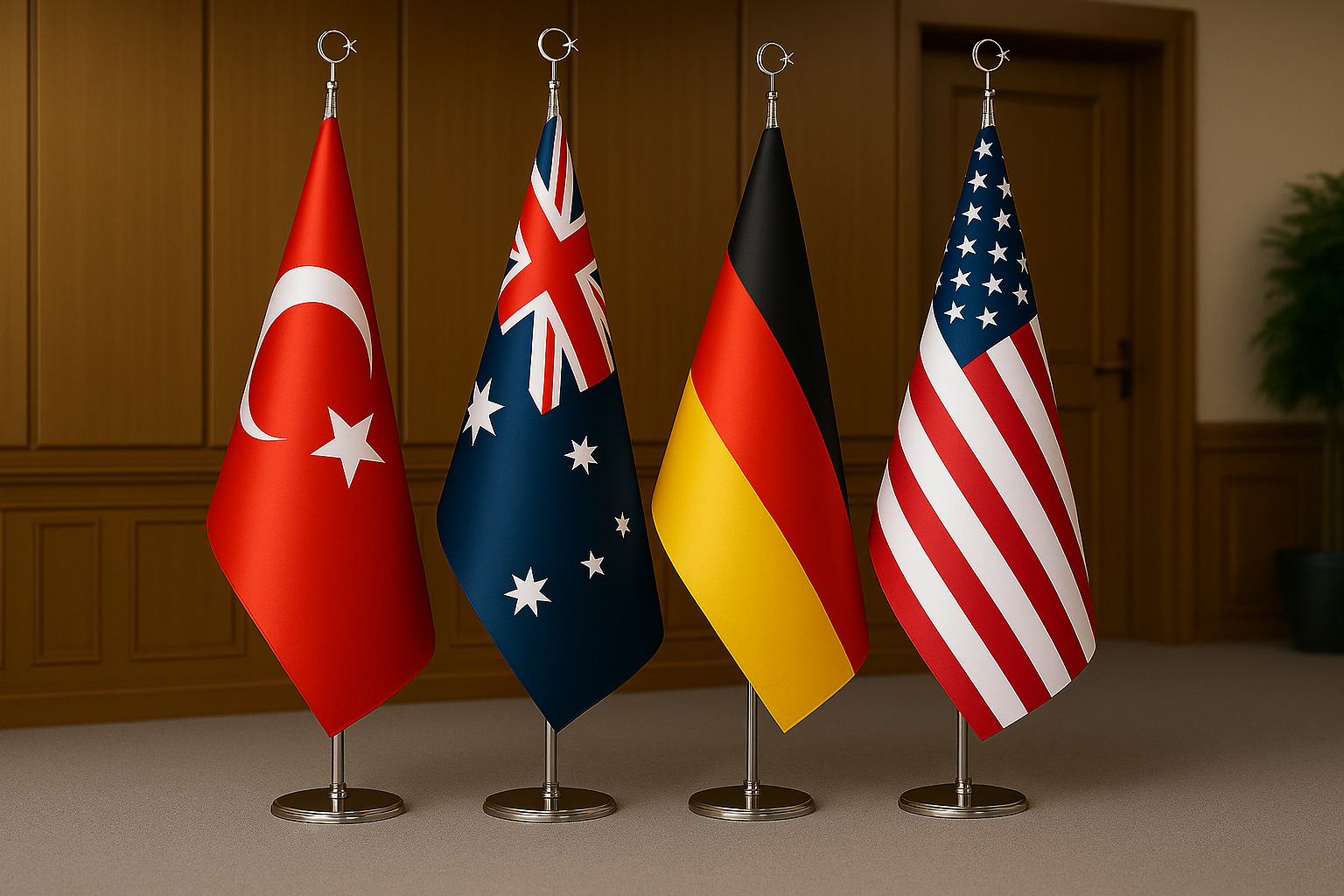
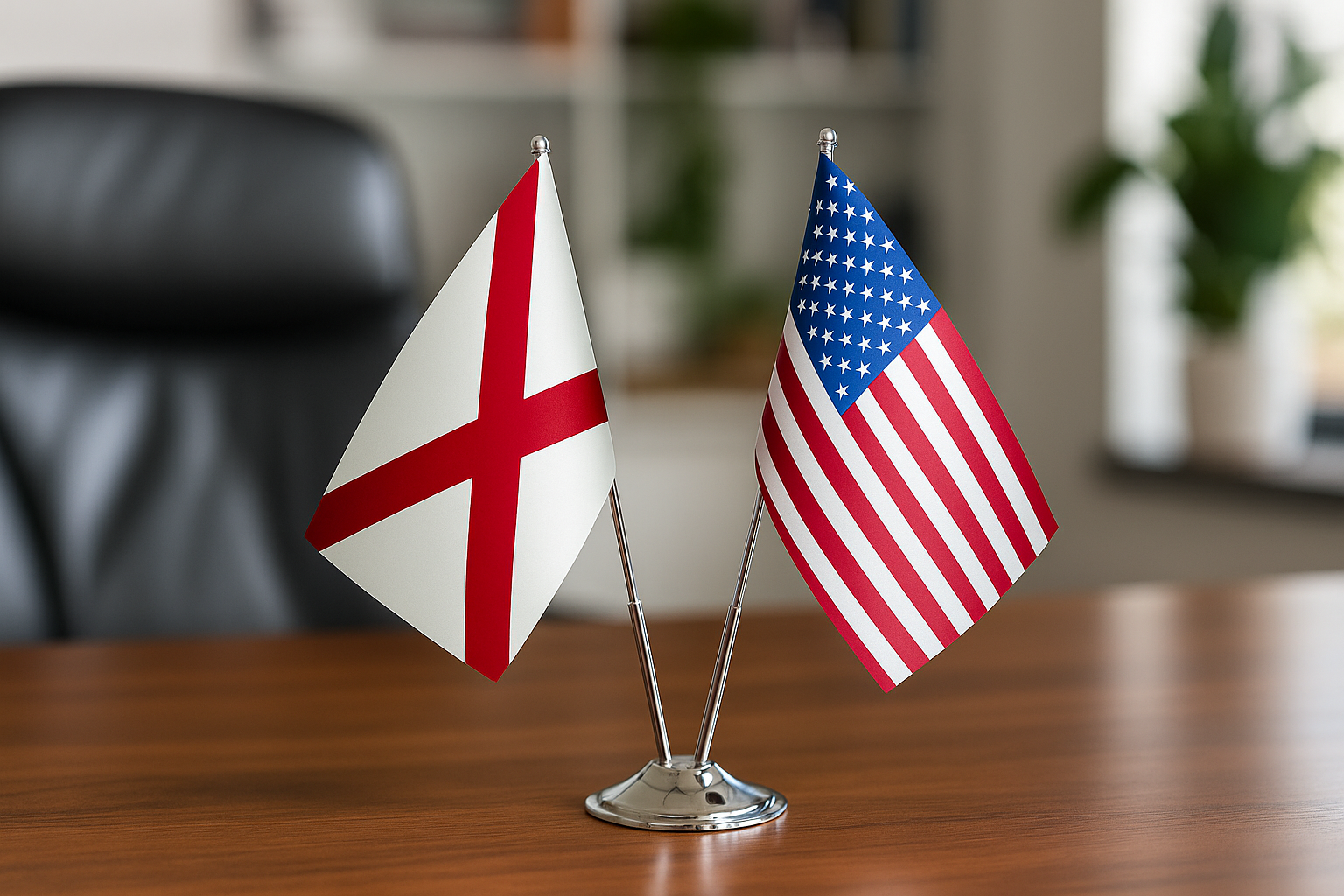

The best outdoor American flag for year-round flying is one built from UV-resistant, colorfast polyester that holds up against wind, rain, and prolonged sun exposure — typically rated for 6 months to 2 years of continuous outdoor display depending on conditions. If you're ready to explore proven options, the USA Flag Collection at Asya Bayrak covers everything from standard pole-mount flags to vertical outdoor formats engineered for high-traffic sites.
Which Flag Type Suits Which Buyer?
For most homeowners and small businesses flying a traditional horizontal flag on a standard pole, a knitted polyester Raschel flag in the 110–120 g/m² weight range is the most practical all-year choice; vertical flags suit commercial facades, dealerships, and embassy entrances where ground-level or building-mounted visibility matters more than pole height. Understanding this split before you buy saves money and prevents the frustration of ordering the wrong format for your display environment.
Both the horizontal and vertical outdoor American flag serve the same patriotic purpose, but they are optimized for very different mounting configurations and viewing distances. A traditional flag on a 20 ft (6 m) pole is read from the side as it waves; a vertical flag mounted at a corporate entrance is read face-on from a street-level approach. Knowing your site — pole angle, wind corridor, viewer distance — is the single most important variable before you choose a product. The US Flag Code (4 USC §§ 1–10) applies equally to both orientations, though it does specify that when displayed vertically, the union (blue canton with stars) must be at the observer's upper left.
What Makes the Standard Outdoor USA Flag Perform Year-Round
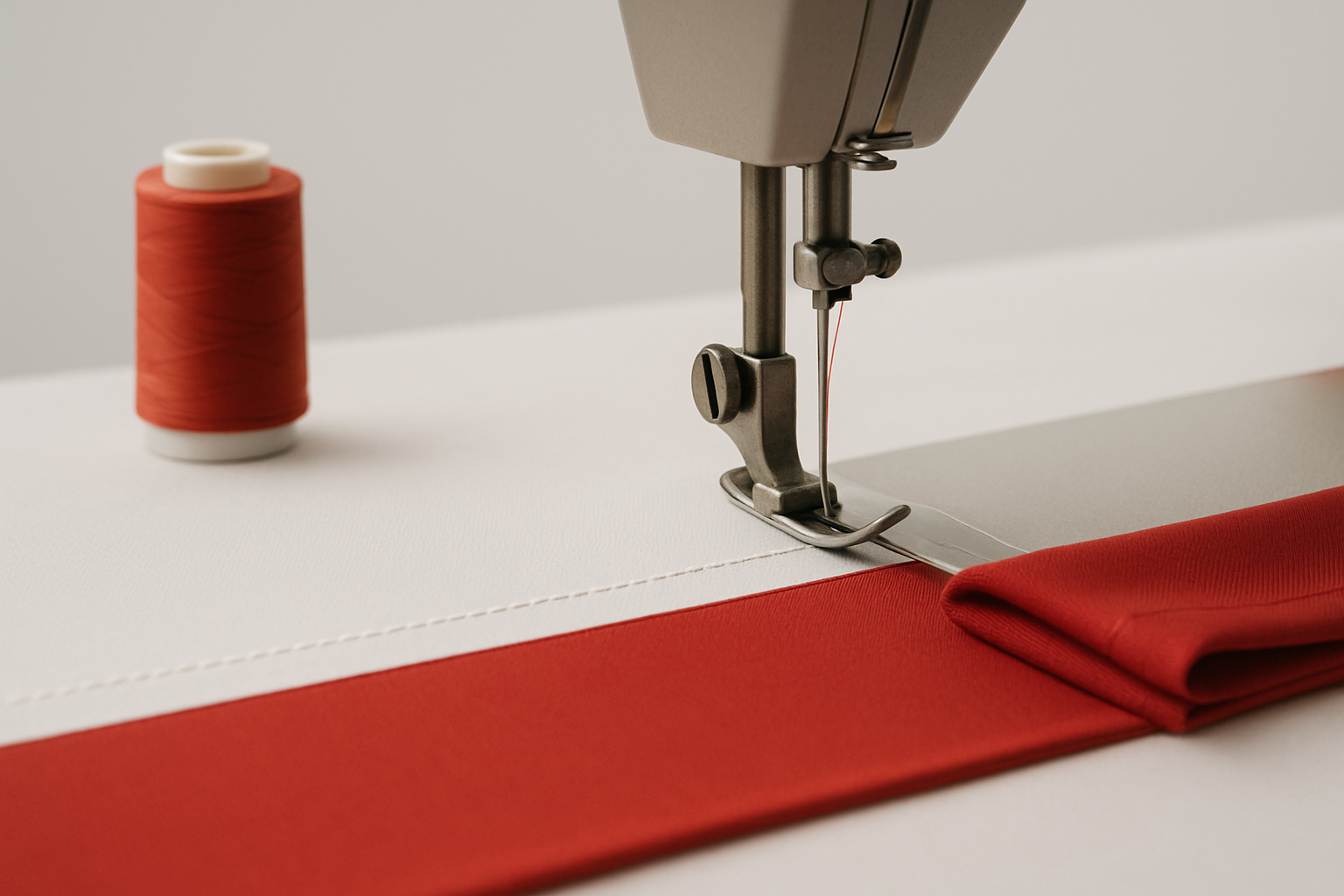
 The USA Outdoor Flag is constructed from 110 g/m² Raschel knitted polyester — a fabric specifically suited to outdoor flying because its open-knit structure allows wind to pass through the weave rather than accumulating pressure that tears stitching. Asya Bayrak's Raschel fabric is direct-printed and heat-fixed, which bonds the ink into the fiber matrix rather than sitting on the surface, giving the red, white, and blue substantially better UV resistance and colorfastness than screen-printed alternatives. The iconic design — thirteen alternating red and white stripes with the blue canton bearing fifty white stars — is faithfully reproduced with sharp registration on both faces of the knitted substrate. For buyers flying a flag 365 days a year in a temperate climate with moderate winds, this is the most forgiving format: it handles rain, morning dew, and summer sun without the rapid color fade you see on lightweight single-ply alternatives common in the market. One practical maintenance note — even the most durable outdoor flag will last significantly longer if you bring it in during sustained winds above 40 mph (64 km/h) or severe weather warnings, a practice consistent with US Flag Code guidance on proper care and respect.
Strengths of the standard horizontal outdoor flag:
- Familiar format compatible with virtually every residential and commercial flagpole
- Open-knit Raschel structure reduces wind load and fabric stress
- Heat-fixed direct printing for superior UV resistance and long-term color retention
- Available for both everyday residential use and institutional display
- Covered by clear US Flag Code protocols (4 USC §§ 1–10) for confident, compliant display
Weaknesses to be aware of:
- Horizontal flags on a fixed pole may wrap or tangle in calm, multi-directional wind conditions
- Fly-end fraying is the first point of wear — inspect the hem every 2–3 months in high-wind sites
- Requires a proper pole and hardware; cannot be used for facade or building-mount display without a bracket
Where the Outdoor Vertical USA Flag Has a Real Advantage
 The Outdoor Vertical USA Flag is engineered specifically for high-traffic commercial environments — gas stations, corporate entrances, embassies, dealerships, hotels, and event venues — where face-on visibility from ground level or a passing vehicle is the display goal. Because the flag hangs vertically rather than flying freely, the aerodynamic behavior is entirely different: fabric tension is primarily gravitational rather than wind-driven, which changes how and where wear develops over time. For institutions that need the American flag present at a formal entrance regardless of wind conditions, this format delivers consistent, always-readable display without the furling and unfurling that makes a horizontal pole flag sometimes invisible when air is still. Vertical display also tends to project a more formal, architectural presence — consistent with how embassies and government buildings worldwide present national symbols. When displayed vertically per US Flag Code §7(i), the union must appear at the top and to the observer's left; the Asya Bayrak vertical flag is designed with this orientation as its standard, so there is no guesswork about which end goes up.
Strengths of the outdoor vertical flag:
- Always visible regardless of wind speed — no furling or tangling
- High visual impact at commercial and institutional entrances
- US Flag Code compliant orientation built into the design
- Ideal for mounting on buildings, poles at shallow angles, or architectural brackets
- Durable enough for 24/7 commercial display in demanding environments
Weaknesses to keep in mind:
- Requires appropriate vertical mounting hardware — not compatible with standard horizontal pole clamps
- In high sustained winds, vertical flags can experience more direct fabric stress than a free-flying horizontal flag that spills wind through its knit
- Less familiar to residential buyers accustomed to traditional pole-mount display
Choosing by Use Case — Outdoor, High Wind, and Ceremonial Settings
For year-round residential outdoor display on a standard 20–25 ft (6–7.6 m) pole, the standard USA Outdoor Flag in 110 g/m² Raschel is the right choice; for commercial facades and high-visibility commercial entrances, the vertical format is purpose-built for the job. High-wind coastal or mountain environments deserve extra consideration regardless of which format you choose.
In high-wind sites — coastal areas, elevated terrain, highway corridors — the open-knit structure of Raschel polyester is genuinely advantageous because the weave allows air to pass through rather than turning the flag into a sail. If you are flying in sustained winds above 25 mph (40 km/h) regularly, a heavier 120 g/m² Raschel construction provides additional durability without dramatically increasing wind load. For comparison, nylon and single-ply polyester flags commonly sold in the market are often lighter (sometimes under 90 g/m²) and can be prone to rapid fly-end fraying in sustained winds — though they may be adequate for light-wind inland sites. Ceremonial and parade settings call for a different calculus: the flag is handled, carried, and presented at close range, which typically makes satin or a similar smooth fabric preferable for indoor display; for outdoor ceremonial use where the flag will be flown on a pole, Raschel remains the practical choice. If you are purchasing a large format for a ceremonial site, our related guide on large American flags for sale, 6×10 ft and bigger covers size selection and mounting considerations in detail.

USA Flag Collection
Browse Asya Bayrak's full range of American flags — standard outdoor, vertical, and specialty formats — all built for durable, year-round display.
Browse Collection →How Long Each Flag Lasts and What That Means for Your Total Cost
An outdoor American flag flown continuously in moderate conditions typically lasts 6 months to 2 years; with disciplined care — bringing the flag in during severe weather and inspecting hems quarterly — buyers regularly extend service life toward the upper end of that range. Understanding this helps you make a true cost comparison rather than just comparing sticker prices.
A well-made 110–120 g/m² Raschel polyester flag flying in a suburban residential setting with average winds and seasonal variation will commonly reach 12–18 months before the fly end shows significant wear. In coastal or high-wind environments, that window can compress to 6–9 months even with quality construction. Vertical flags in commercial settings often show different wear patterns — more stress at the attachment points than at the fly end — which means inspecting header stitching and grommets every 3 months is the most useful maintenance habit. When you calculate cost per year of display rather than upfront cost, a flag that lasts 18 months at a moderate price consistently outperforms a cheaper flag replaced every 4–5 months. Bulk purchasing — for institutions flying multiple flags, replacing seasonally at schools, offices, or cemeteries — can reduce per-unit cost substantially; our article on Veterans Day flags for schools, offices, and cemeteries covers institutional planning in more depth. The Raschel fabric's heat-fixed direct printing also means colorfastness holds up better over time than surface-printed alternatives, so the flag looks presentable for more of its service life rather than fading to washed-out pink and grey in year one.
From a total cost perspective, buyers should factor in: flag replacement frequency, hardware and pole compatibility, and whether local illumination rules (4 USC §6 allows 24-hour display only if properly illuminated at night) add any operating cost. A single quality Raschel flag, properly mounted and maintained, is almost always the more economical and more respectful choice than cycling through inexpensive alternatives.
FAQ
What fabric is best for an outdoor American flag that flies all year? +
How long does an outdoor American flag typically last? +
Can I fly an American flag outside 24 hours a day, 365 days a year? +
What is the correct way to display an American flag vertically? +
Should I bring my outdoor flag in during bad weather? +
What is the difference between a horizontal outdoor flag and a vertical outdoor flag? +
How do I know when it is time to replace my outdoor American flag? +
Whether you are flying a traditional horizontal flag on a residential pole or mounting a vertical format at a commercial entrance, choosing the right construction and caring for it properly makes a significant difference in how long it serves and how well it represents. For standard pole-mount residential and institutional display, the USA Outdoor Flag in 110 g/m² Raschel polyester offers the best balance of durability, colorfastness, and year-round performance. For commercial facades and high-traffic sites where face-on visibility matters most, the Outdoor Vertical USA Flag is purpose-built for the job. Browse the complete USA Flag Collection to compare formats and sizes side by side. Bulk pricing is available for corporate, institutional, and government orders — contact Asya Bayrak directly to discuss volume requirements.


