






No — under U.S. Flag Code (4 U.S.C. §§ 1–10), the American flag must be displayed at a higher position than any state flag when both fly on the same pole, but Texas and all other state flags may fly at equal height when each has its own separate flagpole of the same size. If you're looking for the right flags to display together correctly, browse the USA Flag Collection to find properly sized American flags that pair well with the Texas state flag for compliant dual-pole display.
What the US Flag Code Actually Says About State Flag Height
The U.S. Flag Code (4 U.S.C. § 7) is explicit: when the national flag is displayed on the same halyard or pole as a state flag, the U.S. flag must be at the peak — meaning the state flag flies below it. The law does not forbid state flags from matching the height of the U.S. flag; it only requires that on a shared pole, the Stars and Stripes holds the superior position at the top.
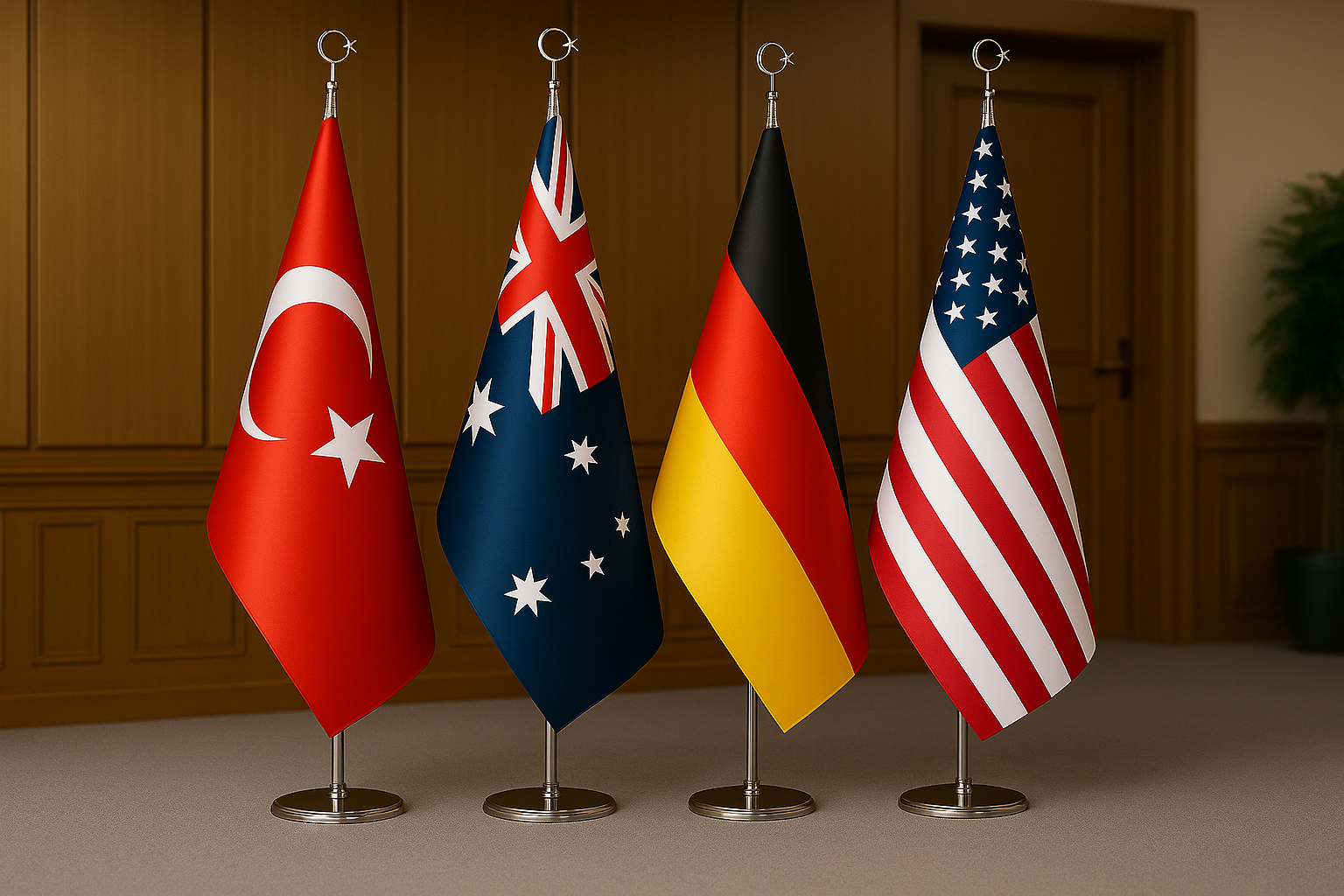
This distinction matters enormously in practice. The Flag Code further specifies that when flags of states, cities, or localities are flown on separate staffs alongside the national flag, all staffs should be of equal height and the flags should be approximately the same size. In other words, a Texas flag flying on its own pole beside an American flag on its own pole of equal height is perfectly lawful and fully respectful. The rule of subordination applies only to the single-pole scenario. Many government buildings, schools, and corporate campuses correctly fly the U.S. flag and the Texas flag side by side on matching poles without any violation whatsoever. Understanding this nuance prevents both accidental disrespect to the national flag and unnecessary subordination of state pride.
Where the Texas Flag Stands in the Order of Precedence
When multiple flags are displayed together, the U.S. flag always occupies the position of honor — to its own right, which is the observer's left — regardless of what other flags are present. The Texas state flag, like all state flags, ranks below the national flag but above county, municipal, or organizational flags in formal order of precedence.
 When three or more poles stand in a row, the U.S. flag goes to the far left from the audience's perspective (the flag's own right), the Texas flag takes the next position, and any additional flags — county seals, military branch flags, or organizational banners — follow in descending rank. On a single pole with multiple flags, the U.S. flag must be at the peak, Texas below it, and any lower-ranked flags beneath Texas. Indoors, the same logic applies: the national flag stands to the speaker's right, the state flag to the speaker's left. For outdoor installations requiring a durable Stars and Stripes that holds its position through Texas wind and weather, our USA Outdoor Flag — crafted from 110g Raschel knitted polyester — is built precisely for this kind of long-term paired display.
Texas does have a unique cultural claim worth noting. The popular legend holds that Texas, as a former independent republic, has the right to fly its flag at the same height as the U.S. flag — and legally, that is correct when separate poles are used, just as any state may. The Texas State Library and Archives Commission confirms no special legal elevation right exists beyond what every state already has, but that equal-height, separate-pole setup is itself a dignified and fully compliant display.
Displaying Prohibited — Common Mistakes That Violate Flag Protocol
The most frequent violation is flying a state flag higher than the U.S. flag on a shared pole, whether intentionally or through carelessness. On a single-pole setup, any arrangement that places the Texas flag above the U.S. flag is a direct violation of 4 U.S.C. § 7(c) and is considered disrespectful under federal law.
Other prohibited practices include: displaying either flag in a tattered or faded condition (retirement protocols under 4 U.S.C. § 8(k) apply to both the national and state flag equally); using the flags as decoration, drapery, or advertising material; and attaching commercial insignia or text to either flag. The U.S. flag must never be displayed with its union (the blue canton with stars) down except as a genuine distress signal. The Texas flag, governed by Texas Government Code §§ 3100.051–3100.073, also has its own prohibition against displaying it upside down except in an emergency signal. For indoor ceremonial settings — legislative chambers, courtrooms, and executive offices — where the Texas flag is shown with full dignity alongside the U.S. flag, a properly mounted display matters just as much as correct positioning. Explore our State and City Indoor Flags collection for display-ready options built for institutional use.
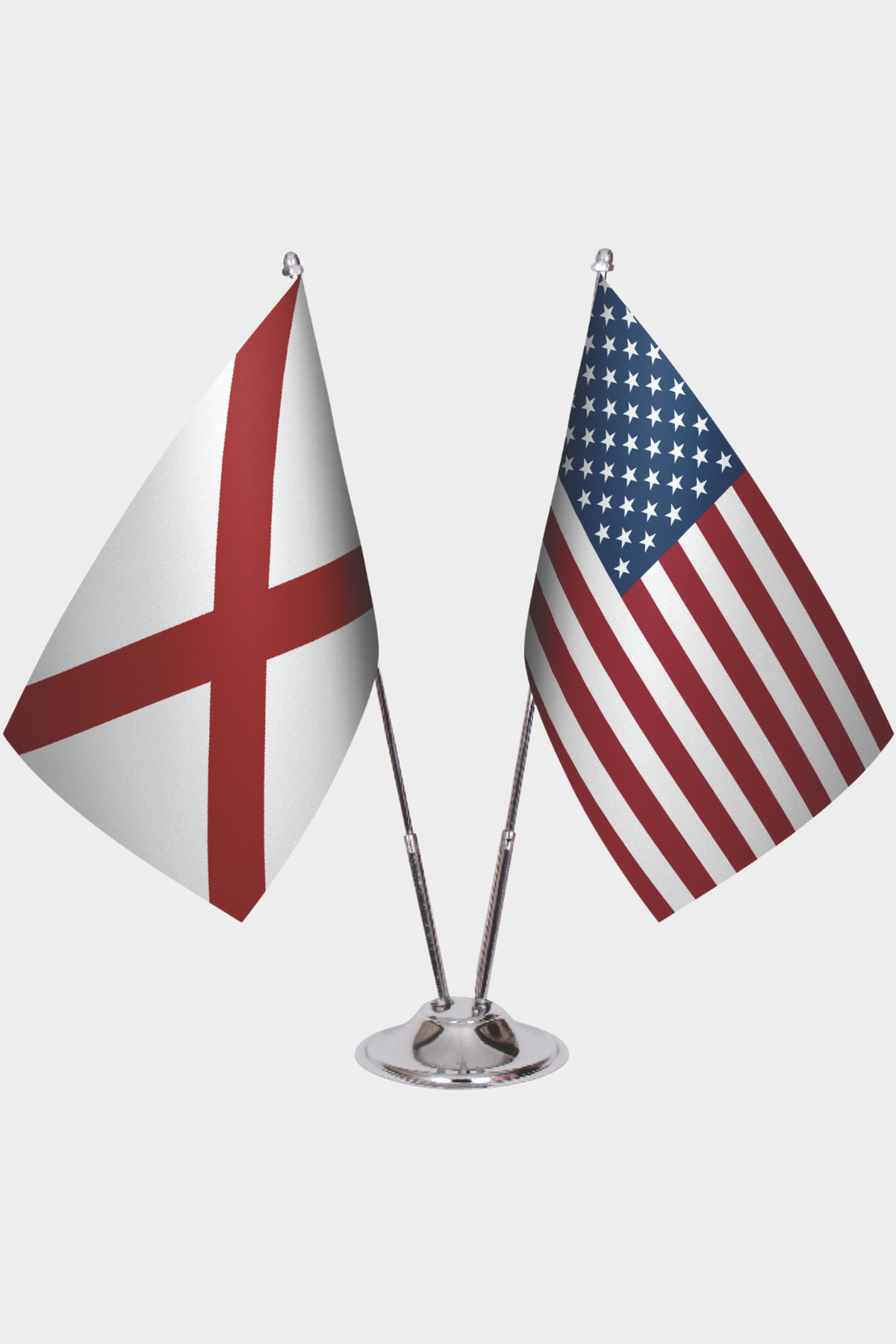
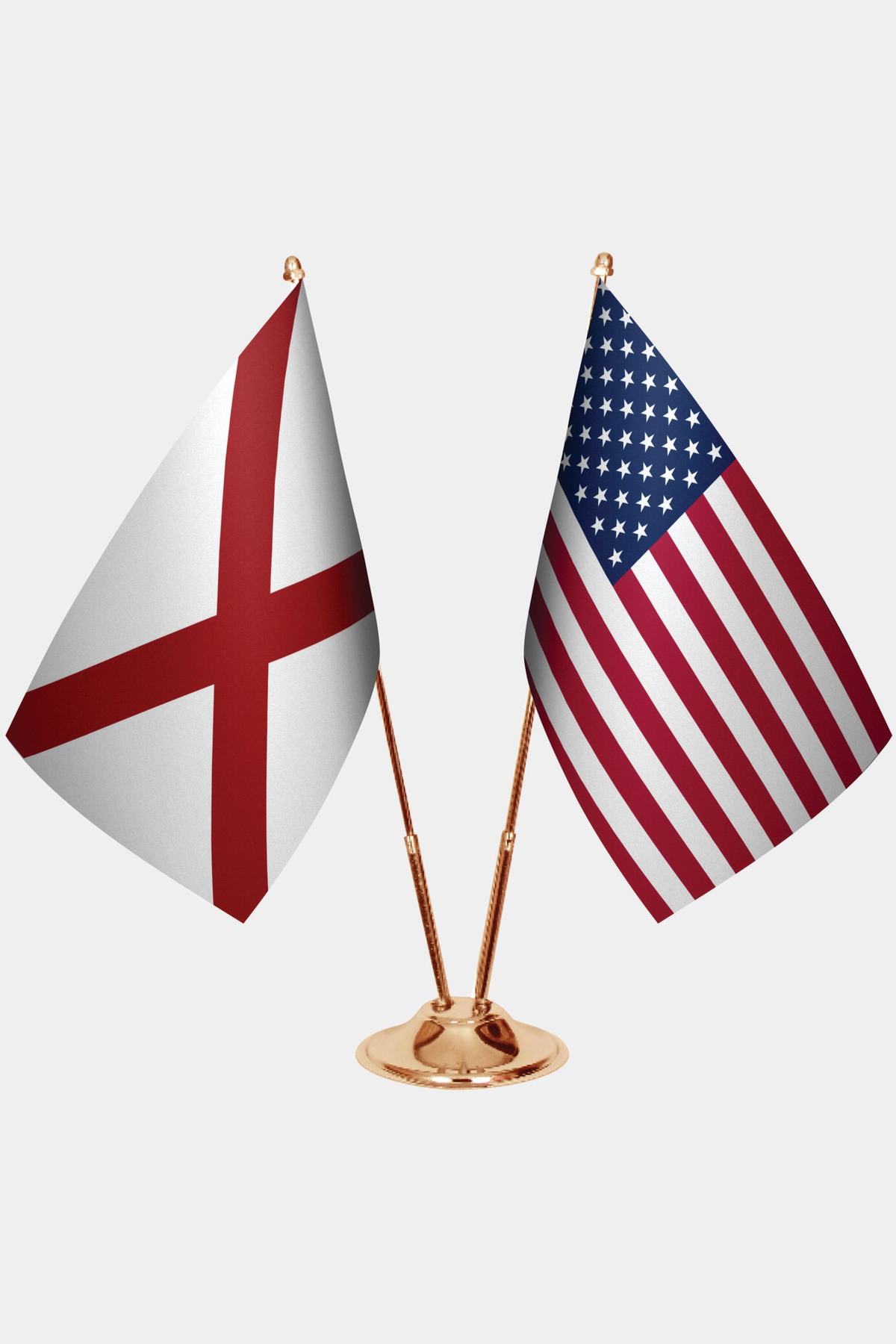
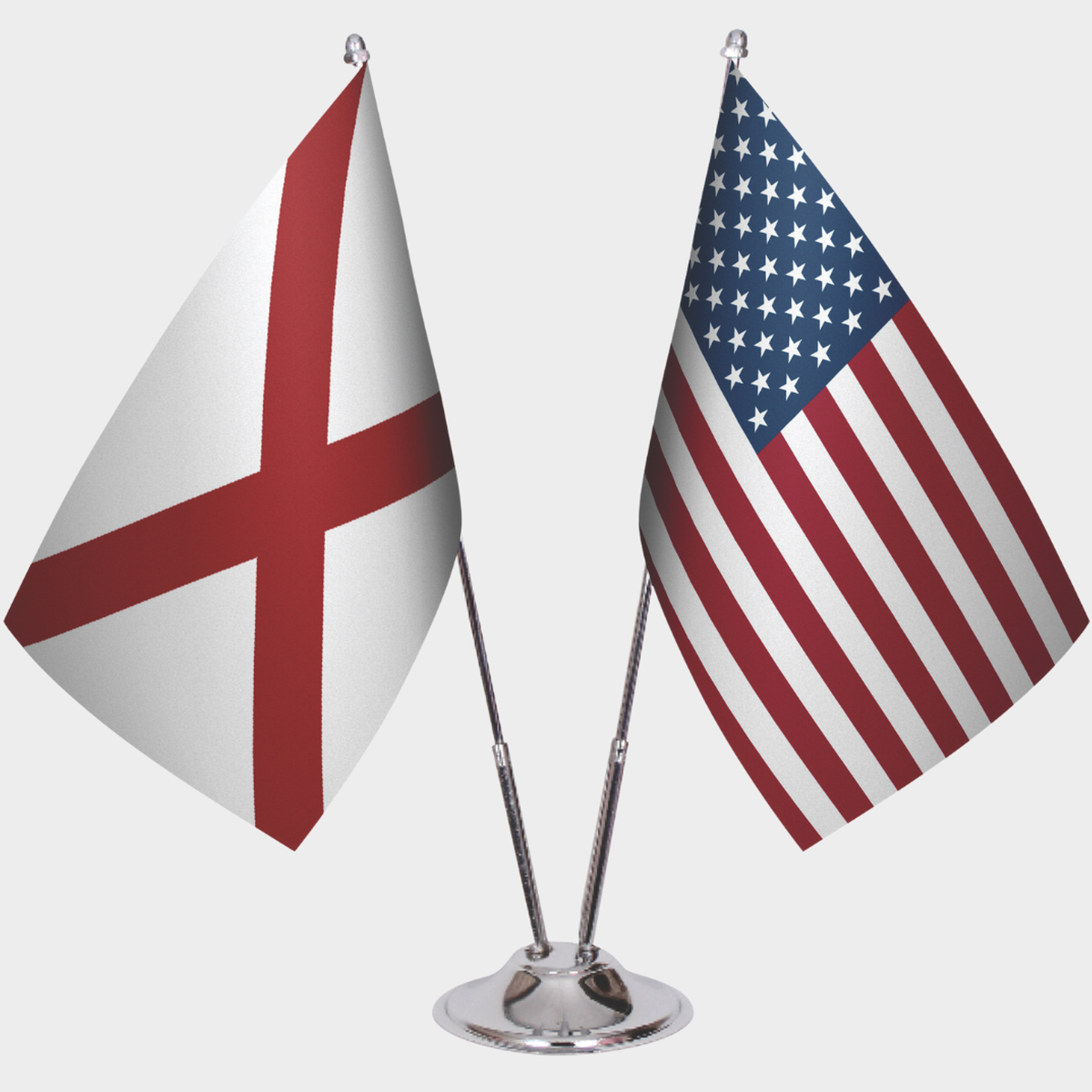
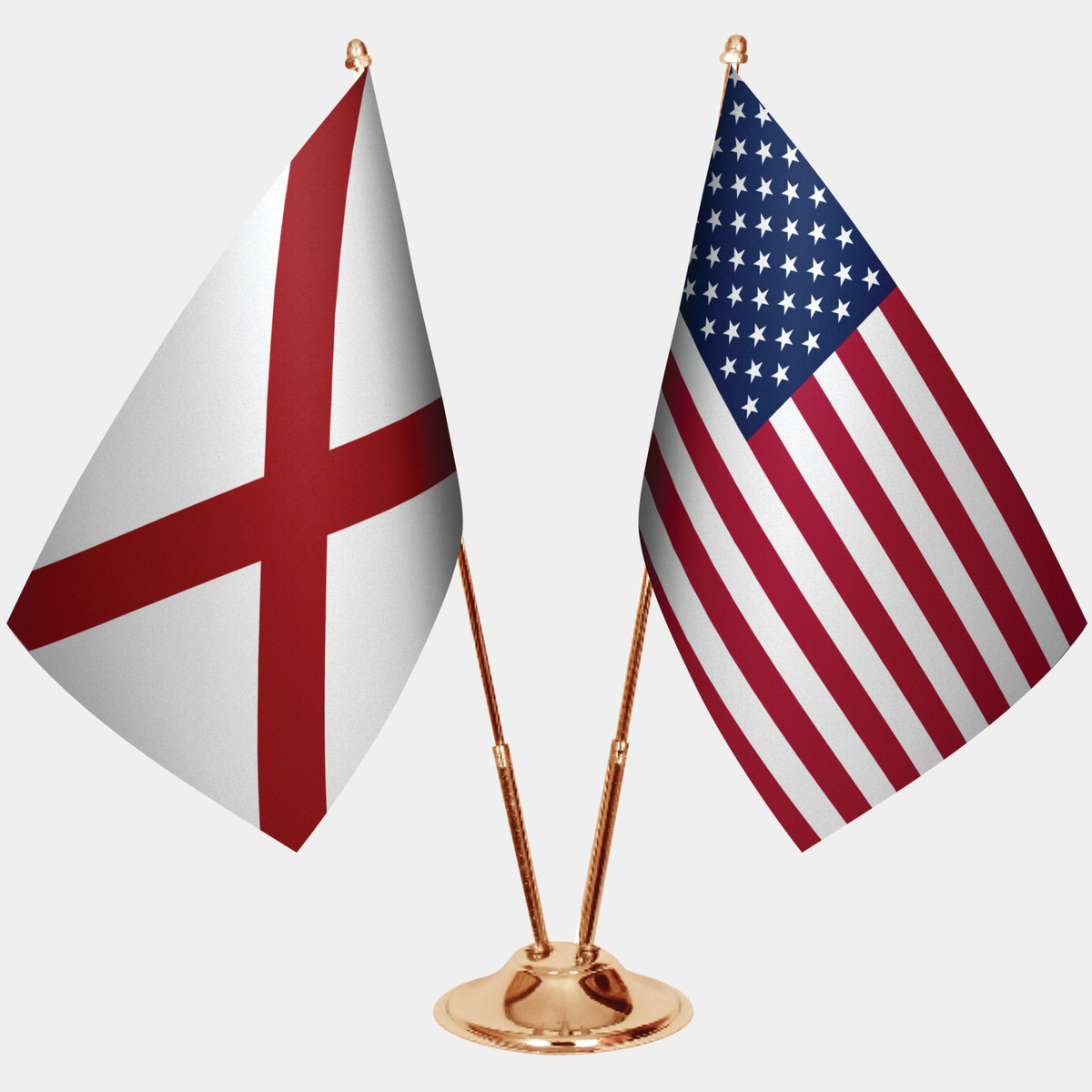
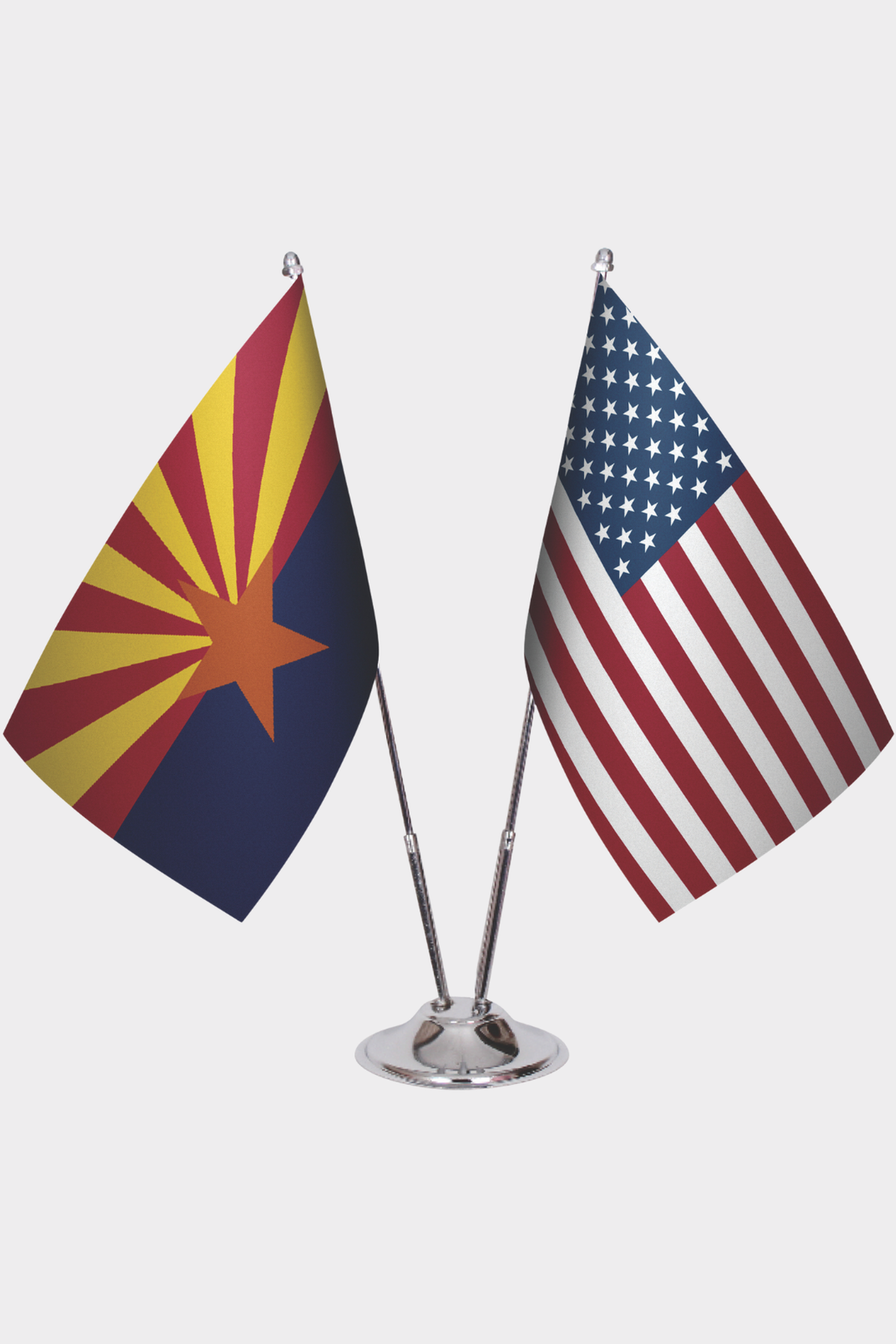
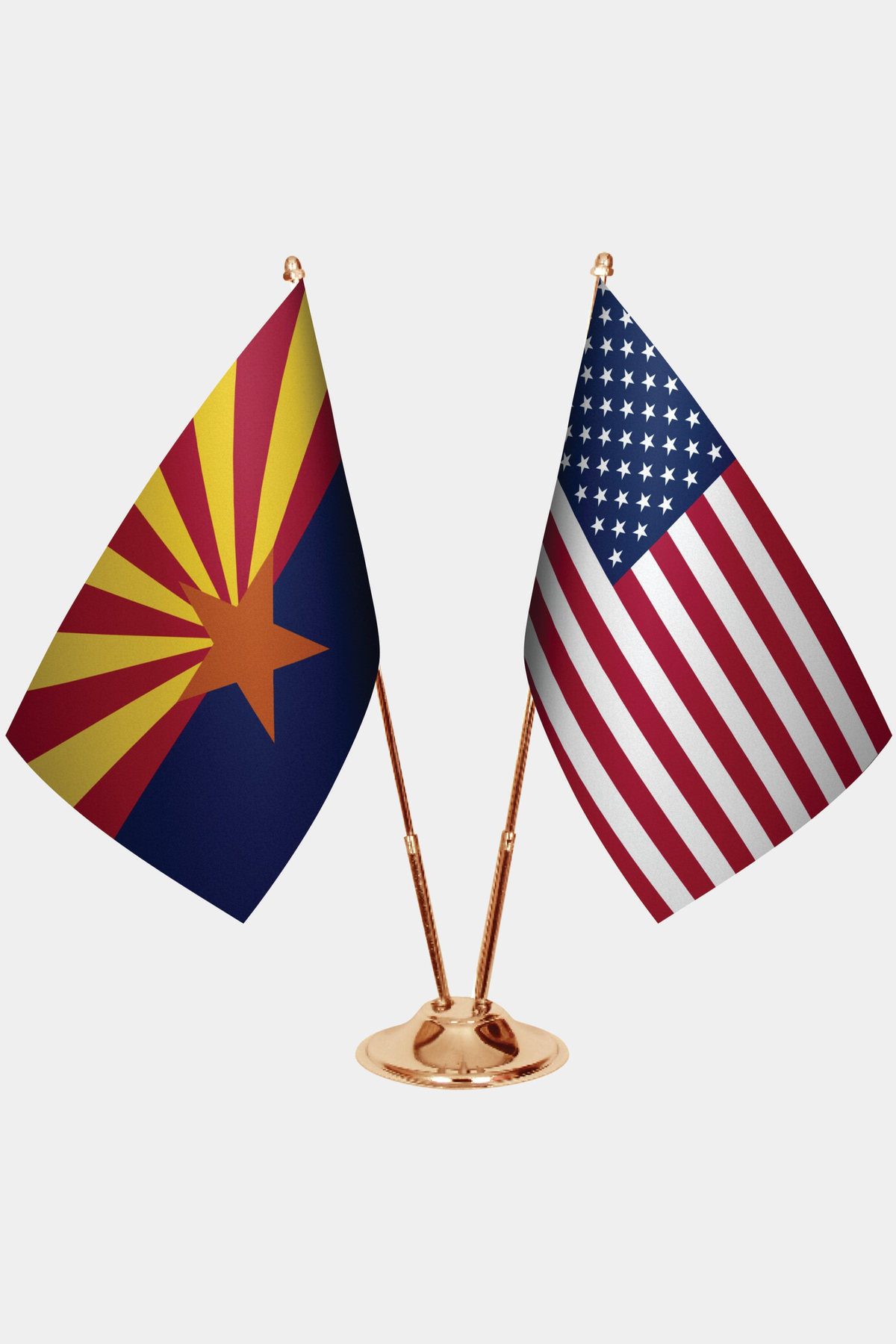
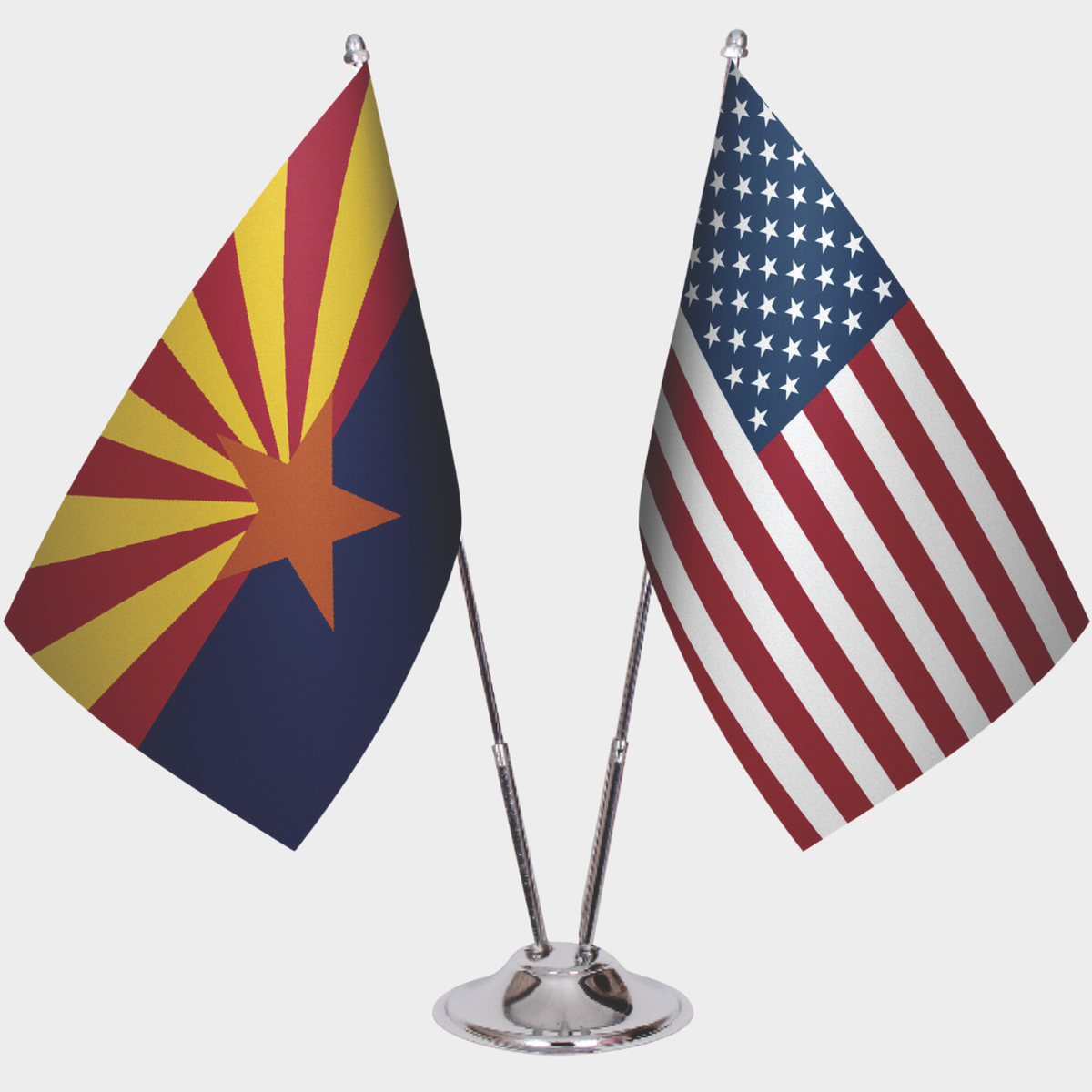
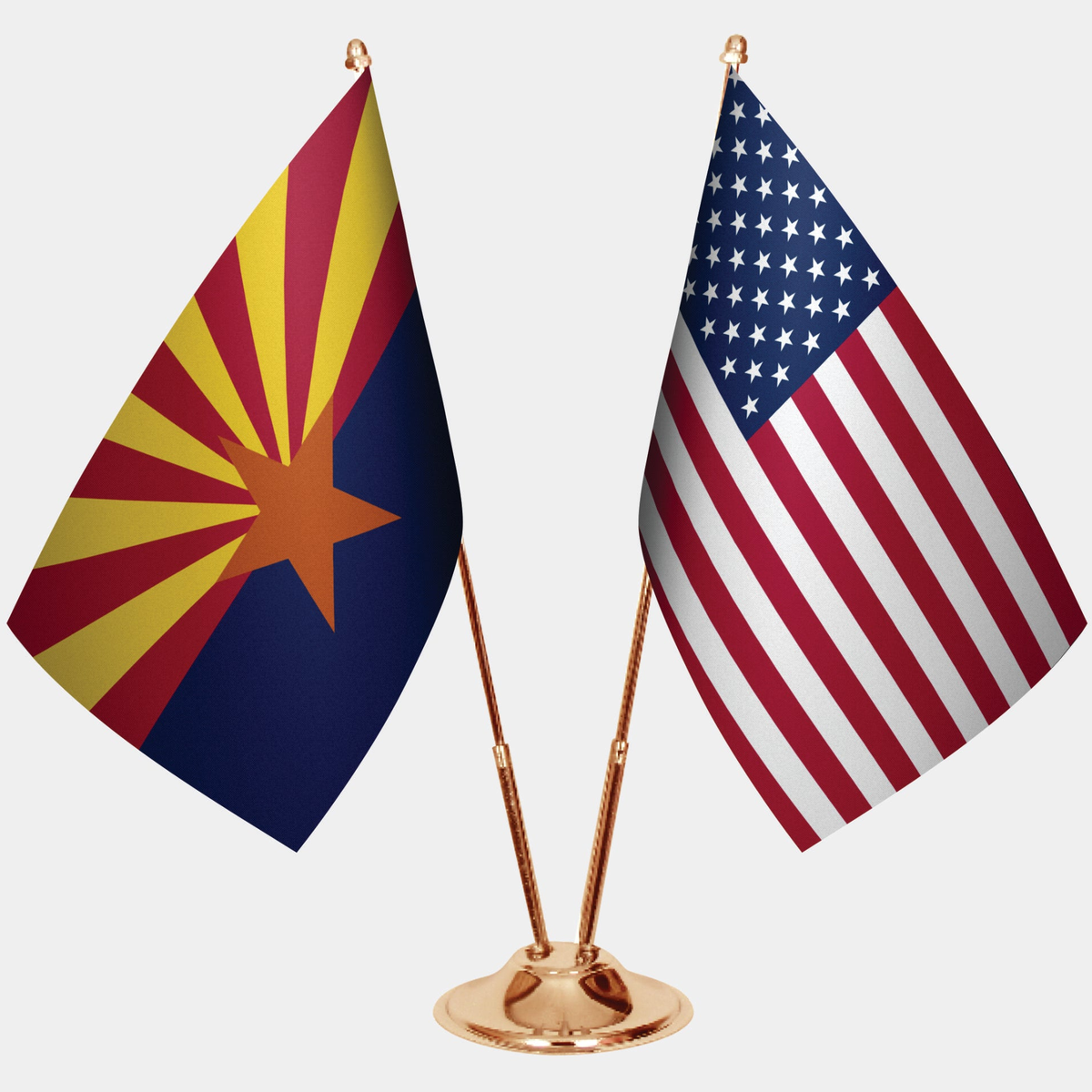
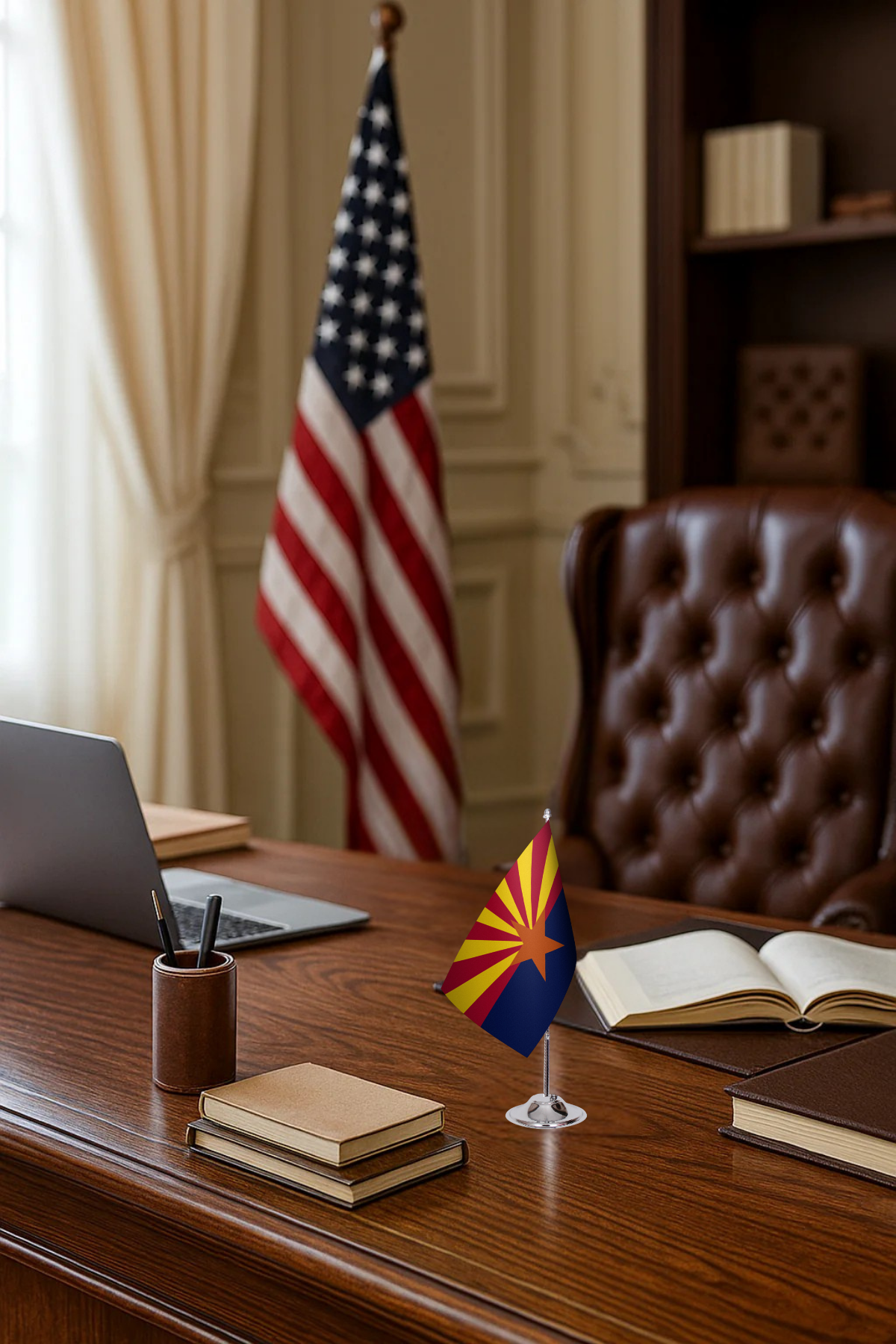
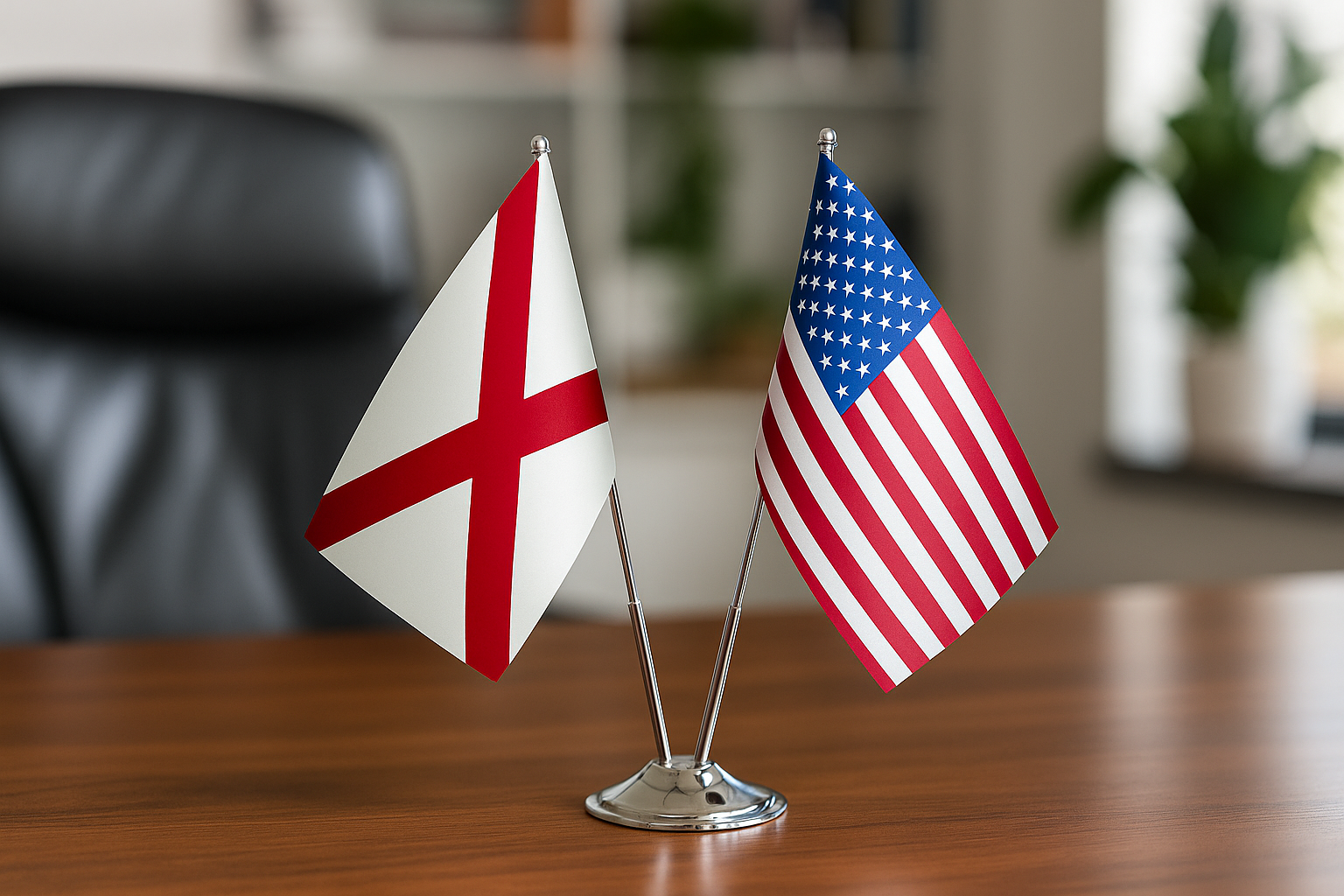
 For desk or tabletop settings, maintaining correct order of precedence is just as important as on a full flagpole. The Texas & U.S. Desk Flag Set places the Stars and Stripes and the Lone Star flag on matching stands — available in Silver Chrome or Gold finish — making correct bilateral display effortless for offices, reception areas, and conference rooms. When both flags share a single desk base or crossing-staff mount, position the U.S. flag to the right of center (observer's left) per Flag Code § 7(k). This paired set eliminates the guesswork and presents both flags at equal visual prominence while respecting the national flag's positional priority. Small details like stand finish and flag fabric quality speak volumes about institutional pride, and getting the protocol right from the start avoids any perception of disrespect to either flag.
Half-Staff and Ceremonial Rules for the Texas Flag
When the U.S. flag is ordered to half-staff by the President or the Governor of Texas, the Texas flag must also be lowered to half-staff — it may never remain at full-staff while the national flag is at half-staff on the same or adjacent poles. The order of lowering matters: the U.S. flag is always raised first and lowered last.
Under Texas Government Code § 3100.052, the Governor of Texas has independent authority to order the Texas flag to half-staff for the death of a state official or as a mark of respect for Texans lost in service. This means the Texas flag can be at half-staff without the U.S. flag being lowered — but only when state authority has issued the order and the national flag is being displayed at its own separate pole. Federal half-staff orders always supersede state orders. If you want to understand the full federal framework for half-staff occasions and who has the authority to issue orders, our article on Half-Staff Rules: Who Decides and When covers every tier of authority in detail. Similarly, if you need guidance on nighttime display — another common compliance question — see Do You Need a Light to Fly a Flag at Night?
A Practical Compliance Checklist for Schools, Businesses, and Government Offices
Getting dual-flag display right comes down to a handful of concrete decisions made before installation. Follow this checklist to ensure your Texas and U.S. flag setup is fully compliant from day one.
- Separate poles, equal height: Install two poles of identical height so each flag has its own staff — this is the cleanest, most compliant configuration for side-by-side display.
- Position of honor: The U.S. flag pole goes to the flag's own right — from the building's perspective facing outward, this is the left pole as seen by someone approaching.
- Equal flag size: Both flags should be approximately the same dimensions. A common outdoor pairing is 3 ft × 5 ft (91 cm × 152 cm) or 4 ft × 6 ft (122 cm × 183 cm) for each.
- Single-pole rule: If only one pole is available, the U.S. flag must be at the peak. Texas flag clips below the national flag — never above.
- Condition inspection: Inspect both flags every 30–60 days outdoors. A flag showing fraying, color fading beyond 20% of original vibrancy, or torn edges should be retired per 4 U.S.C. § 8(k). See our guide on When a Worn American Flag Must Be Retired for proper retirement procedures.
- Half-staff protocol: Designate a staff member responsible for monitoring both federal Presidential proclamations and Texas Governor orders. Both flags must respond appropriately.
- Indoor display: The U.S. flag stands to the speaker's right; the Texas flag stands to the speaker's left. For ceremonial indoor settings, use properly mounted display poles.
- Illumination: If flags fly overnight, both must be properly illuminated per Flag Code § 6(a).

USA Flag Collection
Find the right American flag for paired outdoor or indoor display alongside your Texas flag — built to protocol-compliant sizing and durable construction.
Browse Collection →Can the Texas flag legally fly at the same height as the U.S. flag? +
Is it true Texas has a special right to fly its flag at equal height because it was once a republic? +
What does the Texas flag look like and what do its colors mean? +
Does "Old Glory" refer only to the U.S. flag, or can the Texas flag be called that? +
How often should I replace my outdoor Texas flag? +
Can I fly a Texas Rangers flag alongside the U.S. flag using the same protocol? +
Where can I buy a Texas flag that meets official display standards? +
Correct dual-flag display comes down to three decisions: separate poles of equal height, the U.S. flag in the position of honor, and both flags in proper condition at all times. Whether you're setting up an outdoor installation at a Texas courthouse or a desk display in a corporate office, the right flags and mounting hardware make protocol easy to maintain. Start with our Texas Official Indoor Flag for ceremonial interiors, pair it with a USA Outdoor Flag for matching outdoor flagpole setups, or choose the Texas & U.S. Desk Flag Set for a protocol-correct tabletop display. Browse the full USA Flag Collection for sizing options that meet government and institutional display standards. Bulk pricing is available for corporate, government, and school orders.