
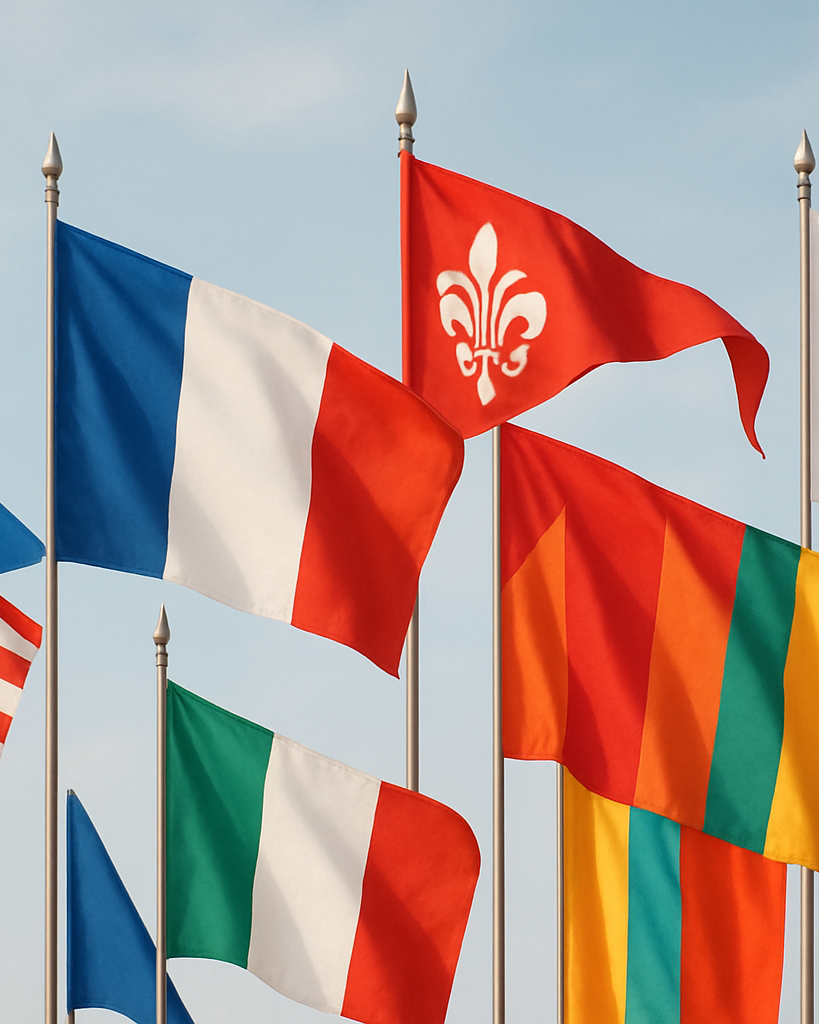

Eastern European flags for heritage days and festivals work best as outdoor-grade 3 ft × 5 ft (90 cm × 150 cm) polyester flags that can be pole-mounted, clustered in national groupings, or carried in parade processions. Whether you are organizing a Polish-American cultural fair, a pan-Slavic heritage weekend, or a community festival celebrating roots from the Balkans to the Baltic, sourcing the right flags from a dedicated European Countries Flags collection saves time and ensures every nation is accurately represented.
Which flag types work best for Eastern European heritage events?
Outdoor Raschel knitted polyester flags are the most practical choice for heritage festivals because they fly well in light wind, resist rain, and retain color through multi-day events. At Asya Bayrak, all Eastern European outdoor flags are made from 110 g/m² Raschel knitted polyester — a fabric that is printed by direct printing and heat-fixed so the colors remain vivid even after repeated exposure to sun and moisture.
Heritage festivals typically run outdoors for one to three days, often in late spring or early summer when UV exposure is high and weather can be unpredictable. The 110 g/m² Raschel weight sits in the mid-range of the Raschel spectrum (which runs from 80 g/m² up to 220 g/m²), giving it enough body to hang well from a flagpole while remaining light enough to flutter visibly in a modest breeze. The direct-print, heat-fixed process locks dye into the fabric rather than sitting on the surface, so flags do not fade or crack after a weekend of continuous flying. For indoor display tables, ceremonial arches, or stage backdrops, satin fabric flags (available in 100, 150, and 165 g/m²) produced via dye-sublimation offer richer, glossy color rendering — though they are better suited to sheltered environments. Most event organizers combine both: Raschel flags on outdoor flagpoles and satin flags on the indoor stage or registration area.
 Serbia is one of the most-requested flags at Balkan heritage festivals, and the Serbia Outdoor Flag delivers the iconic red, blue, and white horizontal stripes alongside the detailed coat of arms in print-accurate color. Made from 110 g/m² Raschel knitted polyester, it is built for the kind of extended outdoor display that a multi-day festival demands. The coat of arms — featuring the double-headed eagle and the four Cyrillic Cs — is a point of pride for Serbian diaspora communities, and getting that emblem right matters enormously to attendees. Paired alongside flags of neighboring nations, it anchors a Balkan or pan-Slavic grouping visually and historically.
How many flags do you actually need for a heritage festival?
A practical formula is one flag per nation represented, plus one spare per flag that will be flown outdoors continuously for more than one day. For a typical Eastern European heritage day featuring eight to twelve nations, that means ordering ten to fourteen flags minimum.
Think through each use case separately. Outdoor perimeter poles usually hold one flag each and are spaced 10–15 ft (3–4.5 m) apart along a festival entrance or pathway. A 200 ft (61 m) entrance row could therefore need 14–20 flags. Stage backdrops often use a tighter cluster of five to seven national flags flanking the podium. Parade contingents typically carry one flag per national group, sometimes two (one leader and one rear). If you are running a cultural fair with country booths, each booth typically displays its nation's flag on a 4 ft (1.2 m) tabletop staff. Add up all these placements before you finalize your order, and add a 10–15% buffer for flags that may be damaged by unexpected high winds or heavy rain. Bulk pricing is available for orders covering multiple nations — see the notes in the concluding section.
How to lay out Eastern European flags at an outdoor festival
The internationally accepted neutral approach is alphabetical order by country name in the host country's language, which avoids any perception of political hierarchy among nations. This is the same convention used by the United Nations and most multi-national sporting events.
 For layouts where you display flags from the same geographic cluster — say, the Visegrád Four (Czech Republic, Hungary, Poland, Slovakia) or the Western Balkans — grouping by sub-region can add educational value and help attendees understand cultural relationships. The Slovakia Outdoor Flag, crafted from 110 g/m² Raschel knitted polyester, displays the white, blue, and red tricolor alongside the striking Slovak cross emblem, making it immediately recognizable within a Central European grouping. When using flagpoles of the same height (recommended), all flags should be the same size — 3 ft × 5 ft (90 cm × 150 cm) is the standard outdoor festival size. Never fly one nation's flag on a taller or more prominent pole than another; this violates general diplomatic courtesy and can cause offense among diaspora communities who are deeply attuned to such signals. If you are also displaying the US flag at a heritage event — which is common and encouraged — fly it at the center or at the highest point of a semicircular arrangement per the US Flag Code (4 USC §§ 1–10), with all other national flags at the same height on either side.
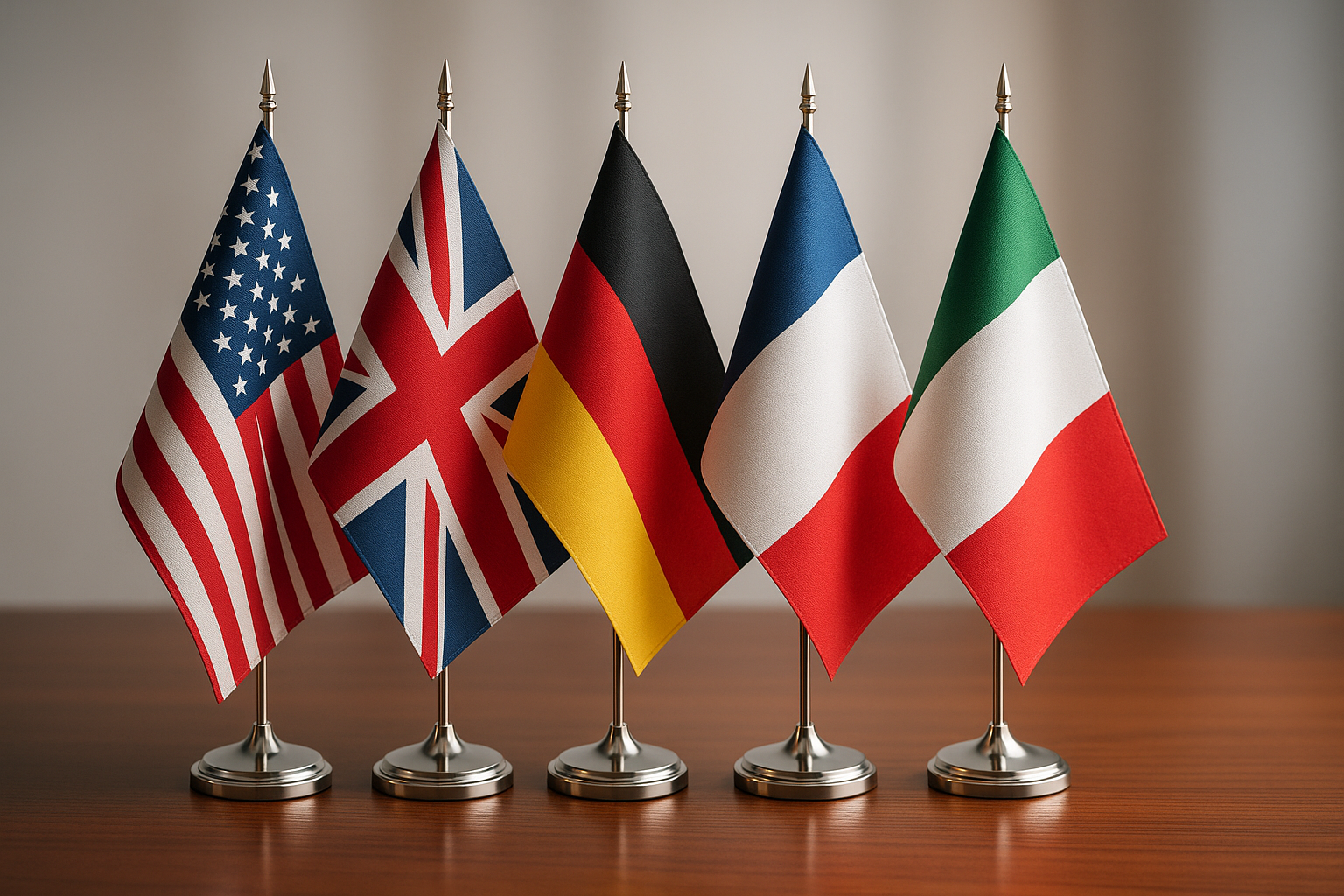
For indoor settings, a row of tabletop flags on 12 in (30 cm) staffs running along a banquet table creates an elegant, low-cost heritage display without requiring flagpoles. Country groupings on the same table reinforce the event's educational purpose. Stage backdrops work well with flags hung vertically from a crossbar or truss, ensuring each flag faces the audience with the hoist side (left edge) correctly oriented. FIAV (Fédération internationale des associations vexillologiques) guidelines recommend that flags always hang with the hoist to the viewer's left when displayed vertically against a wall.

European Countries Flags
Every Eastern and Central European nation in one place — outdoor-grade Raschel polyester flags ready for heritage festivals, cultural fairs, and community events.
Browse Collection →What should you budget for Eastern European flags at a heritage event?
A realistic per-flag budget for outdoor Raschel polyester flags depends on order quantity — smaller orders cost more per unit, while bulk orders covering an entire regional grouping bring the per-flag price down significantly. Plan your total flag count before requesting a quote so you can take advantage of volume pricing.
A well-stored Raschel polyester flag used seasonally can last 6 months to 2 years of actual flying time before color or structural degradation becomes noticeable. Dividing the cost over multiple festival seasons makes per-event costs very manageable. Organizations with ongoing heritage programming — cultural associations, community centers, churches, and diaspora clubs — often find it cost-effective to order a full Eastern European set once and reuse it annually. If you are also planning events that involve flags from outside Europe, the broaderCountry Flags collection covers over 200 nations under the same manufacturing standard.
When should you place your order to be ready for your festival date?
Order at least three to four weeks before your festival date to allow for production, quality control, and international or domestic shipping. For large multi-nation orders (ten flags or more), six weeks is a safer lead time.
Heritage days and cultural festivals in the United States tend to cluster around a few key periods: late spring (May–June, coinciding with European national days and end-of-school cultural events), midsummer (July–August, when outdoor festivals peak), and autumn (September–October, harvest-festival and cultural heritage month programming). Each of these windows sees a surge in flag orders, so lead times can extend during peak season. If your event falls in June, submit your order no later than early May. If you are coordinating a first-time event and are still finalizing the country list, place a provisional inquiry early — this locks in pricing and alerts the production team to your timeline. Reorders for organizations that run annual events are even simpler: store your flag inventory after each event, inspect for wear, identify replacements, and order only what needs refreshing. That approach keeps recurring costs low while ensuring your flag display always looks polished. For planning events with a similar multi-national scope in other regions, the article on Southeast Asian flags for ASEAN events and classrooms offers useful parallel guidance on quantity planning and layout strategy.
Which countries are typically included when people display Eastern European flags? +
Several Eastern European flags look very similar — how do I tell them apart when setting up? +
Can I use the same outdoor flags at an indoor gala or banquet the following evening? +
Is it respectful to display multiple Eastern European flags together, or could it offend any community? +
How should I store Eastern European festival flags after the event so they last for next year? +
Do I need permits to fly foreign national flags at a public festival in the United States? +
Can children carry full-size Eastern European flags in a heritage parade, or is a smaller size better? +
Ready to bring your Eastern European heritage event to life? Start by browsing the full European Countries Flags collection to confirm every nation on your list is available and in stock. For individual highlights, the Slovenia Outdoor Flag and the Russia Outdoor Flag — both in 110 g/m² Raschel knitted polyester — are popular additions to any pan-Slavic or Eastern European display. If your event covers nations beyond Europe as well, the broader Country Flags collection has you fully covered. Bulk pricing is available for corporate sponsors, cultural associations, and municipal event organizers placing multi-nation orders — contact Asya Bayrak directly to discuss volume pricing and production scheduling for your specific event date.


