






Matching the right flag to your flagpole height is the single most important sizing decision you'll make — a flag that is too small looks like a postage stamp from a distance, while one that is too large can shred in the wind or violate display guidelines. The general industry rule is that flag length (the fly dimension) should equal roughly one-quarter to one-third of the pole height, and flag width (the hoist) should be two-thirds of the flag's fly length. Use this flag size chart as your starting point, then browse the full Country Flags collection to find the exact size that suits your pole, your setting, and your display goals.
Standard Flag Sizes and Where Each One Is Used
Flag sizes are standardized around a small set of common dimensions that map neatly to typical residential, commercial, and ceremonial applications. The most widely used outdoor flag sizes in the United States are 2×3 ft (61×91 cm), 3×5 ft (91×152 cm), 4×6 ft (122×183 cm), 5×8 ft (152×244 cm), 6×10 ft (183×305 cm), 8×12 ft (244×366 cm), 10×15 ft (305×457 cm), 12×18 ft (366×549 cm), and 20×30 ft (610×914 cm).
The 3×5 ft size is by far the most popular for residential use — it fits a standard 20–25 ft (6–7.6 m) residential flagpole beautifully and is proportioned to be readable from a street or sidewalk. The 4×6 ft flag moves into light commercial territory, commonly seen on 25–30 ft (7.6–9 m) poles outside small businesses, schools, and municipal buildings. At the 5×8 ft and 6×10 ft range, you are entering commercial and institutional display, appropriate for 35–40 ft (10.7–12.2 m) poles in front of office parks, hotels, and government buildings. The largest standard sizes — 10×15 ft, 12×18 ft, and 20×30 ft — are reserved for very tall poles (60 ft/18 m and above) used at car dealerships, stadiums, highway interchanges, and military installations where maximum visual impact at distance is required.
 Pennant flags follow a different convention entirely because they are triangular rather than rectangular. Standard pennant lengths run from 12 in (30 cm) for small decorative strings up to 36 in (91 cm) for single pennants displayed on a vehicle antenna or boat mast, with larger 4 ft (122 cm) and 6 ft (183 cm) pennants used for stadium and arena railings. Because a pennant's visual weight is concentrated at its widest point (the hoist edge), you typically need a pennant that is 10–20% longer than an equivalent rectangular flag to achieve the same visual presence at the same viewing distance. Indoor pennants for offices and classrooms generally run 9×24 in (23×61 cm) or 12×30 in (30×76 cm), sizes that fit neatly on a wall-mounted bracket without overwhelming the space. The USA Outdoor Flag, crafted from 110g Raschel knitted polyester, is a great reference point for how fabric weight and size interact — heavier fabric reads more crisply at smaller sizes, while lighter fabric is better suited to very large flags where wind resistance is a concern.
How to Choose the Right Flag Size for Your Space, Pole, and Viewing Distance
Start with your pole height, then apply the one-quarter-to-one-third rule to get the flag's fly length, and use a 2:3 width-to-length ratio to get the hoist. For example, a 20 ft (6 m) pole calls for a fly length of 5–6.6 ft (1.5–2 m), making a 3×5 ft flag the correct choice. A 30 ft (9 m) pole lands in the 4×6 ft to 5×8 ft range, depending on how prominent you want the flag to appear.
Viewing distance is the second critical variable. A flag that looks perfect at 50 ft (15 m) may be illegible at 300 ft (91 m). The practical rule is that every 1 ft (30 cm) of flag fly length provides readable visibility up to approximately 20 ft (6 m) of horizontal viewing distance. So a 3 ft fly flag is easy to read at up to 60 ft (18 m), a 5 ft fly flag reads to about 100 ft (30 m), and a 10 ft fly flag extends visibility to roughly 200 ft (61 m). For highway installations or airport approaches, you need a minimum 20×30 ft flag on a 100 ft (30 m) or taller pole. Wind load is also worth factoring in: wider, longer flags catch significantly more wind, and in regions with sustained winds above 20 mph (32 km/h), upsizing the fabric weight or slightly downsizing the flag can double its lifespan from roughly 6 months to well over 1 year.
The Pole-to-Flag Ratio Every Flag Owner Should Know
 The correct pole-to-flag ratio is a fly length equal to 25–33% of the total pole height — this is the most widely accepted guideline used by flag manufacturers, municipal planners, and the US Flag Code's interpretive guidance. Deviating significantly from this ratio in either direction creates proportional problems that undermine the display's visual authority. A flag that is 40% or more of the pole height will look crowded and may wrap the pole in calm conditions, while one at 15% or less will seem insignificant and can appear disrespectful in formal settings. When in doubt, choose the larger of the two sizes that fall within the acceptable range — it is always better to err slightly on the generous side than to under-represent the flag. For wall-mounted applications, the United States Wall-Mounted Telescopic Flagpole Set includes a durable aluminum telescopic pole and a sturdy wall bracket, giving you a complete, proportioned system for homes, offices, embassies, and cultural centers. For anyone researching indoor pole heights specifically, the article on indoor flag pole heights for low and high ceilings provides detailed guidance for every ceiling scenario.
Here is a quick-reference flag size chart based on the standard ratio:
- 15 ft (4.6 m) pole → 2.5×4 ft or 3×5 ft flag
- 20 ft (6 m) pole → 3×5 ft flag
- 25 ft (7.6 m) pole → 4×6 ft flag
- 30 ft (9 m) pole → 5×8 ft flag
- 35–40 ft (10.7–12.2 m) pole → 6×10 ft flag
- 50 ft (15.2 m) pole → 8×12 ft flag
- 60 ft (18.3 m) pole → 10×15 ft flag
- 80–100 ft (24.4–30.5 m) pole → 12×18 ft or 20×30 ft flag
Wall-Mounted Telescopic Flagpole Sets
Complete pole-and-flag kits sized and proportioned for residential or commercial wall mounting — the easiest way to guarantee a correct pole-to-flag ratio from day one.
Browse Collection →How Indoor, Outdoor, and Desk Flag Sizes Compare
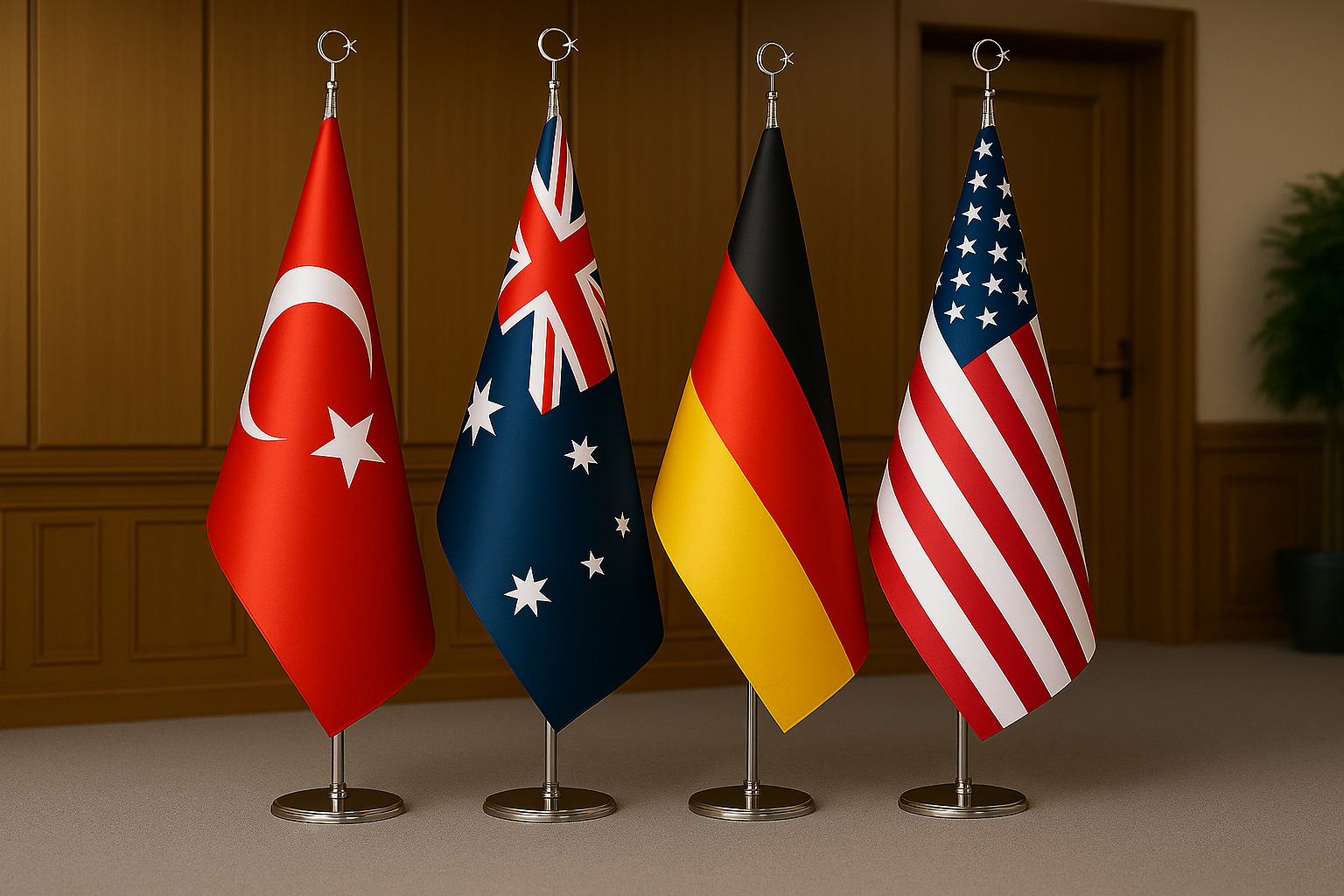
Indoor, outdoor, and desk flags serve completely different purposes and are sized accordingly. Outdoor flags span the full range of the chart above and are built to withstand UV exposure, rain, and wind. Indoor ceremonial flags are almost always 4×6 ft (122×183 cm) or 5×8 ft (152×244 cm) on 8–9 ft (2.4–2.7 m) poles, chosen to suit standard commercial ceiling heights and to meet the display standards used by government agencies, military units, and courts.
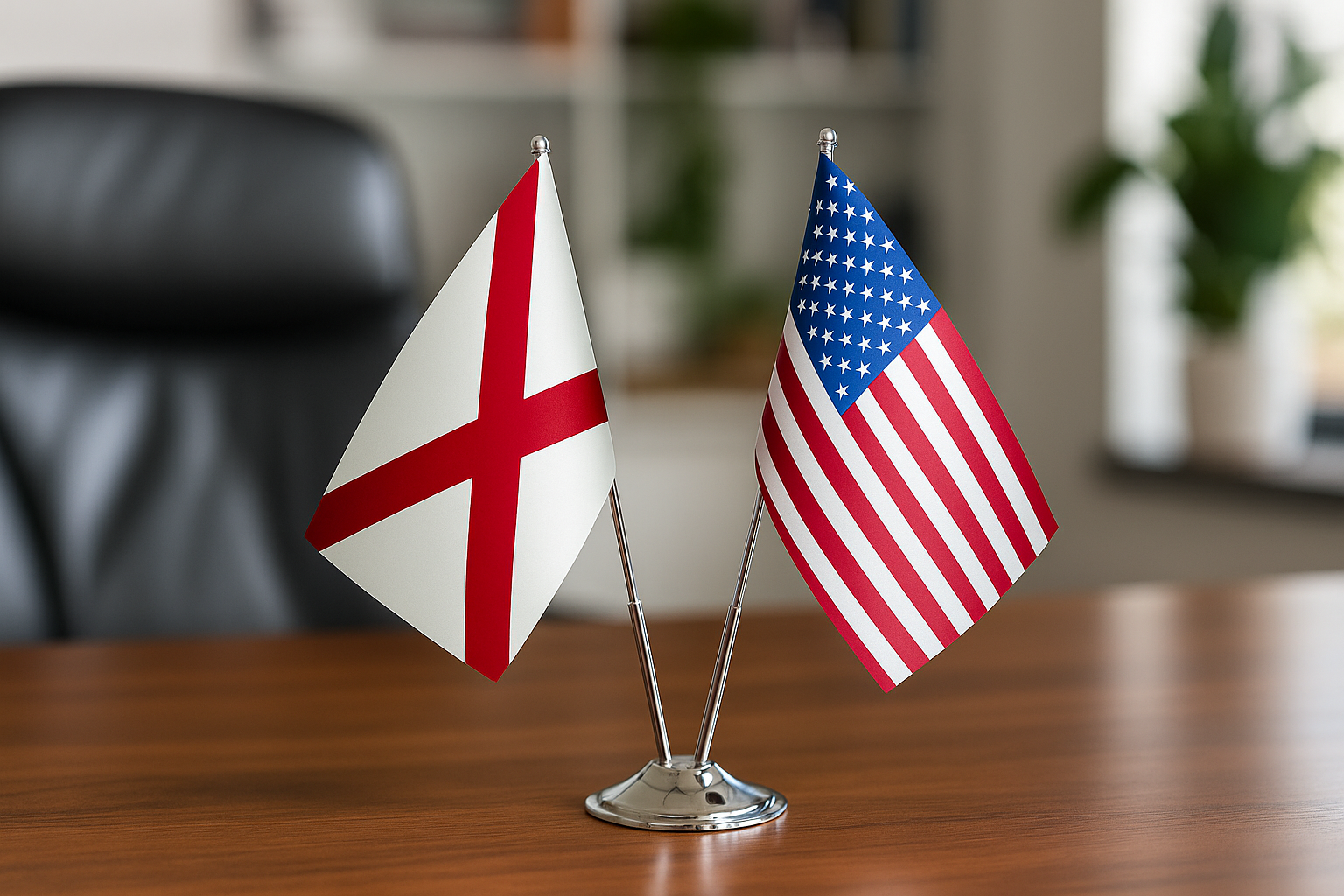
Desk flags occupy a category of their own — typically 4×6 in (10×15 cm) on a 10 in (25 cm) pole, or occasionally 5×8 in (13×20 cm) for larger desk sets. Their purpose is identification and representation rather than visibility at distance, so fabric quality and color accuracy matter far more than size. The Premium USA Desk Flag is mounted on a chrome metal pole with a weighted base and is available in Silver Chrome or Gold finish, making it appropriate for executive desks, reception areas, and formal meeting rooms. When comparing flags across all three categories, bear in mind that the FIAV (Fédération internationale des associations vexillologiques) standards govern proportions but not absolute sizes — a 1:2 ratio flag and a 2:3 ratio flag can both be "correct" depending on the country or institution.
 The US federal government, under Executive Order 10834 (1959), specifies that the official proportions for the American flag are 1:1.9 (hoist to fly), which is why official government-issue flags measure 5×9.5 ft rather than the commercial 3×5 ft or 4×6 ft that most people are familiar with. Commercially available flags use the 2:3 ratio as a practical approximation that fits standard pole hardware and production widths. If you are flying a flag for an official federal installation, check whether the precise 1:1.9 ratio is required; for all residential, commercial, and ceremonial uses, 2:3 is universally accepted. For international flags, proportions vary significantly — for instance, the Mexican flag is 4:7 and the Swiss flag is square (1:1) — so if you are sourcing a country flag for a diplomatic or international event, verifying the official ratio is essential. You can find guidance on specific country flag sizing (including proportions and official shade standards) in related articles such as Mexican flags for sale, sizes and prices.
Sizing Mistakes That Shorten a Flag's Life and Undermine the Display
The most common and costly sizing mistake is choosing a flag that is too large for the pole — not because it looks bad immediately, but because the extra fabric creates leverage that accelerates wear at the hoist seam, tears grommets, and can bend or crack a pole rated only for a smaller flag's wind load. A 5×8 ft flag on a pole designed for a 3×5 ft flag can generate roughly three times the wind force in a 20 mph (32 km/h) gust.
The second most frequent error is ignoring building set-back and local ordinances when choosing flag size. Many municipalities have height and size limits for flags displayed on private property, and some HOAs specify maximum flag dimensions explicitly. Always verify local rules before purchasing a flag larger than 4×6 ft for residential use. A third common mistake is selecting a flag solely by length and forgetting to check the hoist (width) against the available header space on the pole's snap hook or halyard system — a flag with a 60 in (152 cm) hoist on a pole fitted for a 36 in (91 cm) hoist will billow incorrectly and stress the hardware unevenly. Finally, many buyers overlook the difference between the flag's finished size and its cut size — quality manufacturers account for hem seam allowances, so a finished 3×5 ft flag may cut slightly larger before hemming. Always buy by the finished, hemmed dimension.
What is the standard flag size chart for common flagpole heights? +
What do the inches in a flag size chart actually refer to? +
What sizes do pennant flags come in? +
Can I fly a larger flag to make my display more impressive? +
What flag size is used indoors for official ceremonies? +
Does the US Flag Code specify a required flag size? +
How do international flag proportions differ from US flag proportions? +
Using this flag size chart, you now have everything you need to match a flag to a pole with confidence — from a 4×6 in desk flag for a chrome-finished executive stand all the way up to a 20×30 ft outdoor banner on a 100 ft pole. For your next purchase, start with the Country Flags collection for a full range of sizes across hundreds of national designs, or go directly to the USA Outdoor Flag in 110g Raschel knitted polyester for a durable, weather-resistant American flag proven for outdoor use. If you need a complete pole-and-flag system, the Wall-Mounted Telescopic Flagpole Sets collection offers everything in one kit, including aluminum telescopic poles and wall brackets sized to work together correctly from day one. Bulk pricing is available for corporate orders, government procurement, and event organizers — contact us for a volume quote.


