
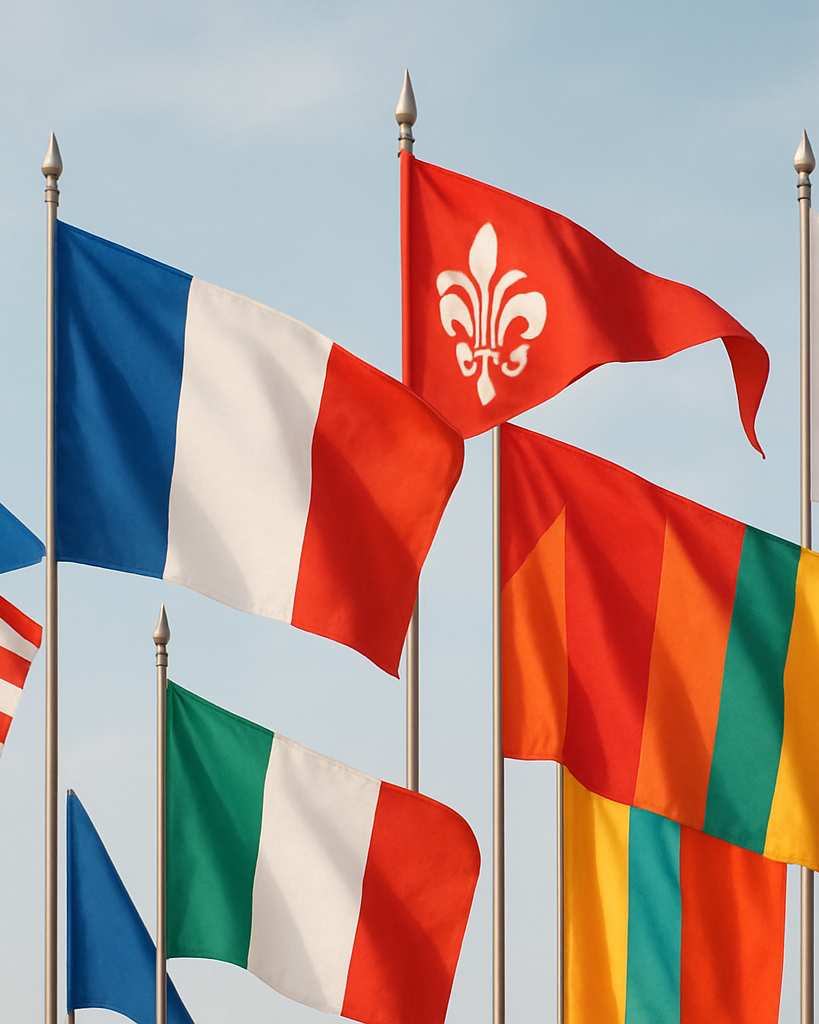




Real estate professionals who want to attract more foot traffic and close sales faster need high-visibility signage at every open house, model home, and development site — and outdoor flags are one of the most cost-effective tools available. From tall feather flags real estate agents plant at curbside to bold sail flags for real estate developments visible from a block away, the right flag setup can increase walk-in traffic by a measurable margin. Whether you are managing a single listing or coordinating signage across dozens of properties, understanding how to choose, display, and place a bulk outdoor flags order will save you time, money, and setup headaches on event day.
Why Outdoor Flags Outperform Traditional Real Estate Signage
Outdoor flags for property sales consistently outperform static yard signs because they move, catch light, and register in peripheral vision at distances of 100 ft (30 m) or more. A standard corrugated plastic yard sign competes with landscaping and parked cars at ground level, while a 15 ft (4.6 m) feather flag stands above every obstacle on the roadside, waving in even the lightest breeze. Studies conducted by the Outdoor Advertising Association of America indicate that motion-based outdoor displays capture attention up to 400% more effectively than static alternatives — a decisive advantage during the few seconds a passing driver has to notice your property event. Real estate brokers who deploy four to six open house flags outdoor at key sight-lines typically report measurable upticks in unscheduled visitor counts during weekend open houses, turning passive drive-bys into active showings.
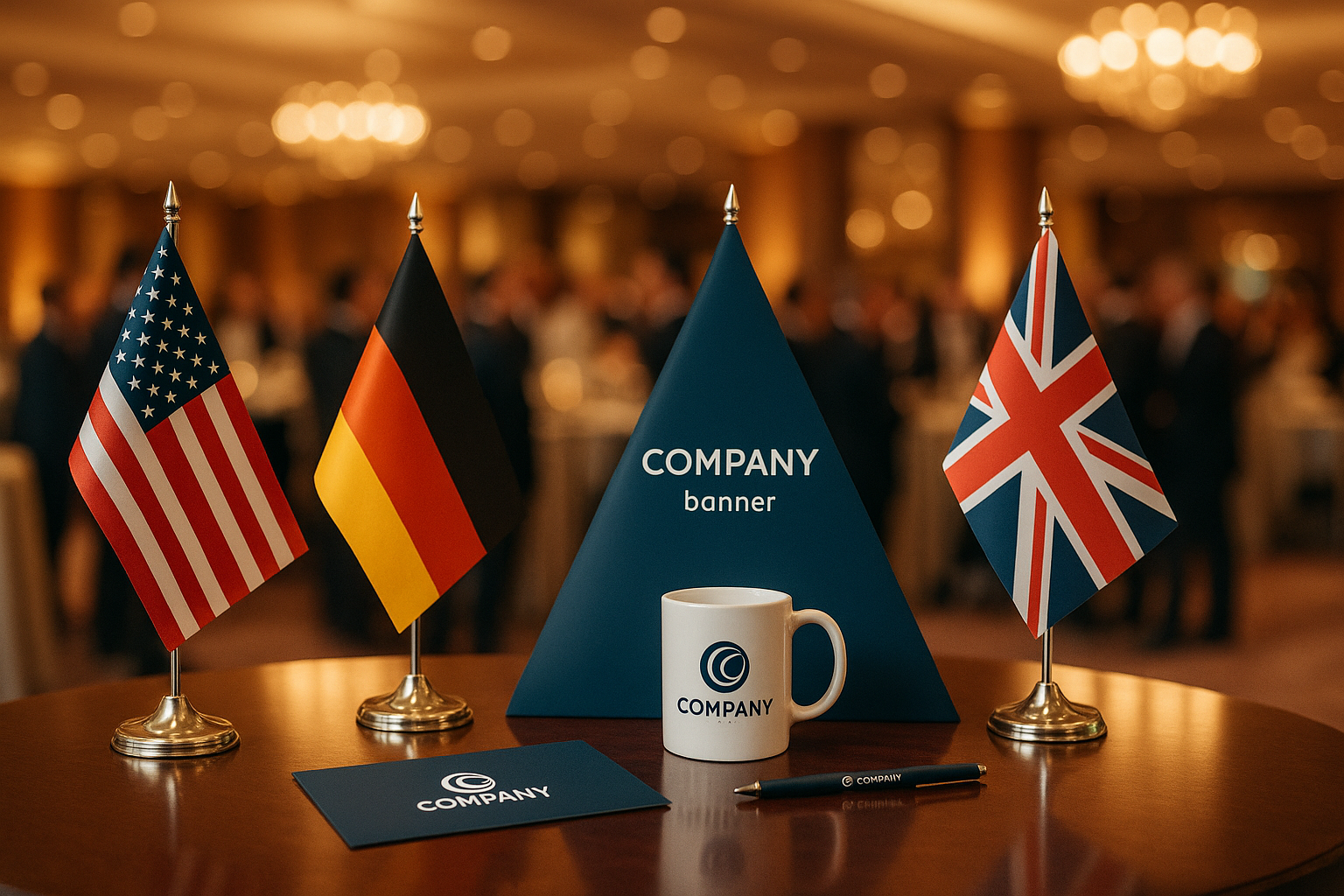
Beyond raw visibility, flags carry brand-building value that disposable signs cannot match. A well-printed custom logo flag real estate brokerage plants at every listing reinforces brand recognition across an entire neighborhood, especially in active development corridors where multiple properties are being shown simultaneously. The professional appearance of coordinated flag kits — matching colors, consistent branding, clean hardware — signals seriousness and investment to prospective buyers even before they step through the front door. For developers managing multiple active sites, this kind of visual consistency across locations is priceless.
Feather Flags vs. Sail Flags: Choosing the Right Shape for Your Property
Feather flags real estate professionals prefer are tall and narrow, designed to flutter dramatically in wind and remain stable even in gusts up to 25 mph (40 km/h), while sail flags for real estate offer a wider rectangular display area ideal for bold text and logos. The choice between the two shapes comes down to your specific use case: feather flags excel at curbside placement along busy roads where fast-moving drivers need an instant visual cue, while sail flags — sometimes called blade or teardrop flags depending on their cut — are better suited to model home entrances, development site gateways, and trade show-style outdoor presentations where the audience approaches on foot and has time to read messaging. Both formats typically stand between 8 ft and 15 ft (2.4 m – 4.6 m) tall and can be mounted on ground-spike hardware, weighted bases for hard surfaces, or cross-base feet for indoor foyers.
For most residential open house setups, a mix of formats works best: two or three feather flags planted along the street-facing boundary to capture vehicle traffic, and one or two wider sail flags positioned near the entrance or driveway to deliver the brand message up close. Commercial and development sites often benefit from taller, heavier-duty hardware rated for sustained outdoor exposure over weeks or months, rather than the lightweight event-grade poles used for single-weekend showings. When ordering in volume, matching all units to a single hardware standard dramatically simplifies setup and storage logistics for your team.
Material and Print Specifications That Matter for Outdoor Durability
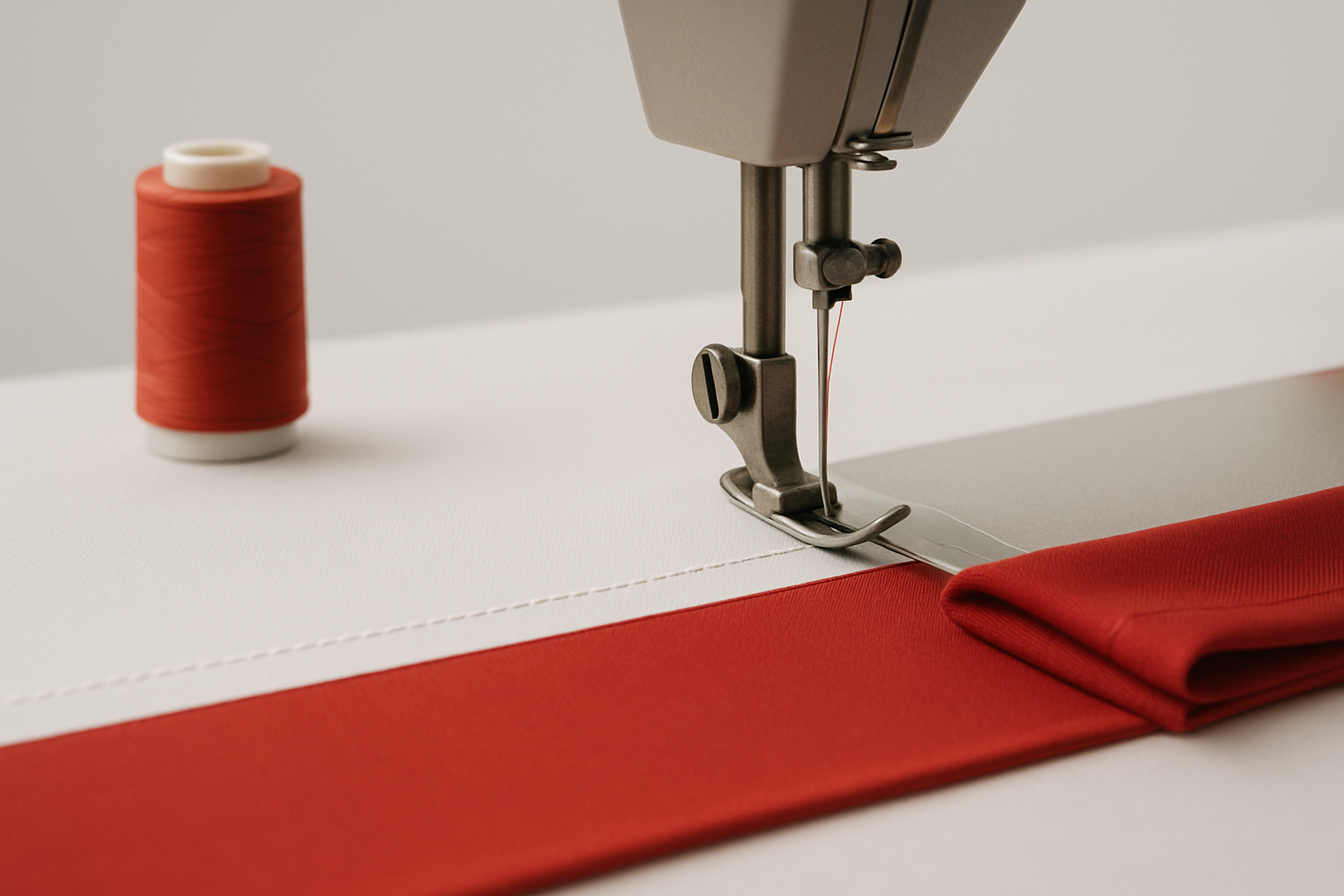
 For outdoor flags for property sales that will survive a full season of open houses, the fabric and printing method are the two most important technical decisions you will make. The industry standard for high-quality outdoor promotional flags is 110–115 gsm knitted polyester with dye-sublimation printing, which bonds ink directly into the fiber rather than sitting on top as a coating that can crack or peel. A properly sublimated flag rated at 80% UV resistance will maintain vibrant color for 6 to 12 months of continuous outdoor use, and up to 24 months when flags are deployed only on event weekends and stored properly between uses. The logo-printed vertical pole flags collection at Asya Bayrak uses exactly this construction, delivering sharp, full-color imagery that holds up under direct sun, rain, and wind cycle after cycle. Reinforced hem stitching and double-sewn sleeves at stress points add structural integrity, especially important for model home flags display applications where flags may be left installed for weeks at a time at active sales offices.
Color accuracy is especially critical for brokerage branding. Real estate franchises and independent brokerages alike invest heavily in brand standards — specific Pantone colors, logo proportions, and typography guidelines — and a flag that renders those colors inaccurately undermines the entire brand investment. When ordering custom logo flags real estate teams will use at client-facing events, always request a digital color proof before bulk production and confirm that your supplier works from vector source files (AI, EPS, or high-resolution PDF) rather than low-resolution JPEGs. Double-sided printing, where two layers of fabric are bonded back-to-back so the design reads correctly from both sides of the flag, adds cost but is strongly recommended for any location where the flag is visible from multiple approach directions.
How to Display Flags at Open Houses, Model Homes, and Development Sites
 Correct flag placement turns a single-flag setup into a directional system that guides prospects from the road all the way to the front door. The most effective open house flag layouts follow a "funnel" pattern: start with two or three high-visibility feather flags at the nearest major intersection to capture street traffic, add one or two directional flags at any turn-off or driveway entrance, and finish with a statement flag or pair of flags flanking the front entrance itself. Each placement point should be visible from the previous one so that a buyer who has never visited the address can follow the flags like a trail without consulting GPS. For model home flags display at planned communities, extending this flag trail from the community entrance sign all the way to the model home's front walk dramatically reduces the number of confused buyers who stop at the wrong unit. The sail flags collection offers multiple size options so you can scale flag height to the sight-line distance at each placement point.
Hardware selection is just as important as flag design when it comes to reliable display. Ground-spike mounts work well in grassy lawns and unpaved shoulders, requiring no tools and providing a secure hold in most soil conditions. For paved driveways, parking lots, and hardscape surfaces at commercial developments, weighted cross-base stands with a sandbag ballast are the professional solution — they will not tip in wind and leave no marks on finished surfaces. Always check local municipal sign ordinances before installing flags on public rights-of-way; many counties permit temporary real estate event signage for 24–72 hours without a permit, but development sites with long-term installations may require a variance. Compliance with these rules protects your brokerage from fines and ensures your signage remains in place for the full duration of the event.
Placing a Bulk Order: What Developers and Brokerages Need to Know
Real estate flags bulk order pricing becomes significantly more favorable at quantities of 10 units or more, and the break-even point where custom flags become cheaper per unit than renting or reusing generic signs is typically around 20–25 pieces for most flag formats. For brokerages with active listing pipelines, a standing inventory of 30–50 branded flags with standardized hardware covers most simultaneous open house schedules and allows for quick redeployment between events. Development companies managing multiple active sites should think in terms of kits — a defined package of flags, poles, and hardware per site — so that new sites can be activated immediately from warehouse stock without waiting for new production runs.
When structuring a bulk outdoor flags for developers order, provide your supplier with the following at minimum: finished artwork files in vector format, desired flag dimensions and shape, quantity per design, hardware type preference, and delivery deadline with buffer time for production. Standard production lead times for custom dye-sublimated flags run 7–14 business days; rush production is available at most manufacturers for a premium. Ordering with 3–4 weeks of lead time before your first deployment date eliminates the stress of last-minute logistics and gives you time for a quality check on the first production samples before approving the full run.
Corporate Flags Collection
Purpose-built for branded outdoor use, this collection offers bulk-ready corporate flag options perfect for real estate brokerages and development companies needing consistent, professional signage across multiple sites.
Browse Collection →Customization Options: Logos, Colors, and Messaging for Real Estate Branding
Custom logo flags real estate companies order today go far beyond simple text on a solid background — full-bleed dye-sublimation allows photographic-quality imagery, gradient backgrounds, QR codes linking to listing pages, and precise Pantone color matching for franchise-compliant branding. The most effective real estate flags combine three elements: a high-contrast background color that reads from a distance (deep red, cobalt blue, and forest green all perform well), a large logo or brokerage name in the upper third of the flag where it clears ground-level obstructions, and a single action phrase in the lower section such as "Open House," "Now Selling," or "Move-In Ready." Adding a QR code that links directly to a property listing page or virtual tour has become increasingly common and measurably increases digital engagement from foot-traffic prospects.
For developers marketing new communities, flags can be produced in a phased messaging sequence: "Coming Soon" flags for pre-construction, "Now Selling" flags for active sales phases, and "Final Homes" flags for close-out inventory. This approach maximizes the reuse value of hardware while keeping messaging current and urgency-driven at every phase of the project. The logo-printed outdoor pole flags range from Asya Bayrak supports full-color custom design across all flag shapes and sizes, making it straightforward to build a complete phased signage program from a single supplier.
Caring for Your Flag Inventory to Maximize Lifespan and ROI
With proper care, quality outdoor flags used at weekend open houses can last 18 to 24 months, delivering a per-use cost that is dramatically lower than any comparable temporary signage option. The most important maintenance practices are straightforward: shake or brush off loose debris before rolling flags for storage, never store flags while wet or damp as this accelerates fabric degradation and promotes mildew, and inspect pole connections and sleeve stitching after every five to ten deployments to catch wear before it causes a failure at an event. UV exposure is the primary factor that degrades color and fabric strength, so flags used at properties in sun-intense regions like the Southwest or Florida should be evaluated for replacement at the 12-month mark rather than the 24-month mark.
For brokerages managing large flag inventories, a simple check-in/check-out log by agent or team, combined with a quarterly condition audit, will dramatically extend the useful life of your flag assets and prevent agents from deploying tattered or faded flags that reflect poorly on the brand. Storage in labeled fabric bags or breathable bins — never compressed in plastic tubs that trap moisture — keeps hardware and flags ready for fast deployment. Investing an extra 10 minutes per event in proper takedown and storage pays back many times over in extended flag lifespan and avoided replacement costs.
Ready to build your real estate signage program from the ground up? Explore the sail flags collection for high-visibility curbside options, browse the full range of logo-printed outdoor pole flags for branded model home and development site displays, or shop the corporate flags collection for bulk-ready solutions built for professional real estate operations. Bulk pricing is available for corporate and developer orders — contact the Asya Bayrak team directly for volume quotes and custom production timelines tailored to your deployment schedule.


