









Funeral homes, cemeteries, and memorial service providers need flags that perform flawlessly under open-sky conditions, honor the solemnity of the occasion, and meet legal display requirements — including half-staff protocols governed by the US Flag Code (4 USC §§ 1-10). Whether you manage a single funeral home or a network of cemeteries, choosing the right outdoor flags, understanding proper display etiquette, and placing smart bulk orders can save money while ensuring every service reflects the dignity it deserves. From heavy-duty nylon American flags rated for continuous outdoor use to coordinated indoor chapel displays, this guide covers everything your organization needs to make informed purchasing decisions.
Why Funeral Homes and Cemeteries Have Unique Flag Requirements
Funeral homes and cemeteries operate under stricter visibility, durability, and protocol standards than most other flag-flying institutions, making off-the-shelf consumer flags a poor fit for professional memorial use. Flags at memorial sites are expected to fly daily, often in exposed, windy locations, while maintaining a respectful, well-maintained appearance for grieving families and visitors. A frayed or faded flag on cemetery grounds sends exactly the wrong message — and in some states, public cemeteries are subject to local ordinances requiring flags to meet minimum quality standards. Professional-grade outdoor flags for funeral homes must be constructed from 200-denier nylon or heavier, with reinforced canvas headers, brass grommets, and UV-inhibited dyes that resist fading for 6 months to 2 years depending on climate. Indoor chapel or arrangement-room flags serve a different purpose, requiring weighted stands and ceremonial finishing, which is why separating your indoor and outdoor procurement makes both logistical and financial sense.
Memorial service flags must also account for the frequency of display changes. Many funeral homes lower and raise the flag for every service, which means hardware — grommets, headers, and rope attachment points — must be rated for high-cycle use. Flags that see daily changes in a busy funeral home may go through 200 or more raising-and-lowering cycles per year, far exceeding what a residential flag endures in the same period. Selecting flags with double-stitched fly ends and lock-stitched stripes dramatically extends service life in these high-turnover environments.
Understanding Half-Staff Protocol for Memorial Services
Under 4 USC § 7(m), the President of the United States has authority to order flags to be flown at half-staff as a mark of respect for principal figures and on other designated occasions, and governors may order the same within their states. For funeral homes and cemeteries, knowing when and how to execute half-staff display is not optional — it is a fundamental professional obligation that families notice and remember. Half-staff means the flag is flown at one-half the distance between the top and bottom of the staff; it does not simply mean "lower than full-staff" by an arbitrary amount. The correct procedure is to first raise the flag briskly to the top of the pole (called "peak" or "full-staff"), then slowly lower it to the half-staff position as a mark of respect. At the end of the day, the flag should again be raised to peak before being lowered ceremonially and folded.
Common occasions that trigger half-staff orders relevant to memorial service providers include Memorial Day (half-staff until noon, then raised to full-staff), Pearl Harbor Remembrance Day (December 7), and the deaths of current or former government officials. Funeral homes serving military families should be particularly attentive, as the President may order flags to half-staff upon the death of a principal figure of the government or armed forces. Many states also have their own proclamation systems — subscribing to your state governor's official notification system ensures you never miss a local order. Displaying a flag at full-staff when an active half-staff order is in effect is a violation of federal protocol and can be perceived as deeply disrespectful by the families you serve.
Choosing the Right Outdoor Flags for Cemetery and Funeral Home Poles
 Selecting the correct flag size for a cemetery or funeral home flagpole is the first practical decision — and it follows a straightforward rule: the flag's fly length (horizontal dimension) should equal approximately one-quarter to one-third of the pole height. A 20 ft (6.1 m) pole commonly pairs with a 3 ft × 5 ft (0.9 m × 1.5 m) flag, while a 25 ft (7.6 m) pole is best matched with a 4 ft × 6 ft (1.2 m × 1.8 m) flag, and a 30 ft (9.1 m) or taller pole calls for a 5 ft × 8 ft (1.5 m × 2.4 m) or larger display. For cemetery entrance monuments or roadside poles that may exceed 40 ft (12.2 m), an 8 ft × 12 ft (2.4 m × 3.7 m) flag provides proportional visibility without being so heavy that it strains the halyard system. The USA Outdoor Flag collection offers multiple sizes purpose-built for institutional flagpoles, with 80% UV-resistant dye systems and reinforced headers designed to survive continuous outdoor exposure. Material choice matters significantly too: 200-denier nylon is the professional standard for most climates because it dries quickly, resists mildew, and flies at light wind speeds (as low as 5 mph / 8 km/h) — ensuring the flag displays properly even on the still, overcast days that often accompany funeral services.
Beyond the American flag, many funeral homes also display state flags, POW/MIA flags, military branch flags, and religious flags simultaneously. Multi-flag installations require careful attention to the US Flag Code, which specifies that the American flag must be at the center and highest point when displayed with other flags on separate poles of equal height. When displayed on a single pole with other flags, the American flag goes at the peak. Funeral homes serving veteran communities should keep POW/MIA flags in their inventory at all times, as these are flown on six designated days per year by federal law (Public Law 105-85) and are frequently requested by families of veterans regardless of the calendar date.
Indoor Memorial Display: Chapel Flags, Stands, and Ceremony Sets
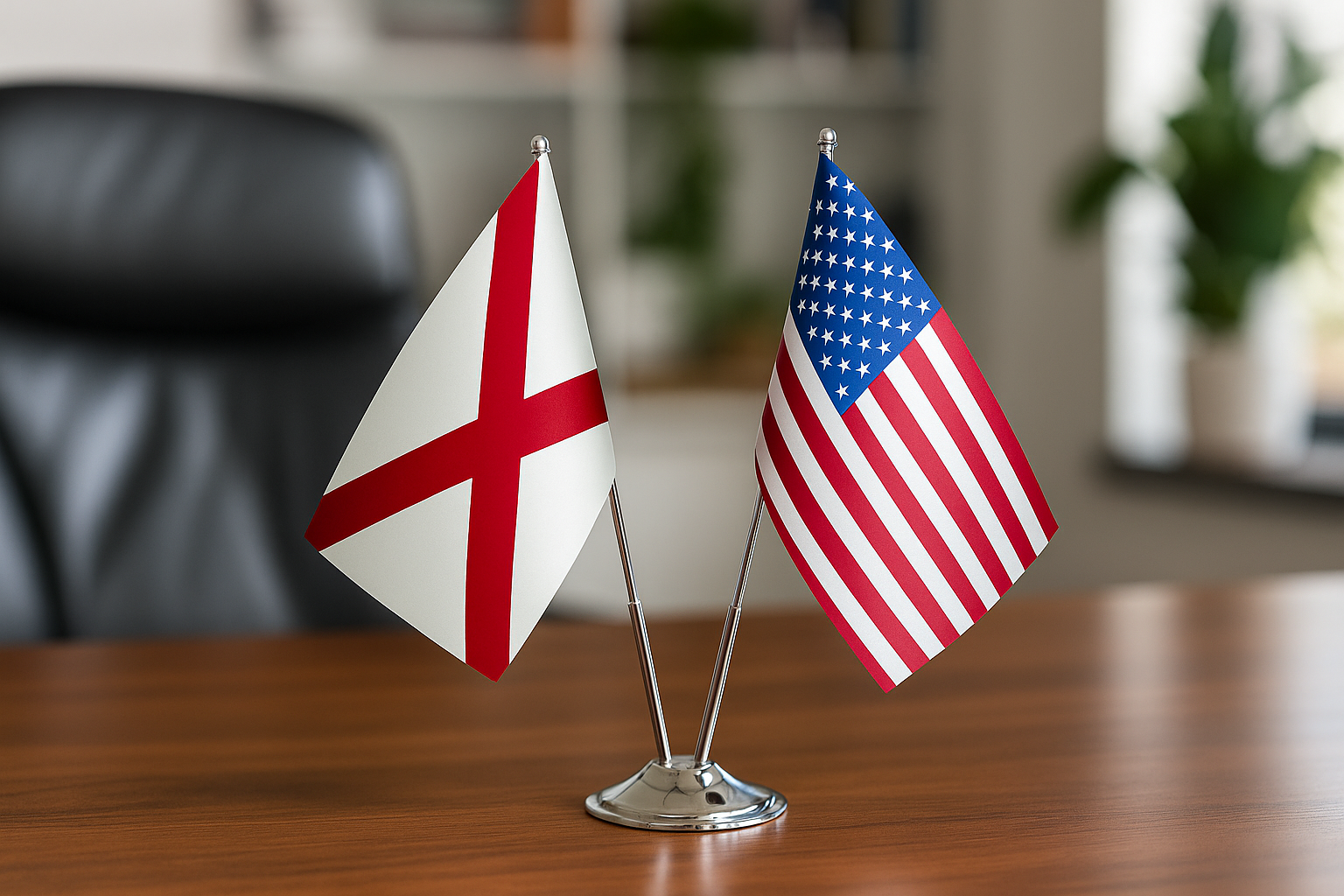
 Indoor memorial display in chapels, visitation rooms, and arrangement offices requires a completely different set of products than outdoor installations — ceremonial presentation is paramount, and stands must be stable enough to hold a flag in a dignified, upright position throughout a service lasting 1 to 3 hours or more. The premium weighted metal flag stand is an ideal solution for funeral homes that need a polished, professional presentation without the risk of a top-heavy floor stand tipping during a service. These chrome and gold-finish stands project an air of solemnity and respect that inexpensive plastic alternatives simply cannot match, and the weighted bases keep flags stable even in air-conditioned rooms where HVAC airflow can cause lightweight stands to shift. For multi-flag arrangements — such as simultaneously displaying the American flag, a state flag, and a military branch flag — triple, quad, or five-flag configurations on a single weighted base create a clean, organized presentation that fits neatly at the front of a chapel without requiring multiple separate floor stands. Funeral directors who invest in quality indoor display hardware report higher family satisfaction scores and a more consistent brand image across all service rooms. Browse the full range of display solutions in the bases and stands collection to find options scaled for both intimate arrangement rooms and large chapel spaces.
Indoor flags for memorial services should be distinguished from outdoor flags not just in stand type but in fabric and finish. Indoor ceremonial flags are typically made from polyester or heavyweight nylon with a lustrous sheen, finished with gold fringe (2.5 in / 6.4 cm is the standard width) to indicate they are used for display rather than outdoor flying. Gold fringe on an indoor American flag is a long-accepted ceremonial convention — contrary to internet myths, it does not carry any legal or jurisdictional meaning under the US Flag Code and is simply a mark of formal display. Funeral homes should maintain a separate indoor flag inventory from their outdoor stock to ensure the correct flag type reaches the correct location for every service. Reviewing the indoor flags collection gives procurement managers a clear view of available ceremonial options with the finishing details appropriate for chapel use.
Bulk Ordering Strategy for Funeral Homes and Cemetery Networks
Bulk purchasing is the most cost-effective approach for any funeral home group, cemetery management company, or memorial service network that operates multiple locations or goes through flags at a high rate due to weather exposure. Buying in quantities of 12, 24, or 48 flags at a time typically reduces per-unit cost by 20–40% compared to single-flag purchases, and maintaining an on-site inventory of 3–6 replacement flags per outdoor pole ensures you are never caught with a damaged flag and no replacement when a service is scheduled. Wholesale flags for funeral operations should be sourced from manufacturers that can guarantee color consistency across production runs — this matters because replacing a single flag on a two-pole installation with a flag from a different dye lot can result in a visible color mismatch that looks unprofessional.
When placing a bulk order for memorial service flags, define your specifications precisely: size (e.g., 3 ft × 5 ft, 4 ft × 6 ft, 5 ft × 8 ft), material (200-denier nylon is the professional standard), grommet type (solid brass, minimum ⅝ in / 16 mm diameter), header reinforcement (canvas with lock-stitching), and any custom printing needs such as a funeral home name or logo on a secondary flag. Establishing a standing purchase order with a flag manufacturer — rather than reordering ad hoc — locks in pricing, ensures stock availability, and reduces administrative overhead. Many cemetery management organizations find that a single annual bulk order, timed to arrive in March before the Memorial Day season, covers the full year's replacement needs at the lowest possible cost per flag.
Flagpoles & Accessories Collection
Everything funeral homes and cemeteries need to complete a professional flag installation — poles, halyards, truck ornaments, and mounting hardware built for continuous outdoor use.
Browse Collection →Care, Maintenance, and Replacement Schedules for Memorial Flags
A well-maintained flag program at a funeral home or cemetery requires a documented inspection and replacement schedule, not reactive purchasing when a flag becomes visibly worn. Outdoor American flags in continuous use should be inspected weekly for fraying at the fly end (the edge opposite the header), fading of the red stripes and blue canton, and wear at the grommet holes. As a general rule, a quality 200-denier nylon flag flown continuously at a funeral home or cemetery can be expected to last 3 to 6 months in coastal or high-wind climates, and 9 to 18 months in moderate inland conditions. Set a minimum condition threshold — for example, any flag with fly-end fraying exceeding ½ in (12.7 mm) or noticeable color fading is retired and replaced, regardless of whether a formal order is in effect.
Retired American flags must be disposed of in a dignified manner per US Flag Code 4 USC § 8(k), which states that a flag, when worn beyond repair, should be destroyed in a dignified way, preferably by burning. The American Legion and Veterans of Foreign Wars posts conduct regular flag retirement ceremonies and accept worn flags from funeral homes and cemeteries — donating retired flags to these organizations serves both a practical and community-building function. Tracking replacement cycles in a simple spreadsheet (date installed, location, flag size, replacement date) gives purchasing managers the data they need to forecast annual flag spend accurately and identify specific locations — perhaps a hilltop cemetery entrance exposed to prevailing winds — where more durable or more frequent replacement flags are warranted.
Customization Options for Funeral Home Brand Identity
Beyond standard American and state flags, many funeral homes and cemetery groups use custom-printed flags to build brand recognition, direct visitors across large grounds, or denote specific service areas. Custom outdoor flags with a funeral home's name, logo, or directional messaging (such as "Chapel Entrance" or "Committal Service Area") can be produced on the same 200-denier nylon as standard outdoor flags, using UV-resistant digital printing that maintains color accuracy for 12 to 24 months of outdoor exposure. For cemetery networks with multiple sections — veteran sections, children's sections, denominational sections — small custom pennants or section flags on short ground stakes help families and staff navigate efficiently during services.
Custom flag orders for corporate or institutional clients typically require a minimum run of 12 to 24 pieces for cost-effective production, and artwork should be provided in vector format (AI, EPS, or SVG) at actual size for the sharpest print results. When commissioning custom flags, request a physical proof or pre-production digital proof before approving the full run — color matching between a computer screen and a dye-sublimation or screen-printed flag can vary, and catching a color discrepancy before 48 flags are printed saves significant cost and time. Funeral homes that combine standard American flag inventory with a small quantity of branded directional flags create a cohesive, professional visual environment that distinguishes them from competitors and reinforces the quality message they deliver to families.
Frequently Asked Questions
What size American flag is appropriate for a funeral home or cemetery flagpole? +
How do funeral homes receive half-staff notifications under the US Flag Code? +
What is the correct procedure for lowering a flag to half-staff at a funeral home? +
How long do outdoor American flags typically last at a busy funeral home? +
What is the minimum order quantity for wholesale funeral home flags? +
Can a funeral home display a gold-fringed American flag indoors during a service? +
How should a funeral home properly dispose of worn-out American flags? +
What accessories do funeral homes need to complete a professional flag installation? +
Equipping your funeral home, cemetery, or memorial service operation with the right flags, hardware, and display systems is an investment in the dignity of every service you provide. Start with the USA Outdoor Flag for durable, weather-ready cemetery and funeral home pole display, complete your indoor chapel setup with a premium weighted metal flag stand, and source all the mounting hardware and pole accessories your installation requires from the flagpoles and accessories collection. Bulk pricing is available for corporate and multi-location orders — contact Asya Bayrak directly to discuss standing purchase agreements, custom flag printing specifications, and volume discount tiers tailored to the needs of funeral home groups and cemetery management companies.


