


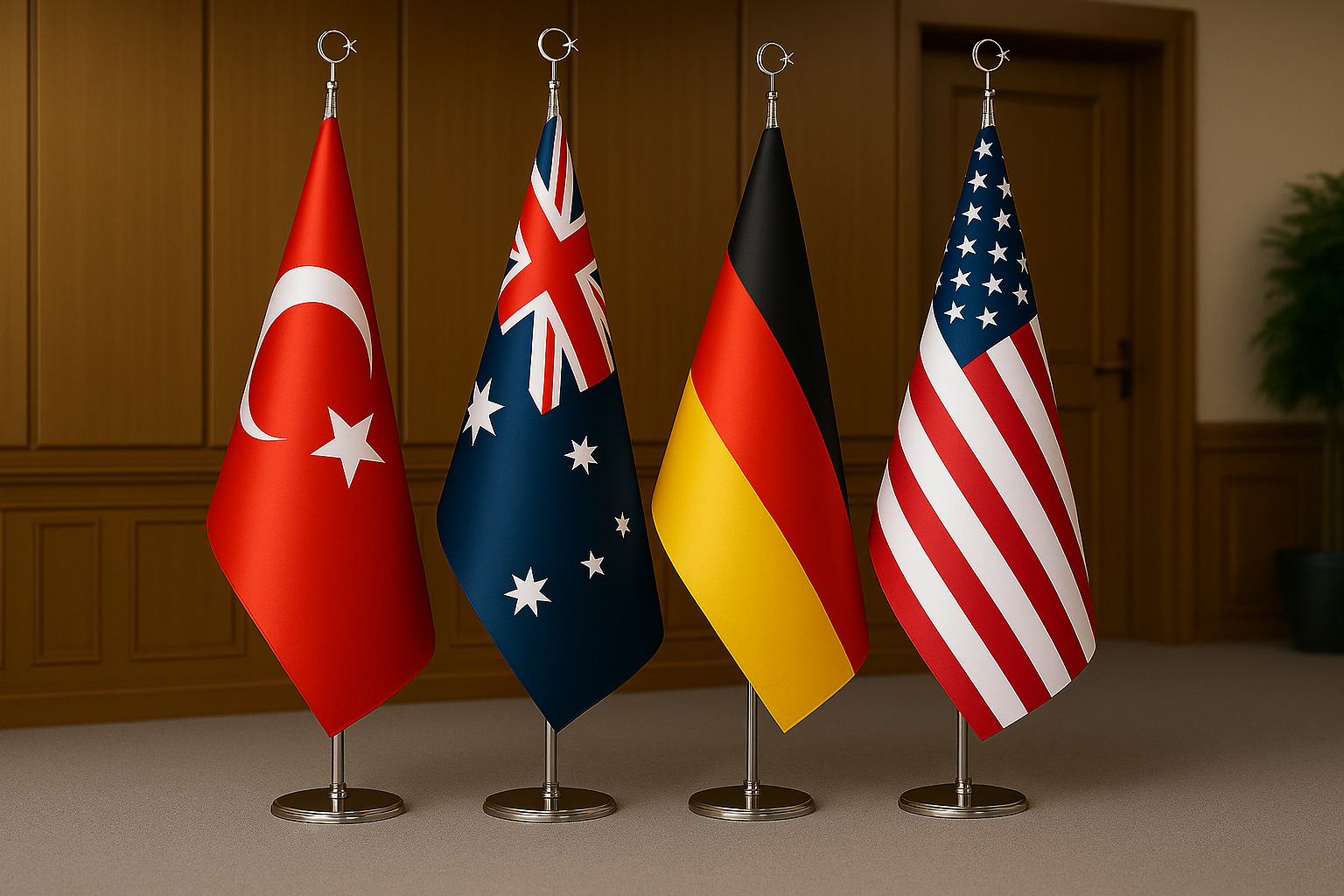
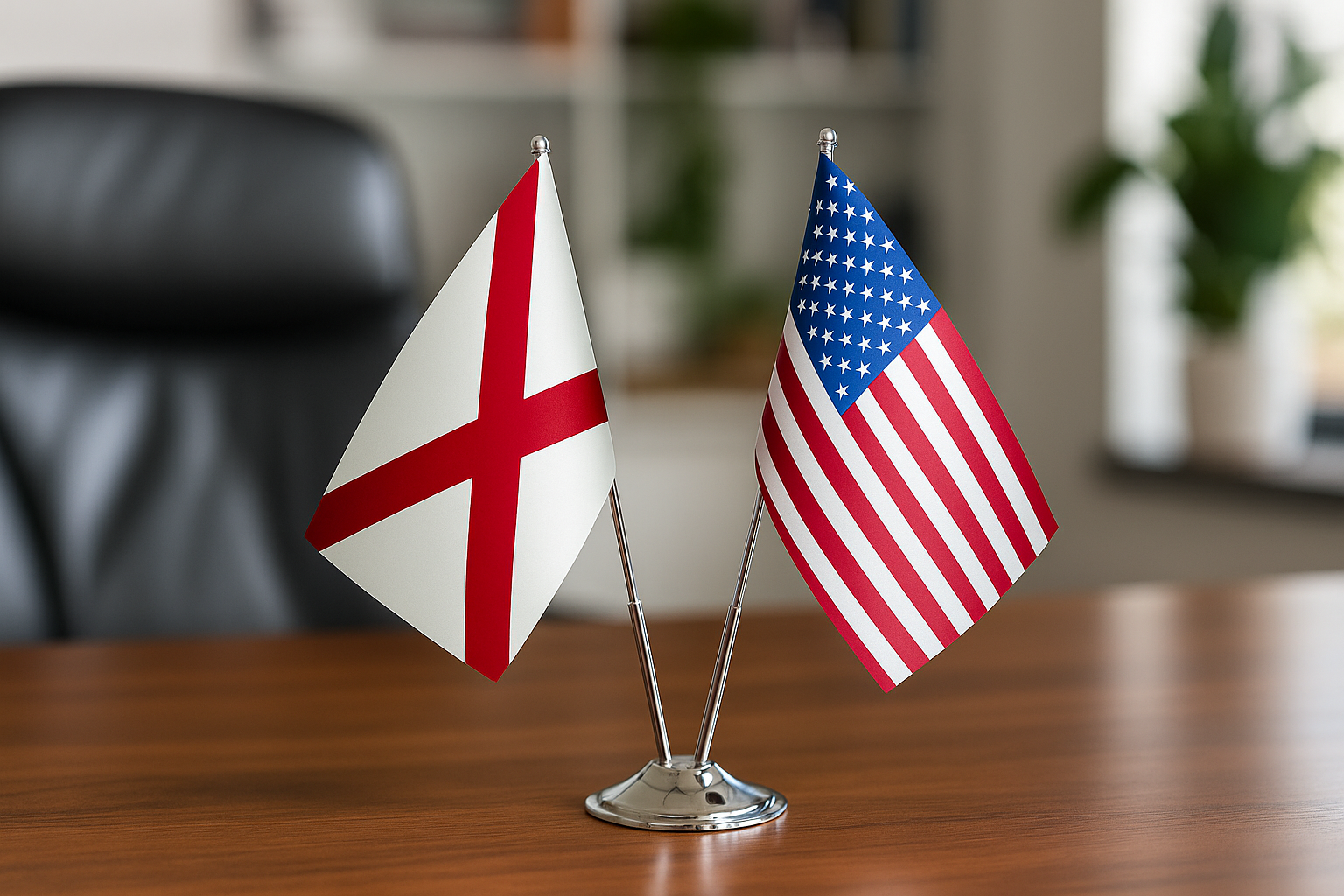




For church sanctuaries and fellowship halls, pole-mounted indoor flags on freestanding bases are the right choice — they can be positioned precisely, moved between rooms, and dressed with gold fringe to match the dignity of a worship setting. Whether you are displaying the American flag alongside a Christian banner or adding a denominational flag for a seasonal service, the Indoor Flags collection covers every format a congregation is likely to need. This guide walks through product selection, quantities, layout, budget, and ordering timelines so your church is fully prepared before the next service, ceremony, or special event.
Which flag format actually works inside a sanctuary?
Pole-mounted flags with decorative fringe and a standing base are the standard for sanctuary use — they look finished, stand independently without wall fixings, and comply with the ceremonial expectations most congregations hold. A sanctuary is not a gymnasium or a lobby; it is a formal space where every visual element carries symbolic weight. That means you want flags that look as deliberate as the altar furnishings around them, not banners taped to a folding table or outdoor flags repurposed indoors.
The two flag types churches most commonly display are the United States flag and a Christian or denominational flag. Under US Flag Code (4 USC §§ 1–10), when both are displayed inside a building, the US flag should be on its own right (the congregation's left as they face the front), and no other flag should be placed at a higher position or on the flag's right. Many congregations also display a third flag — a Vatican flag for Catholic parishes, a denominational seal flag, or a seasonal processional banner. For detailed guidance on Vatican flag placement specifically, see our article on displaying the Vatican flag in churches and schools. The satin fabric used on our ceremonial indoor flags holds color beautifully under the warm, low-angle lighting typical of sanctuaries — far better than knitted polyester, which can look slightly rough when illuminated up close.
 For parishes and congregations that want to display their own logo, seal, or denominational insignia, the Fringed Gold Pole Office Flag with Logo is the most suitable option. It is built from double-layer satin fabric mounted on a gold-plated metal pole, with your artwork printed to order — meaning no generic stock design, only your congregation's specific identity. The gold fringe border is what elevates this flag from a simple display piece to something that reads as genuinely ceremonial, matching the candlesticks, vestments, and woodwork already present in most sanctuaries. Because it is made to order, you will need to supply your logo or crest in a high-resolution format, and you should factor in production time when planning for a holiday service or anniversary event. This flag type is also worth considering for fellowship halls used for formal dinners, ordinations, or bishop visits — anywhere the room needs to project institutional gravity rather than casual warmth.
How many flags does a typical church actually need?
Most congregations need two to three flags for the sanctuary and one to two for a fellowship hall — a practical minimum that covers US Flag Code requirements, denominational identity, and seasonal variation without overcrowding the chancel. A sanctuary with a central aisle flanked by two flag positions (the standard bilateral setup) needs exactly two flags: one US flag on the congregation's left, one Christian or denominational flag on the congregation's right. A third flag becomes appropriate when a parish regularly hosts ecumenical services, visiting dignitaries, or a school that shares the building.
Fellowship halls follow different logic. These rooms host everything from weekly potlucks to wedding receptions to memorial luncheons, so a single freestanding US flag near the head table is usually sufficient for ordinary gatherings. For formal events — an installation dinner, a bishop's visit, a civic award ceremony — you may want to bring the sanctuary set into the hall temporarily, which is exactly why freestanding bases matter: you can move flags between rooms without disassembling poles or drilling new brackets. For seasonal services that call for processional or decorative banners rather than national flags, our companion article on church banners for sanctuaries and seasonal services covers those formats in depth.
How to arrange flags in the sanctuary without violating protocol
The correct layout places the US flag to the speaker's right (the congregation's left), positioned slightly forward of any other flag, with no flag elevated above it — this arrangement satisfies both US Flag Code (4 USC § 7) and the ceremonial conventions observed in most Christian denominations. The key measurement is that flags should not compete visually with the altar, pulpit, or cross; they should frame the chancel, not dominate it.
 Pole placement depends entirely on your base. The Iron Base from Asya Bayrak measures 40×40 cm (16×16 in) and relies on its own weight to hold the pole upright — no bolts, no floor anchors, no damage to hardwood or tile floors that many historic church buildings feature. That footprint is small enough to tuck alongside a pew end or column base without blocking the aisle, and heavy enough that a flag moved by an air conditioning draft will not tip over mid-service. For churches with low ceilings — fellowship hall annexes built in the 1960s and 1970s often top out at 8 ft (2.4 m) — pole height matters considerably; our guide to indoor flag pole heights for low and high ceilings explains how to size poles so the flag does not brush the ceiling or bunch at the finial. As a general rule, the flag itself should occupy the top one-third of the pole's visible height, which means a 9 ft (2.7 m) ceiling typically calls for a 7–8 ft (2.1–2.4 m) pole carrying a 4×6 ft (1.2×1.8 m) flag. If you are uncertain whether to use fringe or plain edges, the article on fringed vs plain flags for indoor ceremonies breaks down when each is appropriate by venue type and formality level.
What a realistic budget looks like for a congregation
A complete two-flag sanctuary setup — two poles, two flags, two bases — typically represents a one-time investment that lasts six to ten years with proper care, making it one of the more cost-efficient line items in a facilities budget. The variables that move the needle are flag size, fabric grade, and whether you need custom logo printing.
Standard indoor flags printed on double-layer satin offer a noticeably richer appearance than single-layer alternatives common in the broader market, and satin at 100–165 g/m² holds its drape without sagging under interior climate conditions. Custom logo flags — like a parish seal or denominational crest — carry a higher per-unit cost because they are made to order, but that cost is fixed regardless of whether you order one or ten, so congregations with multiple display rooms benefit from ordering in a single batch. Gold-plated poles and decorative finials (crosses, spearheads, or eagles) add to upfront cost but rarely need replacement. Iron bases, by contrast, are essentially permanent — the material does not rust in a climate-controlled interior and the design has no moving parts to wear out. Bulk pricing is available for corporate and institutional orders, which is relevant for diocese-level purchasing across multiple parishes.

Indoor Flags Collection
Satin-finish flags, gold-pole sets, and custom logo options built for the formal interiors of sanctuaries, fellowship halls, and institutional spaces.
Browse Collection →When should a church place its flag order?
Standard indoor flags ship within a predictable window, but custom logo flags require production lead time — plan for at least three to four weeks before your target installation date, and add one to two weeks of buffer if the event is a major liturgical occasion like Easter, Christmas, or a parish anniversary. These are the moments when everyone orders simultaneously and production queues extend.
The busiest ordering periods for church flags align with the church calendar: Advent and Lent see a spike as congregations refresh sanctuary furnishings, and September sees another surge as programming resumes after summer. If your congregation is planning a renovation, a building dedication, or a new facility opening, that is the ideal moment to order a full flag set rather than adding to an existing mismatched collection. For a standard two-flag setup with no custom printing, three to four weeks lead time is comfortable. For a diocese ordering across multiple parishes with custom crests, six to eight weeks provides adequate margin. Once your flags and bases arrive, installation takes under thirty minutes — pole assembly, flag attachment, and base placement require no tools and no professional help.
One additional timing consideration: if your sanctuary flags are more than eight to ten years old, inspect the satin fabric near the header (the sleeve or attachment point) for fraying, and check the colors under direct light for fading. Satin indoor flags used in climate-controlled interiors with no UV exposure can last a decade or more, but older flags displayed near windows or under strong stage lighting fade measurably within three to five years. Replacing a visibly faded flag before a major event is always the right call — a worn flag in a sanctuary communicates neglect rather than reverence.
What is the correct flag for a Catholic church sanctuary? +
What is a church banner and how is it different from a church flag? +
Can Christian church banners include custom scripture or imagery? +
Does the US Flag Code say anything specific about displaying flags inside a church? +
What size flag is standard for a church sanctuary? +
Is gold fringe required on church flags, or is it just decorative? +
Can the same flag stand be used in both the sanctuary and the fellowship hall? +
Setting up flags in a church sanctuary or fellowship hall is a one-time decision that shapes how your congregation and visitors experience the space for years. Getting the product type, size, and placement right from the start saves the cost of replacement and ensures your flags always reflect the dignity of the setting. Browse the full Indoor Flags collection for satin flag sets suited to formal interiors, explore Bases & Stands to find the right freestanding support for your pole, and consider the USA Official Indoor Flag for a dignified, high-definition American flag ready for sanctuary display. For diocese-level purchasing or multi-parish orders, bulk pricing is available — contact us with your quantity and delivery requirements.


