






Indoor flag sets for nonprofits, churches, and civic organizations require careful attention to protocol, sizing, and hardware selection — and sourcing them in bulk from a reliable wholesale supplier is the most cost-effective path for any organization outfitting multiple rooms or chapters. Whether you are displaying a church indoor American flag in a sanctuary, setting up a civic organization flag display in a meeting hall, or equipping a nonprofit reception area, the guidelines below will walk you through every decision point from flag dimensions to floor-stand placement.
Understanding Indoor Flag Display Protocol for Organizations
Indoor flag display protocol is governed primarily by the U.S. Flag Code (4 U.S.C. §§ 1–10), which specifies that the American flag must always occupy the position of honor — to its own right, which is the observer's left — when displayed alongside other flags indoors. This rule applies universally whether you are setting up an indoor flag display protocol for a church sanctuary, a nonprofit boardroom, or a civic hall.
Beyond federal law, many organizations follow additional guidance from their denominational bylaws, state statutes, or organizational constitutions. For example, the American Legion and VFW publish their own flag display manuals that expand on the Flag Code's baseline rules. Churches that are part of national denominations sometimes receive display guidelines through their governing bodies, specifying not only position but also the acceptable size of religious flags relative to the national flag. The rule of thumb endorsed by the Flag Code is that no other flag should be placed higher than, or at a size larger than, the U.S. flag when both are displayed indoors on staffs of equal height. Civic organizations affiliated with international bodies — such as Rotary International or Lions Clubs — must also reconcile FIAV (Fédération Internationale des Associations Vexillologiques) standards for flag proportions with domestic protocol, especially when international chapter flags are included in a multi-flag grouping.
Choosing the Right Flag Size for Indoor Spaces
The standard indoor American flag size for most organizational settings is 3 ft × 5 ft (91 cm × 152 cm), paired with an 8 ft (244 cm) pole, making it the most widely recommended combination for sanctuaries, boardrooms, and assembly halls. Smaller venues such as a nonprofit office lobby or a committee room often use a 2 ft × 3 ft (61 cm × 91 cm) flag on a 6 ft (183 cm) staff for a proportional look.
Sizing your flag correctly to your ceiling height is essential — a common rule is that the pole should reach approximately two-thirds of the ceiling height, and the flag's fly (horizontal width) should not exceed one-quarter of the wall's width. For high-vaulted church sanctuaries with 20 ft (610 cm) or higher ceilings, a 4 ft × 6 ft (122 cm × 183 cm) flag on a 9 ft (274 cm) pole is often more visually appropriate. Desk-format flags — typically 4 in × 6 in (10 cm × 15 cm) on a small staff — are used for conference tables or reception desks rather than formal ceremonial display. When organizations need flags for multiple settings within the same building, it is practical to establish a sizing matrix: sanctuary-scale, meeting-room-scale, and desk-scale, each with its own corresponding hardware. Bulk orders benefit greatly from this tiered approach since you can specify each tier separately and receive consistent quality across all three categories.
Indoor Flag Hardware: Poles, Stands, and Bases
 Selecting the right hardware is just as important as the flag itself, and the wrong base can cause a ceremonial flag to tip over during a service or meeting — a serious breach of protocol and a safety concern. For floor-standing flags in sanctuaries and assembly halls, a weighted cast-iron or solid marble base in the 7–10 lb (3.2–4.5 kg) range provides the stability needed for an 8 ft (244 cm) pole carrying a 3 ft × 5 ft (91 cm × 152 cm) flag. The bases and stands collection at Asya Bayrak includes options ranging from economy weighted bases suitable for occasional use to heavy-duty ceremonial stands designed for permanent display in high-traffic spaces. Pole finish matters too: satin gold and polished chrome are the two most common finishes for formal indoor settings, while brushed nickel suits modern nonprofit offices with contemporary décor. When outfitting multiple rooms in the same building — such as a church with a sanctuary, a fellowship hall, and administrative offices — matching finishes across all flag hardware creates a unified, professional appearance that reflects well on the organization.
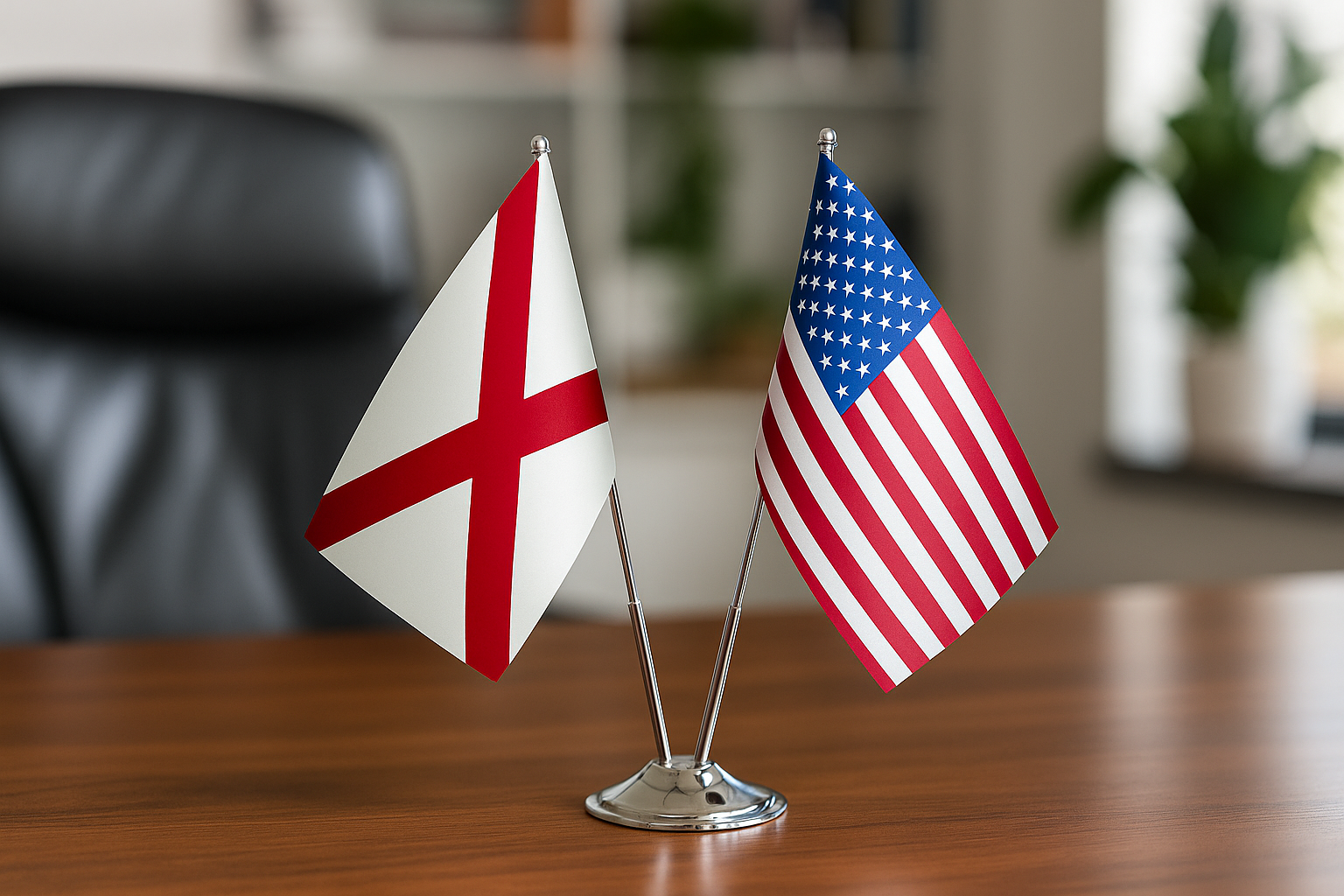
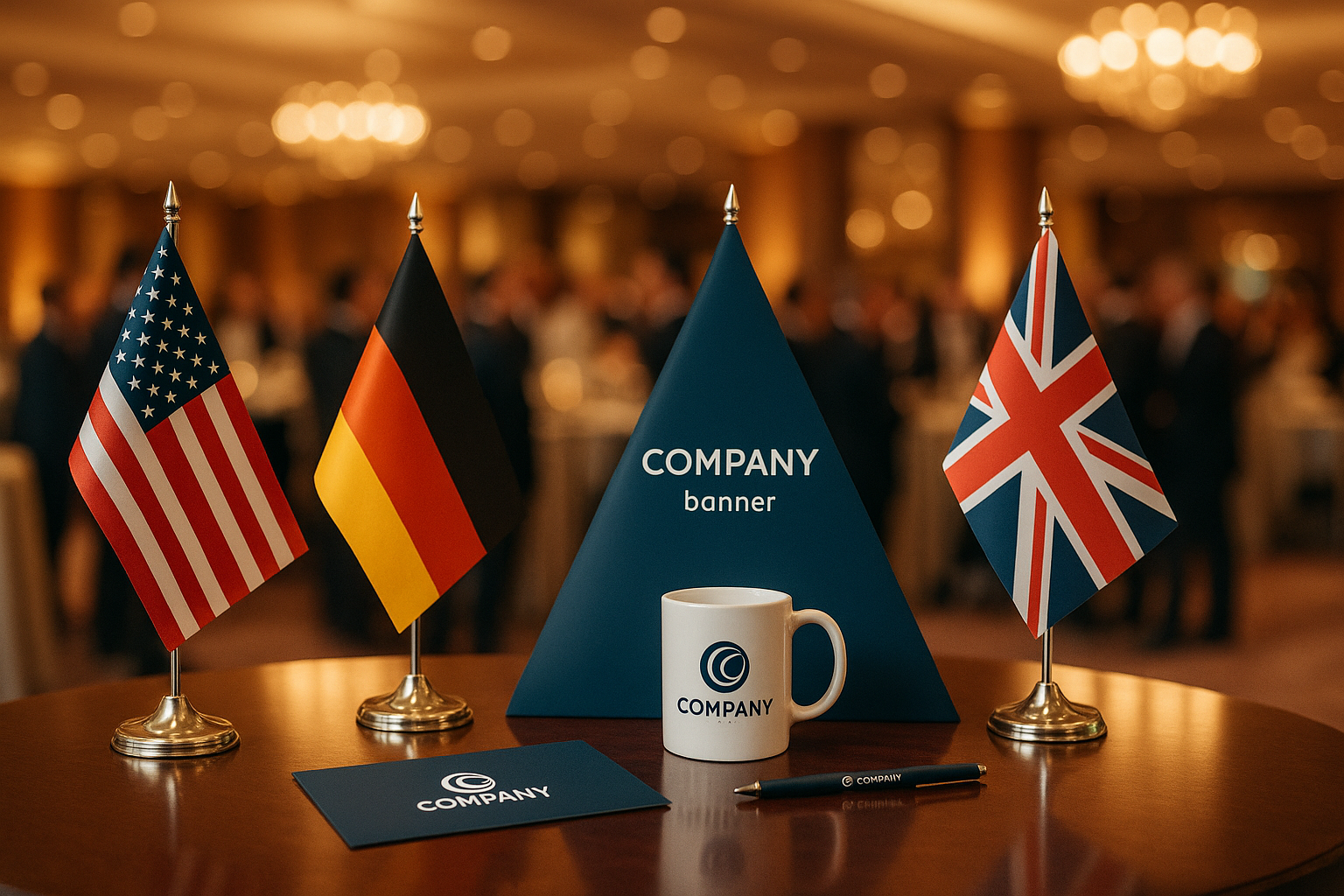
For conference tables and reception desks, the hardware solution shifts to desk flag stands, where the luxury chrome and gold desk flag stand from Asya Bayrak stands out with its premium weighted metal base available in single, double, triple, quad, and five-flag configurations — ideal for organizations that display the U.S. flag alongside a state flag, organizational flag, or international chapter flag on a single desk unit. Poles and holders for wall-mounted bracket applications are also worth considering for smaller office spaces where floor space is at a premium; the poles and holders collection covers both wall-bracket and floor-stand pole systems. Material quality for indoor poles ranges from solid brass and aluminum to wood dowel; solid aluminum with a gold anodized finish offers the best combination of durability and ceremonial appearance for most organizational budgets.
Flag Material and Longevity Standards for Indoor Use
 Indoor flags should be made from 2-ply polyester or heavyweight nylon rated for interior environments, giving them a lifespan of 2–5 years under normal display conditions without the UV degradation that shortens outdoor flags to 6 months to 2 years. Unlike outdoor flags, indoor ceremonial flags are not exposed to rain, wind, or direct sunlight, so the priority shifts from weather resistance to color fidelity, drape, and a clean lock-stitched header. Many organizations — especially churches displaying an American flag for church sanctuary use — prefer a rayon or two-ply polyester blend because it hangs with a dignified, full drape rather than billowing, which suits a stationary ceremonial display. Gold fringe (typically 2.5 in / 6.4 cm) is a traditional addition to indoor ceremonial flags and is entirely permissible under the Flag Code when used for decorative purposes on staffed flags — it does not alter the flag's official meaning. Color fastness is rated on a scale of 1–8 by ISO 105 standards; indoor flags should meet at least a grade 5–6 for light fastness to ensure colors remain vibrant under interior LED and fluorescent lighting over multiple years. Organizations that rotate their flags seasonally or store them between events should look for flags with reinforced canvas headers and double-stitched fly ends, as these stress points are the first to fail during repeated rolling and unrolling.
Bulk Indoor Flags for Organizations: Ordering Strategy
Bulk indoor flags for organizations are most economically ordered in sets — flag, pole, and base bundled together — rather than as individual components, and most wholesale suppliers including Asya Bayrak offer tiered pricing that reduces per-unit cost by 15–30% at quantities of 10 sets or more. A well-planned bulk order begins with an accurate audit of every display location: count rooms, confirm ceiling heights, note décor finish preferences, and identify whether each location requires a single-flag or multi-flag arrangement.
Nonprofits with multiple branch offices or chapters should standardize on a single flag specification to simplify reordering and maintain brand consistency — for example, specifying "3 ft × 5 ft (91 cm × 152 cm) two-ply polyester American flag on 8 ft (244 cm) gold aluminum pole with 9 lb (4 kg) weighted cast base" as the organizational standard. Churches that need to outfit a sanctuary, a fellowship hall, and an administrative wing in one order can often negotiate a mixed-SKU bulk rate that applies the volume discount across all three configurations. Civic organizations that hold annual installations or charter new chapters regularly should establish a standing purchase order with their wholesale supplier to lock in pricing and ensure consistent product quality across all chapters. Lead times for bulk indoor flag orders typically run 5–10 business days for stock items and 15–25 business days for custom-printed organizational flags; planning orders 4–6 weeks ahead of an installation event or charter ceremony eliminates last-minute premium shipping costs.
Indoor Flags Collection
Asya Bayrak's indoor flags collection offers American flags, state flags, and organizational flags in ceremonial sizes with matching pole and base hardware — perfect for nonprofits, churches, and civic groups ordering in volume.
Browse Collection →Protocol Checklist for Multi-Flag Displays in Churches and Civic Halls
A multi-flag display in a church or civic hall must follow a strict order of precedence: the U.S. flag always occupies the position of honor at the speaker's right (audience's left), with other flags arranged in a prescribed order to its left. Violating this order — even unintentionally — can cause offense at formal ceremonies and may technically conflict with the U.S. Flag Code.
The standard order of precedence for a three-flag indoor display, from right to left as viewed by the audience, is: (1) U.S. national flag, (2) state or territorial flag, (3) organizational or unit flag. For churches, the Christian flag or denominational flag traditionally stands to the left of the U.S. flag, consistent with guidance from most major Protestant denominations and the National Council of Churches. Civic organizations that display an international body's flag — such as a Rotary or Lions flag — place it after the state flag in the sequence. All flags in a grouped floor-stand display should be on poles of equal height to comply with Flag Code section 7(f), which prohibits any other flag from being placed on a level above the U.S. flag. If ceiling height or architectural constraints force unequal pole heights, the U.S. flag must be on the tallest pole. Eagle ornaments are the correct finial for the U.S. flag's indoor staff, while spearhead or ball finials are appropriate for state and organizational flags. Organizations should document their specific display configuration in writing so that volunteers, staff, or new members can reconstruct the display correctly after storage or relocation.
Maintenance, Storage, and Replacement Guidelines
Indoor ceremonial flags should be inspected every 6 months and replaced when they show visible fraying at the fly end, faded colors, or torn canvas headers — a proactive replacement schedule protects the dignity of the display and avoids last-minute scrambles before important events. A properly stored indoor flag — rolled (not folded) around an acid-free tube or folded into the traditional tri-corner shape — will retain its shape and color fidelity significantly longer than one stored loosely in a box.
For organizations that display flags year-round in climate-controlled buildings, a 2–4 year replacement cycle is realistic for quality two-ply polyester indoor flags. Organizations in drier climates with consistent indoor humidity under 45% may extend that to 5 years without significant degradation. Poles and bases typically outlast flags by a wide margin — a quality gold aluminum pole and cast-iron base should last 10–15 years with basic care — so bulk replacement orders for established organizations often cover flags only, not hardware. When a U.S. flag is retired due to wear, it should be disposed of in a dignified manner; the Flag Code (4 U.S.C. § 8(k)) recommends burning as the preferred method, and many VFW and American Legion posts offer flag retirement ceremonies for organizations that prefer a formal disposal process. Keeping a written inventory log of each flag's installation date, location, and condition rating makes it easy for a nonprofit, church, or civic group to plan annual procurement budgets and avoid the cost of emergency replacements.
What size American flag is recommended for a church sanctuary? +
Where should the American flag be placed in a multi-flag indoor display? +
Can a church display the Christian flag next to the American flag indoors? +
What is the best fabric for indoor ceremonial flags in nonprofits and civic organizations? +
How much does bulk ordering indoor flag sets save for nonprofits? +
Is gold fringe on an indoor American flag a violation of the Flag Code? +
How should an indoor ceremonial flag be stored when not in use? +
What pole finish is most appropriate for a formal church or civic hall display? +
Equipping your nonprofit, church, or civic organization with the right indoor flag sets — properly sized, correctly displayed, and sourced in bulk — is a straightforward process when you work with a wholesale supplier that understands ceremonial protocol. Explore the full indoor flags collection at Asya Bayrak for American flags, state flags, and organizational flags in all standard ceremonial sizes. For desk and conference table displays, the USA desk flags collection offers compact, professional options ideal for reception areas and boardrooms. Complete your setup with matching hardware from the bases and stands collection, where you will find weighted floor bases and elegant desk stands suited to every organizational budget. Bulk pricing is available for corporate and organizational orders — contact Asya Bayrak directly to discuss volume rates, mixed-SKU configurations, and standing purchase arrangements for multi-chapter or multi-location organizations.


