
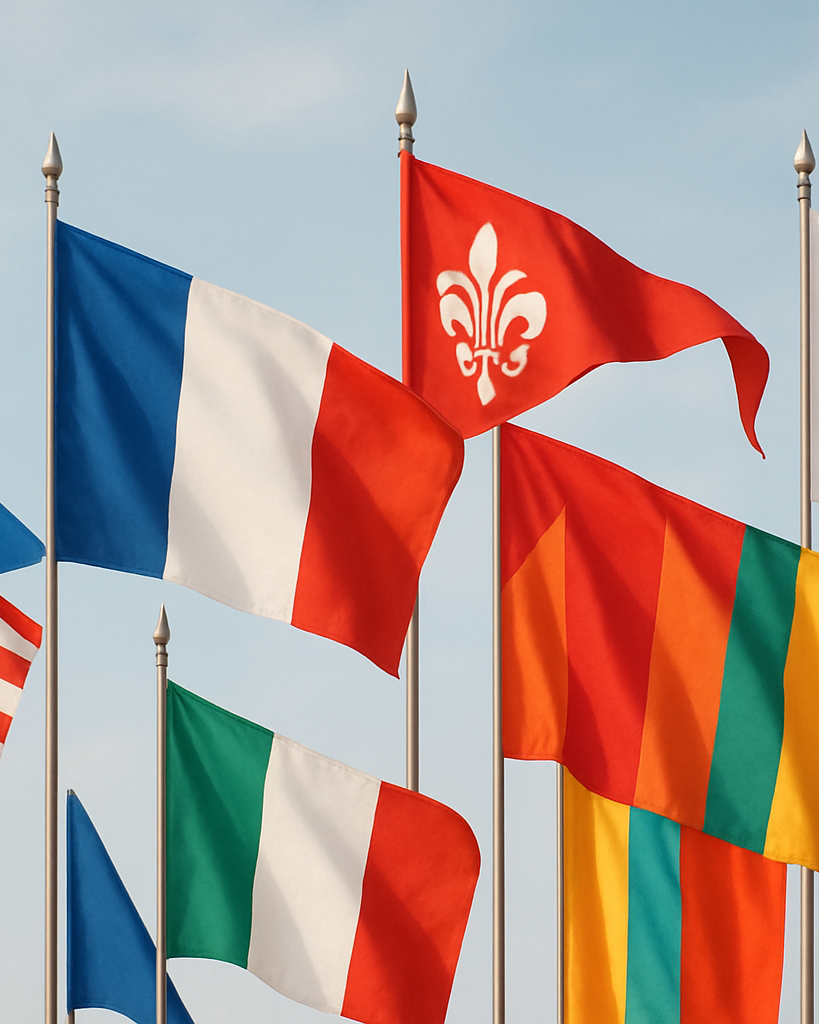

The Lithuania flag features three equal horizontal stripes of yellow, green, and red — colors that together represent the nation's agricultural wealth, its forests and hope, and the blood of those who fought for independence. If you're looking to fly one, the Country Flags collection carries Lithuania flags in every format, from outdoor pole flags to desk displays.
What the Three Colors of the Lithuania Flag Actually Mean
Yellow stands for the golden fields of grain and the sun that sustains Lithuanian agriculture; green represents the country's vast forests, nature, and the hope of the nation; red symbolizes the blood and courage of those who sacrificed their lives for Lithuania's freedom. These are the official interpretations codified in Lithuanian law, not folk readings — the 1988 Law on the National Flag of the Republic of Lithuania defines each color's symbolic meaning explicitly.
What makes the Lithuanian color symbolism distinctive is that it is grounded in the natural landscape rather than abstract ideals. The yellow stripe at the top is sometimes extended to mean prosperity and the ripening land of the Baltic plains. Green, the middle stripe, also carries an ecological resonance that resonates strongly in a country where nearly one-third of the land is forested. Red at the bottom is both historical — pointing to centuries of armed struggle — and forward-looking, representing the vitality of the Lithuanian people. Together, the three stripes read as a vertical narrative of sky, earth, and sacrifice, even though they run horizontally on the cloth.
How the Lithuanian Flag Developed Through History
The yellow-green-red tricolor was first adopted on April 25, 1918, when Lithuania declared independence from Russia and Germany at the end of World War I — making it one of the newer tricolors in European heraldic history, though rooted in much older folk textile traditions. The flag's modern history is inseparable from Lithuania's turbulent twentieth century.
 During the Soviet occupation that lasted from 1940 to 1990, the tricolor was banned and replaced with a Soviet-style red flag bearing the hammer, sickle, and a narrow green stripe. Flying the yellow-green-red flag became an act of resistance, and the colors were kept alive in diaspora communities across the United States, Canada, and Australia. When the Lithuanian independence movement — known as Sąjūdis — gathered momentum in the late 1980s, the tricolor reappeared publicly at mass gatherings, most memorably during the Baltic Way on August 23, 1989, when roughly two million people formed a human chain stretching from Vilnius through Riga to Tallinn. Lithuania officially restored the flag on March 20, 1989, more than a year before it formally declared the restoration of independence on March 11, 1990. For outdoor display, the Lithuania Outdoor Flag, crafted from 110g Raschel knitted polyester, is built to handle wind and UV exposure over extended periods.
The interwar flag (1918–1940) used slightly different proportions than the current standard. After restoration in 1989, the Lithuanian parliament standardized the ratio at 3:5 (width to length), and the exact Pantone values of the three stripes were formalized: Pantone 1235 C for yellow, Pantone 349 C for green, and Pantone 180 C for red. These specifications align with FIAV (Fédération internationale des associations vexillologiques) registration practices and ensure that flags produced internationally match the official standard.
Where the Yellow, Green, and Red Come From in Lithuanian Culture
The colors were not invented for the 1918 flag — they were drawn directly from traditional Lithuanian folk art, particularly woven sashes, textiles, and embroidery patterns that had used these three hues for centuries. The design committee that proposed the flag in 1917 and 1918 looked to ethnographic material rather than medieval heraldry, which is what makes the Lithuanian flag unusual among European national flags.
Lithuanian folk weaving (called juostos — woven sashes) traditionally combined yellow, green, and red in decorative bands that were worn at festivals and given as gifts at important life events. These sashes were documented by Lithuanian ethnographers in the nineteenth century, and the flag's designers explicitly cited them as a source. This grounding in craft tradition rather than royal arms or battlefield emblems gives the Lithuanian flag a folk authenticity that distinguishes it from flags derived from dynastic heraldry. It is also worth noting that the Grand Duchy of Lithuania, one of the largest states in medieval Europe, used a red banner with the white Vytis (the mounted knight) as its state symbol — that emblem appears today on the Lithuanian coat of arms but not on the flag itself, preserving the folk-textile character of the tricolor.
 For embassy and institutional settings where the folk heritage of the design must be reproduced with precision, the Lithuania Official Indoor Flag is the appropriate choice — it uses high-definition dye-sublimation printing on double-layer satin fabric mounted on a chrome metal pole, delivering color accuracy that meets diplomatic display standards. The sublimation process locks the Pantone-matched hues into the fiber rather than sitting on the surface, ensuring the yellow reads as warm gold rather than pale straw, the green as rich forest rather than lime, and the red as a deep terra cotta rather than orange. This level of color fidelity matters particularly in formal settings where the flag may be displayed alongside the flags of other nations, and where any deviation from the official specification would be immediately noticeable. Institutional buyers such as embassies, consulates, and government offices frequently specify satin indoor flags precisely for this reason.
Flags That Are Often Confused With the Lithuanian Tricolor
The Lithuanian flag is most frequently confused with the flag of Bolivia, which also uses red, yellow, and green horizontal stripes — but in the reverse order (red on top, yellow in the middle, green at the bottom), and at a different proportion with a coat of arms in the center version. The two flags share no historical or symbolic connection; the similarity is a coincidence of color choice.
A subtler confusion arises with the flag of Ethiopia, which uses green, yellow, and red in horizontal stripes (top to bottom) — the Pan-African color combination discussed in detail in the Ethiopia Flag Colors and Its Pan-African Legacy article. Lithuania's stripe order (yellow on top, green in the middle, red at the bottom) and its specific Pantone shades set it clearly apart, but at a distance or in poor lighting the flags can appear similar. The Lithuanian flag also occasionally gets mixed up with the flag of Myanmar, which uses three horizontal stripes of yellow, green, and red with a white star in the center — again a different stripe arrangement and a completely different symbolic tradition. Knowing the exact stripe order and shade is the fastest way to distinguish Lithuania's flag from these lookalikes.
How the Lithuanian Flag Is Used and Sized Officially Today
Under Lithuanian law, the national flag must be displayed on all state institutions, courts, and local government buildings on a permanent basis, and on all public buildings during national holidays. The standard outdoor ratio is 3:5, meaning a flag 3 ft (91 cm) wide would be 5 ft (152 cm) long — a proportion that gives the tricolor a slightly wider, more square appearance than the 2:3 ratio common in many European flags.
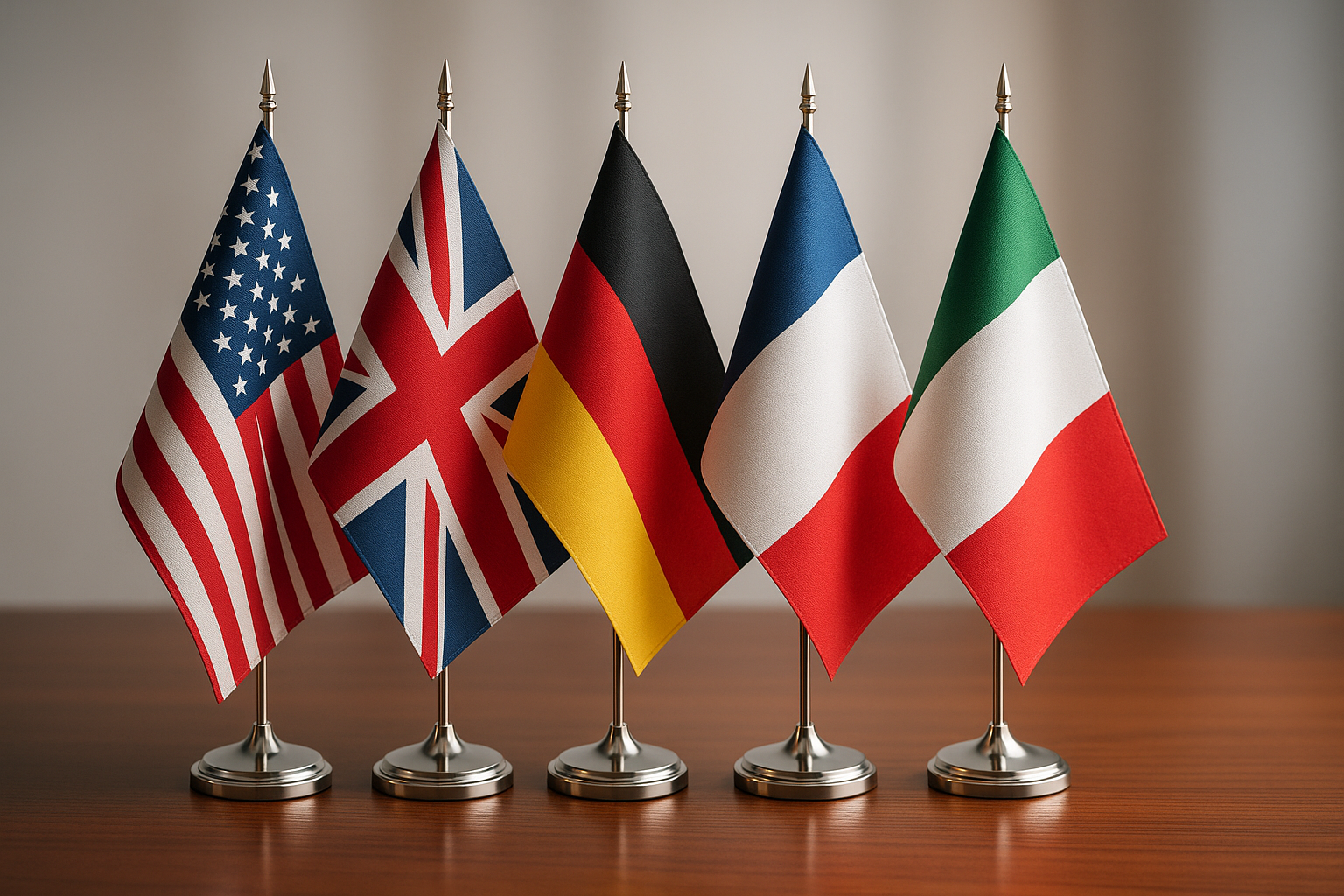
For businesses, cultural organizations, and private citizens, the flag may be flown freely without special authorization under Lithuanian law, which is more permissive than the flag codes of some neighboring countries. In the United States, Lithuanian-American communities and diplomatic missions display the flag alongside the American flag in accordance with US Flag Code (4 USC §§ 1–10) protocols — the foreign flag typically flies at the same height as the US flag and to its left from the observer's perspective. The European Countries Flags collection covers the full range of sizes and mounting options for organizations that display multiple national flags together. For individual events, parades, and sports gatherings, the Lithuania Handheld Flag, made from 90g Raschel polyester on a stick, is practical and durable for waving. For office desks and reception areas, the Lithuania Desk Flag — mounted on a chrome metal pole with a weighted base in silver chrome or gold finish — offers a compact, professional display of Lithuanian identity.

Country Flags Collection
Every national flag in the world, available in outdoor, indoor, desk, and handheld formats — built to official color specifications for institutional and personal display.
Browse Collection →What do the yellow, green, and red stripes on the Lithuania flag mean? +
When was the Lithuanian flag first officially adopted? +
What are the official Pantone colors of the Lithuania flag? +
What is the correct size ratio for the Lithuanian flag? +
Which flags are most often confused with the Lithuania flag? +
Why do the Lithuanian flag colors come from folk textiles rather than heraldry? +
Can private citizens and businesses display the Lithuanian flag freely? +
Whether you're marking Lithuanian Independence Day, equipping an embassy, or representing Baltic heritage at an international event, flying the correct flag with accurate colors and proportions matters. Browse the full European Countries Flags collection for all Baltic and EU member state flags, or go directly to the Lithuania Outdoor Flag for a weather-ready 110g Raschel polyester option, the Lithuania Official Indoor Flag for embassy-grade sublimation printing on satin, or the Lithuania Desk Flag for a polished desktop display. For further reading on flags with similarly compelling color stories, the Guyana's Golden Arrowhead Flag Explained article explores another flag where each color carries a precisely defined national meaning. Bulk pricing is available for corporate, institutional, and diplomatic orders — contact us for volume quotes.


