
The Norway flag and Iceland flag look strikingly similar at first glance — both display a bold Nordic cross on a red field — yet they carry distinct color combinations, symbolic histories, and practical display considerations that set them apart completely. If you need either flag for display, events, or educational purposes, the European Countries Flags collection covers both nations in multiple formats, from outdoor pole flags to compact desk models.
Quick Verdict: Which Flag Is Right for You?
If you need to represent Norway, choose the red flag with a blue cross outlined in white; if you need Iceland, choose the blue flag with a red cross outlined in white — the base field colors are swapped. For most display purposes the choice is straightforward: the flag you need is the one that represents the country you intend to honor, and confusing the two is a meaningful error because each carries deep national symbolism recognized under international vexillological standards (FIAV).
That said, buyers planning multi-country Scandinavian displays, cultural festivals, or educational exhibits sometimes purchase both flags simultaneously. In those cases it is worth understanding not just the color differences but also the proportions, the official shade specifications, and the contexts in which each flag is flown — because a flag presented at the wrong size ratio or in the wrong shade of blue can misrepresent the nation it is meant to honor. The sections below walk through both flags in detail so you can make a fully informed decision.
The Norway Flag: Bold Red Field, Strong Heritage
The Norwegian flag's defining feature is its deep red base field, overlaid with a blue Nordic cross that is edged in white — making it one of the most visually powerful flags in Scandinavia. Adopted in its current form in 1821, the flag carries the longest continuous use of any Nordic cross design still in official service.
The proportions of the Norwegian flag are set at a ratio of 8:11 (width to length), which is slightly less elongated than many national flags. The blue cross arms are set off-center toward the hoist side, following the traditional Nordic cross convention. The official color palette calls for a vivid crimson red (Pantone 186 C), a cobalt blue (Pantone 281 C), and white — a combination that reads with high contrast even at a distance, which is why it performs extremely well as an outdoor pole flag. The red dominates the field at roughly 60% of total visible surface area, making Norway's flag one of the most red-dominant national flags in Europe. Durability is a genuine consideration for outdoor display: a properly manufactured flag in 200-denier nylon rated at 80% UV resistance can hold its crimson without significant fading for 6 to 12 months in typical US outdoor conditions, and up to 18 months in moderate climates.
The symbolism embedded in Norway's flag is layered. The red and blue reflect the colors historically associated with Norway's struggle for independence from Denmark and Sweden. The white outline of the cross was added deliberately to visually separate the cross from the red field and to honor the nation's Christian heritage — a tradition shared across all Nordic cross flags but executed here with Norway's specific palette. For ceremonial and indoor display, the flag is often presented in a 3 ft × 5 ft (91 cm × 152 cm) format alongside a gold-fringe border, consistent with the kind of dignified presentation common in government offices and cultural institutions.
The Iceland Flag: Blue Field, Fire and Ice in Color
The Iceland flag is the direct visual inverse of Norway's: a deep blue field carries a red Nordic cross outlined in white, reversing the relationship between background and cross colors. Iceland adopted this design officially in 1944 upon declaring independence, though the flag had been in civic use since 1915.
 The official color specification for Iceland's flag calls for a rich navy-leaning blue (Pantone 287 C), a bright red (Pantone 186 C — the same red as Norway's), and white. Because the blue dominates approximately 60% of the field, Iceland's flag reads as a predominantly blue banner at distance, which makes it easy to distinguish from Norway's even in low-light or windy outdoor conditions where flags flutter and obscure parts of the design. The proportions follow a 18:25 ratio, slightly more elongated than Norway's 8:11, which means an Icelandic flag at the same hoist width will be marginally longer than a Norwegian flag — a subtle but measurable difference when both are displayed side by side on matching poles. For outdoor display in North American climates, an Iceland Outdoor Flag manufactured in solution-dyed polyester offers excellent resistance to the kind of UV fading that can shift blue pigments toward gray, maintaining color fidelity for 9 to 18 months depending on sun exposure.
Iceland's flag symbolism is particularly rich: the blue represents the mountains and the Atlantic Ocean surrounding the island nation, the white evokes the glaciers and snow that define the landscape, and the red speaks directly to the volcanic fire — the active lava fields that make Iceland geologically unique in Europe. This "fire and ice" symbolism is one of the most celebrated examples of a flag whose colors are explicitly tied to a nation's physical geography rather than purely to political or religious history. The FIAV (Fédération Internationale des Associations Vexillologiques) recognizes the Icelandic flag design as one of the clearest examples of geographic symbolism in vexillology.
Side-by-Side Comparison: Colors, Proportions, and Key Differences
When placed side by side, the Norway flag and Iceland flag are immediately distinguishable by field color — red versus blue — but a closer look reveals several additional differences that matter for accurate display.
- Field color: Norway — red (Pantone 186 C); Iceland — blue (Pantone 287 C)
- Cross color: Norway — blue cross (Pantone 281 C) edged in white; Iceland — red cross (Pantone 186 C) edged in white
- Aspect ratio: Norway — 8:11; Iceland — 18:25 (slightly more elongated)
- Year of current design adoption: Norway — 1821; Iceland — 1944
- Cross offset: Both follow the Nordic cross convention with the vertical bar shifted toward the hoist side
- Symbolism emphasis: Norway — national independence and Christian heritage; Iceland — geographic landscape (ocean, glaciers, volcanism)
 For ceremonial and indoor display — office lobbies, legislative chambers, cultural centers, or school classrooms — the correct flag format differs from outdoor use. An Iceland Official Indoor Flag is typically constructed with a heavier fabric weight, often a woven polyester or a nylon blend, and may include a gold fringe border that adds visual formality appropriate to the setting. Indoor flags are almost always displayed at standard US pole heights of 6 ft to 9 ft (183 cm to 274 cm) with the flag at a 3 ft × 5 ft (91 cm × 152 cm) size. Because indoor flags are not exposed to UV radiation or wind stress, their lifespan is dramatically longer — often 5 to 10 years or more with proper handling — making the quality of color fidelity at the point of manufacture far more important than UV resistance ratings. The blue field of Iceland's indoor flag must match Pantone 287 C precisely; a flag produced with cheaper dye lots may appear purple-shifted under fluorescent office lighting, which is a common quality complaint with lower-grade imports.
One practical note that buyers frequently overlook: because the Norway and Iceland flags share the same red (Pantone 186 C) as a common color — one as the field, the other as the cross — a faded or poorly lit flag of either nation can become genuinely ambiguous. This reinforces the importance of purchasing flags with accurate, stable color production, particularly for diplomatic or educational contexts where misidentification would be embarrassing.
Choosing by Use Case: Outdoor, Events, Desk, and Handheld
The right flag format depends entirely on how and where you intend to display it — the flag's nation matters less than matching the physical format to the use case. For outdoor flagpoles, choose a flag rated for UV and wind stress; for events and parades, handheld and stick flags are practical; for offices and desks, compact formats offer daily visibility without space demands.
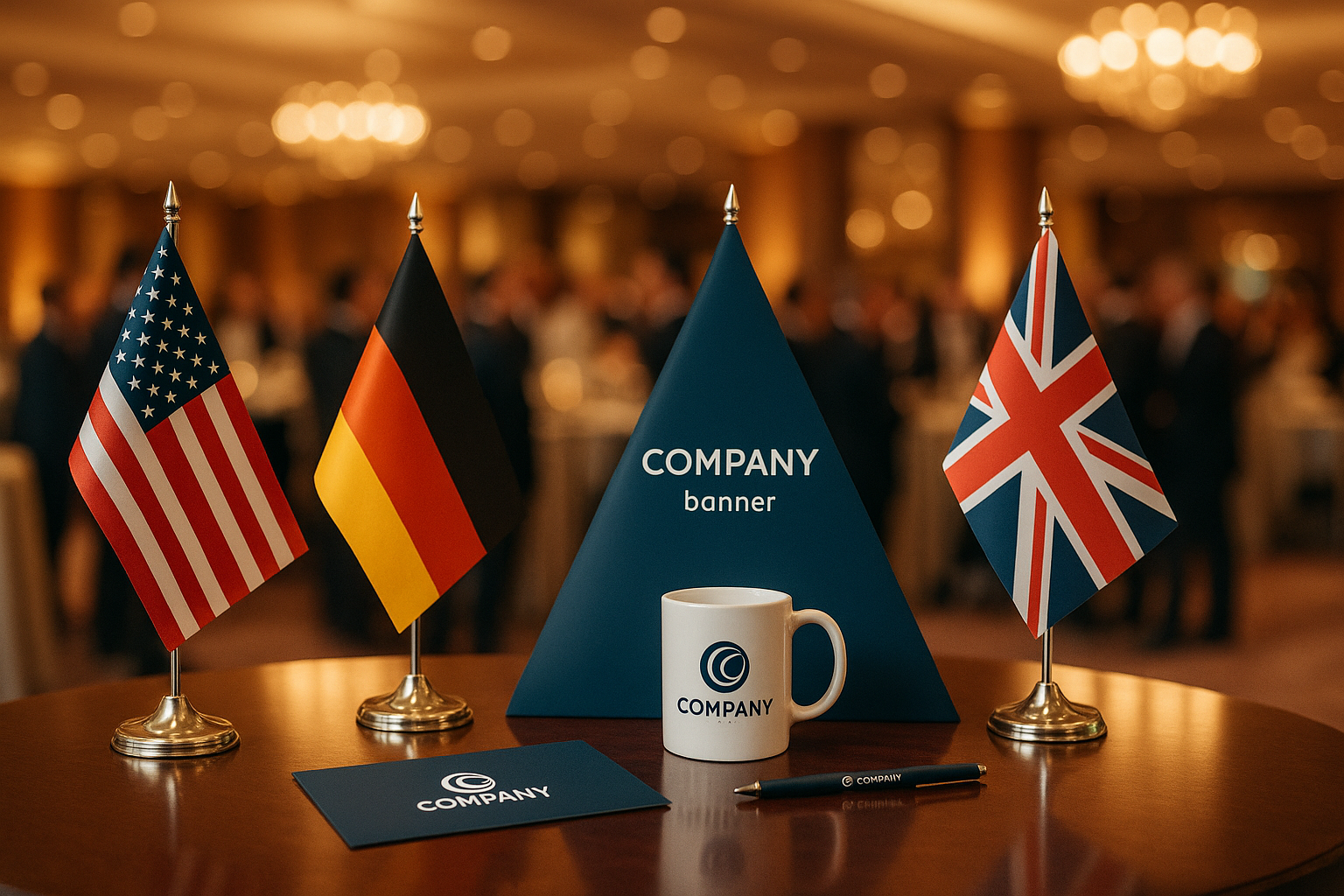
For high-wind outdoor environments — coastal locations, open plazas, elevated flagpoles — a heavier denier nylon or polyester flag with reinforced canvas headers and brass grommets is the correct choice. Flags flown at 20 ft (6 m) or taller poles in exposed locations typically last 4 to 9 months before the fly end begins to show fraying, so buying a pair makes practical sense for uninterrupted display. For parades, cultural festivals, or classroom demonstrations, the Iceland Handheld Flag format — typically 4 in × 6 in (10 cm × 15 cm) on a 10-inch (25 cm) staff — is the most practical choice, offering high portability and bright color reproduction at close range. For desk settings in offices, embassies, travel agencies, or educational institutions, the Iceland Desk Flags format provides a polished, professional presentation at sizes typically ranging from 4 in × 6 in to 8 in × 12 in (10 cm × 30 cm) on a weighted base.

European Countries Flags Collection
Covers all major European nations — including both Norway and Iceland — in outdoor, indoor, desk, and handheld formats with accurate official color specifications.
Browse Collection →Lifespan and Total Cost Compared
When comparing the Norway and Iceland flags purely on cost and longevity, the flags are essentially equivalent — the differences in lifespan and pricing come from format and material choices, not from which nation the flag represents. A well-manufactured outdoor flag in 200-denier nylon for either country will typically last 6 to 12 months in full outdoor exposure, while a heavyweight polyester version can extend that to 12 to 24 months.
For buyers planning long-term or multi-unit display — embassies, international hotels, schools, or corporate campuses — understanding the total cost of ownership matters more than the per-unit price. An outdoor flag lasting 8 months at a given price point is more economical than a cheaper flag lasting 4 months, even if the up-front cost is 30% higher. Indoor ceremonial flags, by contrast, represent a one-time investment that can serve a decade or more with routine care: keeping them off direct sunlight, folding correctly, and inspecting the fringe and header annually. For events and promotions, handheld and desk flags have an effectively unlimited indoor lifespan since they see no weather exposure. If you are budgeting for a set of flags across multiple European nations — for a trade show, international conference, or world geography program — the related guide on what a set of world flags costs provides detailed per-unit and bulk pricing context that will help you plan accurately.
For those interested in the broader symbolism of national flags — how colors and emblems encode a nation's identity — the article on Spain flag colors and the coat of arms offers a compelling parallel case study in how European nations embed layered meaning into their flag designs.
What is the main difference between the Norway flag and the Iceland flag? +
Are the Norway flag and Iceland flag related historically? +
Can you easily confuse the Norway and Iceland flag in outdoor display? +
What do the colors of the Iceland flag mean? +
What size Iceland flag should I buy for a standard outdoor flagpole? +
Which other Nordic flags look similar to Norway and Iceland? +
Is there a rule about how to display the Norway or Iceland flag alongside the US flag? +
Whether you are sourcing a single Iceland flag for a classroom or equipping a multi-pole installation for a Scandinavian cultural event, the right format and material make the difference between a flag that performs with accuracy and dignity and one that fades or frays within weeks. Explore the full European Countries Flags collection for both Norway and Iceland in every standard format, or browse the broader Country Flags collection for multi-nation display needs. For Iceland-specific formats, the Iceland Outdoor Flag and Iceland Official Indoor Flag are the most requested starting points. Bulk pricing is available for corporate, government, and institutional orders — contact us directly for volume quotes on multi-unit flag programs.