




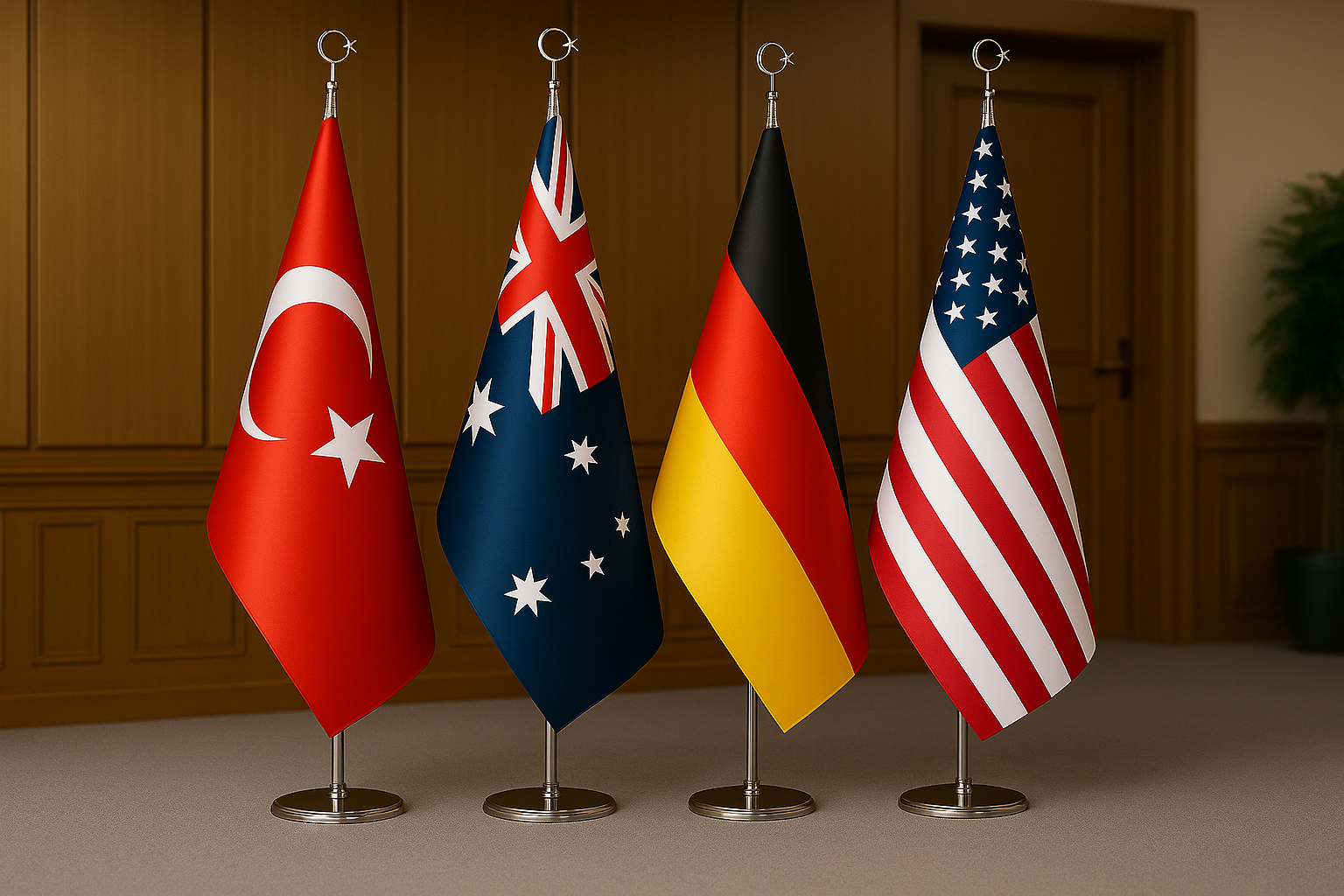




Funeral homes, cemeteries, and memorial parks need outdoor flags that meet strict display standards, withstand year-round weather exposure, and can be ordered in volume to serve dozens or hundreds of gravesites simultaneously. From the correct 3x5 flag for cemetery installations to full-campus memorial park flag display configurations, this guide covers sizing requirements, material selection, mounting hardware, US Flag Code compliance, and how to secure the best pricing through bulk and wholesale channels.
Why Outdoor Flag Quality Matters More at Memorial Sites
Memorial environments demand the highest flag durability because flags flown at funeral homes, cemeteries, and veterans' sections are symbols of national honor — faded, fraying, or incorrectly displayed flags send an unacceptable message to grieving families and visiting veterans. Under US Flag Code 4 USC § 8(k), a flag that is "worn, soiled, or faded" should be retired promptly, which makes material quality directly tied to institutional reputation. For a site maintaining 50 to 500 flagpoles, the cost of frequent replacement is a serious operational factor that makes upfront quality selection essential. Commercial-grade flags rated for 80% UV resistance and with reinforced fly-end stitching can extend outdoor service life to 18–24 months even in high-sun climates, versus 6–9 months for budget alternatives. Selecting the right outdoor flag for funeral home and cemetery use therefore means balancing dignity, longevity, and the budget realities of large-scale operations.
Funeral homes also serve as the first point of contact for flag-related decisions immediately after a veteran's passing. Many families expect to see properly displayed American flags at the facility entrance, chapel, and committal area — and any visual inconsistency undermines trust at the most sensitive possible moment. Institutional buyers who establish a standing relationship with a wholesale flags for cemeteries supplier can standardize on a single product specification across all locations, simplifying procurement and ensuring a uniform, dignified appearance year-round.
Standard Flag Sizes for Cemetery and Funeral Home Use
The most widely used size for cemetery and funeral home outdoor applications is 3 ft × 5 ft (0.9 m × 1.5 m), which is the standard for both residential-scale flagpoles (15–20 ft / 4.5–6 m) and smaller in-ground gravesite poles. Larger formats — 4 ft × 6 ft (1.2 m × 1.8 m) and 5 ft × 8 ft (1.5 m × 2.4 m) — are appropriate for main entrance flagpoles at 25–40 ft (7.6–12 m) heights, while the ceremonial 6 ft × 10 ft (1.8 m × 3 m) size suits prominent memorial park centerpiece poles of 50 ft (15.2 m) or taller.
For individual gravesite markers, the most common format is a small 12 in × 18 in (30 cm × 45 cm) or 8 in × 12 in (20 cm × 30 cm) flag mounted on a wire or wooden staff, particularly used during Memorial Day and Veterans Day observances. When ordering a cemetery flags bulk order for a veterans section, procurement managers should specify both pole-top flags and gravesite-size flags separately to avoid over-ordering one format. The general industry guideline is that flag width should equal approximately 25%–33% of the flagpole height for proper visual proportion — a ratio endorsed by FIAV (Fédération Internationale des Associations Vexillologiques) display standards.
Material Selection: Nylon, Polyester, and All-Weather Fabrics
 For funeral home outdoor flag applications, nylon is the most popular fabric choice because it is lightweight enough to fly in low-wind conditions (as often occur in cemetery settings sheltered by trees), dries quickly after rain, and holds color vibrancy for 12–18 months of continuous outdoor exposure. Heavyweight 200-denier nylon with lock-stitched stripes and embroidered stars delivers the sharpest traditional appearance and is the specification most commonly requested for honor-guard and veterans' cemetery settings. Woven polyester, by contrast, offers superior abrasion resistance and is preferred for coastal and high-wind memorial parks where flags experience sustained gusts above 25 mph (40 km/h); its denser weave resists fraying at the fly end but does feel stiffer and is slower to unfurl in light breezes. Two-ply polyester blends rated for 150–200 mph (240–320 km/h) wind speeds are also available for hurricane-prone regions in Florida, the Gulf Coast, and Hawaii where cemetery flags must remain flying during severe weather warnings. When evaluating the USA Outdoor Flag collection, look for specifications that include brass grommets, reinforced canvas heading, and four-row fly-end stitching — these details collectively extend outdoor service life and reduce the replacement frequency that drives up total cost of ownership for large cemetery operations.
Printed flags (dye-sublimation on polyknit) are growing in popularity for memorial park flag display installations that feature custom institutional logos, branch-of-service emblems, or POW/MIA imagery alongside the American flag. These printed formats allow full-color, photorealistic detail without the weight penalty of embroidery, and they can be produced in any quantity from 10 units to 10,000 with consistent color accuracy. UV-stable inks used in modern dye-sublimation processes are rated to resist fading for 24–36 months of outdoor exposure when paired with 110-gram polyknit base fabric, making them a cost-effective option for large cemetery-wide installations.
US Flag Code Compliance for Memorial and Funeral Settings
Half-staff display — mandated by the President or state governors for periods of national mourning — is the most common Flag Code requirement encountered by funeral homes and cemeteries, and 4 USC § 7(m) specifies that the flag should be raised to the peak first and then lowered to half-staff. Beyond half-staff protocols, US Flag Code 4 USC § 6 governs when flags should be displayed: federal law specifies all-day display when weather permits, and year-round 24-hour display only when the flag is properly illuminated after dark. Cemetery facilities that fly flags continuously at entrance poles must ensure each pole has adequate lighting — typically a 100-watt equivalent directional fixture — to remain compliant. Flag Code 4 USC § 8 also prohibits using the flag as a decorative drape over caskets outside of the formal military burial protocol, a nuance that funeral home staff should be aware of when setting up chapel displays.
State-specific requirements add another layer of compliance. For example, Texas and California both have state flag statutes requiring that the state flag, when flown alongside the US flag, is displayed at the same height and to the flag's right. Veterans cemeteries administered under the National Cemetery Administration follow additional VA guidelines specifying that American flags at gravesite markers must be no smaller than 8 in × 12 in (20 cm × 30 cm) and must be replaced when visibly faded or damaged. Procurement teams managing bulk American flags for veterans cemetery operations should incorporate these minimum-size and replacement-trigger standards directly into their purchasing specifications and maintenance contracts.
Mounting Hardware and Gravesite Flag Holder Options
Selecting the correct gravesite American flag holder is as important as flag quality itself — a poorly anchored staff defeats the purpose of purchasing a durable flag. The three main mounting categories for cemetery use are: in-ground wire staffs (most common for individual gravesite markers, typically 18–24 in / 45–60 cm driven stakes), granite or bronze marker brackets (permanently affixed to headstones, accepting standard ⅜ in / 9.5 mm diameter staffs), and pole-mounted external halyard systems for full-size flagpoles at chapels and entrance gates. In-ground wire staffs are typically sourced in bundles of 144 or 288 for Memorial Day mass installations and should be powder-coated steel or galvanized wire to resist rust staining on memorial stone surfaces — a common complaint from cemetery grounds managers who have used bare wire staffs.
For funeral home entrance installations, internal halyard flagpoles with a hinged base are recommended because they allow a single staff member to raise and lower the flag safely without climbing or using a ladder — important for half-staff compliance during frequent periods of national mourning. Flagpole hardware quality directly affects flag longevity: a spinning truck (the rotating assembly at the pole top) that allows the flag to weathervane reduces fabric stress dramatically, extending service life by an estimated 30–40% compared to fixed-truck systems. Browse the full range of mounting solutions in the Flagpoles and Accessories collection to find grommeted halyard systems, anti-wrap spinners, and ground-sleeve kits suited to memorial park installations of every scale.
Outdoor Flags Collection
Explore our full range of outdoor flags in all standard sizes — from gravesite markers to full-campus memorial park display flags — all available in bulk quantities.
Browse Collection →Bulk and Wholesale Ordering: Pricing Tiers, Lead Times, and Specifications
Wholesale flags for cemeteries and funeral homes are typically available at three pricing tiers: retail (1–11 units), commercial (12–99 units), and institutional/bulk (100+ units), with per-unit savings of 20–45% at the highest volume tier depending on size and material. Cemetery operators managing seasonal programs — particularly Memorial Day gravesite flag installations that may require 500–5,000 flags simultaneously — should plan orders at least 8–12 weeks in advance for standard American flags and 12–16 weeks for custom-printed designs involving branch-of-service insignia or institutional branding.
When preparing a bulk order specification document for a cemetery flags bulk order, include the following data points to receive accurate quotes: (1) flag size and quantity per size, (2) fabric type and weight, (3) grommet material (brass preferred for longevity), (4) heading style (canvas or reinforced nylon), (5) intended mounting system, and (6) expected replacement cycle (annual, biannual, or as-needed). For large veterans cemetery accounts, it is also worth specifying whether flags are for permanent pole display or temporary gravesite marking — these two use cases call for entirely different product specifications and pricing structures. Custom logo-printed options for chapel banners and ceremonial entrance flags are available through the Logo Printed Outdoor Pole Flags collection, which supports full custom artwork in quantities from 25 units upward.
Maintenance, Retirement, and Replacement Planning for Memorial Sites
A proactive flag maintenance program is the single most effective way to control long-term costs while maintaining the dignified appearance that memorial sites demand. Under US Flag Code 4 USC § 8(k), flags showing visible deterioration — fraying edges, faded colors, or torn panels — must be retired respectfully through burning in a dignified ceremony, and the American Legion and VFW offer scheduled retirement events that cemetery operators can partner with to fulfill this obligation. Establishing a visual inspection checklist reviewed monthly by grounds staff ensures that flags are assessed against defined retirement criteria (such as fly-end fraying exceeding ½ in / 12 mm, or color fading measurable against a reference swatch) rather than replaced arbitrarily or left flying past the point of respectability.
For cemetery and funeral home operators in the Sun Belt, replacing 3x5 flags for cemetery entrance poles on a 9–12 month cycle is a realistic budget assumption when using standard 200-denier nylon. In northern climates with milder UV exposure but greater freeze-thaw stress on fabric, the same specification may last 15–18 months. Building these replacement intervals directly into annual operating budgets — and pre-negotiating a standing bulk purchase agreement with a wholesale supplier — eliminates emergency procurement situations and ensures price consistency. Volume buyers who pre-commit to annual quantities of 100 or more flags typically receive preferential lead times and stable pricing regardless of raw material market fluctuations, making forward contracting a smart strategy for any large memorial park or multi-location funeral home group.
Frequently Asked Questions
What is the best flag size for a funeral home entrance flagpole? +
What flag material is most durable for cemetery outdoor display? +
How many flags should I order for a Memorial Day veterans cemetery installation? +
Are there specific US Flag Code rules funeral homes must follow? +
What type of gravesite American flag holder is recommended for headstone mounting? +
Can I order custom-printed flags for a memorial park with facility branding? +
How often should cemetery flags be replaced to stay Flag Code compliant? +
What discount can I expect on a wholesale cemetery flags bulk order? +
Equipping a funeral home, cemetery, or memorial park with the right outdoor flags is both a matter of legal compliance and institutional respect for the families and veterans you serve. Start by selecting the correct size and material for each application — from small gravesite American flag holders to full-size entrance pole installations — then build a maintenance program that keeps every flag in Code-compliant condition year-round. For single-location funeral homes and large multi-site cemetery operators alike, volume purchasing is the most effective strategy for controlling quality and cost simultaneously. Browse the USA Outdoor Flag collection for standard specifications ready for institutional ordering, explore custom options through the Logo Printed Outdoor Pole Flags collection for memorial park branding needs, and visit the Flagpoles and Accessories collection for compatible mounting hardware. Bulk pricing is available for corporate and institutional orders — contact our wholesale team with your specifications to receive a dedicated quote tailored to your facility's requirements.


