




The US Flag Code, specifically flag code Section 7 (4 USC § 7), lays out the official rules for how and where the American flag may be displayed — covering everything from flagpole position to building facades and parade formations. Understanding these American flag display rules is essential for every citizen, business, and government office that wants to honor the Stars and Stripes with proper flag etiquette law. Whether you're a homeowner flying the flag on a front porch or a municipal official managing a multi-flag installation, this complete guide breaks down every provision of Section 7 in plain language, with practical advice for real-world compliance. Browse the full flags collection at Asya Bayrak to find a flag built to meet every display standard described below.
What Is the US Flag Code and Why Does Section 7 Matter?
The US Flag Code (4 USC §§ 1–10) is the federal law that establishes uniform standards for the use and display of the American flag, and Section 7 is the most detailed and frequently referenced section because it addresses physical placement, position, and orientation. Enacted in its modern form in 1942 and codified under Title 4 of the United States Code, the Flag Code provides guidance rather than criminal penalties for civilian violations — but for government entities, military installations, and public schools, adherence is expected as a matter of law and national respect. Section 7 specifically covers indoor and outdoor scenarios, multi-flag groupings, wall and window displays, and parade contexts, making it the central reference for nearly every common display question. Without a working knowledge of Section 7, it is easy to make well-intentioned mistakes — such as flying a state flag at the same height as the national flag or positioning the union (the blue star field) incorrectly on a wall-hung flag.
Flagpole Placement: The Union Always Leads
When displaying the American flag on a flagpole or staff, the union — the blue canton containing the 50 stars — must always be at the peak of the staff, and no flag should be placed above it on the same pole under any circumstances. This is one of the clearest and most absolute rules in flag code Section 7: even the flags of other nations or U.S. states must fly on separate staffs when displayed alongside the national flag, and each of those staffs must be of equal height, with the U.S. flag at the center or to its own right (the flag's right, which is the viewer's left). Section 7(e) further specifies that when flags of states, cities, or localities are grouped with the national flag, the national flag must be at the center and at the highest point of the group. For residential flagpole installations, a standard 20 ft (6.1 m) aluminum or fiberglass pole is the most common choice, supporting a 3 ft × 5 ft (0.9 m × 1.5 m) or 4 ft × 6 ft (1.2 m × 1.8 m) flag without overpowering a home facade. When in doubt about sizing, match the flag's fly length to roughly one-quarter of the pole height — a ratio consistent with federal installation guidelines used on public buildings.
Wall, Window, and Flat Surface Display Rules
 When the American flag is displayed flat against a wall — horizontally or vertically — Section 7(i) of the US Flag Code requires that the union (star field) be uppermost and to the flag's own right, which means it appears in the upper-left corner from the viewer's perspective. This rule catches many people off guard, especially when mounting a vertical flag, because it is the opposite of the natural inclination to place the union on the right side of the display. For window displays, the same rule applies: the union must face away from the building, toward the street or open area. When a flag is suspended over a sidewalk from a rope or wire extending from a building to a pole, it should be hoisted union-first and lowered last, per Section 7(d). A high-quality USA outdoor flag with reinforced canvas header and brass grommets is designed precisely for these mounting scenarios, with the correct proportions (typically 3 ft × 5 ft or 4 ft × 6 ft / 0.9 m × 1.5 m or 1.2 m × 1.8 m) to look proportionate at standard residential or commercial window widths. Embroidered or screen-printed nylon flags rated for 80% UV resistance will maintain color fidelity for 6 months to 2 years depending on sun exposure, making them a reliable choice for year-round facade installations.
For flags displayed flat on a ceiling or overhead surface — common in auditoriums, gymnasiums, and civic halls — Section 7(i) specifies that the union should be toward the north in an east-west street, and toward the east in a north-south street, though this rule is more frequently interpreted in modern settings as simply ensuring the union faces the primary audience or entrance. When the flag is draped over a lectern, speaker's platform, or table in front of a stage, it should be flat, not bunched, and the union should be at the upper-left as seen by the audience. No merchandise, objects, or decorations should be placed on top of a flag used in these ceremonial flat-display contexts, as Section 8(b) of the Flag Code reinforces that the flag should never be used as a receptacle.
Multi-Flag Groupings: Positioning with Other Nations and Organizations
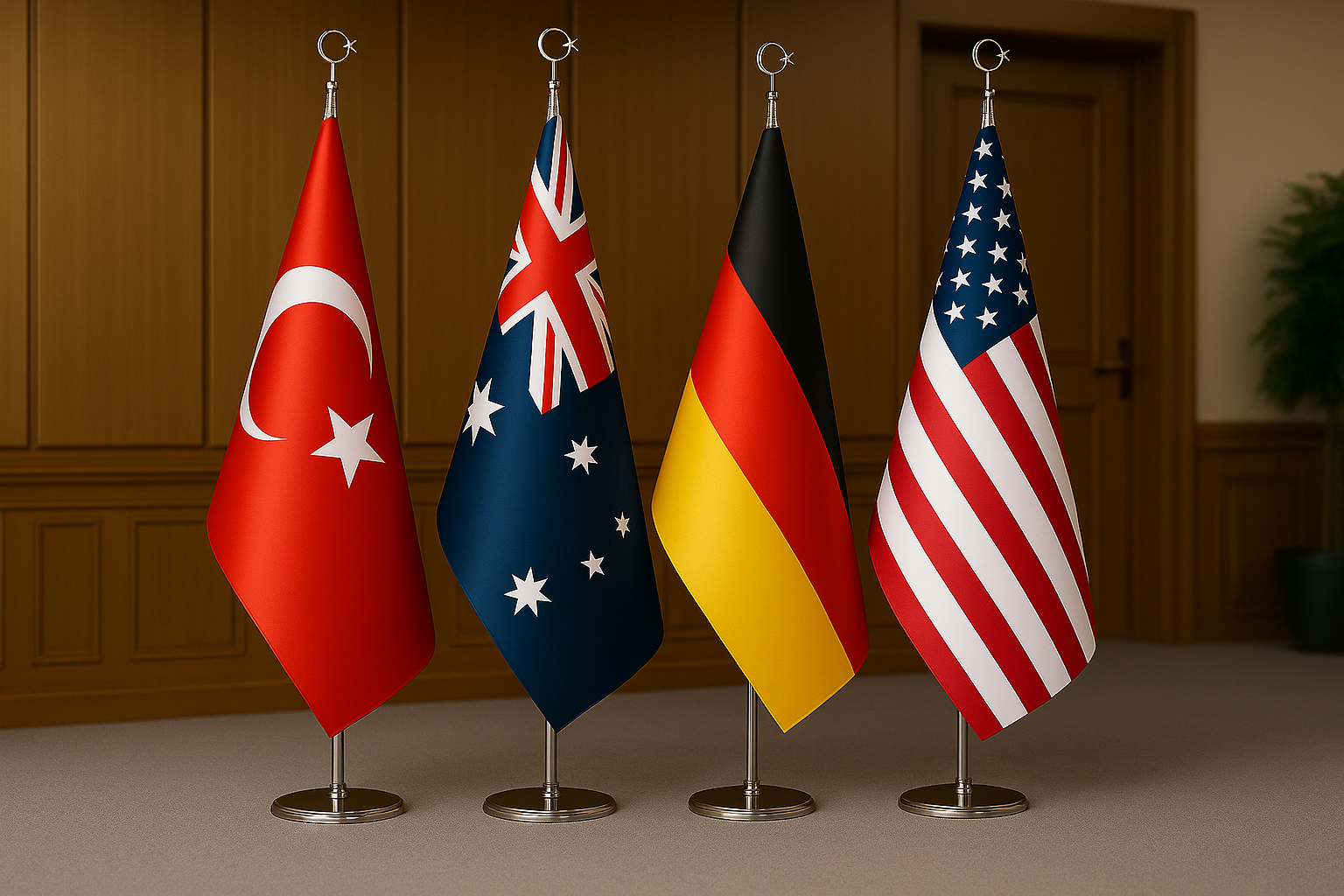
In any display grouping involving the U.S. national flag alongside foreign national flags, the U.S. flag must be given the position of honor — either at the far right of the line (from the flags' own perspective) when the grouping is even in number, or at the center when displayed in an odd-numbered arc or semicircle, per Section 7(g). This rule is critically important for international business events, diplomatic receptions, and United Nations-affiliated venues, where FIAV (Fédération Internationale des Associations Vexillologiques) standards also apply. Foreign national flags should be flown at the same height as the U.S. flag — never higher — and each should be approximately the same size. When displaying with state flags, territorial flags, or organizational banners, Section 7(e) confirms that the national flag holds the position of honor at the center-and-highest point, or to its own right in a flat row. A common real-world mistake seen at car dealerships and sporting venues is placing sponsor banners on taller poles than the national flag; this directly violates the spirit and letter of flag etiquette law.
Raising, Lowering, and Half-Staff Protocols Under Section 7
 Section 7(m) of the US Flag Code states that when flown at half-staff, the flag must first be raised to the peak of the pole and then lowered to the half-staff position — and it must be raised back to the peak before being lowered completely at the end of the day. Half-staff orders are issued by the President of the United States or by state governors for their respective state and local government buildings, and the exact duration (typically 3 days to 30 days) depends on the nature of the occasion, as defined by Presidential Proclamation. Many citizens confuse "half-staff" (the correct term for land-based flagpoles) with "half-mast," which technically refers to flags flown at half position aboard naval vessels. The American flag display rules for half-staff also extend to indoor ceremonial flags on parade staffs: in such cases, a black mourning streamer or ribbon may be affixed to the spearhead or finial rather than physically lowering the flag, per longstanding military custom codified alongside Section 7. For those who display the flag daily and need a durable, weather-resistant product, the USA outdoor flag is constructed with double-stitched fly ends and UV-stabilized polyester to withstand the repeated raising and lowering cycles that proper protocol demands.
The exact position of "half-staff" is not numerically defined by the Flag Code as a precise fraction of the pole, but it is widely understood and applied in practice as approximately one-half the distance between the top and the base of the staff. On a 20 ft (6.1 m) pole, this places the top of the flag at roughly 10 ft (3.0 m). Some states, including South Carolina and Massachusetts, have enacted their own state-level flag codes that supplement federal half-staff rules with additional occasions specific to state history and figures; businesses and institutions in those states should monitor both federal and state proclamations year-round.
Indoor Display: Ceremonial Flags, Staffs, and the Position of Honor
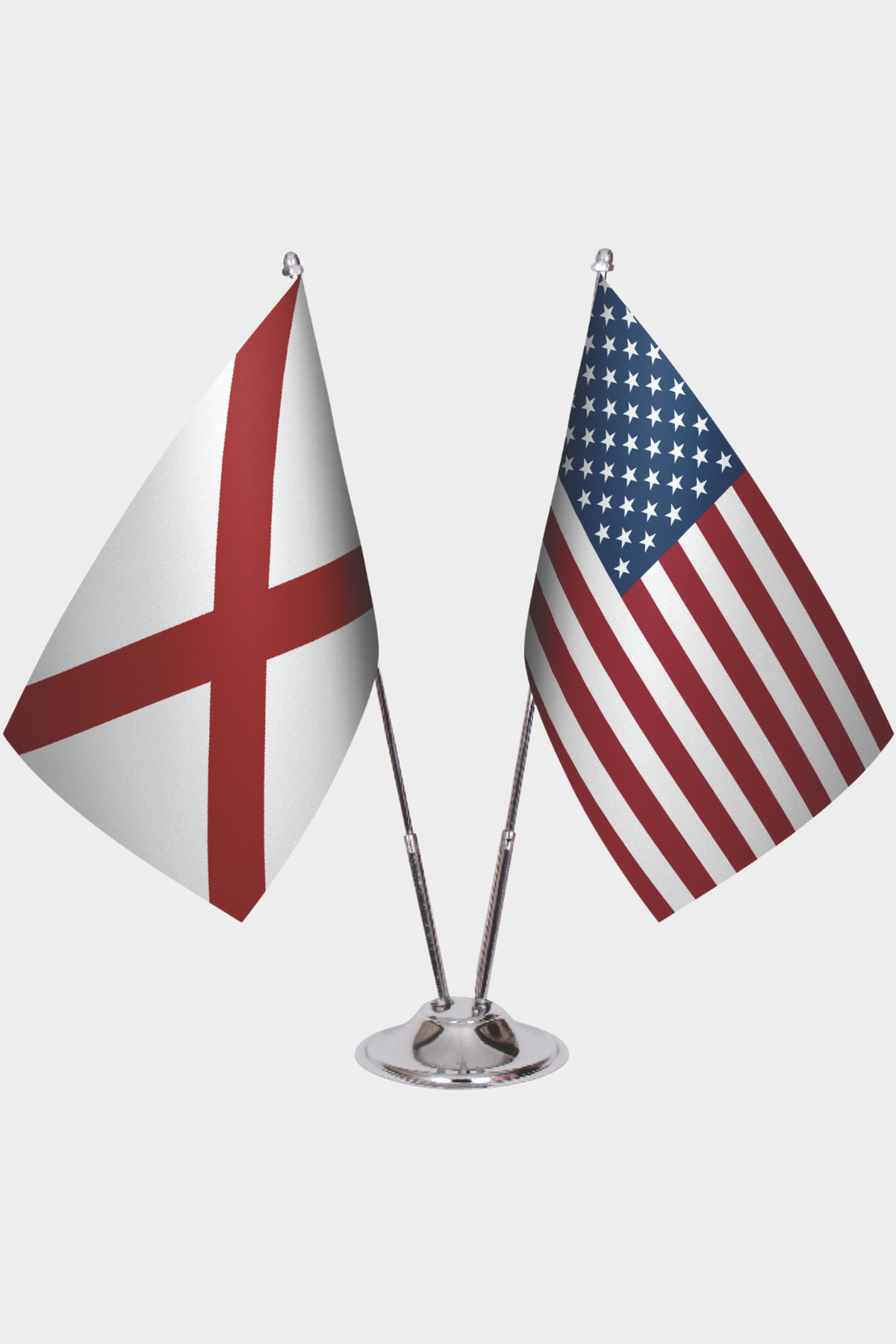
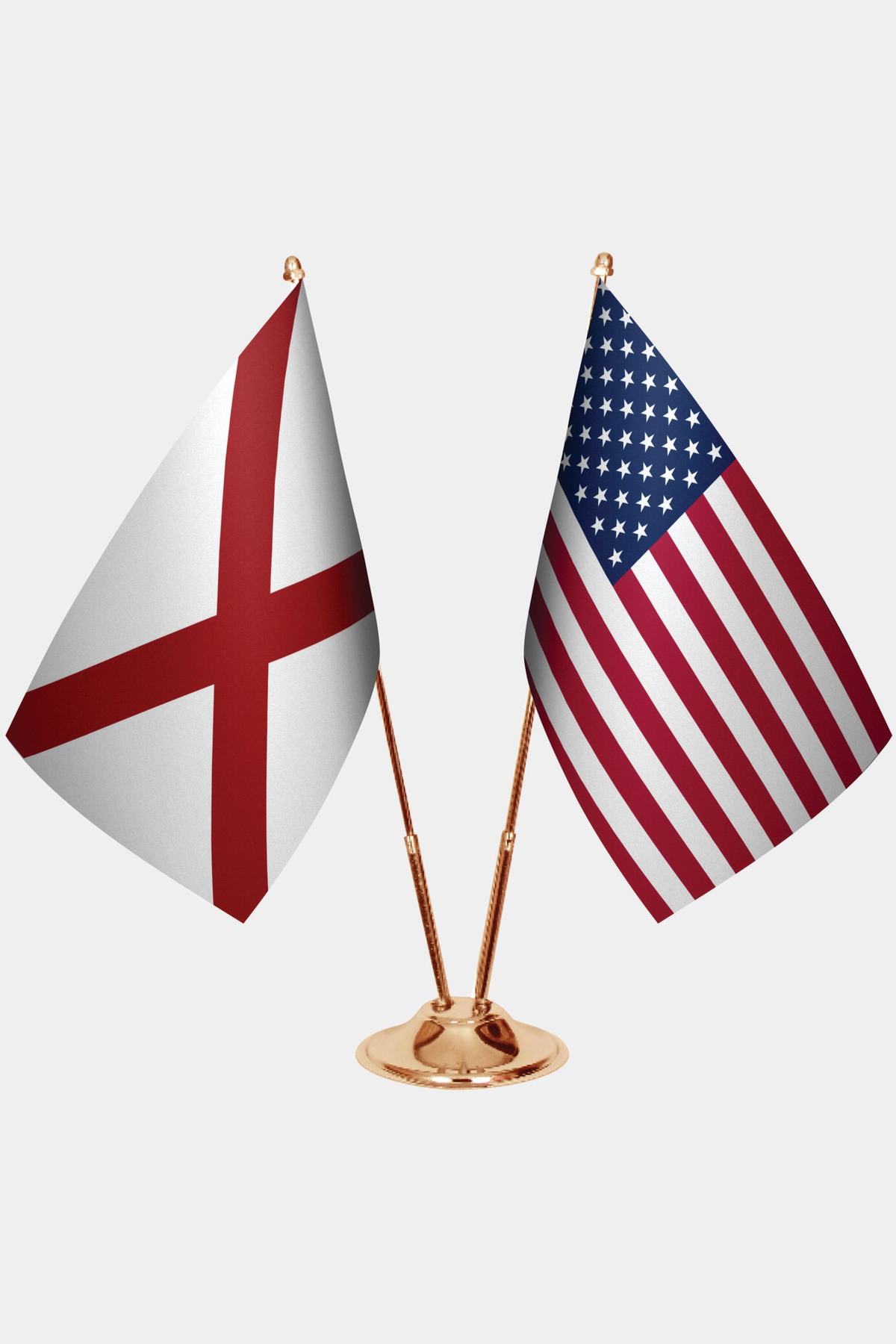
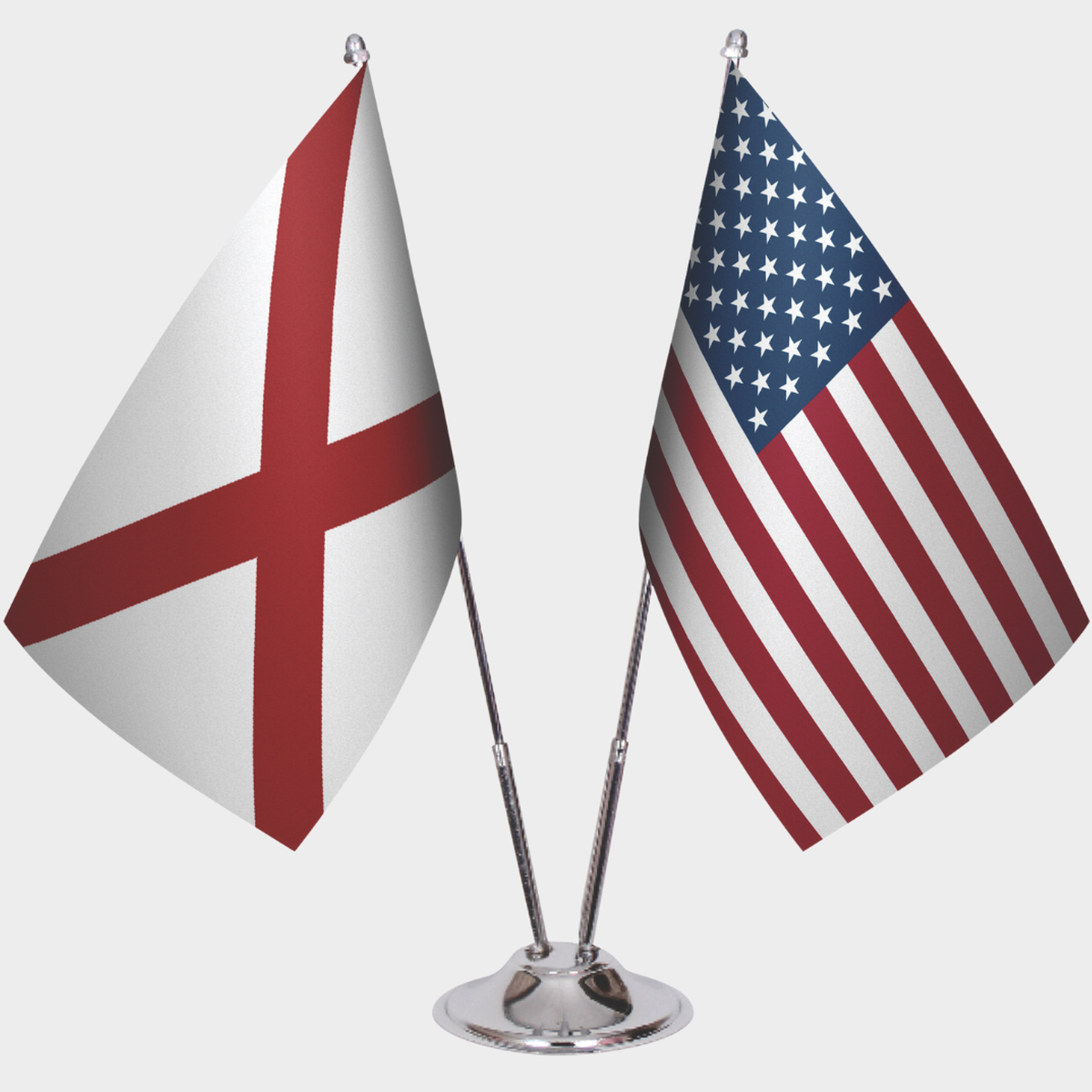
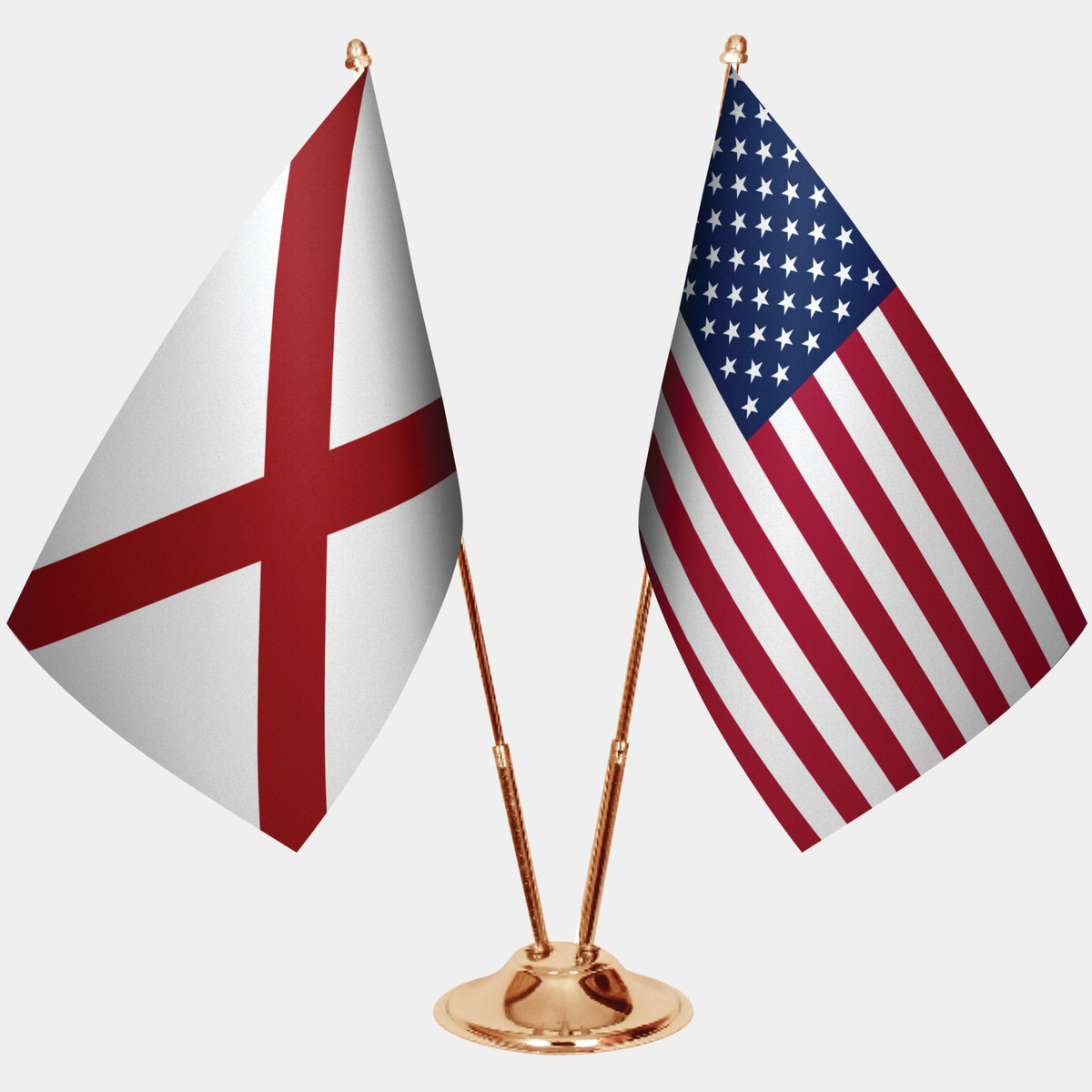
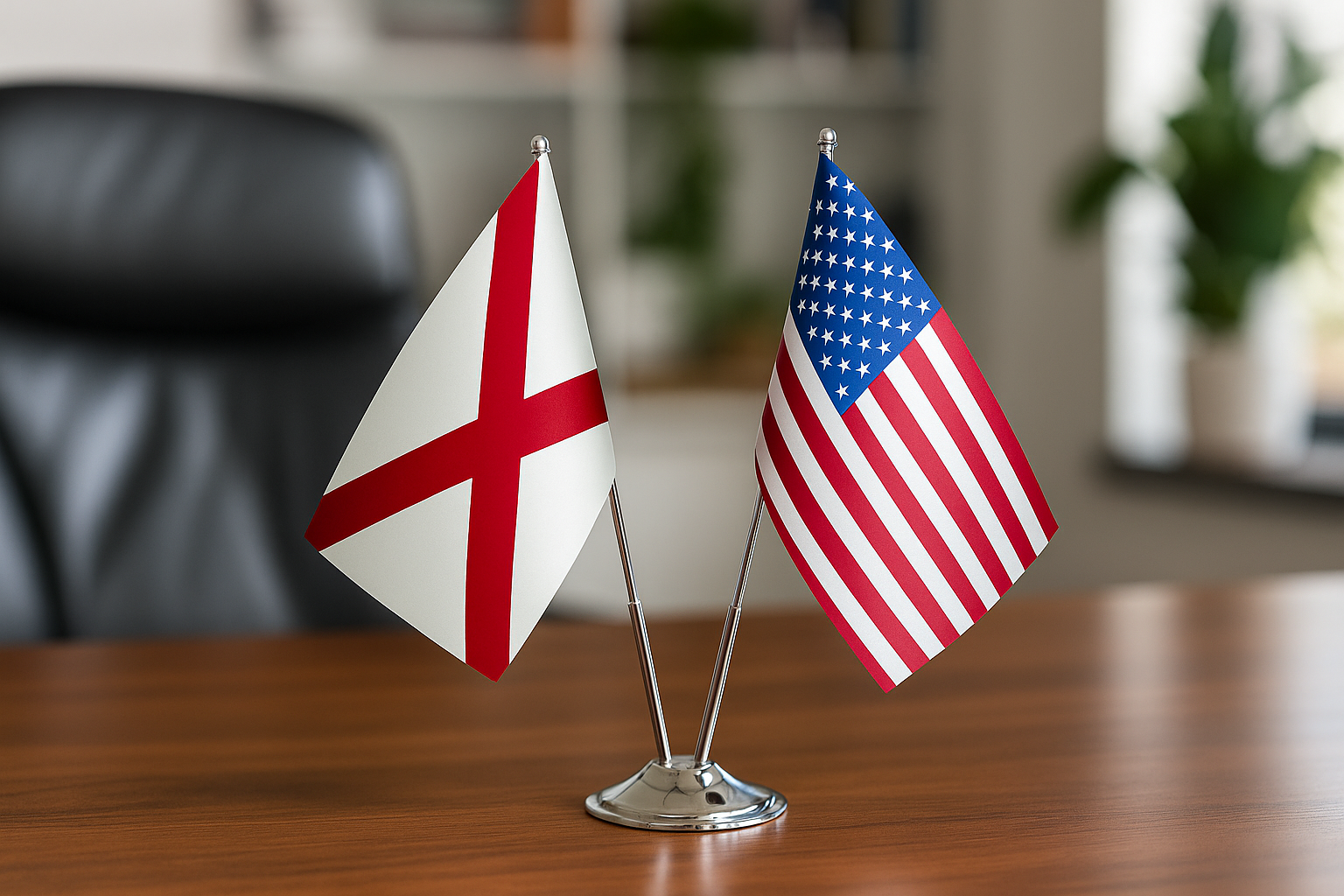
For indoor ceremonial settings — courtrooms, legislative chambers, offices, houses of worship, and auditoriums — Section 7(k) of the flag code Section 7 directs that when the flag is displayed from a staff in a room, it should be given the position of honor at the speaker's right (the audience's left) when displayed with other flags. The term "position of honor" in parliamentary and ceremonial tradition consistently means the right side of the focal point, which is why you will see the U.S. flag to the speaker's right on stage in virtually every official government setting. When the flag is not on a staff but is instead framed or displayed flat on a wall behind a speaker, the union should be in the upper-left from the audience's view, maintaining the same orientation rule that applies to all wall displays. State flags, military branch flags, organizational flags, and unit guidons are placed to the speaker's left in these indoor groupings, ranked in order of precedence (Army, Marine Corps, Navy, Air Force, Space Force, Coast Guard for military branch flags). A USA desk flag with a weighted base makes an elegant and code-compliant addition to any executive office or reception desk, providing a visible symbol of national respect in a compact 4 in × 6 in (10 cm × 15 cm) format.
USA Desk Flags Collection
Compact, properly proportioned desk flags built for indoor ceremonial display in offices, conference rooms, and reception areas — fully compliant with Section 7(k) indoor positioning rules.
Browse Collection →Common Section 7 Violations and How to Avoid Them
The most frequently observed violations of American flag display rules in everyday settings fall into a handful of recurring patterns that are easy to correct once identified. Flying the flag after dark without illumination is one of the most common — Section 7(a) states that the flag should normally be displayed only from sunrise to sunset, but it may be displayed 24 hours a day if properly illuminated, meaning a dedicated flag light pointed at the flag itself, not merely ambient street lighting. Displaying a worn, faded, or tattered flag is addressed by Section 8(k), which states that a flag that is no longer a fitting emblem should be destroyed in a dignified manner, most commonly by burning in a private ceremony (the VFW and American Legion both conduct annual formal retirement ceremonies). Allowing the flag to touch the ground, floor, water, or any surface below it is prohibited under Section 8(b), which is why professional flagpoles use a swivel snap hook and proper halyard tension to keep the flag aloft even in light wind. Displaying a foreign flag in a position higher than the U.S. flag — even at an international trade event — is a direct violation of Section 7(g) that carries significant reputational risk for any host organization. Regularly auditing your flag installation against these Section 7 checkpoints takes less than five minutes and ensures your display reflects genuine respect for flag etiquette law at all times.
Frequently Asked Questions
Is the US Flag Code legally binding on civilians? +
Which direction should the union face when the flag is hung vertically on a wall? +
Can the American flag be flown at night? +
How should the US flag be displayed alongside flags of other countries? +
What is the correct procedure for flying the flag at half-staff? +
Where should the US flag be positioned in an indoor ceremonial room? +
What size flag should be used on a standard residential flagpole? +
How should a worn or tattered American flag be retired? +
Proper American flag display rules are not just a legal formality — they are a living expression of national pride and civic respect that every household, business, and institution can demonstrate through careful attention to the US Flag Code. Whether you need a weatherproof flag for a 20 ft (6.1 m) outdoor pole or a compact ceremonial flag for your desk, Asya Bayrak offers flags manufactured to the exact proportions and material standards that make flag etiquette law compliance straightforward. Explore the USA Outdoor Flag for durable all-weather outdoor installations, discover the USA Desk Flags collection for indoor ceremonial settings, or browse the complete flags collection for every display context covered in this guide. Bulk pricing is available for corporate orders, government procurement, and institutional purchases — contact Asya Bayrak directly for volume quotes and custom sizing options.