

Yard flags for political campaigns, bulk outdoor pennants for election season, and campaign lawn flags available wholesale are the fastest-moving promotional materials during any election cycle — and knowing how to order them correctly can mean the difference between a campaign that looks polished and one that looks underfunded. Whether you are managing a local city council race or coordinating a statewide candidate promotion effort, this guide covers everything campaign managers, political action committees, and grassroots organizers need to know about sourcing, ordering, and deploying outdoor flags, lawn stakes, and pennants in bulk for maximum voter outreach impact.
Why Outdoor Flags and Pennants Outperform Digital Ads in Voter Outreach
Physical signage — including yard flags, lawn stakes, and string pennants — consistently outperforms digital advertising for name recognition in local and regional political campaigns, with studies showing that repeated visual exposure to a candidate's name increases familiarity by up to 70% among likely voters in targeted neighborhoods. Digital ads scroll past in seconds, but a well-placed flag or pennant string stays visible 24 hours a day, seven days a week, for the entire duration of your campaign.
Political consultants often underestimate the compounding effect of physical presence. When a voter drives past a house displaying a candidate's yard flag every single day for six weeks leading up to an election, the name recognition that builds is organic and trusted — it signals community endorsement rather than paid messaging. Outdoor flags for voter outreach work because they leverage a powerful psychological principle: social proof. When neighbors see that other residents have placed campaign lawn flags in their yards, they perceive the candidate as credible and locally supported. String pennants hung across storefronts, community centers, or event spaces at campaign rallies reinforce this same effect on a larger visual scale. Budget-conscious campaigns should think of every flag, pennant, and lawn stake as a silent volunteer working a full shift every single day without pay.
Types of Campaign Flags and Pennants: Choosing the Right Format
The right format depends on your deployment location, budget per unit, and how long the material needs to remain in the field — lawn stake flags suit residential yards for 60–90 days, pole pennants excel at events and storefronts, and string pennants work best for rally venues and parade routes. Understanding these differences before placing a bulk order prevents costly mismatches between the product and its intended use.
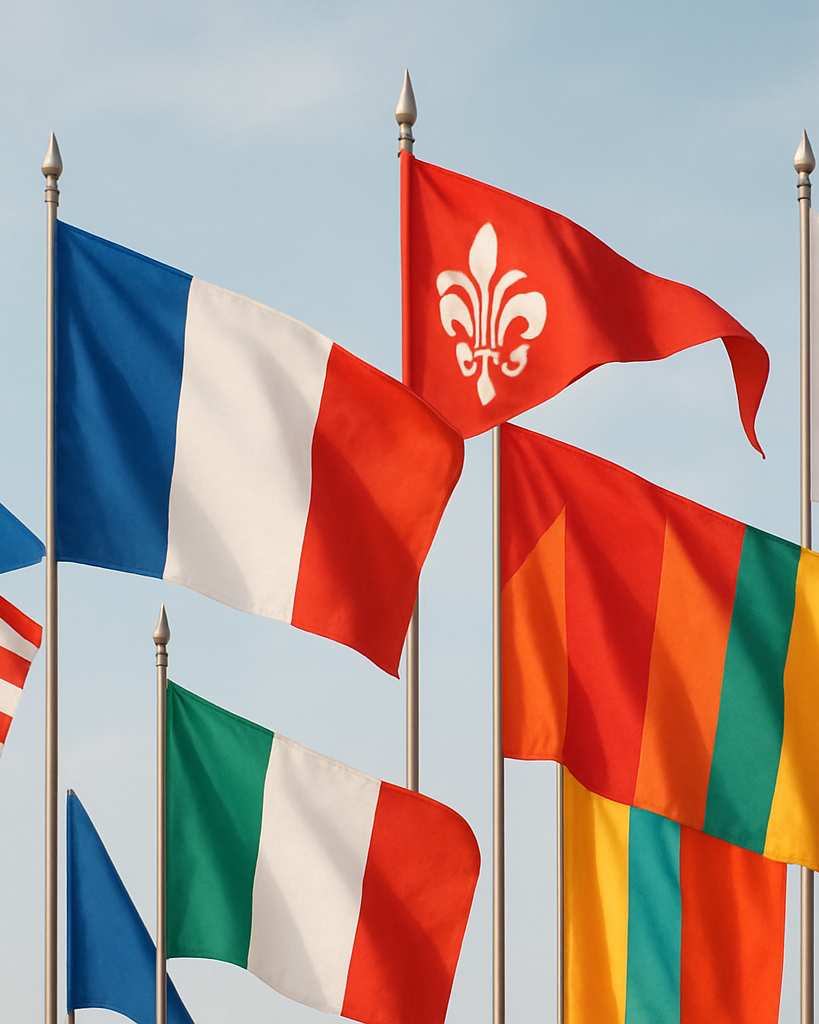
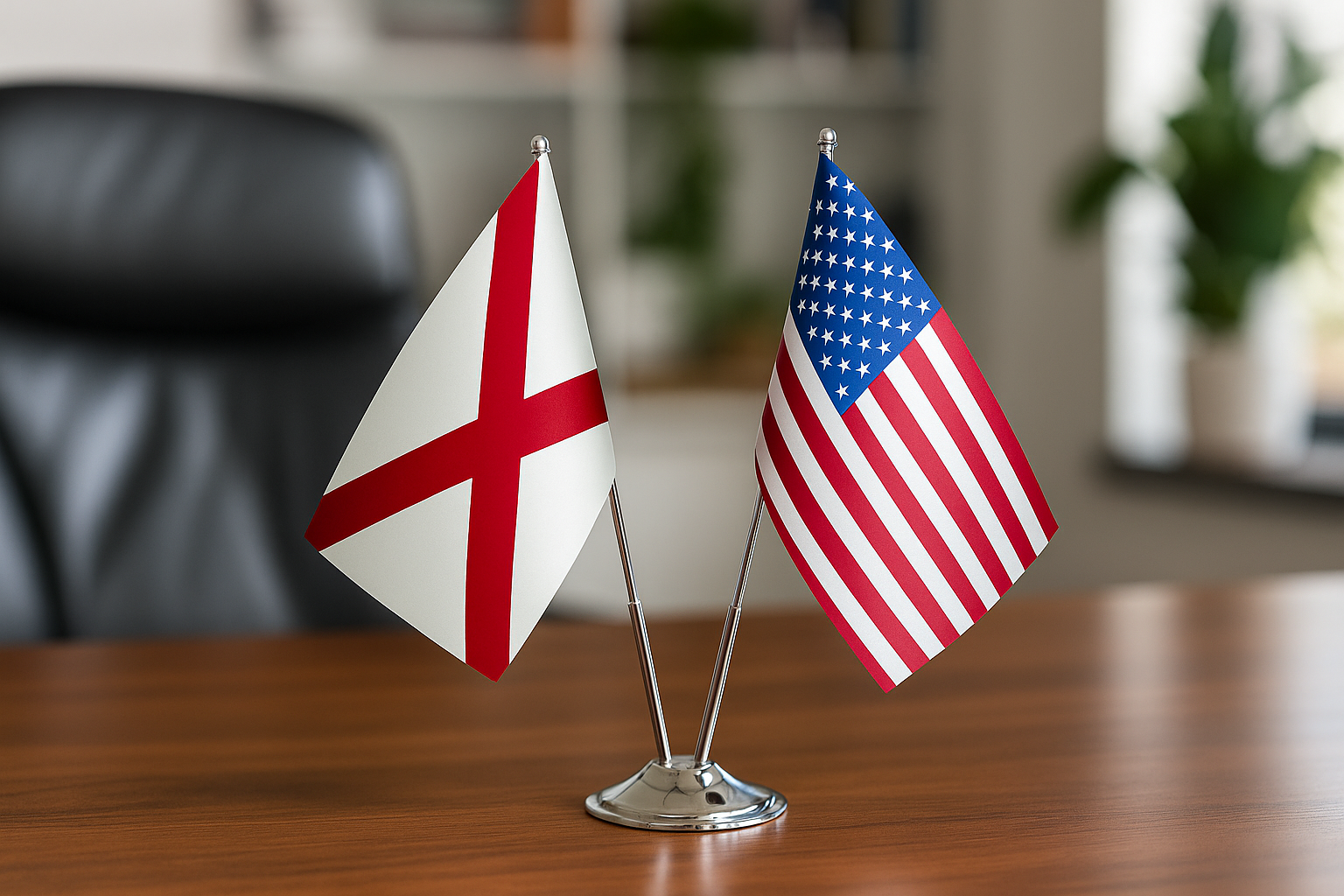
 Lawn stake flags — typically 12 in × 18 in (30 cm × 46 cm) mounted on wire or plastic stakes — are the workhorses of residential campaign operations. They are lightweight, easy for volunteers to install without tools, and inexpensive enough to deploy in the thousands across a targeted district. Campaign managers should plan for a lifespan of 6 to 8 weeks in typical outdoor conditions; UV-resistant inks and heat-sealed edges significantly extend that window. Handheld flags on sticks, like the 10-pack flags on stick with heavy-duty Raschel fabric, serve double duty: they work for parade routes and campaign rallies where volunteers need something visible and portable. For events, consider ordering in packs of 100 or more so every attendee can carry one — the visual effect of a crowd waving coordinated flags is one of the most powerful images a campaign can generate for earned media coverage.
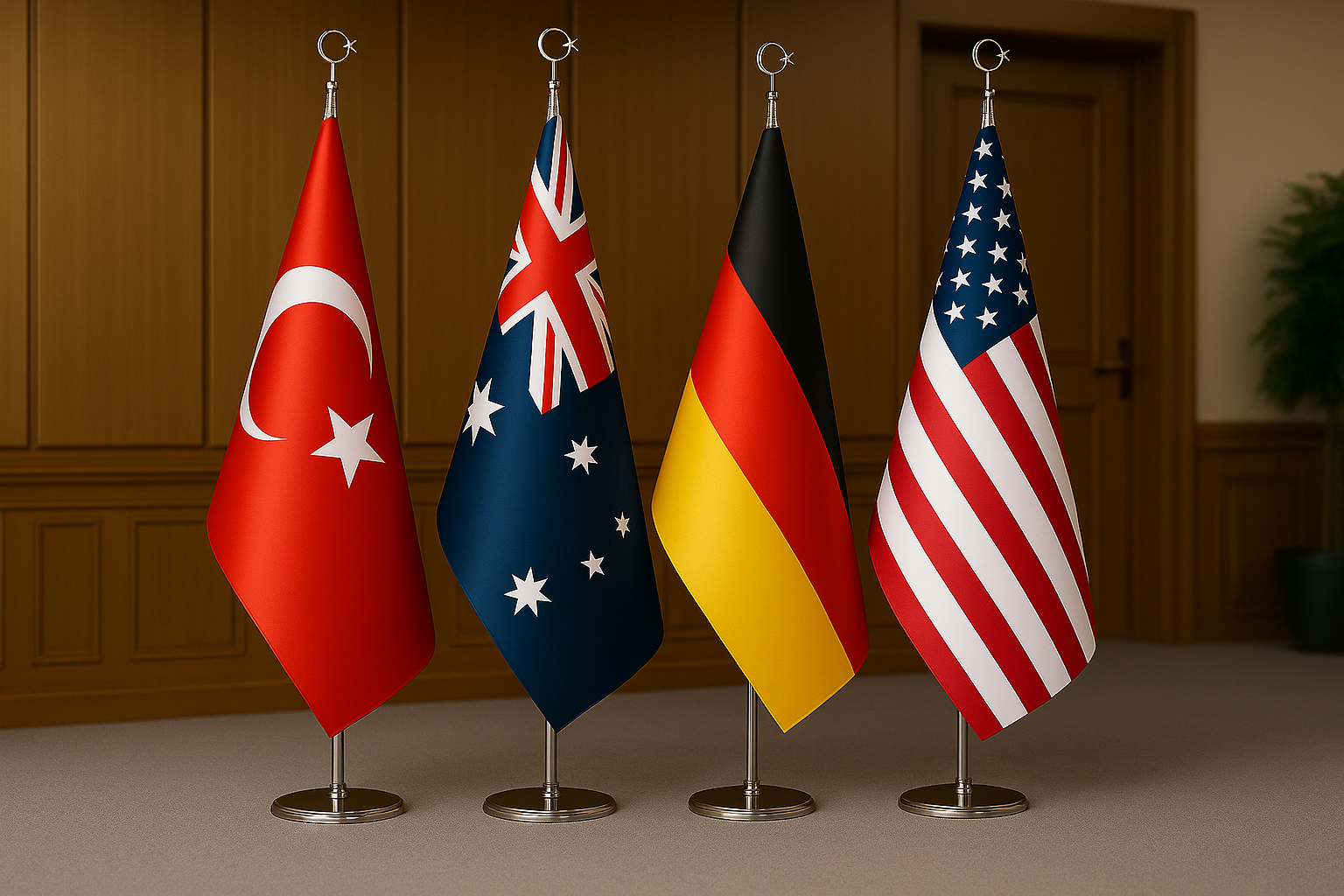
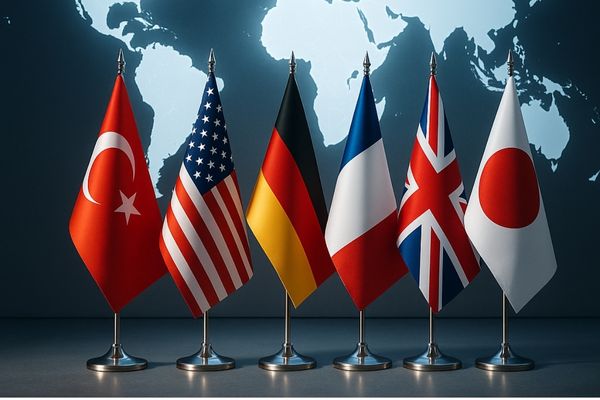
Custom pole pennants for candidates are the premium tier of outdoor campaign signage. Vertical pole flags measuring 2 ft × 5 ft (61 cm × 152 cm) or 2.5 ft × 8 ft (76 cm × 244 cm) can be mounted on light poles, fence posts, or freestanding campaign display stands along high-traffic corridors. Because they are elevated and larger, they capture attention from moving vehicles — a critical consideration for campaigns in suburban or rural districts where most voter contact happens from behind a windshield. Browse the pole pennants collection to explore format options that fit standard municipal light-pole hardware. String pennants for campaign events, available through the string pennants collection, are ideal for event decoration: a single 100 ft (30 m) string can define a stage, line a parade route, or festoon a campaign headquarters in minutes.
Fabric, Printing, and Durability Standards for Election Season Use
For outdoor political campaign use, you need fabrics rated for at least 80% UV resistance with double-stitched hems and reinforced grommets, because substandard materials fade or shred within 3–4 weeks of continuous outdoor exposure — well before election day. Accepting lower specs to save a few cents per unit is one of the most common and costly mistakes campaign buyers make.
The two dominant fabric choices for outdoor campaign flags are knitted polyester and woven nylon. Knitted polyester is the more budget-friendly option and handles sublimation or screen printing exceptionally well, making it ideal for vibrant, full-color candidate portraits or multi-color party branding. Woven nylon is denser, more wind-resistant, and offers a longer field lifespan of up to 2 years under normal conditions — making it the preferred material for pole-mounted flags along busy roads where wind load is a constant factor. For lawn stake flags that will be retrieved and redistributed across multiple neighborhoods during a campaign season, knitted polyester with heat-sealed edges strikes the best balance between cost and durability. Ink technology matters as well: dye-sublimation printing locks color into the fabric at the molecular level rather than sitting on top of it, so the imagery remains vivid through rain, sun, and handling. Campaigns ordering election promotional flags in bulk should always request UV-resistance ratings and confirm whether printing is sublimated or screen-printed before approving any proof.
Bulk Order Quantities, Pricing Tiers, and Lead Times for Campaign Managers
Most wholesale flag manufacturers offer meaningful price breaks starting at 50 units, with the sharpest discounts typically kicking in at the 250-unit and 500-unit thresholds — planning your quantities around these tiers can reduce your per-flag cost by 30–45% compared to small-batch pricing. Campaign managers who understand these tiers can stretch their signage budgets dramatically without sacrificing quality.
 Lead time is the variable that trips up even experienced campaign managers. Standard production for custom-printed outdoor flags typically runs 10–15 business days after artwork approval, and shipping for large bulk orders adds another 3–7 business days depending on destination. That means a campaign ordering 500 yard flags should budget a minimum of 3 full weeks from artwork submission to flags-in-hand — and 4–5 weeks is safer if any design revisions are anticipated. For primary elections with compressed timelines, always discuss rush production options upfront; many manufacturers offer 5–7 business day rush turnarounds for a surcharge of 15–25% on the order total. The premium double-sided sublimation pennant is a strong example of the print quality achievable with modern sublimation technology, showing how vivid, detail-rich imagery transfers to fabric at production scale. For political committees coordinating across multiple districts, consider placing a master bulk order with staggered delivery schedules so different regional coordinators receive their materials at the right time relative to their local canvassing calendars.
Legal and Regulatory Considerations for Campaign Outdoor Signage
Political signage, including yard flags and lawn stake flags, is governed by a combination of Federal Election Commission (FEC) disclosure requirements, state election laws, and local municipal codes — failing to understand all three layers can result in fines, forced removal of materials, or even legal challenges to your campaign. Every campaign manager should review these requirements before printing a single flag.
At the federal level, the FEC requires that political advertising display a "paid for by" disclaimer identifying the campaign committee or PAC funding the materials. For flags and pennants, this disclaimer must be clearly legible — typically printed in a contrasting color at the bottom of the flag face at a minimum 7-point font equivalent when scaled to flag size. State-specific rules vary considerably: some states restrict the placement of campaign signs within a certain distance of polling places (commonly 100 ft / 30 m, though this varies by jurisdiction), and many municipalities have ordinances restricting sign height, total square footage of signage per property, or the use of stakes in public rights-of-way. Wire H-stakes driven into city sidewalk grass strips may be prohibited in your target neighborhoods — always confirm local ordinances before deploying lawn flags. Additionally, while the US Flag Code (4 USC §§ 1–10) does not directly regulate campaign flags, campaigns using patriotic imagery alongside candidate branding should ensure that any American flag graphics are depicted with appropriate respect and are not defaced or altered in ways that could generate negative press coverage.
Logo Printed Vertical Pole Flags
Custom vertical pole flags printed with your candidate's logo, name, and campaign colors — built for high-traffic roadside visibility throughout the entire election season.
Browse Collection →Designing Campaign Flags That Actually Win Votes
The most effective campaign yard flag designs use a maximum of three colors, bold sans-serif fonts readable at 30 ft (9 m), and a candidate name that occupies at least 60% of the flag's visual space — anything more complex than that loses legibility at the distances and speeds at which most voters will encounter it. Design clarity is not a compromise; it is a strategic necessity.
Campaign flag design follows different rules than print or digital media. You have approximately 1–2 seconds to register a message with a passing driver, which means every element on the flag must earn its place. The candidate's name should appear in the largest text, followed by the office being sought (e.g., "For State Senate"), and the party affiliation or campaign tagline if space allows. Avoid photograph-heavy designs on small-format lawn stake flags — faces do not render well at 18 in × 12 in (46 cm × 30 cm) and look blurry from the sidewalk. Save portrait imagery for larger-format pole flags and banners where the print area can support that level of detail. Color psychology matters in political contexts: blue communicates trust and stability, red communicates energy and urgency, and high-contrast color pairings (dark background with light text, or vice versa) maximize readability in varying light conditions. For campaigns ordering outdoor flags for voter outreach across diverse neighborhoods, consider producing two or three design variants — one for residential yard deployment, one for event use, and one for high-visibility roadside pole mounting — to optimize each format for its specific visual environment.
Coordinating Bulk Deliveries Across Multiple Campaign Districts
Large campaigns spanning multiple counties or legislative districts should use a hub-and-spoke distribution model, shipping the majority of bulk flag inventory to a central campaign headquarters and pre-packaging district-specific quantities for local volunteer coordinators to pick up — this eliminates the logistical chaos of shipping hundreds of separate small orders to individual volunteers' homes. Proper logistics planning is what separates a professional campaign operation from an amateur one.
When placing campaign lawn flags wholesale or ordering election promotional flags in bulk across multiple jurisdictions, communicate your full distribution plan to your flag supplier at the time of ordering. Many manufacturers can accommodate split-shipping arrangements, sending a portion of a bulk order to one address and the remainder to another, often with minimal additional freight cost when negotiated upfront. Label each district's allocation clearly before distribution — color-coded packaging or labeled boxes by precinct save enormous amounts of volunteer time on distribution day. Track inventory with a simple spreadsheet logging how many flags were distributed to each coordinator, so you can quickly identify which districts need resupply as the campaign progresses. Budget for attrition: expect 10–15% of lawn stake flags to be lost, damaged, or stolen during a typical campaign cycle, and factor that into your initial bulk order quantity so you maintain a resupply buffer without emergency re-orders at retail pricing.
Frequently Asked Questions
What is the minimum order quantity for bulk campaign yard flags? +
How long do outdoor campaign flags last in the field? +
Do campaign flags need to include a disclaimer or disclosure statement? +
What is the best flag size for roadside candidate visibility? +
Can string pennants be used for outdoor political campaign events? +
How far in advance should a campaign order bulk outdoor flags? +
What file format should I submit for custom campaign flag artwork? +
Are there restrictions on where campaign yard flags can be placed? +
Ready to equip your campaign with professional-grade, high-visibility outdoor signage? Explore the full string pennants collection for rally and event decoration, browse custom logo-printed vertical pole flags for roadside candidate promotion, and check out the pole pennants collection for versatile formats that fit a wide range of outdoor campaign environments. Bulk pricing is available for corporate and political committee orders — contact Asya Bayrak LLC directly to request a wholesale quote tailored to your campaign's scale, timeline, and district geography. From primary season through election day, having the right flags in the right places is one of the highest-ROI investments any campaign can make.


