


Real estate open house flags, feather flags, and vertical pole banners are among the most cost-effective tools a realtor can deploy to drive foot traffic, signal property availability, and reinforce brand visibility at the curb. Placed correctly — at intersections, along driveways, and at entry points — outdoor flags for realtors can increase walk-in attendance by a measurable margin, often cited at 20–30% above signage-only approaches in high-traffic suburban markets. Whether you are equipping a single model home or managing a portfolio of listings that demand a corporate flags and branded display solution, this guide covers everything you need to select the right flag type, position it for maximum impact, and order smartly at wholesale pricing.
Why Flags Outperform Traditional Open House Signage
Flags outperform static yard signs because motion catches the human eye — a moving feather flag is visible from 200–300 ft (61–91 m) away, roughly four to six times the effective distance of a flat A-frame sign. This psychological principle, known as the orienting response, is why vertical pole flags for real estate have become a standard in competitive listing markets across the United States.
Traditional open house signage is limited by surface area, wind resistance, and height. A standard real estate directional sign stands roughly 24 in (61 cm) above grade and can be blocked by parked cars, landscaping, or competing signs. In contrast, a 15 ft (4.6 m) feather flag on a ground stake is visible over most SUVs and light trucks. Research from the Outdoor Advertising Association of America consistently shows that motion-based displays — flags, banners, and spinning signs — generate 47% higher recall than static equivalents. For agents who spend $300–$500 per listing on marketing collateral, adding two or three feather flags for open house events for under $80 total is one of the highest-ROI additions available.
Beyond visibility, flags communicate professionalism. A model home decorated with consistent branded banners signals to prospective buyers that the developer or agent has invested in the presentation. That first-impression effect influences buyer perception of property value before they even enter the front door.
Understanding Flag Types: Feather, Sail, Vertical Pole, and Outdoor Pole Flags
The four main flag categories used at property sales events are feather flags, sail flags, vertical pole flags, and traditional outdoor pole flags — each with distinct strengths depending on placement context and wind conditions. Choosing the right type prevents premature fabric wear and ensures the message stays readable throughout a full open house day.
Feather flags (also called blade flags) taper at the top and remain nearly always in motion, making them excellent for roadside placement. They typically range from 8 ft to 15 ft (2.4 m to 4.6 m) in total height and are available with ground spike, cross base, or water-bag base hardware. Fabric is usually 110 gsm knitted polyester with dye-sublimation printing, delivering vivid color rendering and roughly 6–18 months of outdoor lifespan depending on UV index and wind frequency. Explore the full range in the sail flags collection for sizes and hardware combinations that suit both urban and suburban listing environments.
Vertical pole flags are rectangular or custom-shaped banners that hang from a horizontal top arm on a vertical pole. They offer significantly more printable surface area — common dimensions include 2 ft × 6 ft (61 cm × 183 cm) and 2.5 ft × 8 ft (76 cm × 244 cm) — making them ideal for displaying agent logos, brokerage branding, property addresses, and QR codes that link to listing pages. The logo-printed vertical pole flags collection is particularly well suited for model home complexes and new development entries where brand consistency across multiple units is essential.
Outdoor pole flags fly horizontally from a fixed flagpole and are the format most familiar to US consumers from commercial and civic contexts. These are appropriate for permanent model home installations, sales offices, and developer compounds where a 20 ft (6.1 m) or taller pole is already in place. Custom logo flags in this format reinforce brand equity over the full sales cycle of a development, which can span 12–36 months. Check the logo-printed outdoor pole flags collection for specifications including header tape, brass grommets, and wind-resistant construction.
Placement Strategy: Where to Put Flags to Maximize Open House Traffic
 Strategic flag placement begins at least 500 ft (152 m) from the property, at the nearest high-traffic intersection, to intercept drivers before they pass the turn. A proven three-point system places the first flag at the arterial intersection, a second flag mid-block to maintain direction cues, and a third flag directly at the property entrance — creating a visual breadcrumb trail that works even for buyers unfamiliar with the neighborhood. For corner lots or cul-de-sac homes, two flags at the street corner entry plus one at the front walkway consistently outperform single-flag setups in realtor field reports. When using vertical pole flags for real estate model homes, position the pole so the flag face is perpendicular to the prevailing traffic direction — this ensures the printed surface, not the edge, is visible to approaching drivers. Always check local municipal ordinances regarding temporary signage placement in road rights-of-way; most US municipalities allow temporary real estate flags within 3–10 ft (0.9–3 m) of the property line during active open house hours, typically defined as the hours the property is being actively shown.
For model home complexes and new construction communities, consider a "flag corridor" approach: line both sides of the entrance drive with matching vertical pole flags at 20–30 ft (6–9 m) intervals. This technique is widely used by national homebuilders and creates an immediate sense of arrival and event significance. Consistency in color, logo placement, and flag height along the corridor reinforces brand recognition and signals the scale of the development to prospective buyers arriving for the first time.
Material and Print Specifications for Outdoor Real Estate Flags
The best outdoor flags for realtors are made from 110–150 gsm knitted polyester with UV-resistant dye-sublimation printing, a combination that delivers color accuracy of 95%+ against the original artwork file and resists fading for 6 months to 2 years under standard US outdoor conditions. Material choice directly affects how long your branding investment lasts across multiple open house cycles.
Dye-sublimation is the preferred print method for all property sales event banners because it embeds pigment into the fabric rather than sitting on top, making it resistant to peeling, cracking, and rain streaking. Pantone color matching (within 2–3 delta-E units) is achievable with professional-grade equipment, which is critical for agents and brokerages whose brand standards specify exact colors. For double-sided visibility — useful when flags face both incoming and outgoing traffic — look for specifications that include double-sided sewing with a blockout liner to prevent bleed-through between the front and back images.
Hardware durability matters as much as fabric quality. Ground spikes for feather flags should be fiberglass or aluminum with a minimum wall thickness of 1.5 mm to survive repeated installation and removal across 20–50 open house events. Cross bases and water-bag bases are preferred in paved environments — parking lots, model home hardscape — where ground stakes cannot penetrate. Pole sections should connect via twist-lock or push-button mechanisms rather than friction alone, as friction joints loosen over time and cause flags to lean or rotate unexpectedly in wind gusts above 25 mph (40 km/h).
Custom Logo Flags for Real Estate: Branding Requirements and Artwork Setup
 Custom logo flags for real estate require vector artwork (AI, EPS, or high-resolution PDF at 300 dpi minimum) to reproduce brokerage marks, team logos, and QR codes cleanly at flag scale. Providing properly prepared files is the single biggest factor in shortening turnaround times from order to delivery — most production delays trace back to low-resolution artwork that requires redraw. Brokerages operating under franchise agreements (RE/MAX, Keller Williams, Coldwell Banker, etc.) must ensure their custom flag artwork complies with the franchise brand standards manual, particularly regarding logo clear-space rules and approved color values. For individual agents building a personal brand, custom logo flags in real estate contexts typically include the agent's headshot, name, brokerage affiliation, phone number, and a QR code — all printable within the large surface area of a 2.5 ft × 8 ft (76 cm × 244 cm) vertical pole flag. Explore the full range of corporate and custom branded flags to find formats that match your brokerage's visual identity and outdoor display requirements.
When designing artwork for flags specifically, keep critical text and logos within the inner 80% of the flag's dimensions to account for seam allowances, header tape, and pole sleeve. Background colors should be bold and high-contrast — pale pastels disappear against blue sky or overcast conditions. Limit body copy to three lines maximum; anything more becomes unreadable from a moving vehicle at 25 mph (40 km/h). A phone number in 6 in (15 cm) tall numerals is legible from approximately 100 ft (30 m), which is the practical read-distance benchmark for curbside real estate flagging.
Bulk Ordering for Model Homes and Property Sales Events: How It Works
Bulk ordering for model home flags typically starts at quantities of 10–25 units per design, unlocking per-unit price reductions of 20–40% compared to single-unit retail pricing — making wholesale flags for property events the logical choice for brokerages, property developers, and real estate marketing agencies managing multiple listings simultaneously. Planning your order correctly avoids the two most common mistakes: under-ordering before a high-traffic weekend and over-ordering a design that becomes outdated when branding or contact details change.
A practical bulk order strategy for active brokerages involves separating evergreen branded elements (brokerage logo flags, directional arrow flags, "Open House" message flags) from listing-specific elements (address, agent contact, QR code to the listing). Ordering 20–50 units of evergreen designs amortizes cost across dozens of events, while listing-specific flags are ordered in small runs of 2–6 per property. This two-tier approach is used by the marketing departments of national builders and large regional brokerages to control both cost and inventory.
Production lead times for custom-printed flags typically run 5–10 business days for standard orders, with rush options available at 2–3 business days for an additional fee. For model home grand openings and major property sales events with fixed dates, placing orders 3–4 weeks in advance is strongly recommended to absorb any artwork revision cycles without affecting delivery. Bulk pricing is available for corporate and brokerage orders — contact the sales team with your quantity, dimensions, and artwork files to receive a project-specific quote.
Logo-Printed Vertical Pole Flags
Custom-printed vertical pole flags sized and built for real estate, model home, and property sales event applications — available for bulk ordering with full branding support.
Browse Collection →Compliance, Safety, and US Flag Code Considerations for Real Estate Events
Real estate flag displays are governed by a combination of local municipal signage ordinances, HOA rules, and — when flying the American flag alongside branded banners — the US Flag Code (4 USC §§ 1–10). Understanding these boundaries prevents fines, forced removal during an open house, and complaints from neighbors or community associations.
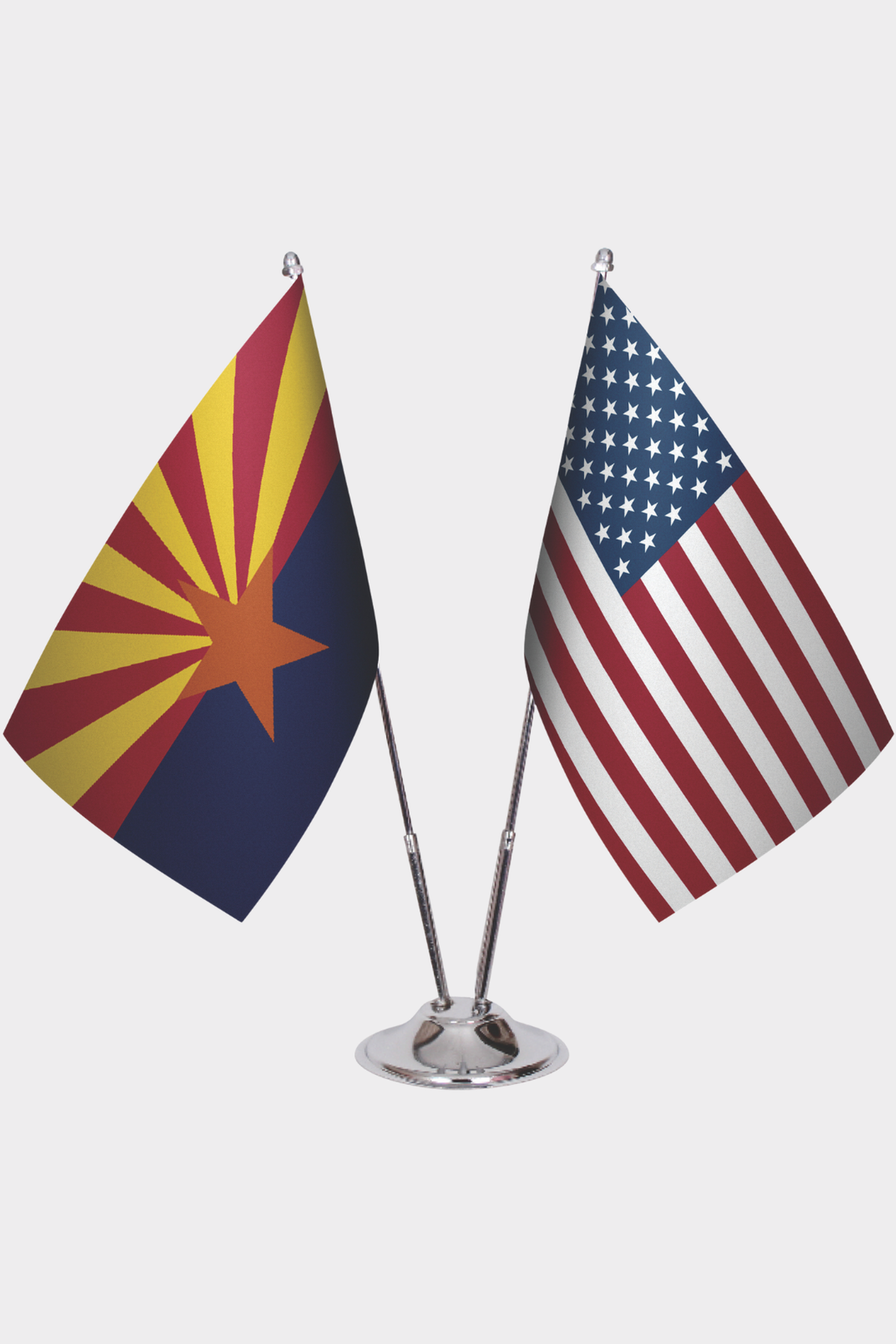
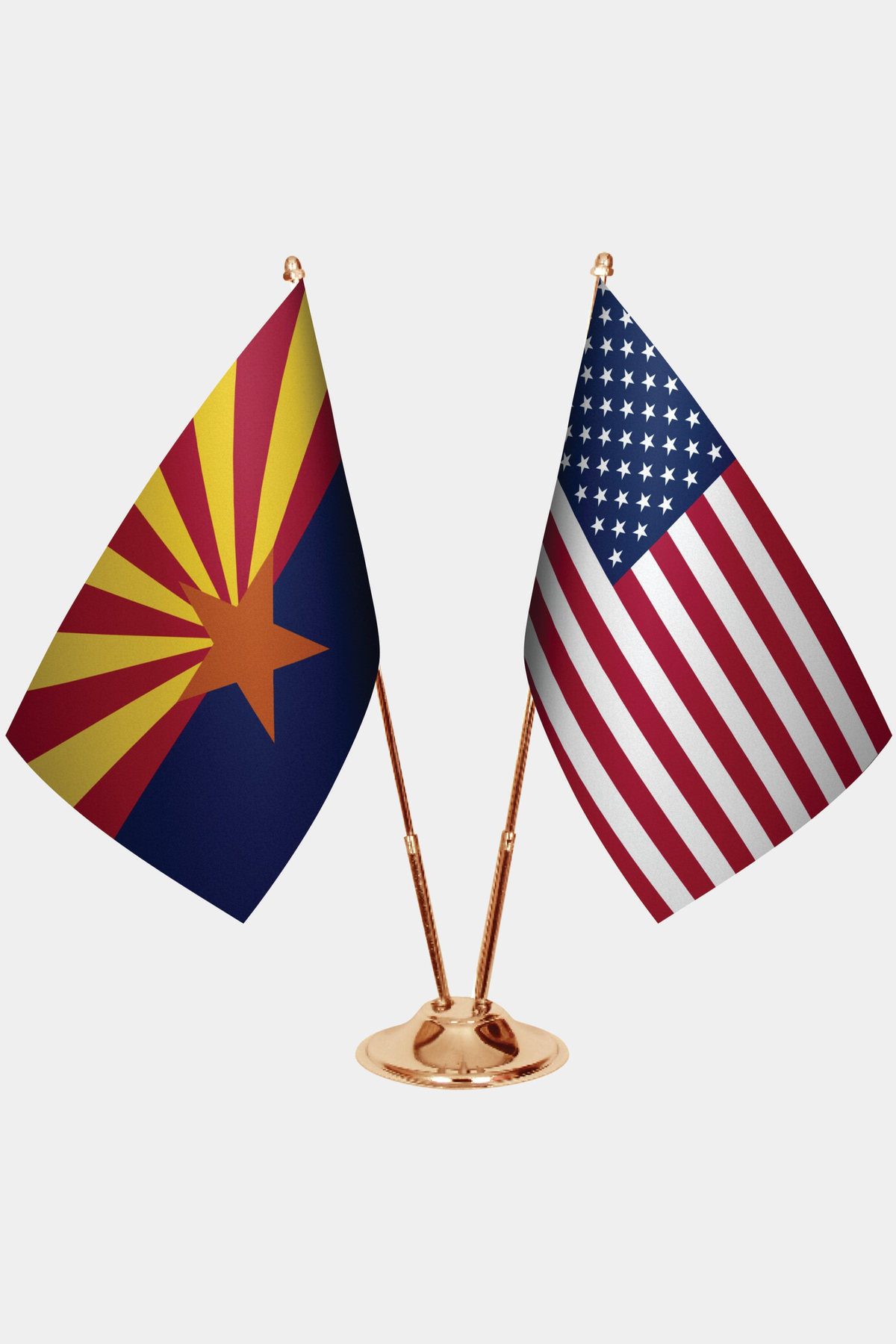
Under 4 USC § 7(c) of the US Flag Code, when the American flag is displayed on the same pole or in the same grouping as other flags, it must occupy the position of highest honor — flown at the peak on a single pole or, in a multi-pole line, placed to its own right (the observer's left when facing the display). Many model home developers fly a US flag alongside their corporate or community-branded flag; if you do this, ensure the US flag is at least equal in size to — and preferably larger than — the branded flag. A high-quality USA outdoor flag that meets commercial durability standards is appropriate for this permanent model home installation context.
Local ordinances vary significantly. In California, many municipalities cap temporary real estate flag heights at 6 ft (1.8 m) above grade in residential zones. In Texas and Florida — states with high volumes of new construction — temporary signage rules are generally more permissive, often allowing flags up to 15 ft (4.6 m) for open house events on the subject property. Always verify with your county planning or zoning department before installing flags in public rights-of-way, and carry a printed copy of any applicable temporary sign permit on-site during the event.
Safety considerations include securing all base hardware to prevent flags from tipping onto pedestrians or vehicles. Water-bag bases should be filled to at least 80% capacity (approximately 33 lbs / 15 kg for standard sizes) to resist winds up to 35 mph (56 km/h). In hurricane-prone regions, remove all temporary flags if wind forecasts exceed 45 mph (72 km/h) sustained — flags left out in high-wind events become projectile hazards and sustain irreparable fabric damage.
What size feather flag works best for a residential open house? +
How many flags should I order for a model home grand opening? +
What is the typical lifespan of an outdoor real estate flag? +
Can I get double-sided printing on open house flags? +
What artwork file format should I submit for custom logo flags? +
Are there restrictions on flying flags at open houses in HOA communities? +
What is the minimum order quantity for wholesale real estate flags? +
How do I display the US flag properly alongside branded real estate flags? +
Whether you are an independent agent preparing for a single weekend open house or a developer equipping an entire new community for a model home sales campaign, investing in purpose-built real estate open house flags and banners is one of the highest-ROI marketing decisions available at any budget level. Start by browsing the logo-printed vertical pole flags collection for branded model home and directional applications, explore the sail flags and feather flags collection for roadside visibility solutions, and review the outdoor pole flags collection for permanent sales office and community entrance installations. Bulk pricing is available for corporate and brokerage orders — reach out with your quantity, preferred dimensions, and artwork files to receive a custom quote tailored to your property sales event schedule.