
When choosing a United Arab Emirates flag for outdoor display, nylon outlasts polyester in most conditions — but polyester holds its shape better in high-wind environments and costs less per flag. If you are shopping for a durable, professionally made MENA Countries Flags collection, understanding the material difference before you buy will save you time, money, and repeat orders.
Quick Verdict: Which Material Suits Whom
Nylon is the better all-around choice for most buyers displaying the national flag of the United Arab Emirates outdoors, while polyester is the right call for heavy-wind sites or large ceremonial poles. Both fabrics accurately reproduce the UAE flag's four pan-Arab colors — red, green, white, and black — but they do so through different weave structures and dye systems that respond differently to sun, rain, and wind. Most schools, embassies, government offices, and event organizers flying a standard 3 ft × 5 ft (91 cm × 152 cm) or 4 ft × 6 ft (122 cm × 183 cm) flag on a moderate-exposure pole will be best served by nylon. Buyers who need a flag for a rooftop, a harbor, a coastal venue, or a flagpole taller than 25 ft (7.6 m) should consider polyester instead.
Nylon UAE Flags: Strengths and Weaknesses
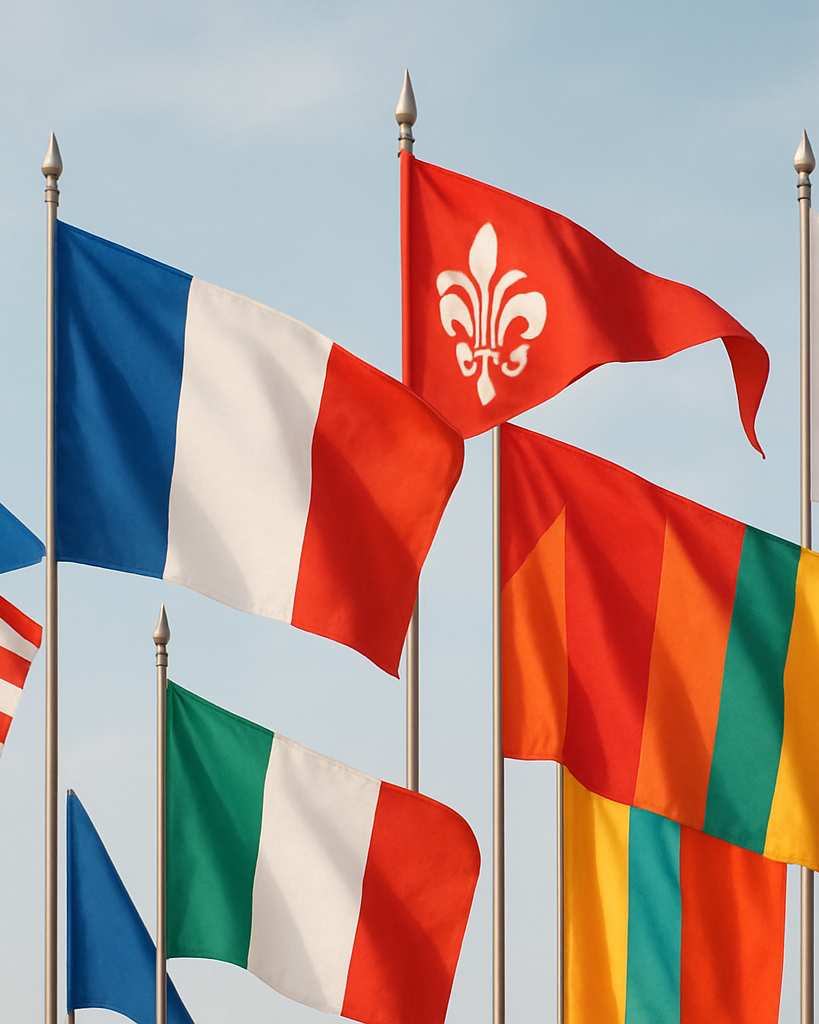
 Nylon is the gold standard for outdoor flag construction and has been the preferred material of professional flag manufacturers for decades. It is a lightweight, tightly woven synthetic that catches even the lightest breeze, meaning your United Arab Emirates Outdoor Flag will fly fully extended and visibly impressive on calm days when a heavier fabric would hang limp. Nylon accepts solution-dyed or screen-printed pigments extremely well, delivering the vivid red vertical stripe and the precise green, white, and black horizontal bands that the UAE flag requires under FIAV color standards. UV inhibitors woven into commercial-grade nylon deliver roughly 80% UV resistance, and a quality outdoor nylon flag typically survives 6 months to 1 year of continuous outdoor display before noticeable fading occurs — longer with proper care. The main weakness of nylon is that it is lighter, so in sustained winds above 35 mph (56 km/h), the fabric undergoes rapid mechanical stress at the fly hem and grommets, shortening its lifespan to as little as 3–4 months if the flag is not rotated or retired indoors during storms.
On the positive side, nylon dries quickly after rain — sometimes within 30 minutes in warm weather — which prevents the mildew and fabric rot that can develop when a damp flag is left rolled on a pole overnight. Nylon is also the lighter of the two materials, making it easier to handle, fold, and store per proper flag etiquette guidelines. For embassies, hotels, and international event venues displaying the flag for united arab emirates alongside other national flags, nylon's lively movement creates the best visual impression. The downside in very hot and dry climates, such as the Arabian Peninsula or the desert American Southwest, is that intense UV exposure without shade can accelerate color degradation faster than in temperate climates, so rotating two flags on a six-month cycle is good practice.
Polyester UAE Flags: Strengths and Weaknesses
 Polyester is a heavier, denser weave that trades some of nylon's graceful flight for considerably greater mechanical durability. The added weight and tight construction mean that high-tensile polyester can withstand winds up to 50–60 mph (80–97 km/h) with far less fraying at the fly end, which is why it is the preferred fabric for harbor flagpoles, rooftop installations, and any application where the flag cannot easily be brought indoors during storms. The United Arab Emirates Handheld Flag in polyester also demonstrates the material's excellent color stability — polyester holds printed or dyed pigments extremely well over long periods, and its heavier structure resists the fading effect of reflected heat from pavement or concrete, which is a real consideration for flags displayed in southern US states or at outdoor summer events. Two-ply polyester, in particular, can reach a lifespan of 1 to 2 years under continuous outdoor exposure when reinforced with canvas headings and brass grommets. The notable weakness of polyester is that it needs a firm, steady wind to fly flat and fill completely; on calm days, a heavy polyester flag will sag or wrap around the pole, which is visually underwhelming and creates pressure creases in the fabric over time.
Polyester is also less forgiving of moisture retention. Because the weave is denser, rain and dew take longer to evaporate, and flags left wet on metal poles in humid coastal climates can develop mildew staining within weeks if not periodically lowered and aired out. Weight-wise, a 4 ft × 6 ft (122 cm × 183 cm) polyester flag can be two to three times heavier than an equivalent nylon flag, which adds stress to lighter flagpole halyard systems. If you are curious about how proper flag care extends the life of any fabric, our blog post on the care guide for a fade-free Ivory Coast flag covers washing, drying, and storage principles that apply equally to the UAE flag regardless of material.
Choosing by Use Case: Outdoor, High Wind, and Ceremonial Display
The right material depends almost entirely on the specific display environment and purpose. Here is a practical breakdown by common use case:
- Standard outdoor pole, 15–25 ft (4.6–7.6 m), moderate wind: Nylon 3 ft × 5 ft or 4 ft × 6 ft. Best balance of visibility and durability for office parks, schools, embassies, and retail locations.
- Tall outdoor pole, 25–40 ft (7.6–12.2 m), coastal or rooftop: Polyester 5 ft × 8 ft (152 cm × 244 cm) or 6 ft × 10 ft (183 cm × 305 cm). The heavier fabric handles sustained strong winds without shredding at the fly hem.
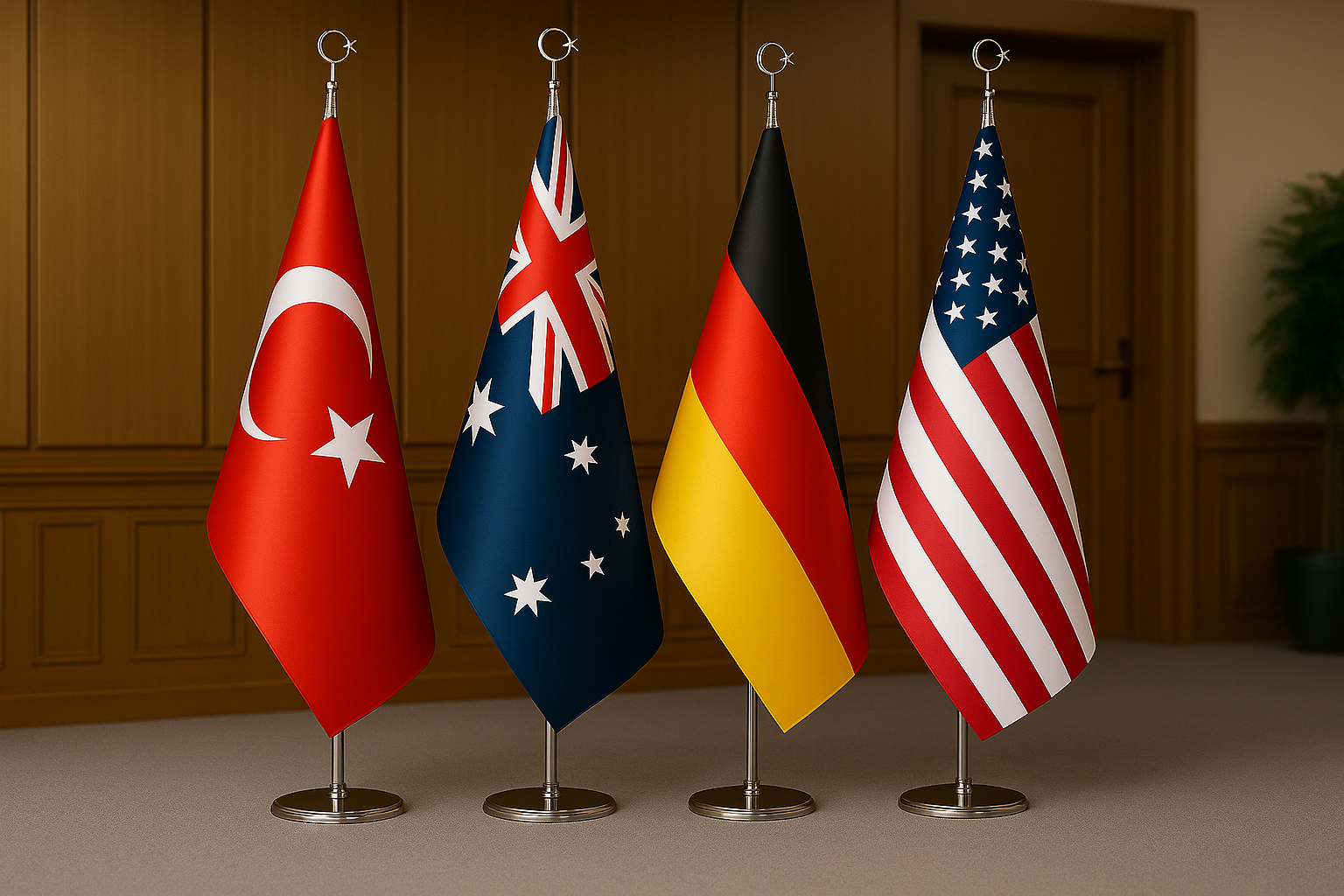
- Indoor ceremonial or stage display: Either material works indoors, but nylon's sheen and brighter dye absorption give it a slight visual edge under artificial lighting. A 3 ft × 5 ft nylon flag on an 8 ft (2.4 m) indoor pole is the most common ceremonial configuration in diplomatic and corporate settings.
- Parades, events, and handheld use: Polyester mini flags or lightweight nylon handheld flags are both suitable. Mini flags used at parades or cultural events do not face the same longevity demands as outdoor pole flags, so material is less critical — print quality and stick attachment matter more.
- Temporary display for sports or travel: A compact nylon or polyester handheld flag works perfectly and is easy to pack and carry.
For background on official UAE flag proportions and size standards — which directly affect which size flag you should order for a given pole height — our sibling article The United Arab Emirates Flag: History and Official Sizes covers the official proportions, pan-Arab color symbolism, and government display regulations in full detail.

MENA Countries Flags Collection
A curated selection of Middle East and North Africa national flags — including the UAE — available in both nylon and polyester, sized for poles from 15 ft to 40 ft.
Browse Collection →Lifespan and Total Cost Compared
Nylon flags generally offer a longer lifespan per unit of weight in moderate-wind environments, while polyester's advantage becomes apparent only in genuinely harsh conditions. In typical moderate-wind outdoor display, a quality nylon UAE flag lasts 6 to 12 months before color fading or fly-end fraying requires replacement. A comparable polyester flag in the same moderate-wind environment tends to last slightly less — around 5 to 10 months — because the heavier fabric experiences greater stress on calm days when it wraps around the pole and on gusty days when it snaps under load. However, in high-wind environments, that equation reverses sharply: polyester can reach 12 to 24 months of service life, while nylon may only survive 3 to 6 months before the fly hem shreds.
From a total-cost-of-ownership perspective, the material that costs more upfront is not always the most economical choice over a year. The real driver of cost-efficiency is matching the fabric weight to your actual wind exposure. Buying a polyester flag for a sheltered indoor pole wastes its durability advantage, while buying a lightweight nylon flag for an exposed harbor pole leads to early replacement. The factors that determine which flag delivers the best value per year of display include: average wind speed at your location, pole height and halyard type, whether the flag is lowered during storms, and how frequently you perform basic maintenance such as cleaning and hem inspection. For related guidance on extending fabric life, see our article on how to clean and store a Congo flag — the washing and storage advice there applies directly to any outdoor nylon or polyester national flag.
If you display multiple national flags together — for example, UAE alongside US and other partner nation flags — consistent material choice across all flags creates a more uniform appearance and simplifies your replacement schedule. Buyers purchasing five or more flags at once can benefit from bulk pricing, which effectively lowers the per-flag cost and makes it practical to keep one replacement flag in reserve for each pole.
Summary: Making the Right Choice for Your Display
The national flag of the United Arab Emirates deserves to be displayed in a material that matches its environment. Choose nylon for standard outdoor poles, indoor ceremonial settings, and moderate-climate locations where the flag's lively movement in light winds matters. Choose polyester for high-wind coastal or rooftop installations, tall poles above 25 ft (7.6 m), and any site where the flag cannot be lowered during heavy weather. Both materials are fully capable of rendering the UAE flag's iconic red, green, white, and black accurately and durably when manufactured to professional standards with reinforced headers and solid brass grommets.
To find the right size and material for your specific pole and setting, browse the full Country Flags collection or go directly to the United Arab Emirates Outdoor Flag product page for outdoor pole options and the United Arab Emirates Handheld Flag for events and travel use. You can also explore Country Desk Flags for indoor office and diplomatic desk display. Bulk pricing is available for corporate, government, and institutional orders — contact us directly for volume quotes.