

Government procurement officers sourcing outdoor flags for government buildings need flags that meet strict sizing standards, survive harsh weather year-round, and arrive on budget — ideally through a single reliable wholesale partner. This guide covers everything from city hall outdoor flag sizing charts and pole-height ratios to material selection and how to structure a municipal flag bulk order that clears procurement approval quickly.
Understanding Flag Sizing Standards for Government Properties
The correct flag size for a government building is determined primarily by the height of the flagpole, with the US Flag Code (4 USC §§ 1-10) and longstanding federal guidelines recommending that flag length equal approximately one-quarter to one-third of the pole height. For a standard 20 ft (6.1 m) pole at a smaller municipal facility, a 4×6 ft (1.2×1.8 m) flag is appropriate; a 30 ft (9.1 m) pole typically takes a 5×8 ft (1.5×2.4 m) flag; and the 40 ft (12.2 m) poles common at county courthouses and city hall plazas are best paired with a 6×10 ft (1.8×3 m) flag. Larger ceremonial installations — state capitol grounds, federal plazas, or high-traffic civic squares — often use 60 ft (18.3 m) or 80 ft (24.4 m) poles requiring 10×15 ft (3×4.6 m) or even 10×19 ft (3×5.8 m) flags. Getting these proportions right is not just an aesthetic decision; flying an undersized flag on a tall pole can be interpreted as a sign of disrespect under federal protocol, while an oversized flag creates dangerous wind-load stress on both the fabric and the pole hardware. Procurement officers should document their pole inventory — including pole height, butt diameter, and truck/pulley type — before issuing any request for quotation so that vendors can match flag size, header weight, and grommet spacing precisely.
Most government sites operate multiple poles simultaneously: a set of three poles at a city hall entrance might display the US flag at center, the state flag to the viewer's left, and the municipal flag to the right, all at the same height and on identical-length poles. Under this arrangement, all three flags should be the same size so that no single flag appears to take visual precedence over another. This consistency requirement makes bulk outdoor flags for county buildings and municipal campuses a natural fit for a single vendor relationship, ensuring dye-lot color consistency across all units ordered in a single run.
Nylon vs. Polyester: Choosing the Right Fabric for Public Buildings
For most outdoor pole flags for public buildings, 200-denier nylon is the preferred material when wind conditions are moderate and color vibrancy is the priority, while 2-ply or spun polyester is recommended for high-wind coastal or Great Plains sites where durability outweighs brightness. Nylon flags fly beautifully in light-to-moderate breeze, dry quickly after rain, and produce vivid, saturated colors under direct sunlight — an important factor when a city hall flag serves as a visual anchor for civic identity. Nylon flags rated at 80% UV resistance typically deliver a 6-month to 12-month service life under daily outdoor exposure in high-sun climates such as Arizona or Florida, while the same flags can last 18 to 24 months in the Pacific Northwest or the Upper Midwest where UV intensity is lower. Polyester flags — particularly heavy-duty 300-denier woven polyester — are significantly heavier and sturdier, making them resistant to the fraying and tearing that comes from sustained high-wind exposure above 25 mph (40 km/h). Government facilities in coastal areas, high-altitude mountain communities, or open prairie environments where sustained wind is the norm typically achieve a 40–60% longer service life with polyester compared to nylon of equivalent construction quality. The trade-off is that polyester flags hang stiffer, look less dynamic in a light breeze, and are heavier to handle during raising and lowering ceremonies, which may matter for buildings where daily colors are performed.
A third option gaining traction in government flag procurement is knitted polyester, sometimes marketed as "SolarMax" or similar trademarked weaves. These fabrics combine the fly-ability of nylon with improved UV and wind resistance, typically achieving 80–90% UV blockage and a 12- to 18-month average service life at coastal installations. For procurement officers managing multi-site portfolios with varied climate conditions, specifying knitted polyester as the baseline fabric simplifies vendor conversations while still accommodating site-specific upgrades to heavier woven polyester where wind data justifies it.
Header, Grommet, and Hardware Specifications That Matter
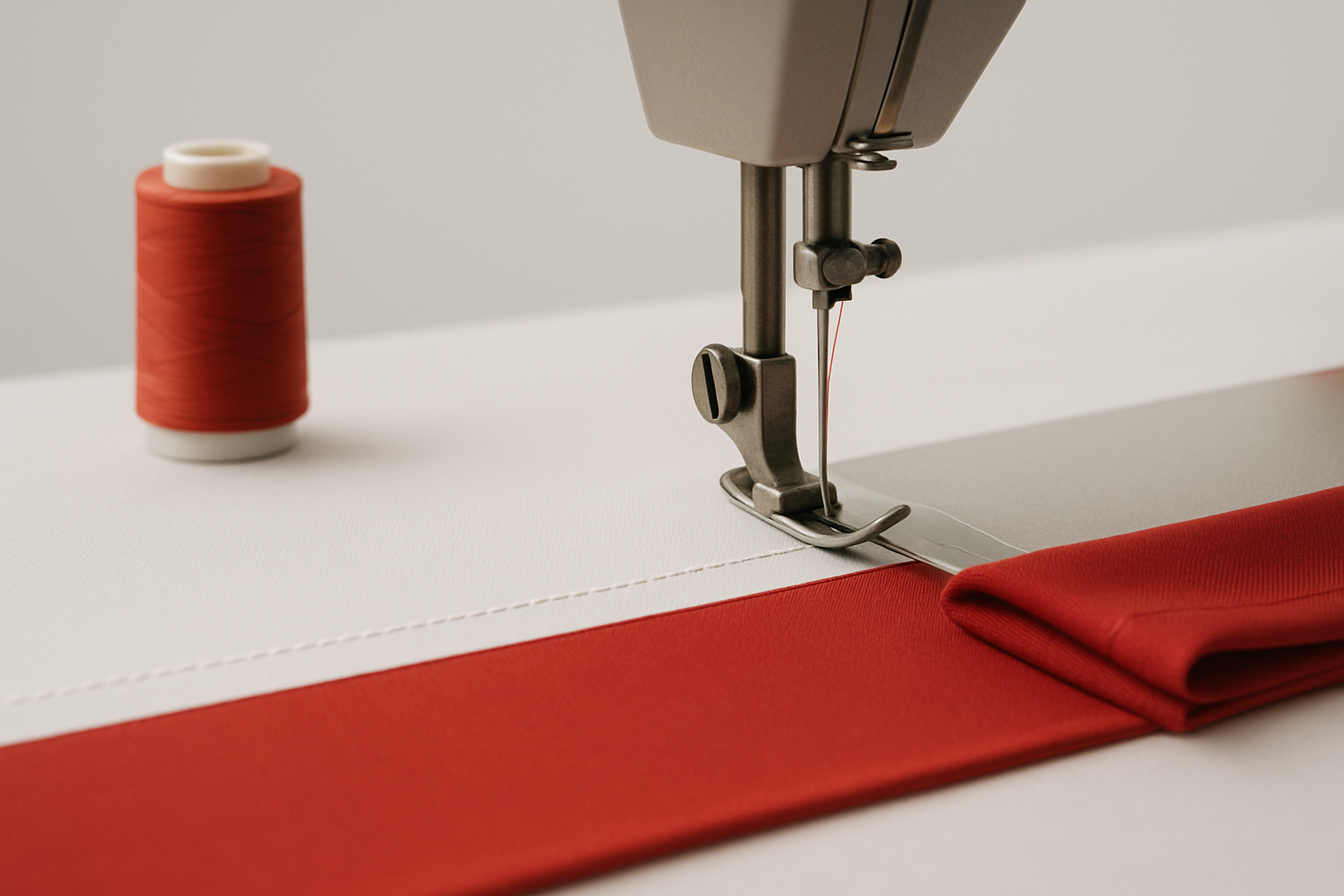
A government-grade outdoor flag should feature a canvas header of at least 2 in (5 cm) width, brass grommets no smaller than #2 (roughly 0.5 in / 12.7 mm inner diameter), and lock-stitched fly-end hem reinforcement to prevent unraveling at the point of highest stress. These construction details are not cosmetic — they are the difference between a flag that survives a full season and one that requires emergency replacement after the first major storm. Procurement specifications should explicitly call out double-needle lock-stitched seams throughout, quadruple-stitched fly hem, and UV-resistant thread, because vendors offering lower unit prices sometimes reduce costs by cutting these details without disclosing it in marketing materials. The header material matters too: a white cotton canvas header is traditional and durable, but some manufacturers now offer polyester canvas headers that better resist mildew in humid Southern climates. Grommet corrosion is a common failure point in coastal environments — brass grommets are standard, but stainless steel grommets should be specified for any installation within 5 miles (8 km) of a saltwater body. For large flags (6×10 ft / 1.8×3 m and above), a rope-and-toggle attachment system is often preferable to grommets alone, as it distributes load more evenly across the header and reduces stress concentration at individual grommet holes.
City Hall Outdoor Flag Sizing Reference Chart
A standardized sizing reference helps procurement officers quickly match pole inventory to order quantities without back-and-forth with vendors. The table below reflects widely accepted federal and state guidelines, though individual agencies may have supplementary requirements based on local ordinance or architectural review board standards.
- 15 ft (4.6 m) pole: 3×5 ft (0.9×1.5 m) flag — suitable for entrance markers, small municipal annexes, and park pavilions
- 20 ft (6.1 m) pole: 4×6 ft (1.2×1.8 m) flag — standard for branch libraries, fire stations, and smaller municipal buildings
- 25 ft (7.6 m) pole: 4×6 ft or 5×8 ft (1.5×2.4 m) — medium-traffic government facilities, DMV offices, and district offices
- 30 ft (9.1 m) pole: 5×8 ft (1.5×2.4 m) flag — the most common configuration for city hall main entrances and county administration buildings
- 40 ft (12.2 m) pole: 6×10 ft (1.8×3 m) flag — county courthouses, civic centers, and state agency regional offices
- 50 ft (15.2 m) pole: 8×12 ft (2.4×3.7 m) flag — large civic plazas, fairgrounds, veterans memorials
- 60–80 ft (18.3–24.4 m) pole: 10×15 ft to 10×19 ft (3×4.6 m to 3×5.8 m) — state capitals, federal buildings, major ceremonial installations
When ordering replacement flags for an existing fleet, procurement officers should also order 10–15% overage to account for in-season failures, ensuring that a weather event or vandalism incident does not leave a public building without a flag while a reorder is in transit.
 Government-grade USA outdoor flags manufactured for daily outdoor use on public building poles combine heavy-duty nylon or polyester construction with reinforced headers, brass grommets, and UV-resistant stitching throughout. For municipal procurement teams, ordering from a dedicated manufacturer rather than a retail supplier ensures that specifications such as canton proportion, fly ratio, and Pantone-matched color values are held to consistent standards across every unit in a batch. Asya Bayrak produces flags to FIAV (Fédération internationale des associations vexillologiques) construction guidelines, meaning that canton size, star spacing, and stripe width all conform to the proportions established by Executive Order 10834 for the United States flag. This level of manufacturing precision matters for high-visibility civic installations where deviations in proportion are immediately noticeable to the public and to inspection officers. Ordering through a wholesale government channel also provides the documentation trail — including material certifications, country of origin declarations, and lot numbers — that most public procurement systems require for audit compliance.
Structuring a Municipal Flag Bulk Order for Procurement Approval
A well-structured wholesale outdoor American flags government purchase order reduces approval delays by anticipating the documentation requirements of public procurement systems before the requisition is submitted. At minimum, a government flag purchase order should specify: flag size (length × width in both imperial and metric), fabric type and denier weight, header material and width, grommet material and size, finish type (lock-stitched vs. overlocked fly hem), quantity per SKU, unit price and extended price, estimated lead time, and the vendor's tax identification number and cage code if applicable for federal purchasing. Most county and municipal purchasing departments also require a product sample or material data sheet for orders exceeding a certain dollar threshold — commonly $2,500 to $5,000 depending on jurisdiction — so requesting sample flags in advance of the main order can significantly accelerate approval timelines. Bulk pricing for municipal flag bulk orders typically activates at 10–12 units per SKU, with deeper discount tiers at 25, 50, and 100+ units; procurement officers should consolidate orders across departments, parks, and satellite offices to reach the most favorable tier. For multi-year maintenance contracts, a blanket purchase agreement specifying an annual quantity with quarterly release orders provides price stability while giving individual facilities the flexibility to draw down inventory as needed rather than storing large quantities on-site.
Logo Printed Outdoor Pole Flags
Custom logo-printed outdoor pole flags for municipal seals, county insignia, and agency branding — produced to government specification standards with bulk pricing available.
Browse Collection →Flagpole Hardware, Accessories, and Maintenance Planning
A complete government flag procurement program accounts for more than just the flags themselves — the total cost of ownership includes poles, hardware, replacement parts, and labor for inspection and rotation. Procurement officers managing a portfolio of 20 or more flagpoles should implement a scheduled rotation program in which flags are inspected every 30 days and replaced at the first signs of fraying at the fly end, color fading beyond 20%, or header damage. A practical approach is to maintain a 2:1 flag-to-pole ratio so that one set of flags is always in service while an identical set is cleaned, inspected, and ready for immediate swap-out. Hardware failures — particularly snap hooks, swivel clips, and rope (halyard) deterioration — are responsible for a significant share of emergency flag calls at municipal properties; including flagpole accessories and replacement hardware in the annual procurement cycle prevents reactive purchasing at retail prices. Internal halyards with locking cleats provide both security (reducing the risk of unauthorized lowering) and longevity compared to external rope systems that are exposed to UV and weather 365 days a year. For new construction projects or capital improvement programs that include flagpole installation, specifying commercial-grade aluminum poles with welded base plates, ball ornaments, and truck-and-pulley systems rated for the expected flag weight and local wind load (available from local building code wind-zone maps) ensures that the structural investment properly supports the flag program for 20+ years.
Custom Municipal and County Flags: Seals, Logos, and Special Orders
Beyond standard American flags, many municipal properties fly custom city, county, or agency flags that require precise reproduction of official seals, coat-of-arms designs, or departmental insignia — making material and printing specifications even more critical than for standard commercial flags. Custom outdoor flags for government buildings are typically produced using one of three methods: dye-sublimation printing on polyester (fastest turnaround, lowest minimum quantities, excellent color range), screen printing for simple designs with spot colors (highly durable ink adhesion, ideal for 2–4 color municipal seal designs), or embroidered appliqué for the most formal ceremonial applications. Dye-sublimated polyester flags are now the most common choice for bulk outdoor flags for county buildings because modern inks achieve 80–90% UV resistance and the per-unit cost drops substantially at quantities of 25+. Pantone color matching is essential when reproducing official seals — most governmental heraldry has formally specified Pantone values, and deviations of even a few points on the color wheel can create visible inconsistencies between flags flying side by side on a multi-pole installation. Procurement specifications for custom municipal flags should always include a color-proof approval step before production begins, with a designated approving authority (typically the city or county attorney's office, or the department that owns the seal) signing off on a physical or digital proof. The logo-printed outdoor pole flags collection at Asya Bayrak supports exactly this workflow, with proof approval built into the order process and bulk pricing that rewards consolidated multi-department orders.
Frequently Asked Questions
What flag size should I order for a 30 ft flagpole at a city hall entrance? +
Is nylon or polyester better for outdoor government flags in high-wind areas? +
What is the minimum order quantity for a municipal flag bulk order? +
How often should government buildings replace their outdoor flags? +
Does the US Flag Code specify flag sizes for government buildings? +
Can I order custom city or county seal flags in the same bulk order as American flags? +
What documentation should I include in a government flag procurement RFQ? +
Are indoor ceremonial flags available alongside outdoor flag bulk orders for government facilities? +
Equipping your city, county, or municipal portfolio with correctly sized, professionally constructed flags is a straightforward process when the right specifications, sizing guidelines, and vendor relationships are in place. Start by auditing your pole inventory, matching each installation to the appropriate flag size from the reference chart above, and consolidating departmental needs into a single purchase order to maximize bulk pricing. For standard outdoor American flags, browse the USA outdoor flag product page for size and material options; for custom municipal and county seal flags, the logo-printed outdoor pole flags collection supports full-color custom production with proof approval built in. Don't forget to include flagpole hardware and accessories in your annual cycle to avoid reactive retail purchasing when snap hooks and haly ards fail mid-season. Bulk pricing is available for corporate and government orders — contact Asya Bayrak directly to request a formal quote, material data sheets, and sample flags for procurement approval.