










Police departments and law enforcement agencies across the United States require precise, dignified flag displays for lobbies, briefing rooms, courtrooms, and ceremonial events — and getting the right indoor flag set, hardware, and protocol right the first time saves both cost and embarrassment. Whether you are outfitting a single precinct or placing a bulk order for an entire county's government buildings, this guide covers everything from US Flag Code compliance and ceremonial flag etiquette to hardware selection and volume pricing. Explore the full range of options in the indoor flags collection to find law enforcement-ready sets that meet both federal guidelines and the professional standards your department demands.
Understanding Police Department Flag Display Protocol and US Flag Code
A law enforcement agency's flag display must follow both the US Flag Code (4 USC §§ 1–10) and any applicable state or municipal regulations, with the American flag always holding the position of honor — to the flag's own right, which is the viewer's left — when displayed alongside agency, state, or specialty flags. This is not optional etiquette; it is federal law. In a precinct lobby or briefing room, the typical ceremonial arrangement places the US flag to the right of the speaker's platform, with the state flag to the left and the agency or departmental flag in the third position. For government building flag protocol, any additional flags such as a thin blue line flag for office display or a Fraternal Order of Police banner occupy subsidiary positions and should never exceed the height or prominence of the national colors. Many departments also display the POW/MIA flag, which Congress has authorized to fly in a position of prominence alongside the US flag at federal facilities under 36 USC § 902. Understanding this hierarchy from day one prevents costly re-ordering of hardware and ensures your display earns the respect it deserves every time a citizen, recruit, or dignitary enters your building.
What Flags Does a Law Enforcement Indoor Display Set Typically Include?
A complete law enforcement indoor flag set typically includes five elements: the US national flag, the state flag, the city or county flag, the departmental or agency flag, and either a thin blue line commemorative flag or a POW/MIA flag. Each flag in an indoor ceremonial set is usually sized at 3 ft × 5 ft (91 cm × 152 cm) — the standard for parade and presentation use — although 2 ft × 3 ft (61 cm × 91 cm) desk flags are popular for commander's offices, conference rooms, and media briefing backdrops. The fabric matters considerably for indoor settings: two-ply poly-poplin or heavyweight nylon are preferred because they drape with authority under low-airflow indoor conditions, hold color under fluorescent and LED lighting, and resist the fraying that thinner materials suffer from repeated folding and unfolding during ceremony. Printed finishes should be double-sided when the flag will be viewed from both sides, as is common at reception desks or freestanding floor stands in open lobbies. Many procurement officers overlook the header and grommet specification — indoor flags destined for use with floor stands need canvas headers and brass grommets, while flags mounted on ceremonial poles use a sleeve or fringe finish instead. The state and city indoor flags collection provides correctly finished flags ready for ceremonial pole mounting right out of the packaging.
Choosing the Right Indoor Flag Stand for Government Offices and Precincts
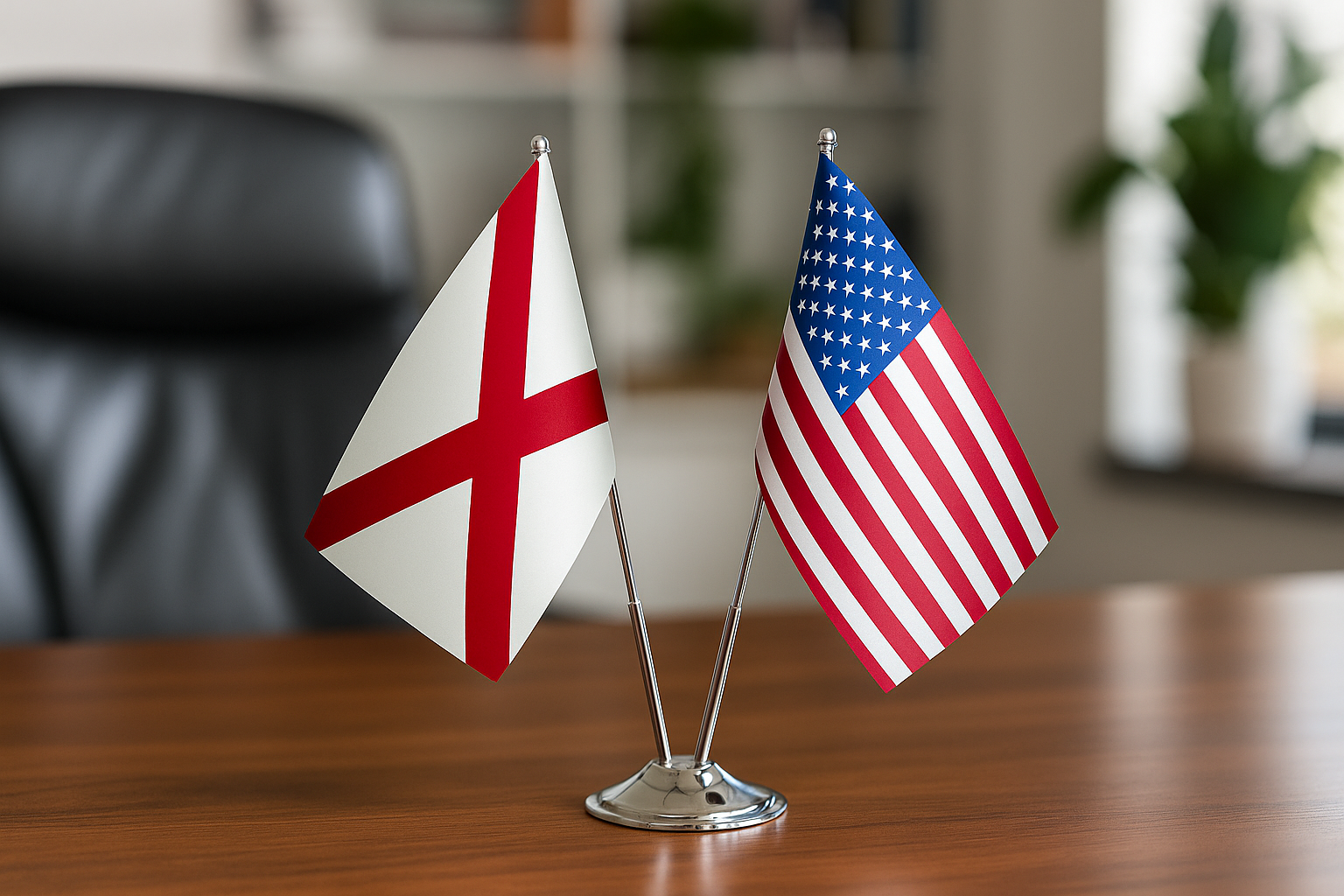
 Selecting the correct indoor flag stand for government offices is not simply an aesthetic decision — stability, finish quality, and configuration capacity all matter in a professional law enforcement environment. For high-traffic areas such as precinct lobbies, roll-call rooms, or courtrooms, a weighted metal base floor stand is the professional standard; lightweight plastic alternatives tip over during crowded events, creating safety risks and an unprofessional appearance. The luxury chrome-gold desk flag stand with premium weighted metal base is available in single, double, triple, quad, and five-flag configurations, making it ideal for everything from a chief's private office to a full ceremonial five-flag display in a government building atrium. The chrome-gold finish aligns with the brass and gold tones traditional to law enforcement insignia, badge hardware, and commendation plaques — a detail that matters during official photography, press briefings, and award ceremonies. For precinct conference rooms, the double or triple configuration accommodates the US flag, state flag, and departmental flag without overcrowding the table surface, and the weighted base ensures the arrangement stays firmly in place even when personnel are moving around the room. When ordering in volume across multiple rooms or facilities, standardizing on a single stand model simplifies installation training and ensures visual consistency across the department's footprint.
Floor-standing ceremonial pole sets require separate consideration. A full floor display for a lobby or courtroom typically uses a 7 ft or 8 ft (213 cm or 244 cm) pole with an eagle or spear ornament top, paired with a weighted base that accommodates the pole diameter. Browse the bases and stands collection for floor stand options rated for indoor ceremonial use, and pair them with matching hardware from the poles and holders collection to build a coordinated system. Consistency across an entire building or department campus — same finish, same ornament style, same pole height — communicates organizational discipline and pride, which is precisely the message a law enforcement agency's entrance should convey.
Thin Blue Line Flag for Office and Ceremonial Use: Rules and Best Practices
 The thin blue line flag is a commemorative symbol rather than an official governmental flag, and understanding this distinction is critical for proper placement in a police department flag display. It should never be flown above or in the place of the American flag, and in formal government settings it is best positioned as the final flag in a multi-flag indoor arrangement or displayed independently on a separate stand away from the official national-colors setup. Many departments place the thin blue line flag in the chief's office, the honor guard staging area, or the department's memorial wall rather than in a primary ceremonial position — this approach honors the symbol's meaning while maintaining strict US Flag Code compliance. Fabric selection is just as important for this flag as for any other: a high-quality, UV-resistant poly-poplin or nylon version will maintain its crisp black-and-white-with-blue-stripe contrast under office lighting for 6 months to 2 years depending on handling frequency, versus budget versions that fade or fray within weeks. When ordering for multiple rooms or an entire department, specifying a consistent size — typically 3 ft × 5 ft (91 cm × 152 cm) for floor stands and 4 in × 6 in (10 cm × 15 cm) for desk sets — across the entire order ensures a unified, professional look. The USA outdoor flag product page provides a useful reference for understanding fabric grades and finish options that translate directly into indoor ceremonial flag quality standards.
Bulk Flags for Police Precincts: How to Structure a Department-Wide Order
Bulk ordering flags for police precincts and government buildings is most cost-effective when procurement officers plan at the set level rather than the individual flag level, grouping all flags for each room type into defined kit specifications before submitting a purchase order. A standard precinct lobby kit, for example, might include one US flag (3 ft × 5 ft / 91 cm × 152 cm), one state flag, one city or department flag, three 8 ft (244 cm) floor stand poles, three weighted bases, and three eagle finials — duplicated across however many facilities the department operates. Desk display kits for offices of rank (captain and above) typically include a five-flag desk stand, a 4 in × 6 in (10 cm × 15 cm) US flag, state flag, city flag, department flag, and thin blue line flag set. Training and briefing room kits are usually a simplified two-flag or three-flag arrangement. Establishing these kit tiers in writing before approaching a supplier allows you to request accurate bulk pricing, ensures nothing is forgotten, and creates a replicable standard that new facilities can simply replicate. Most suppliers, including Asya Bayrak, offer volume pricing that scales meaningfully — typically 15–30% below unit pricing for orders exceeding 20–50 units — which makes the kit-based planning approach pay for itself quickly. For department-wide orders spanning multiple jurisdictions or county governments, a single consolidated purchase order reduces per-unit shipping costs and ensures color-matching consistency across every flag in the order.
Indoor Flags Collection
Ceremonial-grade indoor flags sized and finished for law enforcement and government office display — ready to mount on floor stands, desk stands, or parade poles.
Browse Collection →Ceremonial Flag Set Standards for Law Enforcement Events and Honor Guard
Ceremonial flag sets for law enforcement events — including graduation ceremonies, memorial services, award presentations, and community outreach events — must meet stricter quality standards than everyday office display flags because they are handled repeatedly, transported, and photographed up close. For honor guard use, flags should be made from a minimum 200-denier nylon with reinforced stitching at all seams, a 2-inch (5 cm) canvas header, and solid brass grommets rated for 25 lbs (11 kg) pull strength; these specifications ensure the flag holds its shape under parade carry and survives hundreds of deployment cycles without fraying or color fading. FIAV (Fédération Internationale des Associations Vexillologiques) standards recommend that ceremonial flags use colorfast dyes rated to withstand 80% of UV radiation and maintain color fidelity under standard indoor fluorescent lighting for a minimum of 18 months of regular use. Gold fringe is a traditional embellishment on indoor ceremonial flags and carries no special legal significance under the Flag Code, despite common misconceptions — it is purely decorative and adds a dignified, formal appearance appropriate for law enforcement ceremonies. Honor guards should also maintain a rotation schedule for their ceremonial flags, retiring flags that show any fraying, color fading, or physical damage, as a worn flag in a ceremonial context reflects directly on the department's professionalism. Departments hosting annual memorial or badge-pinning ceremonies should budget for flag replacement on approximately a 12-to-18-month cycle for high-use ceremonial sets, factoring this into annual procurement requests alongside uniform and equipment budgets.
Maintenance, Storage, and Replacement Guidelines for Precinct Flags
Proper maintenance of police department flag displays extends service life significantly and reduces the long-term cost of a department's flag program. Indoor flags that are dusted weekly with a soft cloth or low-suction vacuum brush, stored rolled rather than folded when not in use, and kept away from direct HVAC airflow typically achieve a service lifespan of 1.5 to 2 years, compared to 6 to 9 months for flags that are folded, stored in humid conditions, or positioned directly below air conditioning vents. When a flag becomes soiled, hand-washing in cold water with a mild pH-neutral detergent is recommended; machine washing on a gentle cycle at temperatures below 86°F (30°C) is acceptable for nylon and poly-poplin flags, but heat drying must be avoided as it degrades both the fabric and any printed inks. Flags displaying visible fraying at the fly end, color fading that is visible under normal office lighting, or any physical tearing should be retired immediately — US Flag Code Section 8(k) specifies that a worn or tattered flag should be destroyed in a dignified manner, typically by burning in a private ceremony, and many local VFW posts or American Legion chapters will accept and properly retire flags on behalf of government agencies. Establishing a flag inspection protocol as part of a quarterly facilities review — checking header integrity, grommet condition, color fidelity, and fly-end fraying — is best practice for any department that takes its public image seriously. Replacement flags ordered in advance as part of an annual bulk purchase cost significantly less per unit than emergency single-flag orders and ensure the department is never caught with a damaged flag ahead of an important event.
Frequently Asked Questions
What is the correct order for displaying flags in a police precinct lobby? +
What size flags are standard for a law enforcement indoor ceremonial set? +
Can a police department display a thin blue line flag in an official government building? +
How much does a complete indoor flag set for a police precinct typically cost? +
What fabric is best for indoor law enforcement ceremonial flags? +
Does gold fringe on a ceremonial flag have any legal significance under the Flag Code? +
How should a police department retire worn or damaged flags? +
Can I order custom printed departmental flags alongside standard US and state flags in a bulk order? +
Equipping your police department or law enforcement agency with professional, code-compliant flag displays is a straightforward process when you work from the right specifications and partner with a supplier experienced in government and ceremonial orders. Start by browsing the indoor flags collection for ceremony-ready US, state, and specialty flags, then build your hardware package from the bases and stands collection and the poles and holders collection to ensure every element is matched in finish and scale. For desk display setups in offices of rank, the luxury chrome-gold weighted metal desk flag stand in its five-flag configuration delivers the formal, authoritative presentation your leadership offices deserve. Bulk pricing is available for corporate and government orders — contact the Asya Bayrak team with your kit specifications, facility count, and delivery timeline to receive a tailored quote that fits your department's procurement cycle and budget.


