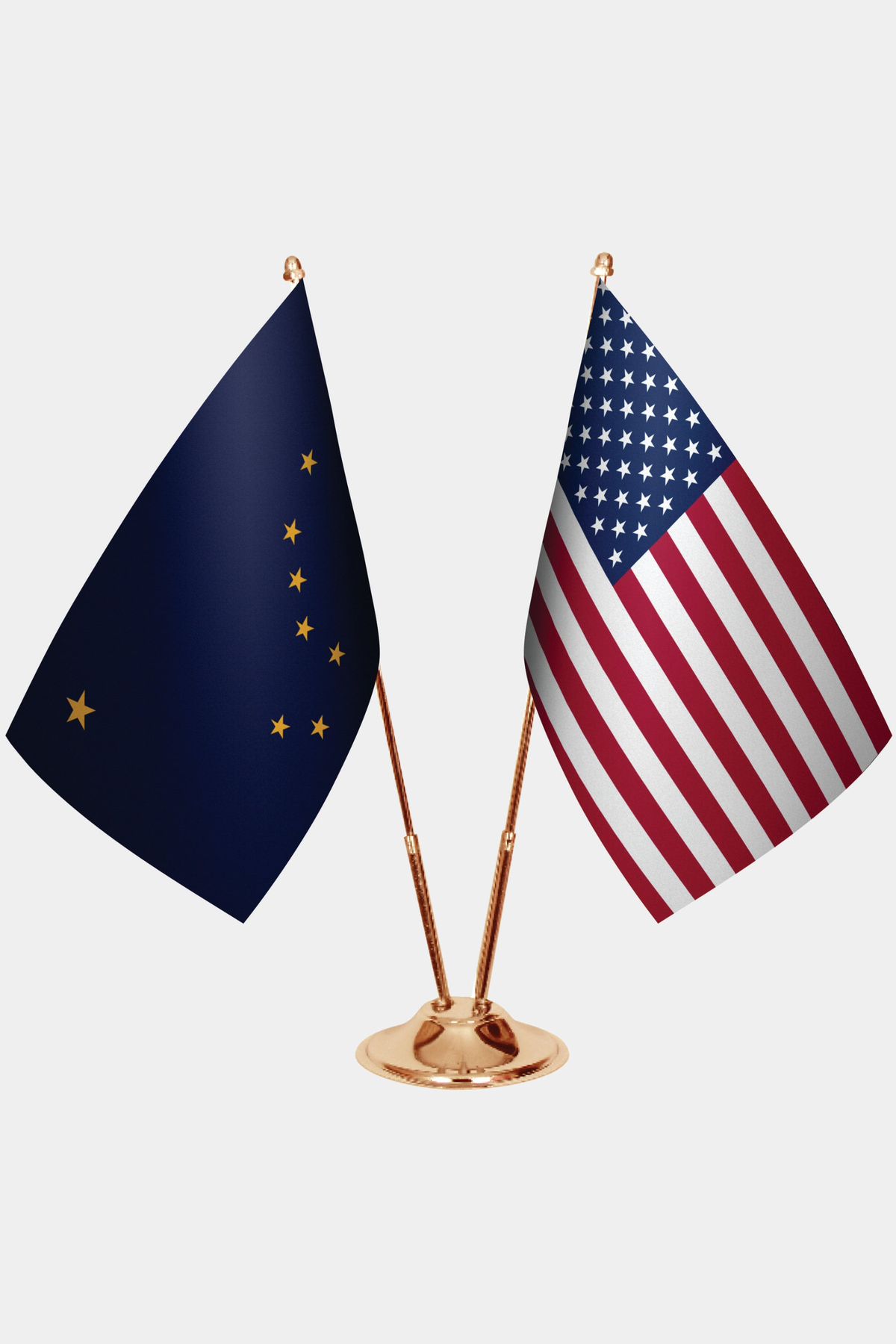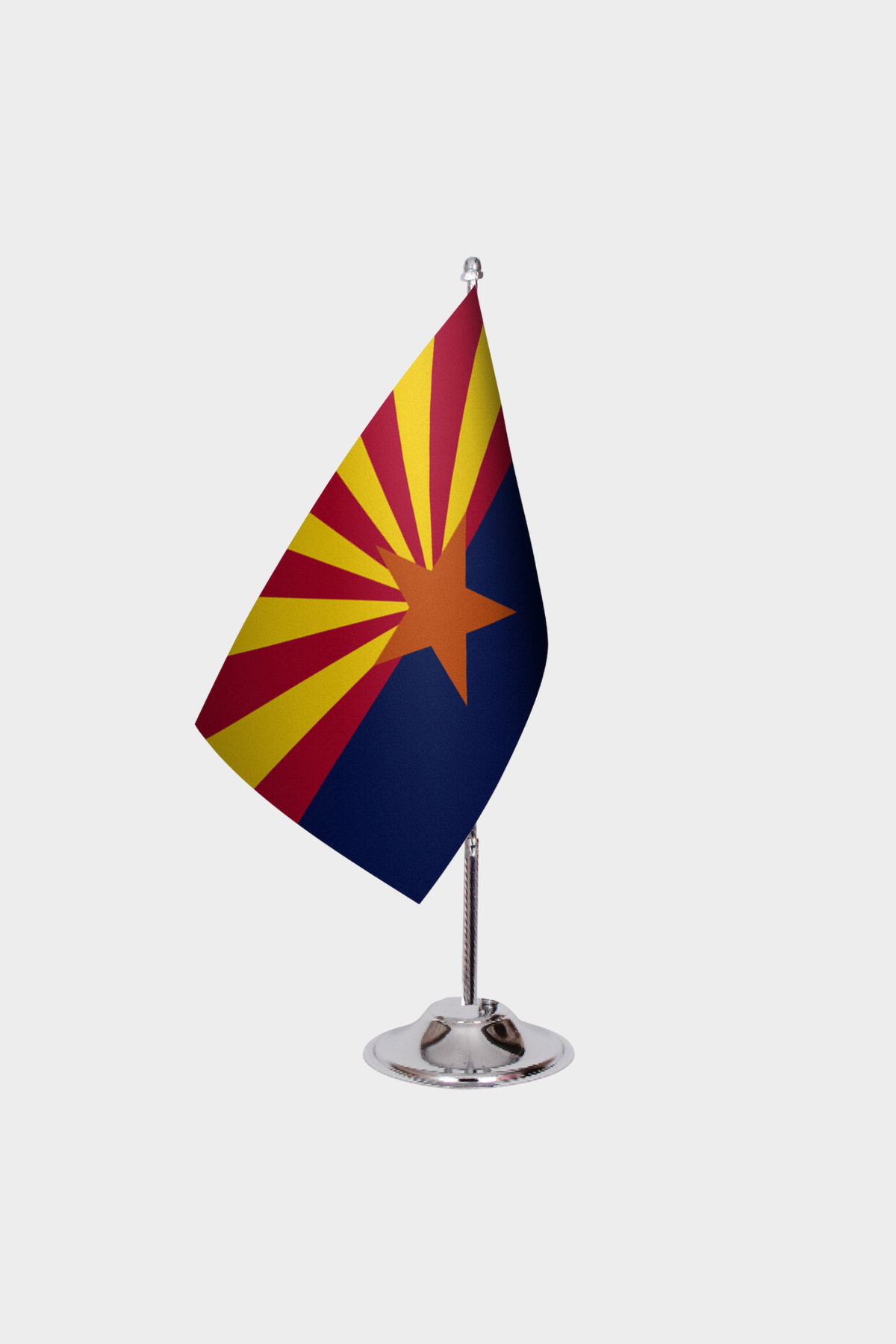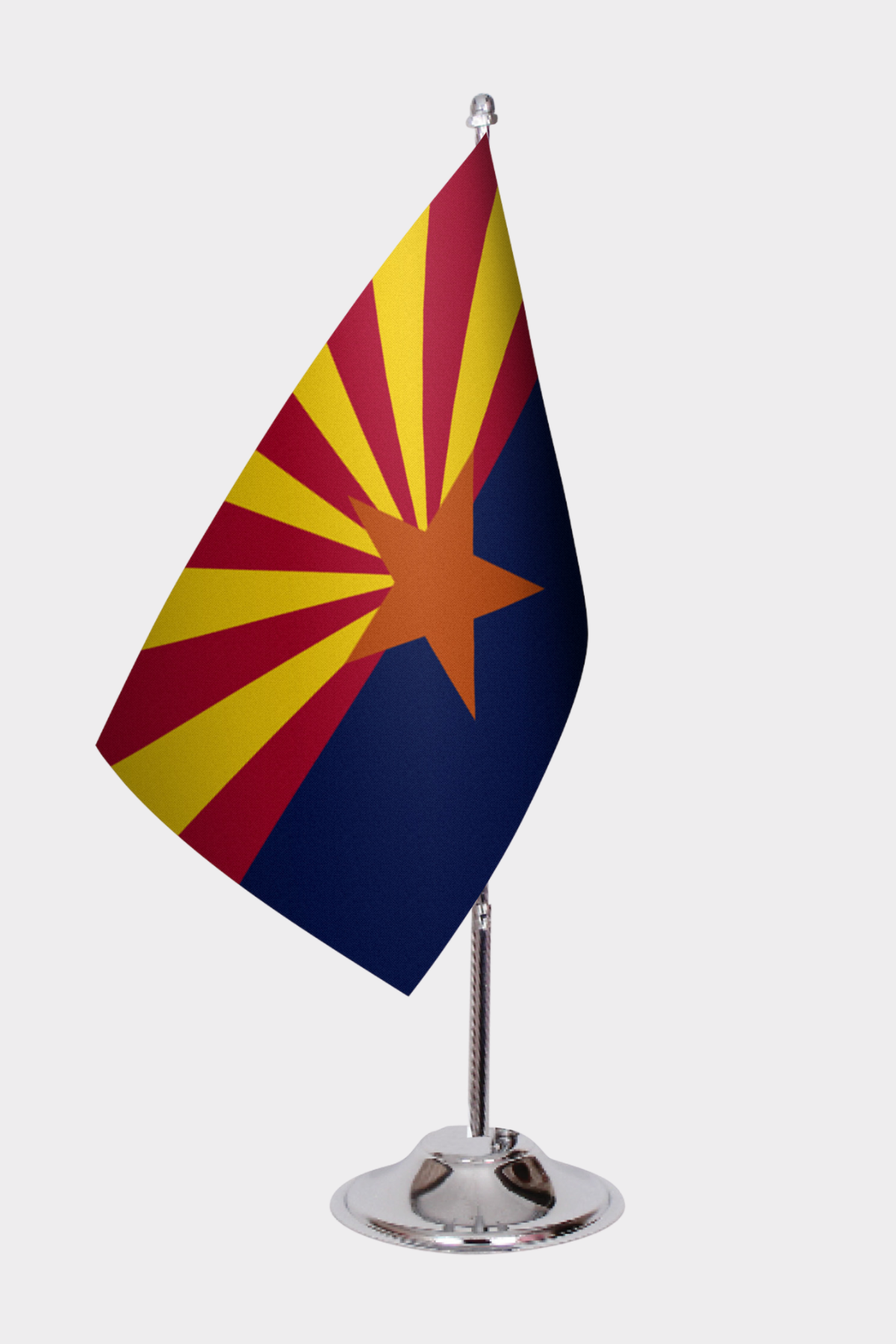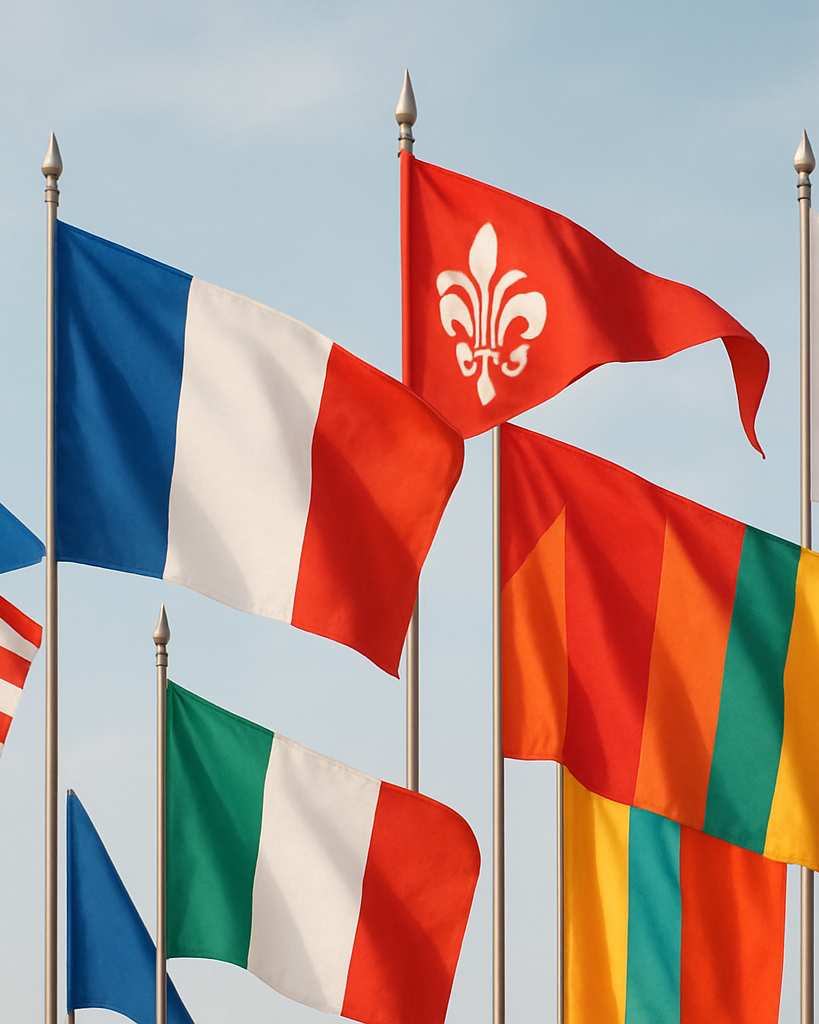

Vertical country flags are standard horizontal national flags rotated 90 degrees and hung from a horizontal crossbar or pole, used primarily in indoor ceremonial settings, conference halls, trade shows, storefronts, and street-pole displays where vertical hanging space is available but horizontal pole mounting is not practical. Knowing when and how to display them correctly — including orientation rules, sizing standards, and country-specific flag codes — ensures your display looks professional and respectful. Whether you are outfitting a convention center, a school gymnasium, or a retail façade, the Vertical Country Flag collection at Asya Bayrak offers purpose-built options designed for exactly these applications.
What Makes a Flag "Vertical" — and Why It Matters
A vertical flag is any national or regional flag that is displayed with its hoist (the side normally attached to the pole) oriented upward rather than to the side, so the flag hangs lengthwise from top to bottom. This distinction matters because some countries — Germany, Austria, and Switzerland among them — produce officially recognized vertical versions of their flags with specific canton or emblem repositioning, while most other nations simply rotate the standard horizontal design, sometimes requiring the flag viewer to mentally tilt their head to read it correctly.
Under FIAV (Fédération internationale des associations vexillologiques) standards, a flag intended for vertical display carries a separate specification from its horizontal counterpart. The standard horizontal flag proportions (commonly 2:3 or 3:5) become a tall, narrow panel when rotated. For example, a 3 ft × 5 ft (91 cm × 152 cm) outdoor flag becomes a 5 ft tall × 3 ft wide (152 cm × 91 cm) hanging banner when rotated — which looks proportionally correct when viewed indoors from 10–20 ft (3–6 m) away. Purchasing flags explicitly manufactured for vertical use, rather than simply rotating a pole flag, guarantees that any text, seals, or non-symmetrical imagery remains legible and correctly oriented.
Common Settings Where Vertical Country Flags Are Used
Vertical flags are most commonly used in four environments: indoor ceremonial halls, street-pole banner programs, trade-show and expo booths, and façade or storefront displays. Each setting has slightly different hardware and sizing requirements that determine which flag format works best.
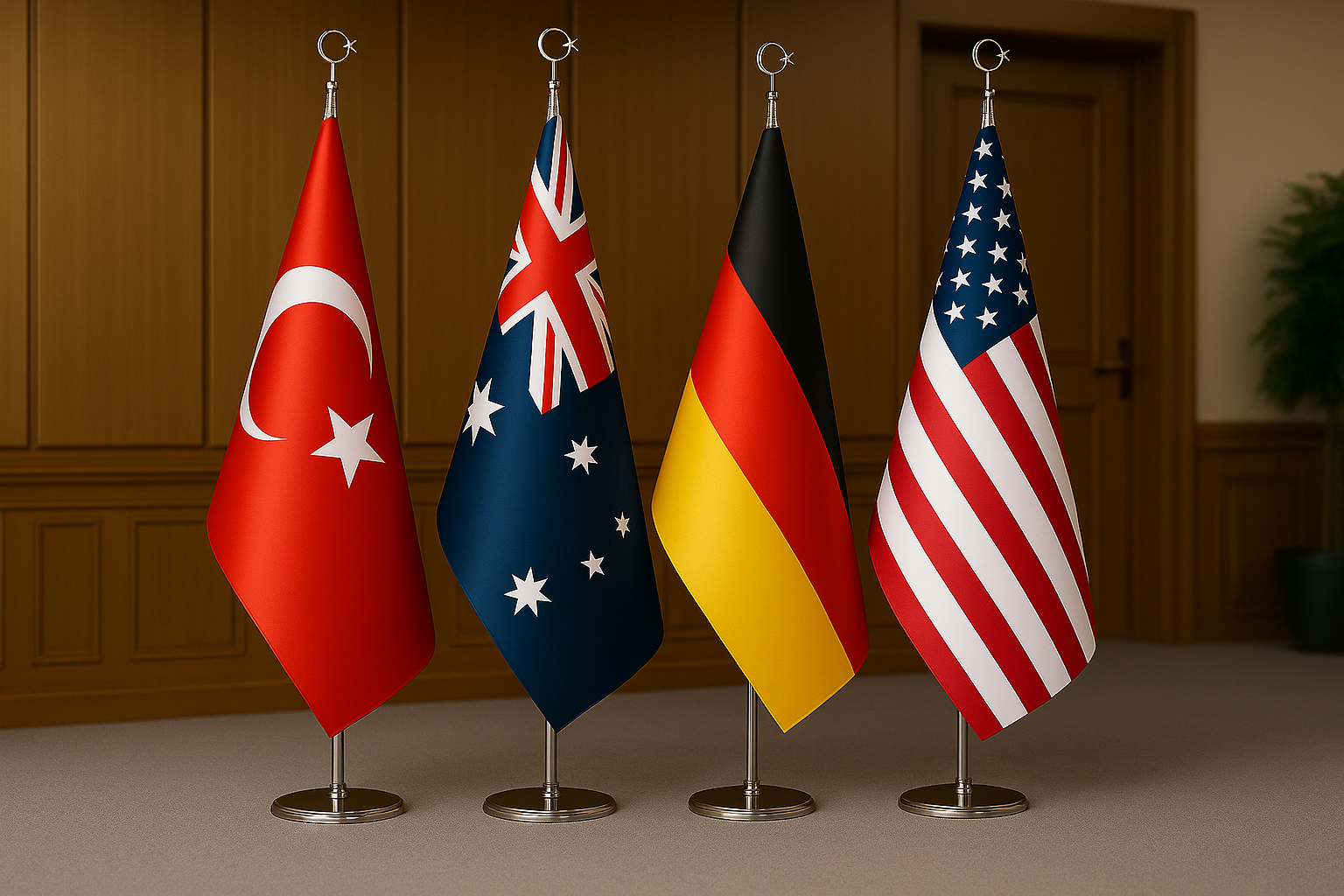
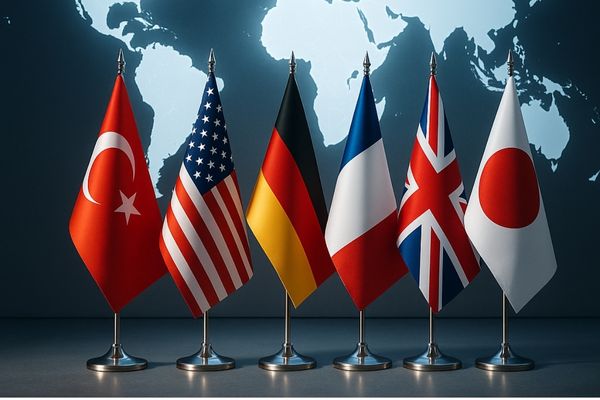
Indoor ceremonial and conference halls are the most prevalent application. The United Nations General Assembly Hall, embassies, and government reception rooms all use vertically hung national flags flanking stages or podiums where ceiling height ranges from 12–30 ft (3.6–9 m). A flag sized 4 ft × 6 ft (122 cm × 183 cm) displayed vertically reads clearly from the audience at 20–50 ft (6–15 m). For multi-nation conference settings, consistent sizing across all displayed nations is essential — our detailed guide on international flag display kits for conference centers covers how to standardize sizing and ordering across 50+ countries simultaneously.
Street-pole banner programs use vertical flags designed with a double-sided sleeve or pole pocket at both the top and bottom so that wind does not whip the banner away from the pole. Municipal governments in the United States commonly mount these on Main Street light poles to celebrate cultural heritage months, international sister-city relationships, or sporting events. These flags are typically 18 in × 36 in (46 cm × 91 cm) to 24 in × 48 in (61 cm × 122 cm) and are manufactured from 150-denier polyester with UV-resistant inks rated for 12–18 months of outdoor exposure.
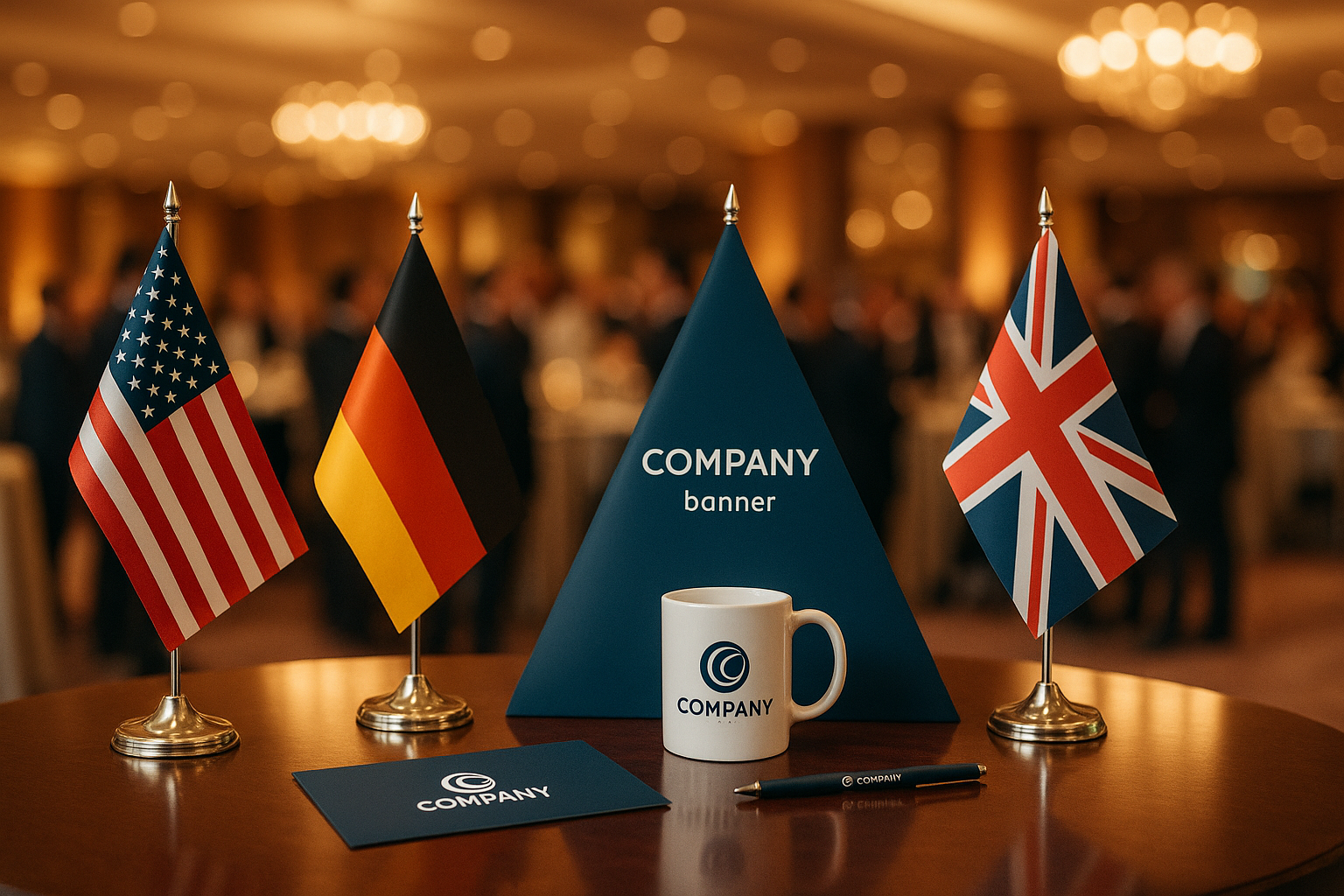
Trade shows and expo booths use vertical hanging banners because they maximize visual impact within a narrow floor footprint. A 2 ft × 6 ft (61 cm × 183 cm) vertical country flag on a retractable stand communicates national identity to attendees walking the aisle from 30 ft (9 m) away. Schools and universities with international student programs rely on the same format — see our resource on international flag programs for multicultural campuses for a full breakdown of ordering vertical flags in bulk for academic settings.
Orientation Rules You Must Follow for Each Country
Most countries require that when a horizontal flag is rotated to hang vertically, the canton (upper-left corner of the horizontal flag) remains in the upper-left position as viewed by the audience — meaning the hoist end faces up and the fly end faces down. However, a meaningful number of countries have codified exceptions or official vertical variants that must be respected.
Germany (Bundesflagge): The German flag law (Gesetz über das Bundeswappen und die Bundesflagge) specifies that when hung vertically, the black stripe must remain at the top left. Rotating it so that black is on the right side is considered incorrect.
Colombia: Colombia's tricolor (yellow, blue, red) follows the same top-hoist rule — the yellow band, which occupies half the horizontal flag's width, should remain uppermost when hung vertically. A common error is flipping the flag so red appears at top, which can be confused with the Ecuadorian flag. The Colombia outdoor flag available at Asya Bayrak is made from 200-denier nylon with reinforced canvas heading and brass grommets, suitable for both horizontal pole flying and vertical display indoors.
Switzerland and Vatican City: Both use square flag proportions (1:1 ratio), so vertical and horizontal display are effectively identical — no rotation adjustment is needed.
Japan, South Korea, and flags with centered emblems: Symmetrical flags are visually forgiving in either orientation. Still, the convention is to treat the left edge of the horizontal flag as the top edge of the vertical flag.
A useful rule of thumb: always confirm whether the country in question has published an official government gazette or flag code specifying vertical display. When in doubt, default to the FIAV convention: hoist up, fly down, canton upper-left.
Sizing and Hardware: Choosing the Right Dimensions
 Selecting the correct size for a vertical country flag depends on the viewing distance, mounting height, and the number of flags displayed in a row. For indoor ceiling mounts at 10–14 ft (3–4.3 m), a flag sized 3 ft × 5 ft (91 cm × 152 cm) hung vertically fills the visual field well when the audience is 15–30 ft (4.6–9 m) away. For ceiling heights above 18 ft (5.5 m) — typical in convention centers and arenas — a 4 ft × 6 ft (122 cm × 183 cm) or even 5 ft × 8 ft (152 cm × 244 cm) flag is more appropriate to maintain legibility. Hardware-wise, a vertical flag needs a top-mount crossbar or bracket, a bottom weight bar to keep the flag taut and prevent folding, and a header with reinforced stitching rated for at least 6 months of continuous display without fraying. For outdoor street-pole applications, dual pole pockets (top and bottom) replace grommets entirely, and the fabric weight should be 150–200 denier polyester rather than nylon, as polyester resists color fading up to 80% longer under continuous UV exposure compared to untreated polyester.
When displaying multiple vertical country flags side by side — as in a row of 10 or 20 nations at a trade show — consistent sizing is non-negotiable. Mixing a 2 ft × 3 ft (61 cm × 91 cm) flag next to a 4 ft × 6 ft (122 cm × 183 cm) flag creates a visually disorganized display that can be interpreted as ranking nations unequally, which may cause diplomatic sensitivity. Order all flags in the same size and hang them at the same height from the floor. Alphabetical ordering by the English name of the country is the most common neutral sequence used in international events, consistent with United Nations protocol.
Material and Print Quality Standards for Vertical Display
The best material for vertical country flags depends on whether the display is indoors or outdoors. For permanent indoor displays, knitted polyester or heavyweight woven polyester (110–150 denier) provides excellent color saturation, minimal fraying at cut edges, and a lifespan of 2–5 years under normal office or lobby conditions. Dye-sublimation printing on these fabrics delivers sharp lines and accurate Pantone color matching — critical for flags where precise color ratios carry constitutional or protocol significance, such as the French Tricolor or the flags of South American nations discussed in our guide on flags of South America.
For outdoor vertical applications, 200-denier nylon or 150-denier polyester with UV-inhibiting inks is the industry standard. Nylon dries faster and flies in lighter winds, making it preferable for humid coastal climates. Polyester is stiffer and better suited for high-wind environments. Both materials, when treated with UV-resistant coatings, should retain 80% of their original color intensity for 6–12 months of continuous outdoor exposure, after which replacement is typically recommended. Stitching at the header and bottom hem should be double-lock stitched with polyester thread (not cotton, which degrades faster outdoors) and reinforced with bar tacks at each corner stress point.
Vertical Country Flag Collection
Purpose-built vertical flags for over 200 nations, available in multiple sizes and outdoor-rated materials for conferences, trade shows, campuses, and street-pole programs.
Browse Collection →Protocol and Etiquette: Avoiding Common Mistakes
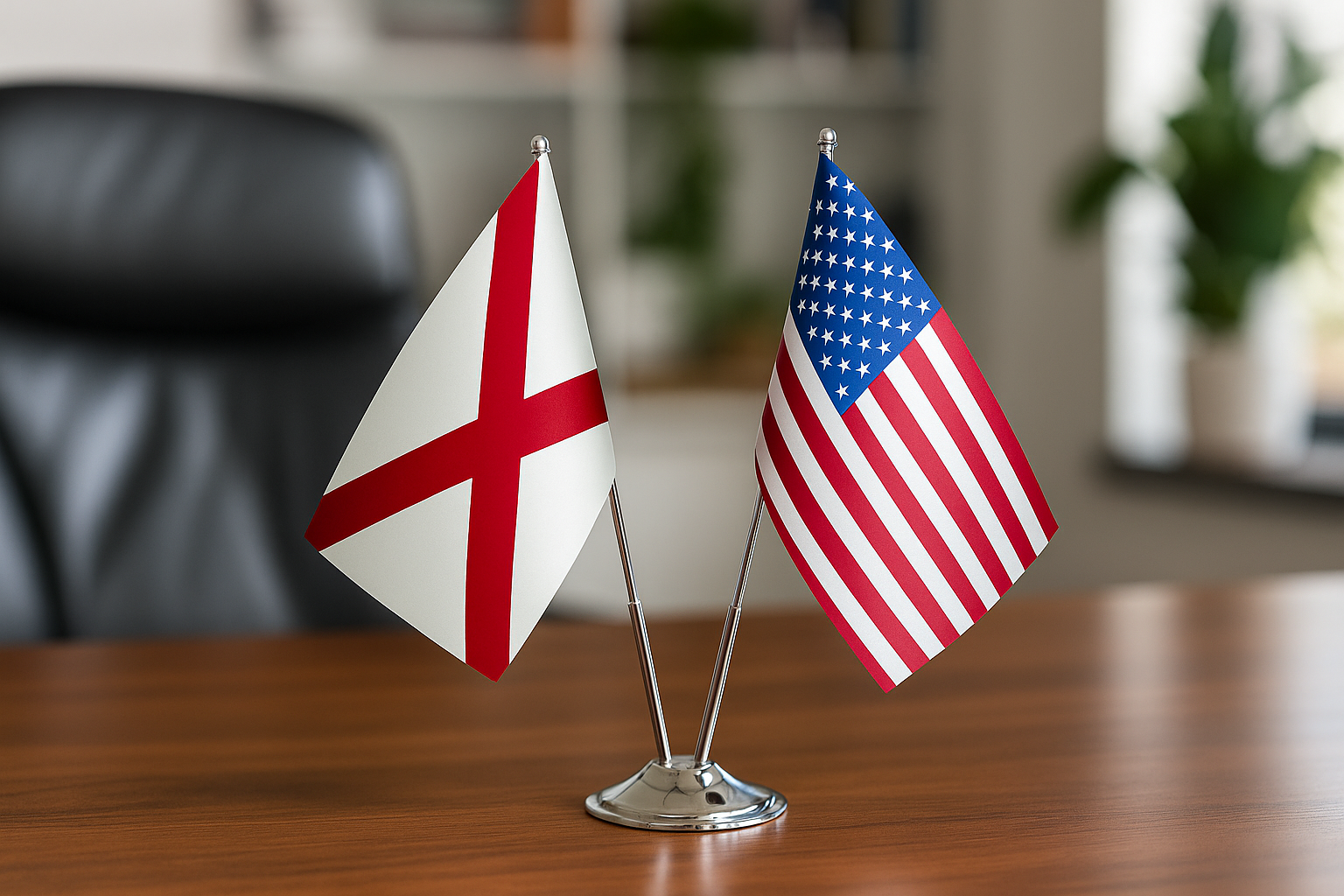
The most important protocol rule for vertical country flags is simple: never display a foreign national flag in a condition — torn, faded, or incorrectly oriented — that would be considered disrespectful of the nation it represents. Under US Flag Code (4 USC §§ 1–10), specific rules govern the American flag, including the requirement that when displayed vertically, the union (stars field) must be at the top and to the flag's own right — which is the observer's upper left. The same directional logic applies as a best-practice courtesy to foreign flags, even though the US Flag Code does not technically govern foreign national flags.
Additional etiquette points worth noting:
- Never hang a vertical flag so that it touches the floor, a wall, or any object beneath it.
- In a multi-nation display, no single country's flag should be physically elevated above another's — all should hang at the same height.
- Illumination is required for any vertical flag displayed 24 hours a day, whether indoors or outdoors; a spotlight directed at the flag face satisfies this requirement.
- Flags displayed at half-staff conventions do not apply to vertically hung flags in the same way as pole-mounted flags; consult the relevant embassy or government protocol office when mourning periods are declared.
- For events featuring flags of African nations, reviewing flags of Africa: meanings and symbols can help ensure you are displaying colors and emblems that are culturally accurate and correctly oriented.
Ordering Vertical Country Flags in Bulk: What to Plan For
Bulk ordering of vertical country flags is the right approach for venues, event companies, government agencies, and schools that display 10 or more nations on a regular basis. Planning ahead with a manufacturer rather than sourcing flags one at a time ensures consistent fabric weight, dye lot color matching, and identical header construction across all flags — differences that become glaringly obvious when flags from multiple sources are hung side by side under the same lighting conditions.
When placing a bulk order, provide the following information to your flag manufacturer: the complete list of countries required, the finished display size needed (width × height in vertical orientation), whether the application is indoor or outdoor, the mounting hardware type (crossbar, dual pole pocket, or grommet), and the required delivery timeline. Lead times for full dye-sublimation print runs of 20–50 unique country designs typically range from 10–21 business days depending on order complexity. For standing institutional programs — such as a university that adds one or two new country flags each academic year — maintaining a relationship with a single manufacturer who archives your print files ensures future reorders match the originals exactly. Explore the full Country Flags collection to find standard horizontal options that can be specified for vertical display at time of order.
Frequently Asked Questions
What is a vertical country flag and how does it differ from a standard flag? +
Can I simply rotate a standard horizontal flag to display it vertically? +
What size vertical flag should I order for an indoor conference hall? +
Which material is best for outdoor vertical country flags? +
How should I order vertical country flags for 20 or more nations? +
Does the US Flag Code apply to vertical displays of foreign national flags? +
What hardware do I need to hang a vertical country flag indoors? +
How long do vertical country flags last before they need to be replaced? +
Whether you are outfitting a single conference room or coordinating a 50-nation trade show pavilion, using correctly oriented, professionally manufactured vertical flags makes a measurable difference in the credibility and polish of your display. For the broadest selection of national flags available in vertical format, browse the Vertical Country Flag collection at Asya Bayrak, or explore the full Country Flags collection to find standard options that can be specified for vertical mounting. For individual nation orders — including the Colombia outdoor flag in outdoor-rated nylon — each product page includes sizing guidance and mounting recommendations. Bulk pricing is available for corporate, government, and institutional orders of 10 or more flags across any combination of nations.