
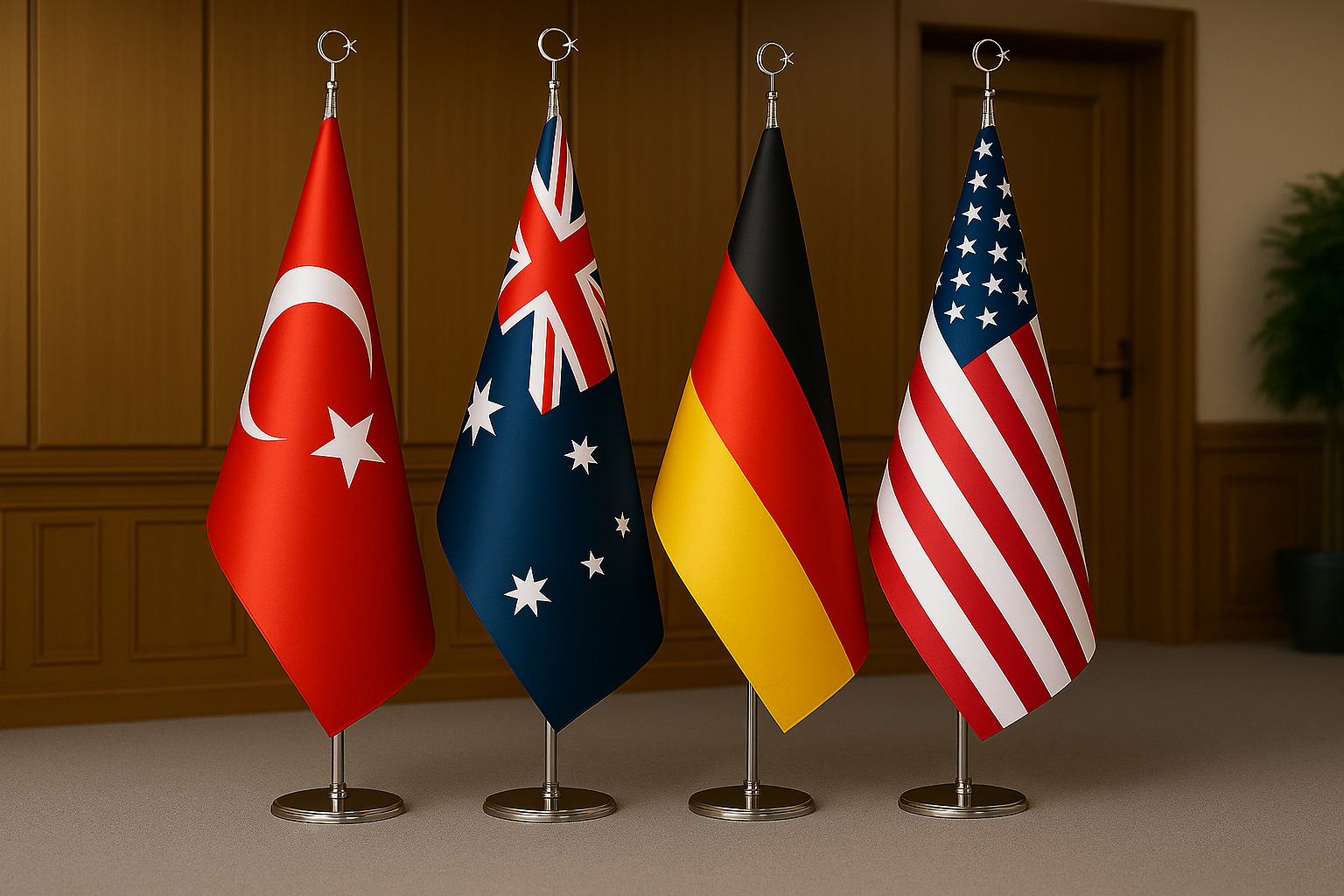

Car flag prices are set by four variables — fabric weight, flag size, print method, and order quantity — and understanding how each one interacts will help you get the best value whether you are buying a single set for a parade or sourcing hundreds of units for a corporate fleet. The Flags collection at Asya Bayrak covers the full range, from standard 12×18 in (30×45 cm) window flags to full hood covers, with pricing that scales efficiently for bulk buyers.
What actually sets the price of a car flag
Four core factors determine what you pay for any car flag: the fabric used, the finished size, the printing process, and the number of units in your order. Knowing how these interact means you can make a genuinely informed comparison rather than simply picking the lowest number on a price list. Material alone can account for a 30–60% swing in unit cost between entry-level and performance fabrics. Printing method adds another layer: direct printing heat-fixed onto knitted polyester is efficient for large runs, while dye-sublimation on satin produces sharper color graduation and suits indoor or presentation-grade flags. Order quantity then multiplies or discounts everything else — set-up costs are amortized across the run, so a 500-unit order routinely lands at a fraction of the per-unit price of a 10-unit sample order. Finally, any value-added feature — reinforced hems, sleeve pockets, double stitching, or a matching pole — adds material and labor cost that is real and worth paying for when longevity matters.
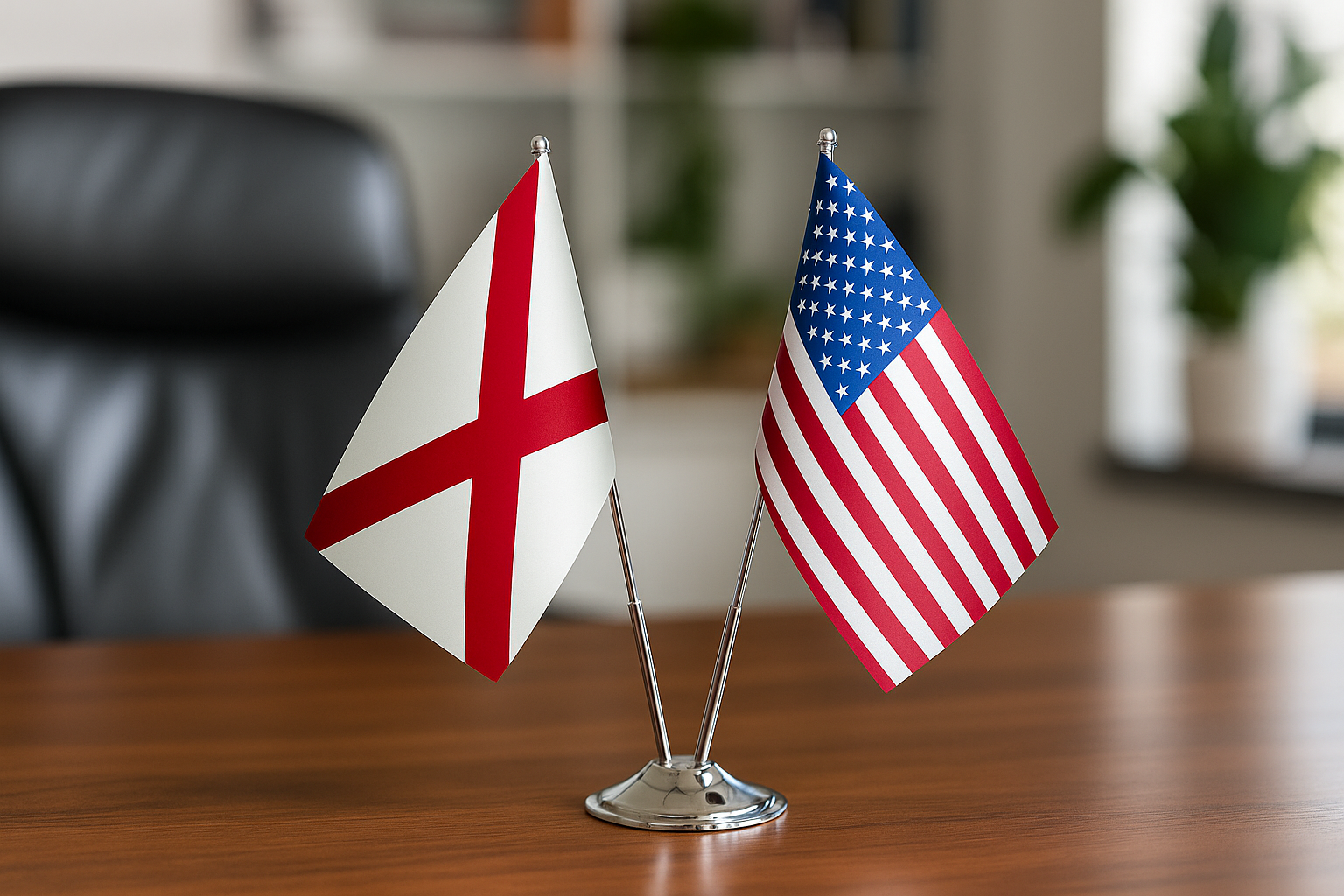
 The 2-Pack USA Car Window Flags illustrate how design choices drive cost. Each flag measures 30×45 cm (approximately 12×18 in) — the globally recognized standard car flag dimension — and uses reinforced construction engineered to withstand highway speeds without tearing or color bleed. This is a wind-resistant flag designed specifically for car window mounting, so the fabric weight and hem reinforcement are higher-spec than a simple handheld pennant. Buying a 2-pack from the outset is already a step toward bulk-tier economics, since the per-flag cost is lower than purchasing a single flag and separately sourcing the second one later. For motorcade parades, national day drives, or sporting event convoys, the 2-pack format also ensures both sides of the vehicle are dressed identically, which matters for visual consistency in a convoy or fleet setting. Keep this structural point in mind as we walk through each pricing variable below — every added feature you can see on this product represents a concrete, quantifiable cost input.
How fabric and material choice changes what you pay
Fabric is the single largest cost variable in a car flag, and heavier or more specialized materials reliably cost more per unit. At Asya Bayrak, car flags are produced on Raschel knitted polyester, available in weights of 80, 90, 110, 120, and 220 g/m², with direct printing that is heat-fixed for UV and wash resistance. Lighter weights — 80 and 90 g/m² — are economical and suitable for short-duration events where the flags will not be on the road for extended periods. Mid-weights around 110–120 g/m² are the workhorse tier: they balance cost, longevity, and color saturation well, making them the most popular choice for national day fleets and sports event convoys. The 220 g/m² Raschel grade is a heavyweight option suited to extended outdoor use where flags face sustained highway wind load. For comparison, the market also offers products in nylon or 2-ply polyester, which are common alternatives not in Asya Bayrak’s car flag range but worth knowing about when you receive competitor quotes. The important takeaway is that a price difference between two “car flags” of the same size almost always traces back to the g/m² rating and whether the print is heat-fixed for longevity or simply screen-printed without UV stabilization.
How flag size affects the unit price
Size scales cost almost linearly once fabric and printing inputs are fixed — a larger flag uses proportionally more material, more ink, and more production time. The standard car window flag at 30×45 cm (12×18 in) is the baseline, and it is the most economical format because machines are optimized for this dimension and waste is minimized. Step up to a larger car banner — sometimes called a “car banner” in the event and motorsport market — and the cost per unit rises accordingly, even if the per-square-centimeter material cost stays identical. Hood covers are the largest format in the car flag category and reflect that scale accordingly.
 The United States Flag Car Hood Cover is a clear example of how size and format create a distinct product tier. Available in three sizes — 100×150 cm, 120×160 cm, and 160×170 cm (approximately 39×59 in, 47×63 in, and 63×67 in) — the hood cover is designed for national day convoys, sporting events, wedding cars, and promotional fleets. The flexible interlock fabric with fully elasticated edges means it pulls over the bonnet in seconds, and the transfer print is wash-safe and fade-resistant. Because it covers a surface area roughly six to eight times larger than a standard window flag, the material cost alone is fundamentally different. Buyers who need this format for fleet use — say, a 20-vehicle promotional convoy — will find that bulk pricing on hood covers offers a significantly lower per-unit cost than buying them individually. If you are comparing “car banner prices” online and finding wide variation, size is very often the hidden reason: a 30×45 cm flag and a 160×170 cm hood cover are both called car flags, but they occupy entirely different budget categories.
Current price list for car flags and hood covers
Exact prices depend on the specific configuration you choose — fabric weight, size tier, and quantity — and are updated regularly to reflect material costs. The table below is generated live from current pricing:
Current Price List
| Product | Size | Price | |
|---|---|---|---|
| 2-Pack USA Car Window Flags | Standard | $24.95 | Check the live price → |
| United States Flag Car Hood Cover | 100x150 cm | $29.90 | Check the live price → |
| 120x160 cm | $29.90 | Check the live price → | |
| 160x170 cm | $39.90 | Check the live price → |
Prices as of November 08, 2026. All sizes and materials
For custom configurations not shown — such as a specific g/m² weight, a non-standard banner dimension, or a custom-print hood cover — contact the Asya Bayrak team directly for a tailored quote. If you are researching pricing for political campaign flags (a category sometimes searched as “BJP car flag price” in South Asian markets), the same size and quantity logic applies: standard 30×45 cm flags on 90 or 110 g/m² Raschel are the most cost-efficient entry point, and custom artwork is printed and heat-fixed using the same process as national flags.

Flags Collection
Browse the full range of car flags, hood covers, and vehicle display flags — all available with bulk pricing for event fleets and corporate orders.
Browse Collection →How bulk and corporate orders bring the per-unit price down
Ordering in volume is the most reliable way to reduce your per-unit car flag cost, often by 25–50% compared to small-quantity retail pricing. The savings come from two places: amortized set-up costs and production efficiency. Every print run has a fixed set-up phase — loading artwork, calibrating color profiles, preparing fabric — and those hours cost the same whether you print 20 flags or 2,000. Spread across a larger quantity, that fixed cost becomes negligible per unit. Beyond set-up, continuous production runs reduce machine idle time and fabric waste at cut edges, translating directly into a lower cost of goods. For corporate fleet managers, event production companies, and political campaign organizers, this means a 100-unit minimum order is typically where pricing starts to look materially different from retail. Orders above 500 units unlock deeper tiered discounts. If you need guidance on how to store your car flags between uses to protect your investment, the article on how to store handheld flags between events covers best practices for keeping fabric and color in peak condition between deployments. And if you are evaluating car flags alongside other promotional flag formats, the guide on advertising flags that pull traffic to car dealerships offers a useful cost-per-impression comparison across different flag types.
Why buying the cheapest car flag usually costs more over time
A low-price car flag that fails after a single event actually costs more per use than a mid-weight flag that lasts 20 events — a straightforward total-cost calculation that is easy to overlook when comparing line items. The most common failure modes in budget car flags are color fading after UV exposure (typically visible within 4–8 weeks of regular outdoor use on a vehicle at highway speed), fraying at the edges where reinforcement is absent or minimal, and tearing at the sleeve or pole pocket where stress concentrates. Raschel polyester flags with proper UV-stabilized, heat-fixed printing are rated for approximately 6 months to 2 years of outdoor use depending on exposure intensity — a figure that budget alternatives from non-heat-fixed printing processes rarely match. There is also a practical compliance dimension: flags that visibly degrade — torn, faded, or unreadable — may fall outside display standards referenced in US Flag Code (4 USC §§ 1–10), which calls for flags to be in a condition that reflects dignity of display. For vehicle-specific legal requirements, the sibling article on car flag rules and local laws covers what US state vehicle codes and the Flag Code say about display condition and obstruction. Investing in a properly constructed flag with the right g/m² for your use case — and maintaining it correctly — delivers a meaningfully lower cost per event over the product’s full service life. For further reading on how size and format choices interact with total cost, see the companion article on vertical flag and banner prices, which applies the same total-cost logic to feather and teardrop formats.
What is the standard size for a car flag and how does it affect the price? +
Are NASCAR-style racing car flags priced the same as standard window flags? +
How is the price of a political party car flag calculated? +
What is the minimum order quantity to get bulk pricing on car flags? +
What is a car banner and how does its price compare to a standard window flag? +
How much does a car flag pole or rod add to the total cost? +
Does a heavier fabric weight always mean a more expensive car flag? +
Whether you need a single 2-pack for a national day drive or several hundred units for a corporate promotional fleet, the right starting point is the full Flags collection at Asya Bayrak, where you can compare formats and request a quote scaled to your quantity. For window-mounted display flags at the standard 30×45 cm (12×18 in) size, the 2-Pack USA Car Window Flags offer an immediately deployable, wind-resistant solution. For larger vehicle branding — event convoys, wedding cars, or promotional fleets — the United States Flag Car Hood Cover in its three available sizes delivers maximum road presence. Bulk pricing is available for corporate orders, campaign procurement, and event production companies — contact the Asya Bayrak team directly with your quantity and design requirements for a tiered quote.


