








For international schools and universities managing multicultural campus flag displays, the most important decisions come down to selecting the right flag sizes and materials, understanding display regulations, and placing a well-organized bulk country flags order that covers every nationality represented on campus. A thoughtful flag program does more than decorate hallways — it sends a clear message of inclusion to every student, family, and faculty member who walks through your doors. Whether you are equipping a single international classroom or outfitting an entire university campus with flags from 50+ countries, this guide walks you through every step of the process.
Why Country Flag Programs Matter on Multicultural Campuses
Country flags for schools serve a concrete psychological and institutional purpose: research consistently shows that students perform better and feel more engaged when their cultural identity is visibly acknowledged in the learning environment. A well-executed multicultural campus flag display communicates that your institution values diversity not just in policy documents, but in the physical spaces where students learn and gather every day. Schools participating in International Baccalaureate (IB) programs, English-language immersion programs, and Title III-funded initiatives are increasingly required to demonstrate active cultural inclusion — and a professionally maintained flag display is one of the most visible ways to do so.
Beyond student morale, a flag program supports institutional branding during international recruitment events, open days, and accreditation visits. Accreditation bodies such as the Council of International Schools (CIS) and the New England Association of Schools and Colleges (NEASC) evaluate campus culture as part of their review criteria. Displaying a comprehensive set of international school flag sets in common areas, entrance halls, and conference rooms signals institutional maturity. From a practical standpoint, flags are also among the most cost-effective visual identity tools available — a properly maintained indoor set can last 3 to 5 years with minimal maintenance.
Choosing the Right Flag Size for Different Campus Settings
The correct flag size depends entirely on where it will be displayed — indoor flags for hallways and lobbies typically range from 2 ft × 3 ft (61 cm × 91 cm) to 3 ft × 5 ft (91 cm × 152 cm), while desk flags for conference tables and classrooms are usually 4 in × 6 in (10 cm × 15 cm) mounted on a 10-inch (25 cm) staff. Matching the size to the setting is not just an aesthetic choice; it affects how legible the flag's design elements are from a typical viewing distance and whether the flag conforms to FIAV (Fédération Internationale des Associations Vexillologiques) display proportion standards.
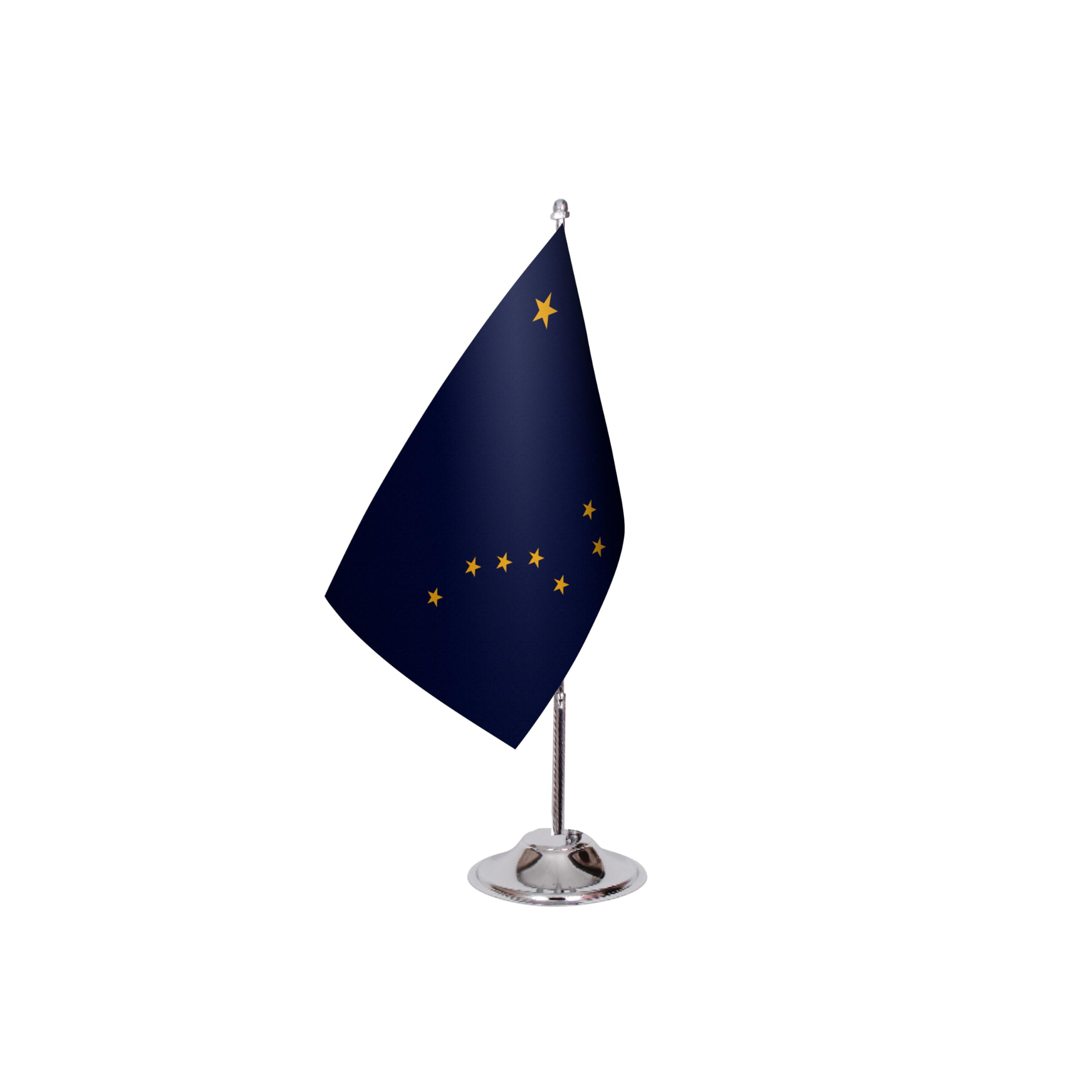
For large entrance lobbies and gymnasium walls, flags measuring 4 ft × 6 ft (122 cm × 183 cm) create an impressive visual statement without overwhelming the space. Standard hallways and corridor display systems work best with 3 ft × 5 ft (91 cm × 152 cm) flags on fixed wall brackets spaced every 6 to 8 feet (1.8 to 2.4 m). Classroom environments — particularly those used for world geography, global studies, or language instruction — benefit from 2 ft × 3 ft (61 cm × 91 cm) flags that can be mounted on lightweight aluminum poles without requiring permanent wall fixtures. For tabletop use during international weeks, parent-teacher conferences, or multicultural festivals, desk flags are the practical choice. Browse the full Country Desk Flags collection for tabletop-ready options that pair well with presentation stands.
Material and Print Standards for Indoor School Flag Programs
Indoor country flags for schools should be manufactured from 100-gsm to 130-gsm knitted polyester or premium nylon, both of which resist wrinkling, hold color vigorously under fluorescent and LED lighting, and can be wiped clean without special treatment. Unlike outdoor flags that must withstand UV radiation and wind load, indoor flags prioritize color accuracy — particularly important for national flags where specific Pantone color values are legally defined by government standards (for example, the precise red of the Canadian maple leaf flag is Pantone 032C).
Printing method matters as well. Dye-sublimation printing, which bonds ink permanently into the fabric fibers rather than sitting on the surface, produces the most accurate colors and will not crack or peel over a 3- to 5-year display lifespan under normal indoor conditions. Screen-printed flags, while sometimes less expensive at lower quantities, begin to show wear at fold lines within 12 to 18 months of regular handling in a school environment. When sourcing world flags for classrooms in bulk, always request a specification sheet confirming the GSM weight, printing method, and whether seams are double-stitched — a critical durability indicator for flags that will be handled frequently by students and staff.
 For schools building a comprehensive indoor display, premium indoor flags represent the gold standard of classroom and corridor presentation. A properly produced indoor flag will feature vivid, fade-resistant colors that remain true even under the warm-toned LED fixtures common in modern school buildings. Each flag in a matched set should use the same fabric weight and finish so that when 30, 50, or even 190 country flags hang side by side in an entrance hall, they present a visually consistent, professional appearance that reflects well on the institution. Schools that have invested in high-quality indoor country flags report significantly fewer replacement orders over a 3-year period compared to those who purchased lower-cost alternatives, making the initial investment the more economical choice over a full program lifecycle. Double-sided printing — where the design shows correctly from both directions — is also worth specifying for flags displayed in open spaces where viewers approach from multiple angles.
How to Plan a Bulk Country Flags Order for Your Institution
Placing a country flags bulk order for a school or university requires more upfront planning than a typical retail purchase, but the process becomes straightforward once you have a clear inventory list and a defined display strategy. The single most important first step is compiling an accurate list of nationalities currently enrolled or represented in your institution — this is typically available through your registrar or admissions office and should be updated annually as your international student body changes.
Once you have your country list, organize your order into three tiers based on display location: large-format flags (3 ft × 5 ft / 91 cm × 152 cm or 4 ft × 6 ft / 122 cm × 183 cm) for entrance lobbies and auditoriums, medium-format flags (2 ft × 3 ft / 61 cm × 91 cm) for hallways and classrooms, and desk flags (4 in × 6 in / 10 cm × 15 cm) for conference rooms and administrative offices. Budget planning is easier when you approach it this way — bulk pricing for country flags typically becomes available at 10+ units per country or 50+ units total, and institutions ordering 100 or more flags can generally expect 20% to 35% savings over individual unit pricing. Include replacement flags (typically 10% to 15% of your total order) in your initial purchase to avoid the administrative burden of small reorder shipments mid-year. The full Country Flags collection covers virtually every sovereign nation recognized by the United Nations, making it a reliable single-source solution for comprehensive institutional orders.
Country Indoor Flags Collection
Premium-quality indoor country flags built for long-term display in schools, universities, and multicultural institutions — available in the sizes and quantities your campus needs.
Browse Collection →Display Protocols, Legal Considerations, and the US Flag Code
When displaying country flags alongside the United States flag on an American school or university campus, the US Flag Code (4 USC §§ 1-10) establishes clear precedence rules that every institution must follow. The U.S. flag must be displayed at the center and highest point when multiple national flags are flown from separate staffs at the same height, or at the far left from the audience's perspective when flags are displayed in a line — the internationally recognized position of honor.
For international school flag sets displayed indoors, the protocol is more nuanced. Under standard diplomatic and institutional practice, all national flags should be displayed at the same height and in the same size format — no single nation's flag should be larger or more prominently placed than another's (except for the US flag per the Flag Code on American soil). Many institutions organize their international flag displays alphabetically by country name in English, which is both protocol-compliant and visually logical for students and visitors navigating the display. Some states, including California and New York, have additional educational code provisions regarding flag display in public schools that apply alongside federal regulations — it is worth consulting your district's legal counsel or facilities manager before finalizing placement. Importantly, the US Flag Code specifies that foreign flags displayed alongside the American flag should be of similar quality and condition, which is one more reason to invest in a matched, professionally manufactured international school flag set rather than mixing flags from different sources.
Desk Flags and Presentation Accessories for Classrooms and Offices
Desk flags are the most versatile element of any campus flag program — they can be repositioned for events, used as teaching tools in geography and social studies classes, and displayed individually in faculty offices to acknowledge personal heritage. A 4 in × 6 in (10 cm × 15 cm) desk flag on a 10-inch (25 cm) wooden or metal staff is the most common format, but the quality of the stand makes a significant difference in the overall presentation.
A standard plastic base creates a visually inconsistent appearance when multiple flags are displayed together on a conference table or reception desk, while a matched set of premium metal stands elevates the entire display to an institutional-grade presentation. The Luxury Chrome Gold Desk Flag Stand is specifically designed for this application — its weighted base prevents tipping, its chrome-gold finish pairs cleanly with any flag design, and its standard socket fits the 10-inch (25 cm) staffs used by virtually all desk flag manufacturers. For international week events, parent orientation sessions, or faculty meetings where cultural representation is being emphasized, a set of matching desk flags with coordinated stands creates a polished, intentional look that reinforces the institution's commitment to its global community. Schools ordering desk flags in bulk for classroom sets of 30 to 50 countries should plan for one stand per flag and add approximately 5 to 10 spare stands to the order to account for attrition over the school year.
Maintenance, Storage, and Annual Review Best Practices
A well-maintained flag program requires a simple annual review cycle — inspect flags each August before the academic year begins, replace any that show fading, fraying at the hem, or visible wear at the header, and update the set to reflect any new nationalities joining the campus community. Indoor flags stored flat in archival sleeves or rolled on tubes (never folded, which creates permanent crease lines) maintain their appearance significantly longer than those stored in boxes or stuffed into storage closets.
For large corridor or lobby displays, a rotation schedule helps distribute wear evenly across the set — flags near windows or skylights receive more UV exposure than those in interior positions, so rotating positions every 6 months prevents uneven aging. When a flag must be retired, follow respectful disposal guidelines; while the US Flag Code's ceremonial disposal provisions (folding and burning or other dignified means) apply specifically to American flags, applying the same respectful standard to foreign national flags is both diplomatically appropriate and aligned with the values of a multicultural institution. Most institutions find that an annual replacement rate of 10% to 15% of their total flag inventory keeps the overall display looking sharp without requiring a complete budget allocation each year.
What is the minimum order quantity for bulk country flags for universities? +
What size country flags are best for classroom display? +
Do indoor country flags for schools need to be double-sided? +
How should international flags be ordered or arranged alongside the US flag on a school campus? +
How long do indoor country flags typically last in a school environment? +
Can I order a custom international school flag set with only the specific countries I need? +
Are desk flag stands sold separately, and do they fit standard desk flag staffs? +
A professionally managed multicultural campus flag display is one of the highest-impact, lowest-cost investments a school or university can make in its culture of inclusion. Whether you are launching a new program or refreshing an aging flag set, start with a clear country inventory from your admissions office, specify indoor-grade dye-sublimation printed flags in the sizes that match your display locations, and place a single consolidated bulk country flags order to maximize pricing efficiency. Explore the complete Country Flags collection for a comprehensive selection covering all UN-recognized nations, browse the Country Indoor Flags collection for premium classroom and corridor-ready options, and add the Luxury Chrome Gold Desk Flag Stand for a polished conference room and office presentation. Bulk pricing is available for corporate and institutional orders — contact the Asya Bayrak team with your country list and quantity requirements to receive a customized quotation for your campus program.