


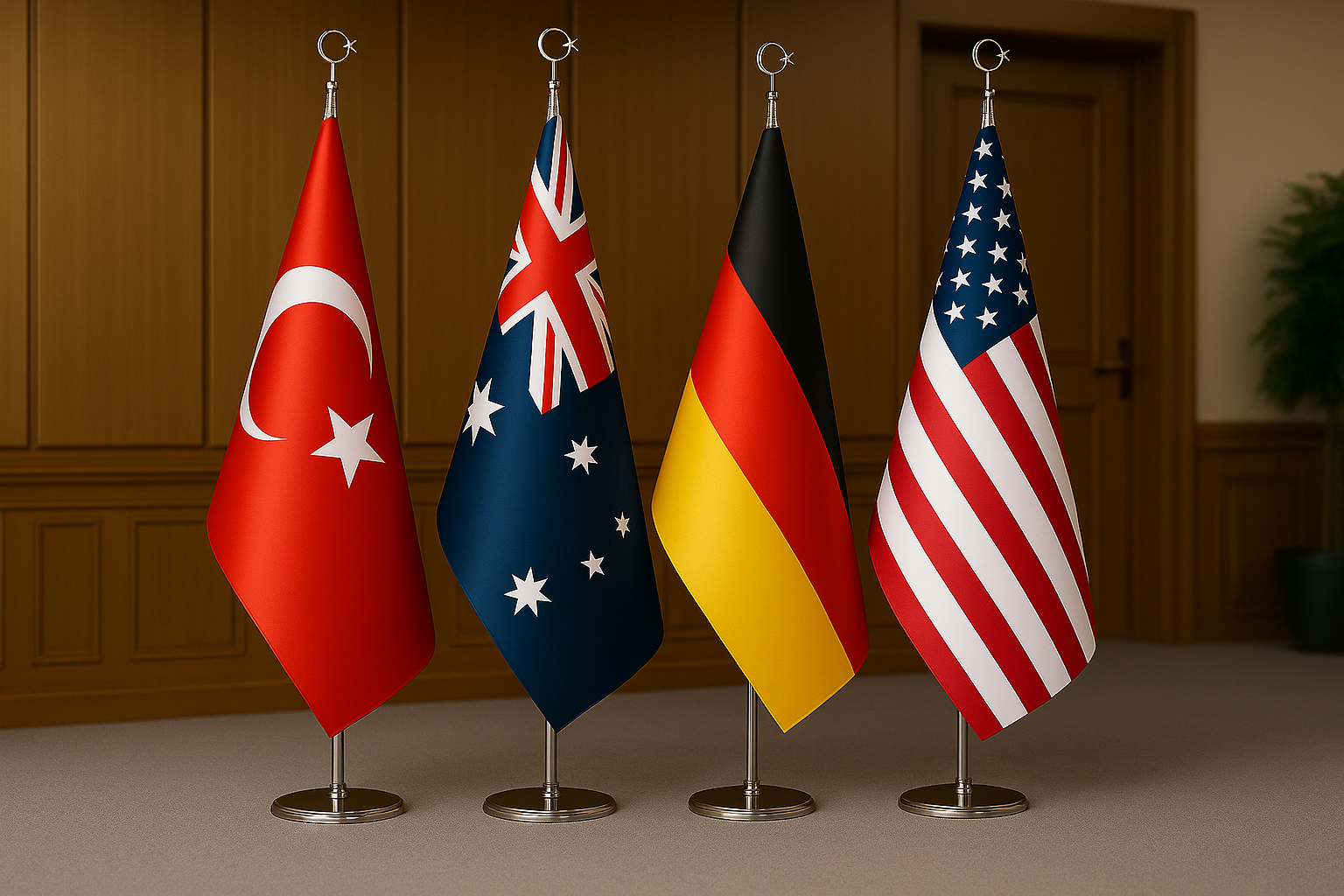





On Memorial Day, the American flag is flown at half-staff from sunrise until noon, then raised to full-staff for the remainder of the day — a tradition codified under the National Moment of Remembrance Act and consistent with US Flag Code (4 USC §§ 1-10). Understanding the precise rules for half-staff protocol ensures that every flag display honors fallen service members with the dignity they deserve, whether you're displaying a flag at home, a government building, or a cemetery. If you're searching for a properly made, weather-ready flag for this solemn occasion, the Asya Bayrak flags collection offers durable options built for meaningful display.
What "Half-Staff" Actually Means Under the US Flag Code
Half-staff means the flag is flown one flag-width below the peak of the staff — not simply "halfway up the pole." According to 4 USC § 7(m), the flag must first be raised briskly to the top of the pole (the peak) and then ceremonially lowered to the half-staff position; this act of raising before lowering is a deliberate and legally required step, not optional tradition.
Many people assume half-staff simply means the midpoint of a flagpole, but the official definition is more specific. For a standard 20 ft (6.1 m) residential pole, half-staff is approximately one flag-width — typically 3 ft (0.9 m) for a 3×5 ft flag — below the finial at the top. On taller poles used at government buildings and military installations, the same rule applies proportionally. Failure to first raise the flag to full peak before lowering it is technically a violation of proper protocol, something many well-meaning citizens unknowingly skip.
The Memorial Day Half-Staff Schedule: Exact Times and Rules
The official Memorial Day flag schedule requires the flag to fly at half-staff from sunrise (roughly 5:30–6:00 a.m. local time) until 12:00 noon, after which it must be raised to full-staff for the rest of the day. This two-phase schedule was established to honor the dead in the morning while celebrating the living and the nation's strength in the afternoon — a balance that makes Memorial Day's half-staff rules unique among all US federal observances.
The National Moment of Remembrance, observed at 3:00 p.m. local time on Memorial Day, is a fitting moment to stand at attention beside your flag, which by that hour should already be flying at full-staff. If you are unable to monitor your flag and raise it at noon, it is considered more respectful to leave it at half-staff for the entire day rather than to miss the transition entirely. State governors also retain the authority to issue their own half-staff proclamations that may overlap with or extend beyond federal requirements, so always check your state's official proclamations as well. The President may issue additional half-staff orders via proclamation for other national tragedies throughout the year, but the Memorial Day schedule is one of the few instances mandated by statute rather than executive discretion.
 Choosing the right flag for outdoor Memorial Day display is more than an aesthetic decision — it directly affects how well the flag holds its color and shape during solemn observance. A quality outdoor flag should be made from 200-denier nylon or heavyweight polyester, both rated for approximately 80% UV resistance to prevent fading under prolonged sunlight exposure. Standard outdoor flags measure 3 ft × 5 ft (0.9 m × 1.5 m) for residential use or 4 ft × 6 ft (1.2 m × 1.8 m) and larger for commercial and municipal poles, with expected lifespans of 6 months to 2 years depending on wind and weather conditions. The USA Outdoor Flag from Asya Bayrak is constructed for exactly this kind of sustained, weather-exposed display, with reinforced stitching at the fly end where fraying most commonly begins. Investing in a durable, professionally finished flag ensures that your Memorial Day display reflects the respect the occasion demands, rather than a weathered or faded representation.
Cemetery Flag Display: Specific Rules and Customs
Cemetery flag display on Memorial Day follows both federal Flag Code guidelines and supplemental rules set by the Department of Veterans Affairs (VA) and individual cemetery administrations. At national cemeteries, small 12 in × 18 in (30 cm × 46 cm) flags are placed at each veteran's grave by volunteers and military personnel — these grave markers are not subject to the half-staff requirement because they are decorative grave markers, not staffed flagpoles.
The large flagpole at the entrance or central area of a national cemetery, however, must follow the same half-staff protocol as any other federal installation: raised to full peak at dawn, ceremonially lowered to half-staff, and then returned to full-staff at noon. Private cemeteries and memorial parks often follow these same conventions out of respect, even when not legally required to do so. If you are visiting a loved one's grave and wish to place a small flag, the standard protocol is to insert the flag stick into the ground at the head of the grave on the right side, with the union (blue field with stars) facing away from the headstone. Many families bring their own flags to supplement or replace those placed by cemetery staff, and using a proper, high-quality flag — even a small one — reflects the gravity of the tribute.
Who Has the Authority to Order Half-Staff?
Only the President of the United States and state governors have the legal authority to order flags to fly at half-staff on federal and state installations, respectively. Private citizens and businesses are not legally required to comply with half-staff orders, but they may choose to do so voluntarily — and the vast majority of Americans do choose to honor the presidential proclamation on Memorial Day.
Under 4 USC § 7(m), the President may order flags at half-staff on all federal buildings, military installations, naval vessels, and flagstaffs throughout the United States and its territories. Governors may order half-staff on state buildings and grounds within their jurisdiction, and their proclamations may differ in timing or duration from federal orders. Local governments, schools, and private organizations that wish to participate typically follow the federal or state schedule as a matter of civic custom. It is worth noting that flying a flag at half-staff without a proper presidential or gubernatorial proclamation — outside of standard observances like Memorial Day — can be seen as a misuse of the protocol, and the American Legion has historically spoken out against unofficial half-staff orders that dilute the solemnity of the designation.

Flagpoles & Accessories
From residential wall-mount brackets to heavy-duty commercial poles, this collection has everything you need to display your Memorial Day flag with proper protocol and lasting durability.
Browse Collection →Common Mistakes People Make with Half-Staff Protocol
The most common mistake is leaving the flag at half-staff all day on Memorial Day instead of raising it to full-staff at noon — this well-intentioned error actually contradicts the statutory purpose of the afternoon observance. Other frequent errors include never raising the flag to full peak before lowering it, displaying a damaged or faded flag, and flying the flag at night without proper illumination.
According to 4 USC § 6(a), the flag should be displayed only from sunrise to sunset on buildings and stationary staffs unless properly illuminated during darkness. On Memorial Day specifically, illuminated overnight display is a choice many municipalities and households make to extend the tribute, but it must be accompanied by adequate lighting. Another widespread mistake involves flag condition: the US Flag Code does not set a formal legal penalty for flying a tattered flag, but it does state in § 8(k) that a flag no longer in a condition for display should be retired — typically through dignified burning at a VFW or American Legion post. Displaying a frayed or significantly faded flag on Memorial Day can unintentionally undermine the respect the day calls for, and replacing a worn flag before the holiday is a simple way to demonstrate genuine reverence.
Half-Staff Protocol for Residential Flagpoles and Wall-Mount Displays
Homeowners with residential flagpoles can and should participate in Memorial Day half-staff protocol by following the same raise-then-lower sequence used at government installations. For wall-mounted flag brackets, which hold the flag at a fixed angle and cannot be raised or lowered, the US Flag Code does not require half-staff positioning — the flag is considered properly displayed in a fixed mount, and no adjustment is needed.
For homeowners with adjustable residential poles — typically 15 ft to 25 ft (4.6 m to 7.6 m) in height — the process begins at sunrise by raising the flag smartly to the peak, pausing briefly, and then lowering it slowly to half-staff, where the bottom of the flag sits approximately one flag-width below the top. At noon, the flag should again be raised to full-staff and flown for the remainder of the day until sunset. Proper rope and cleat hardware is essential for smooth raising and lowering; worn or knotted halyard lines can make the noon-hour transition frustrating and are worth replacing before the holiday. The flagpoles and accessories collection at Asya Bayrak includes replacement hardware, cleat mounts, and ground sleeve systems designed for reliable, ceremony-quality flag raising. Investing a few minutes in inspecting and maintaining your flagpole equipment before Memorial Day ensures the protocol can be carried out smoothly, precisely, and with the dignity that fallen service members deserve.
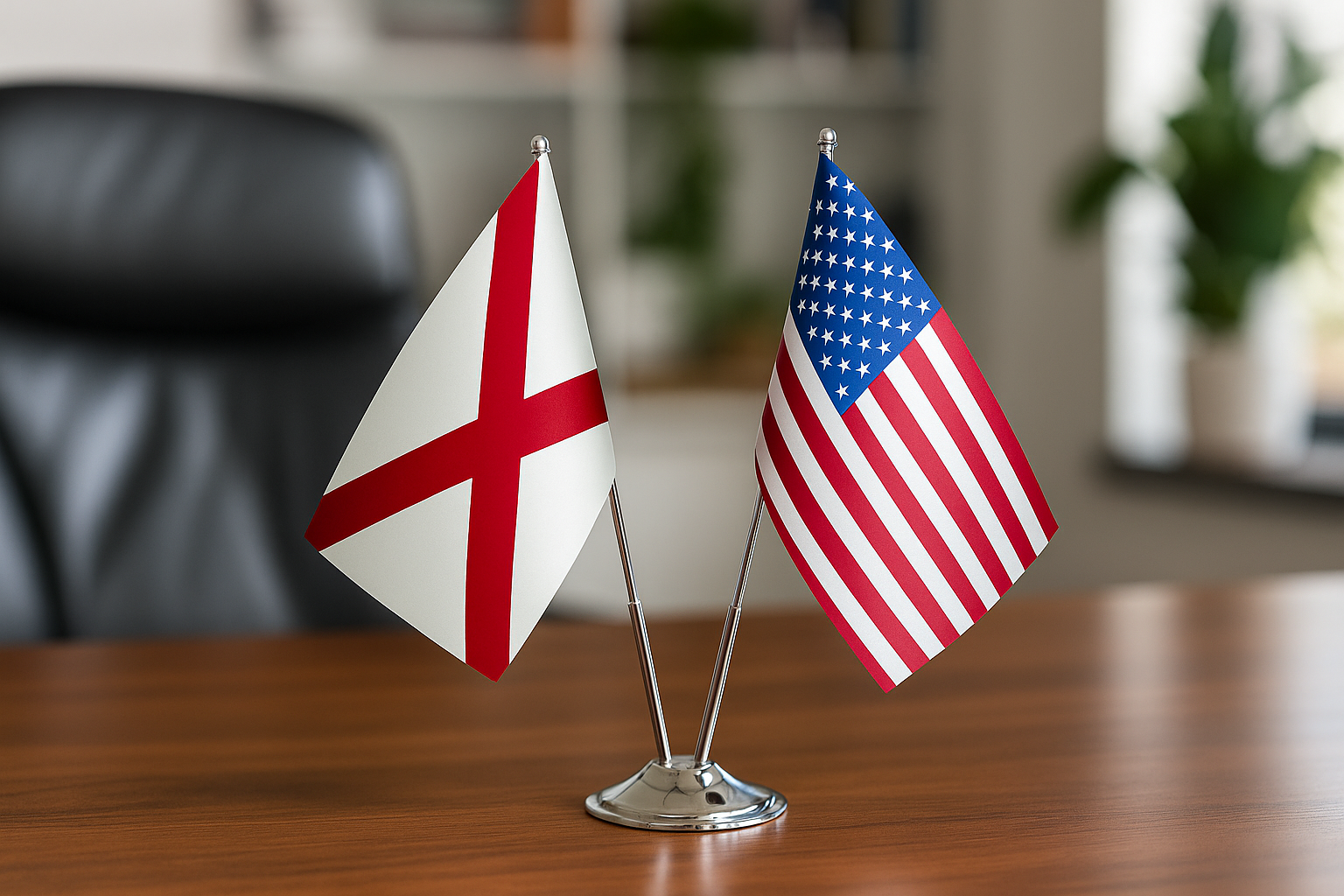
Citizens who do not own a full-size flagpole can still participate meaningfully in Memorial Day observance. Desk flags — small 4 in × 6 in (10 cm × 15 cm) or 6 in × 10 in (15 cm × 25 cm) flags on a stick or base — can be placed in windows, on tables at memorial events, or used in classroom and office settings to reinforce the solemnity of the day. The USA Desk Flags available from Asya Bayrak are a thoughtful complement to larger outdoor displays, particularly for organizations hosting memorial ceremonies, educational events, or community gatherings on Memorial Day.
Frequently Asked Questions
What time should the flag be raised to full-staff on Memorial Day? +
Does the half-staff rule apply to flags flown at cemeteries? +
Can a private citizen or business order a flag to fly at half-staff? +
What is the correct position for half-staff on a residential flagpole? +
What kind of flag is best for outdoor Memorial Day display? +
Do wall-mount flag brackets need to be adjusted to half-staff on Memorial Day? +
How should I retire an old flag before Memorial Day? +
Is there a specific size of flag required for Memorial Day observance? +
Honoring Memorial Day with a proper half-staff display is one of the most visible and meaningful ways Americans can pay tribute to the men and women who gave their lives in service. Whether you're outfitting a residential pole, preparing a cemetery visit, or organizing a community ceremony, having the right flag and hardware makes the difference between a display that is merely adequate and one that is genuinely dignified. Explore the full range of American flags in the Asya Bayrak flags collection, find durable outdoor-rated options in the USA Outdoor Flag product page, and complete your setup with mounting hardware and accessories from the flagpoles and accessories collection. Bulk pricing is available for corporate, municipal, and organizational orders — contact Asya Bayrak directly to discuss volume pricing for Memorial Day events, veteran organizations, or large-scale cemetery flag programs.