
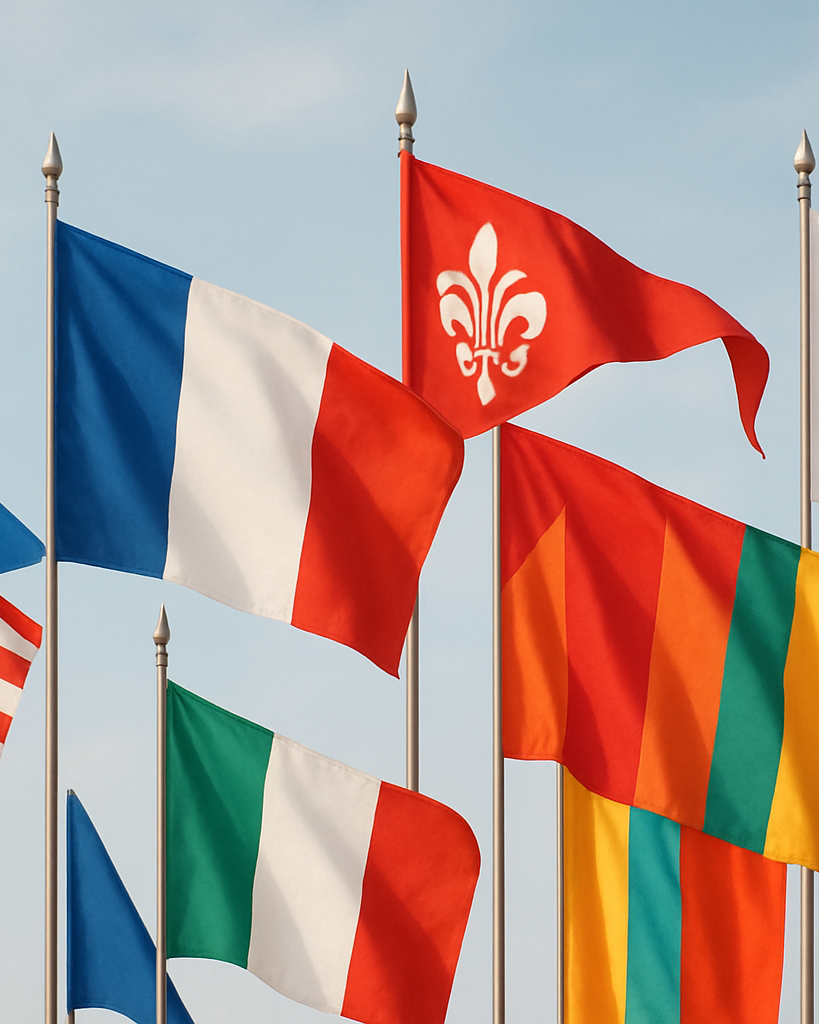
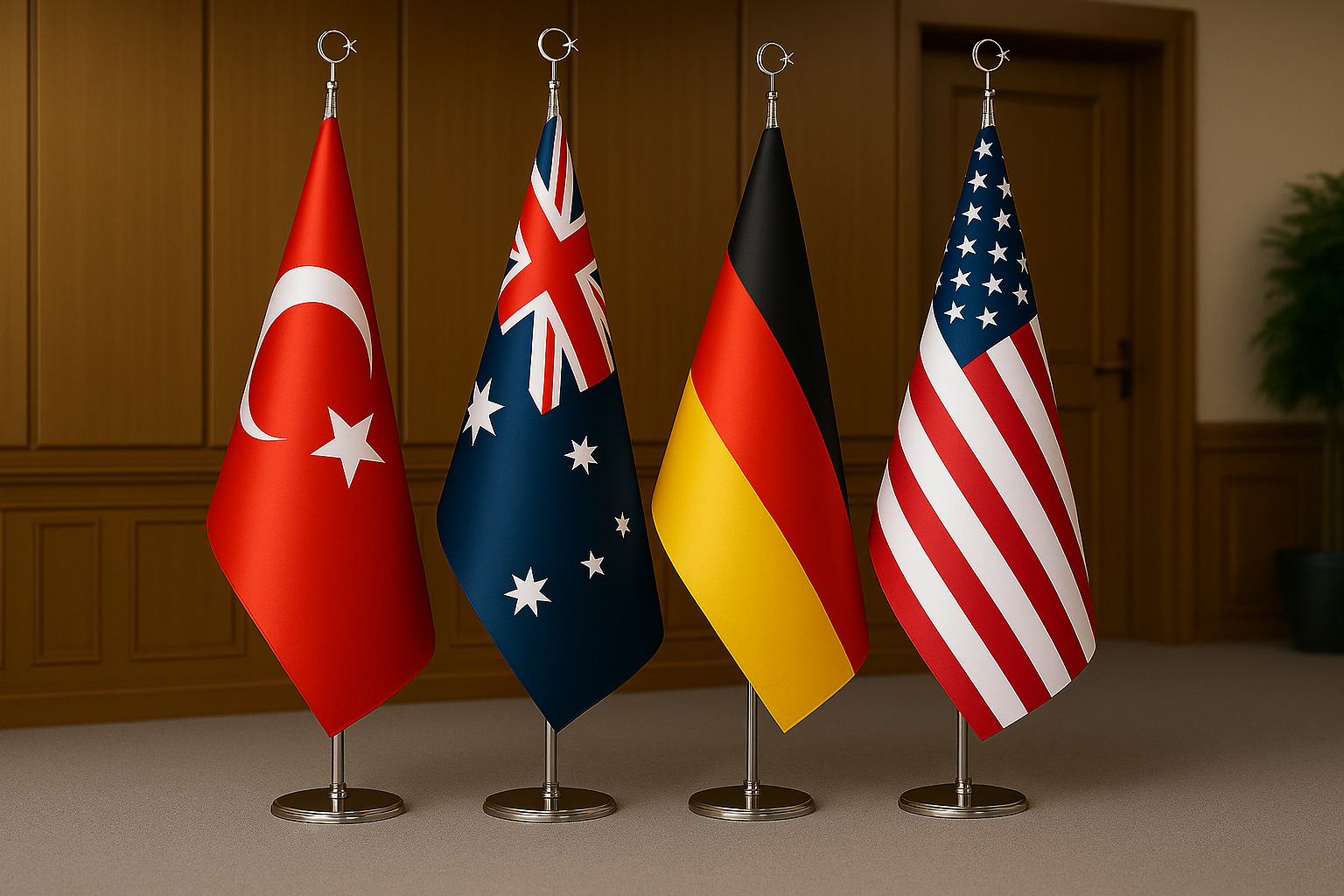



Printed banners perform best outdoors in high-visibility, high-traffic locations — think storefront entrances, festival grounds, sports venues, construction hoardings, and street-facing fences — where large-format graphics can be seen from 20 ft (6 m) or more. If you are planning an outdoor display and want to explore the full range of options, the Banners & Posters collection covers everything from pole banners to retractable stands to party string banners, all available as customized banners with high-resolution digital printing.
Which outdoor venues actually give printed banners the most impact
Outdoor banners deliver their highest return in spaces where foot traffic or vehicle traffic passes within 10–50 ft (3–15 m) of the display, and where the viewer has at least 2–3 seconds of dwell time — a moving car at 25 mph gives roughly 3 seconds of visibility to a 3 ft (0.9 m) wide banner. That window is enough to register a logo, a message, and a color if the design is bold and the placement is deliberate.
Storefront windows and building facades are the most reliable outdoor banner locations because the audience is already walking toward a destination and naturally slows down. Banners mounted flat against brick or glass walls stay stable in moderate wind and need no additional pole infrastructure. Construction site hoardings work similarly: a 4 ft × 8 ft (1.2 m × 2.4 m) customized banner on a temporary fence turns dead space into brand presence for months at a time. Farmers markets, outdoor food festivals, and community fairs are another strong category — vendors consistently report that a large fabric banner above their stall increases foot traffic compared to a simple table sign, partly because it is visible from across the venue floor and partly because it signals permanence and professionalism.
Sports venues — sideline fencing at youth soccer fields, outfield walls at community baseball diamonds, perimeter railings at marathons and 5K events — are ideal because spectators stand or sit facing a fixed direction for extended periods, giving your banner unusually long dwell time. Parking lots in front of car dealerships, garden centers, and home improvement stores use pole banners on lamp-post brackets to guide customers from the road before they even park. Schools, churches, and municipal parks rely on outdoor banners for seasonal announcements, fundraising drives, and event promotion because a single banner can be seen by everyone who passes the building, every day, for the duration of the campaign.
How many banners you realistically need for each venue type
For a single storefront entrance, one banner 2 ft × 6 ft (0.6 m × 1.8 m) or larger is the minimum effective size; two banners — one on each side of the entrance — doubles visibility without doubling cost because the same artwork file is used for both. Street-facing venues and event perimeters follow a simple spacing rule: place one banner every 15–20 ft (4.5–6 m) of frontage to maintain continuous visual coverage without crowding.
Festival and fair booths typically need three banner placements: one large back-wall banner (3 ft × 6 ft / 0.9 m × 1.8 m) that anchors the brand identity, one side banner for lateral visibility to foot traffic passing parallel to the booth, and one smaller tabletop or pole banner at eye level for close-up product information. For a parade or processional route, calculate the number of lamp posts or fence sections along the route and order one pole banner per post — most municipal lamp post brackets are designed for banners 18 in × 48 in (46 cm × 122 cm) to 24 in × 72 in (61 cm × 183 cm), so confirm bracket dimensions with the venue before printing. For construction hoardings, measure total lineal footage of fence and divide by banner width plus 6 in (15 cm) of overlap clearance on each side.
How to lay out and mount outdoor banners so they stay up and stay readable
 Proper layout and mounting are what separate a banner that lasts 6–12 months outdoors from one that tears within two weeks. The first principle is always to match the mounting method to the surface and the wind load at that specific location — a banner on a chain-link fence in an open field faces dramatically different stress than one sheltered between two buildings. For fabric banners, the knitted construction of materials like 110 g/m² Raschel polyester — the same fabric used in our USA Flag Party Banner in 33 ft Raschel fabric — is especially forgiving in wind because the open weave allows air to pass through rather than building pressure behind the face. Pole banners should be mounted with the top bracket carrying the primary load and the bottom bracket acting as a tensioner to keep the banner taut and prevent flapping, which causes edge fraying over time. Text should be placed no closer than 10% of banner width from any edge, and the minimum recommended letter height for a banner read from 20 ft (6 m) is 2.5 in (6.4 cm) — increase to 5 in (12.7 cm) for viewers at 40 ft (12 m). For detailed step-by-step installation guidance, the sibling article how to hang a banner without tearing it covers reinforcement, anchor points, and common damage patterns in depth.
Wind management is the single biggest variable in outdoor banner longevity. A solid-face vinyl banner in sustained 25 mph (40 km/h) wind will billow and stress its grommets far more than a mesh or knitted fabric banner of the same size, because fabric banners with open weaves reduce wind resistance by 20–40%. In high-wind zones — coastal areas, open plazas, rooftop installations — the material choice matters more than the mounting hardware. If you are still weighing vinyl versus fabric for your specific outdoor situation, the sibling article vinyl or fabric banner for outdoor use gives a side-by-side comparison with real-world lifespan data for each scenario.
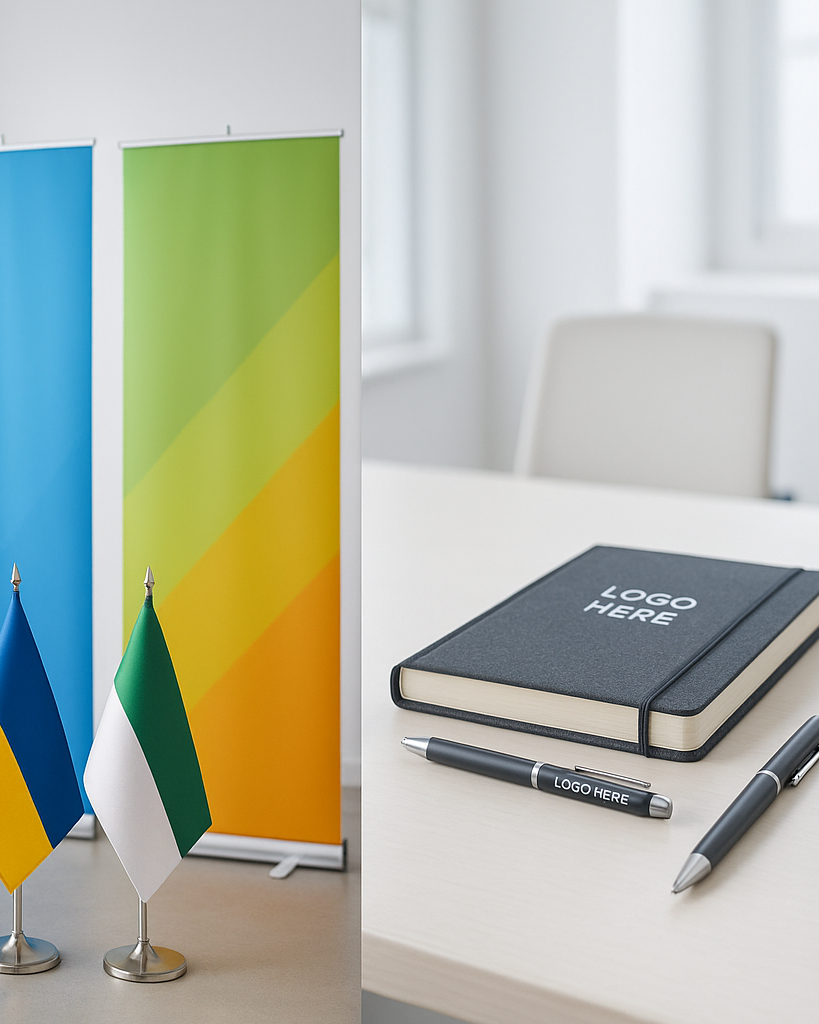
 For semi-permanent outdoor installations at trade shows, pop-up retail, and event check-in stations that move between indoor and outdoor locations, a retractable format gives you the best of both worlds. The Roll-up Print Only banner is printed on premium vinyl or polyester material with high-resolution digital printing and ships as a print-only format — you can pair it with your existing stand or order the stand separately — making it easy to refresh artwork between events without replacing hardware. Because retractable banners are engineered for portability, they are most effective in sheltered outdoor zones: covered entranceways, tent-covered exhibition areas, grandstand overhangs, and market stalls with overhead protection, where wind is moderated but the audience is clearly outdoors. For fully exposed outdoor mounting on posts or poles, a grommeted flat banner mounted on banner poles will outperform a retractable stand in sustained wind, while the retractable format reclaims its advantage the moment conditions are calmer and portability is a priority. If you need pricing guidance before committing to a quantity, the article on vertical flag and banner prices breaks down cost by material, size, and quantity tier.
What a realistic outdoor banner budget looks like for different event scales
Budget planning for outdoor banners should start with total visual coverage needed — total lineal feet of display space — not with individual unit cost, because the per-banner price drops significantly at quantities of 6, 12, and 24 units. A single customized fabric banner in a standard 2 ft × 6 ft (0.6 m × 1.8 m) format represents your highest per-unit cost; the same artwork repeated across 12 pole banners for a street festival can cut the per-unit cost by 30–50% depending on material and quantity tier.
For a small business storefront, a realistic starting budget covers 2–4 banners averaging 2 ft × 4 ft (0.6 m × 1.2 m) to 3 ft × 6 ft (0.9 m × 1.8 m) with a lifespan of 6 months to 2 years depending on UV exposure, rain frequency, and mounting quality. Municipal event banners — lamp post pole banners for a downtown festival, for example — are almost always ordered in multiples of 10 or 20 and should include a 10–15% overrun quantity to account for damage during installation and storage for future reuse. Trade show and exhibition banners live a different budget lifecycle: the hardware is a one-time cost, and the print is replaced event by event, so the cost per impression drops dramatically across the life of the stand. Bulk pricing is available for corporate and municipal orders, so if your project exceeds 10 units, requesting a volume quote before finalizing quantities is always worthwhile.
Banners & Accessories
Everything you need to mount, display, and protect your outdoor banners — from banner poles and stands to hardware accessories that keep your display looking sharp event after event.
Browse Collection →When to place your outdoor banner order so it arrives in time
For most standard customized banners, production and shipping together require 7–14 business days under normal lead times; during peak seasons — spring festival season (April–June), back-to-school (August), and the holiday retail push (October–November) — that window stretches to 14–21 business days, so ordering 4 weeks ahead is the safe minimum for any outdoor event with a fixed date. Rush production is available for many formats but always costs more per unit and can limit material and size options.
Municipal street campaigns and civic banner programs often require permitting before installation, and permit review alone can take 5–15 business days depending on the city. Factor permit lead time into your production schedule: submit your permit application and your banner order simultaneously, not sequentially. For pole banners on city lamp posts, many municipalities require a proof of the final design as part of the permit application, which means your artwork needs to be finalized before the permit process starts — not after. Construction site banners and fence wraps are generally permit-free on private property but should be ordered to arrive 3–5 business days before the installation date to allow time for inspection and any reprinting if the colors or dimensions are off. For recurring annual events, ordering and storing banners from the previous year — and simply reprinting dated elements — is a proven way to cut lead time and cost by reusing hardware and artwork files.
If your outdoor event also involves festive string decorations or hanging arrangements alongside your banners, the article on where pennant strings can be hung safely covers anchor points, load limits, and weather considerations for that complementary display format.
What makes a banner truly customized for outdoor use? +
Is a fabric banner better than vinyl for outdoor events? +
What are pole banners and where are they typically used? +
What size banner poles do I need for an outdoor display? +
How long do outdoor printed banners last before needing replacement? +
Can I use a flag pole banner for a temporary outdoor event and reuse it later? +
Do outdoor banners need special permits in the United States? +
Printed banners earn their place outdoors when they are matched to the right venue, sized for the viewing distance, mounted on appropriate banner poles or stands, and ordered with enough lead time to arrive before your event date. For storefronts, festivals, sports venues, and street campaigns, the full range of options — from grommeted fabric banners to retractable Portable Retractable Banner Stand formats — is available in the Banners & Posters collection. Hardware, brackets, and mounting accessories to complete your pole banner setup can be found in the Banners & Accessories collection. Bulk pricing is available for corporate, municipal, and event orders — contact us with your quantity and dimensions for a volume quote tailored to your project.


