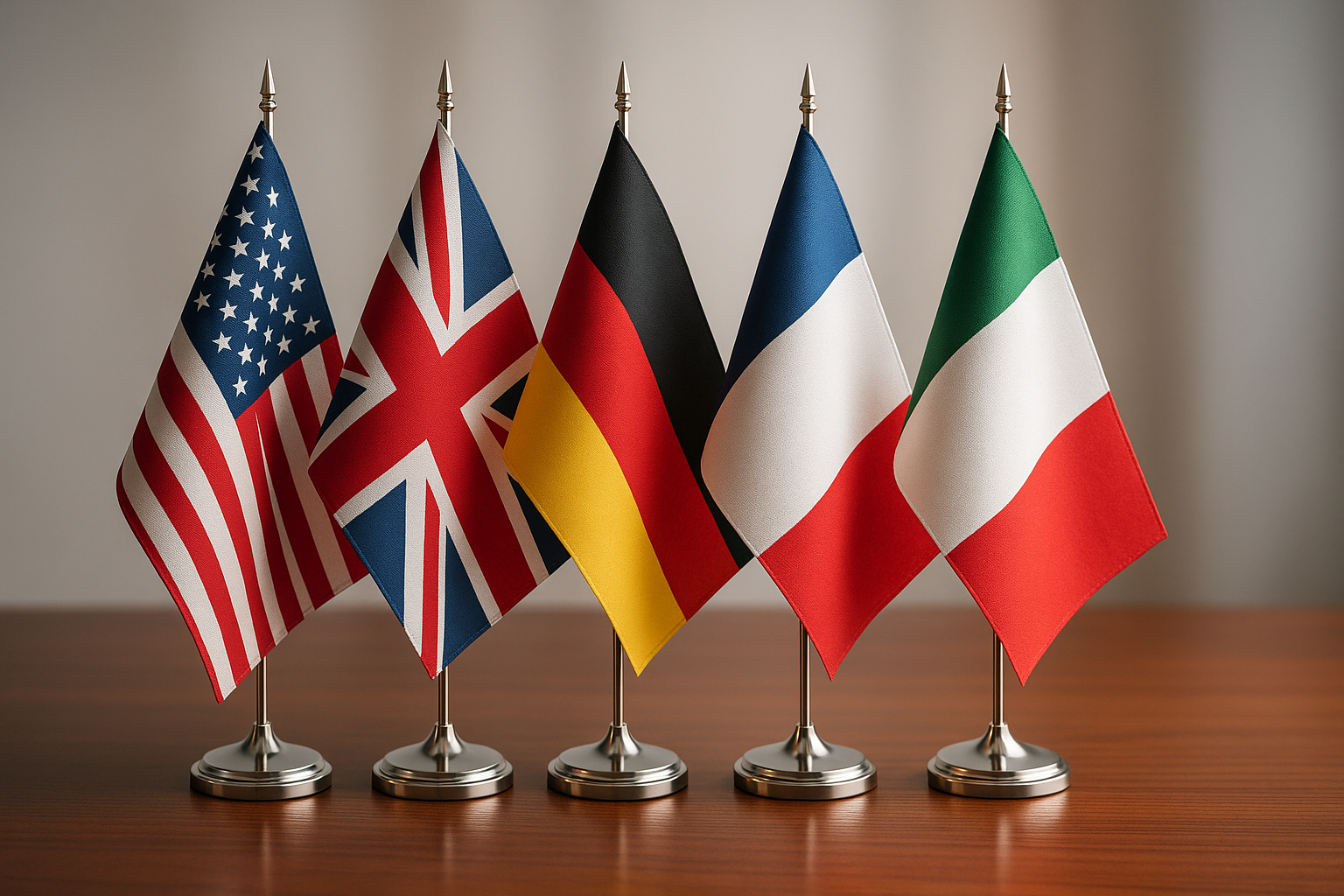
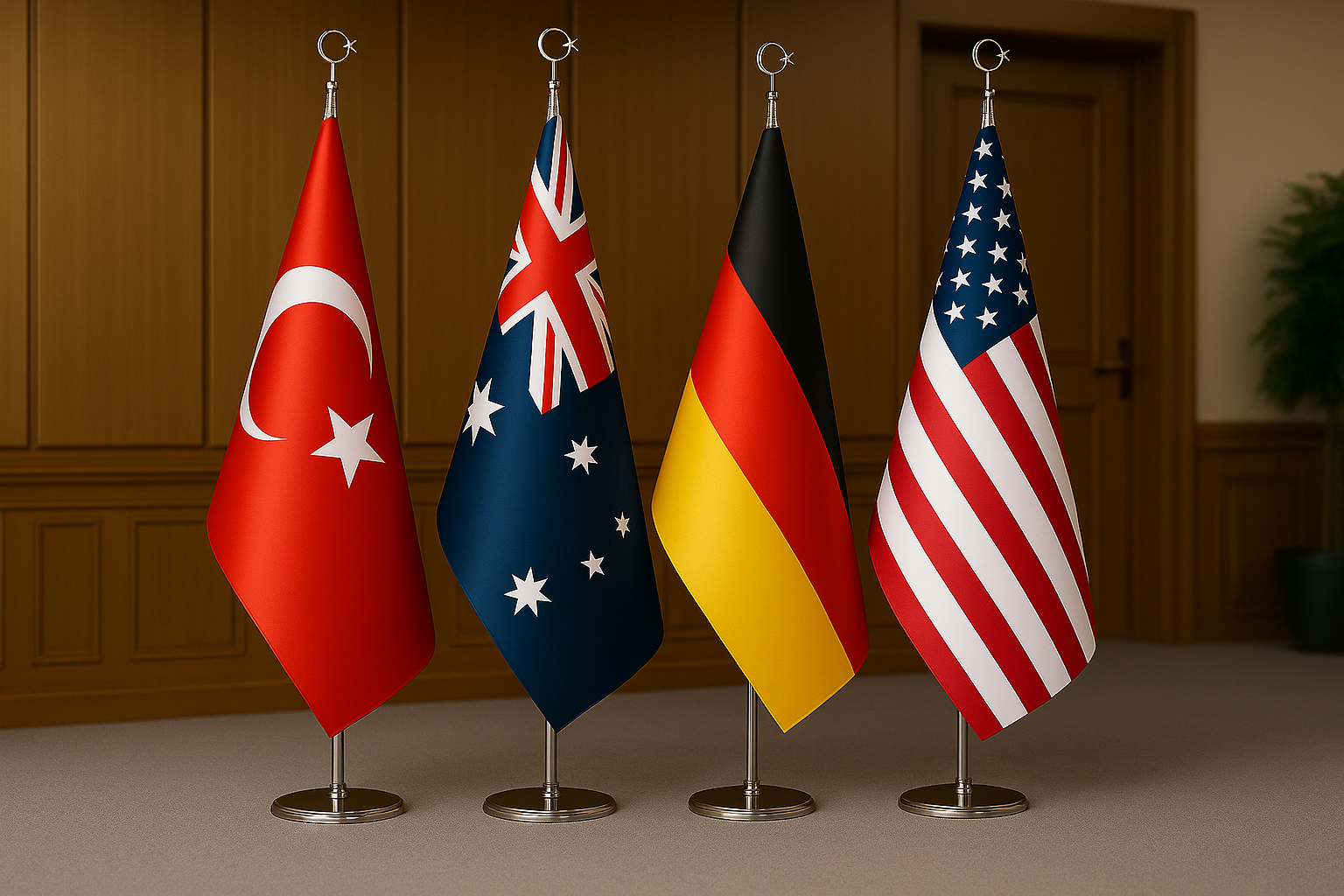



The correct Germany flag size for a given pole height follows a reliable ratio: the flag's fly length (horizontal width) should equal roughly one-quarter to one-third of the flagpole's total height, and the standard aspect ratio of the German flag is 3:5 (width to length). Whether you are mounting Germany's iconic black-red-gold tricolor on a 20 ft (6.1 m) residential pole or a 40 ft (12.2 m) commercial mast, matching the flag's dimensions to the pole prevents the banner from looking lost in the breeze or overwhelmingly large against its surroundings. For a full range of ready-to-fly options, browse the European Countries Flags collection, where sizes are clearly listed alongside each product.
Standard Germany Flag Sizes and Where Each One Is Used
Standard outdoor Germany flags are manufactured in five widely recognized sizes, each suited to a different pole height and setting. The table below maps common flag dimensions to their typical applications:
- 12 in × 18 in (30 cm × 46 cm) — boat stern staffs, small residential poles up to 6 ft (1.8 m), and parade hand-carrying.
- 2 ft × 3 ft (61 cm × 91 cm) — residential garden poles of 10–15 ft (3.0–4.6 m), balcony mounts, and small retail storefronts.
- 3 ft × 5 ft (91 cm × 152 cm) — the single most popular size in the United States; pairs with 20–25 ft (6.1–7.6 m) residential or light-commercial poles.
- 4 ft × 6 ft (122 cm × 183 cm) — medium commercial poles of 25–35 ft (7.6–10.7 m), car dealerships, and shopping-center entries.
- 5 ft × 8 ft (152 cm × 244 cm) — heavy-duty commercial poles of 35–45 ft (10.7–13.7 m), government buildings, and sports arenas.
- 6 ft × 10 ft (183 cm × 305 cm) — tall commercial or municipal poles of 45–60 ft (13.7–18.3 m).
- 8 ft × 12 ft (244 cm × 366 cm) and larger — monumental poles above 60 ft (18.3 m), highway overpasses, and stadium displays.
Germany's national flag — three equal horizontal bands of black (top), red (middle), and gold (bottom) — must maintain the 3:5 aspect ratio under the country's Flag Act (Flaggengesetz). This ratio is also recognized by the Fédération Internationale des Associations Vexillologiques (FIAV) as the official standard for the German Bundesflagge. Note that this differs slightly from many European neighbors: France and Italy both use a 2:3 ratio, so a same-pole Germany flag will appear a few inches shorter on its fly end than a French tricolor of equal hoist height. If you are coordinating a multi-nation display, keep this ratio difference in mind to ensure uniform visual presentation.
 The Germany Outdoor Flag is constructed from heavy-duty 200-denier nylon with UV-resistant inks rated to withstand approximately 80% of ultraviolet radiation, extending outdoor lifespan to roughly 6 months to 2 years depending on sun exposure and wind conditions. A reinforced canvas header and two solid brass grommets positioned at the hoist edge allow the flag to be attached securely to most standard flagpole halyard systems used across the United States. The fly end is finished with a double-stitched hem, which reduces fraying even during sustained winds — a practical advantage for climates in the Midwest or along coastal regions where gusts regularly exceed 30 mph (48 km/h). If you are flying the Germany flag alongside the Stars and Stripes, U.S. Flag Code (4 USC § 7) requires the U.S. flag to occupy the position of honor — the flag's own right — and that all foreign flags be flown at the same height. Matching a 3 ft × 5 ft Germany flag to a 3 ft × 5 ft USA flag on adjacent 20 ft (6.1 m) poles is the most common compliant pairing for residential and small-business use.
How to Choose the Right Germany Flag Size for Your Space
Choose your Germany flag size by working backward from three measurements: your available pole height, the viewing distance from the nearest public vantage point, and any local zoning or HOA restrictions on flag dimensions. As a general rule, a flag that subtends between 1° and 2° of arc at the primary viewing distance looks proportionate — at 100 ft (30.5 m) away, that translates to a fly length of roughly 1.7–3.5 ft (52–107 cm), which maps directly to the 2 ft × 3 ft or 3 ft × 5 ft size.
Viewing distance is the most underestimated factor in flag selection. A 3 ft × 5 ft (91 cm × 152 cm) Germany flag mounted on a 25 ft (7.6 m) residential pole reads clearly from up to 150 ft (46 m) away — enough for a typical suburban front yard or a small parking lot entrance. Beyond 200 ft (61 m), the black-red-gold bands begin to merge visually, and a 4 ft × 6 ft (122 cm × 183 cm) flag becomes the minimum practical size. For commercial properties with traffic passing at highway speed, a 5 ft × 8 ft (152 cm × 244 cm) flag on a 40 ft (12.2 m) pole is the industry standard recommendation.
Wind load is equally important. A larger flag generates dramatically more drag force: a 5 ft × 8 ft flag in a 30 mph (48 km/h) wind exerts approximately four times the force of a 2 ft × 3 ft flag in the same wind. Always confirm that your flagpole's structural rating — typically stamped on a plate at the base of commercial poles — matches or exceeds the wind load of the flag you intend to fly.
The Pole-Height-to-Flag-Size Ratio Explained
The established industry guideline is that the flag's fly length should be 25–33% of the flagpole's total height, while the hoist (height of the flag) should be roughly 15–20% of pole height. Applying these percentages to the Germany flag's 3:5 aspect ratio gives the following matched pairings:
- 10 ft (3.0 m) pole → 2 ft × 3 ft (61 cm × 91 cm) flag (fly = 30% of pole height)
- 15 ft (4.6 m) pole → 2 ft × 3 ft or 3 ft × 5 ft flag
- 20–25 ft (6.1–7.6 m) pole → 3 ft × 5 ft (91 cm × 152 cm) flag (fly = 25% of pole height at 20 ft)
- 30–35 ft (9.1–10.7 m) pole → 4 ft × 6 ft (122 cm × 183 cm) flag
- 40–45 ft (12.2–13.7 m) pole → 5 ft × 8 ft (152 cm × 244 cm) flag
- 50–60 ft (15.2–18.3 m) pole → 6 ft × 10 ft (183 cm × 305 cm) flag
- 80–100 ft (24.4–30.5 m) pole → 10 ft × 15 ft (305 cm × 457 cm) or larger
These ratios are consistent with guidelines published by the National Flag Foundation and are also aligned with the flag display practices used at German embassies and consulates worldwide. When in doubt, err on the side of one size smaller rather than one size larger — an undersized flag flaps cleanly and wears evenly, while an oversized flag wraps around the pole, degrades faster, and can stress the halyard system.
 Handheld or stick flags follow a completely different sizing logic than outdoor pole flags. The Germany Handheld Flag is designed for parades, trade show booths, stadium events, and tabletop waving — contexts where the flag travels at eye level in someone's hand rather than flying free in the air. Standard handheld Germany flags measure 4 in × 6 in (10 cm × 15 cm) on a 10-inch (25 cm) plastic or wooden staff, or 8 in × 12 in (20 cm × 30 cm) for larger crowd waving and promotional giveaways. These miniature flags maintain the official 3:5 aspect ratio of the German Bundesflagge, so the three equal horizontal stripes of black, red, and gold remain proportionally accurate even at this compact scale. For German-American cultural events, Oktoberfest celebrations, or heritage festivals, handheld flags in bulk quantities are frequently ordered alongside larger outdoor banners to create a cohesive visual presentation across different venues and distances.
Indoor, Outdoor, and Desk Germany Flag Sizes Compared
Indoor, outdoor, and desk Germany flags are not interchangeable — each format has its own standard dimensions, hardware, and materials suited to its environment. Understanding these distinctions saves money and avoids the common mistake of ordering an outdoor nylon flag for an indoor ceremonial setting where a poly-cotton blend with a fringed border is the expected presentation.
Outdoor flags (nylon or polyester, brass grommets): Most commonly ordered in 3 ft × 5 ft (91 cm × 152 cm) or 4 ft × 6 ft (122 cm × 183 cm). UV-stabilized inks, double-stitched fly hem, and 200-denier or heavier fabric. Expected lifespan outdoors: 6 months to 2 years. See the full range in the Country Flags collection.
Indoor/parade flags (poly-cotton, gold fringe, pole sleeve): Typically 3 ft × 5 ft (91 cm × 152 cm) or 4 ft × 6 ft (122 cm × 183 cm), with a reinforced pole sleeve along the hoist rather than grommets. Gold bullion fringe (2.5 in / 6.4 cm wide) is added along the fly, bottom, and sometimes top edges. These flags are displayed on a floor-standing indoor pole set — usually 8–9 ft (2.4–2.7 m) tall — in offices, boardrooms, and diplomatic reception areas.
Desk flags: The standard desk flag for Germany measures 4 in × 6 in (10 cm × 15 cm) on a 10-inch (25 cm) staff with a small base, or 4 in × 6 in on a 6-inch (15.2 cm) chrome staff inserted into a decorative base. These are used on executive desks, conference tables, and trade show counters. Browse desk-sized options in the Country Desk Flags collection for coordinated sets covering multiple nations.

European Countries Flags
Every major European national flag — including Germany — in outdoor, indoor, and desk sizes, ready for single-unit or bulk orders.
Browse Collection →Common Germany Flag Sizing Mistakes to Avoid
The most frequent Germany flag sizing mistake is ordering a 3 ft × 5 ft flag for a pole that is 30 ft (9.1 m) or taller — the flag simply disappears visually at that height and reads as a postage stamp against the sky. At 30 ft, the minimum recommended size is 4 ft × 6 ft, and 5 ft × 8 ft is preferred for busy commercial locations.
Here are the other sizing errors we see most often from customers:
- Ignoring the 3:5 aspect ratio: Some generic suppliers cut Germany flags at a 2:3 ratio (more convenient for manufacturing) instead of the official 3:5. The result is a flag that looks too short on the fly end and misrepresents the Bundesflagge. Always verify the finished dimensions before ordering.
- Confusing hoist and fly: Flag dimensions are always stated as hoist × fly (height × width). A "3 ft × 5 ft" flag is 3 ft tall and 5 ft wide, not the reverse. Reversing these on a vertical pole mount is a surprisingly common installation error.
- Ordering outdoor nylon for indoor display: Nylon flies beautifully in wind but looks limp indoors. Indoor Germany flags use a heavier woven fabric that drapes properly from a floor-standing pole without any airflow.
- Skipping the halyard check: A 5 ft × 8 ft flag on a thin halyard designed for a 3 ft × 5 ft flag will snap the rope or wear through the grommet holes within weeks. Match your halyard diameter and snap hook strength to the flag's wind-load rating.
- Underestimating replacement frequency: Even a premium UV-resistant outdoor Germany flag typically lasts 6–12 months in full-sun, high-wind coastal or plains locations. Budgeting for annual or semi-annual replacement — especially for commercial displays — prevents an faded, tattered flag from becoming a brand-image problem.
For a parallel discussion of how aspect ratio and fabric choice interact with price, the article on Standard Italy Flag Dimensions provides useful context for European flags broadly, since Italy, like Germany, uses a distinctly different ratio from the United Kingdom or the United States.
Frequently Asked Questions About Germany Flag Sizes
What is the official aspect ratio of the Germany flag? +
What size Germany flag fits a standard 20 ft residential flagpole? +
What are the colors of the Germany flag and what do they mean? +
What is the oldest flag of Germany? +
Can I fly a Germany flag alongside a US flag, and are there rules? +
How long does an outdoor Germany flag typically last? +
What size Germany handheld flag is best for parades and events? +
Is the Germany flag the same as any other country's flag? +
Choosing the right Germany flag size is straightforward once you know your pole height and apply the standard 25–33% fly-length guideline. For most homeowners and small businesses in the US, a 3 ft × 5 ft Germany Outdoor Flag on a 20–25 ft pole is the correct starting point. Event organizers and cultural groups frequently complement larger displays with the Germany Handheld Flag for crowd interaction and table décor. The full range of sizes — from desk flags to monumental banners — is available in the European Countries Flags collection. For additional context on how European flag pricing and dimensions interact, the article on France Flag Prices: Cost by Size and Material is a useful companion read. Bulk pricing is available for corporate, government, and institutional orders — contact us directly to discuss quantity discounts and custom sizing.