
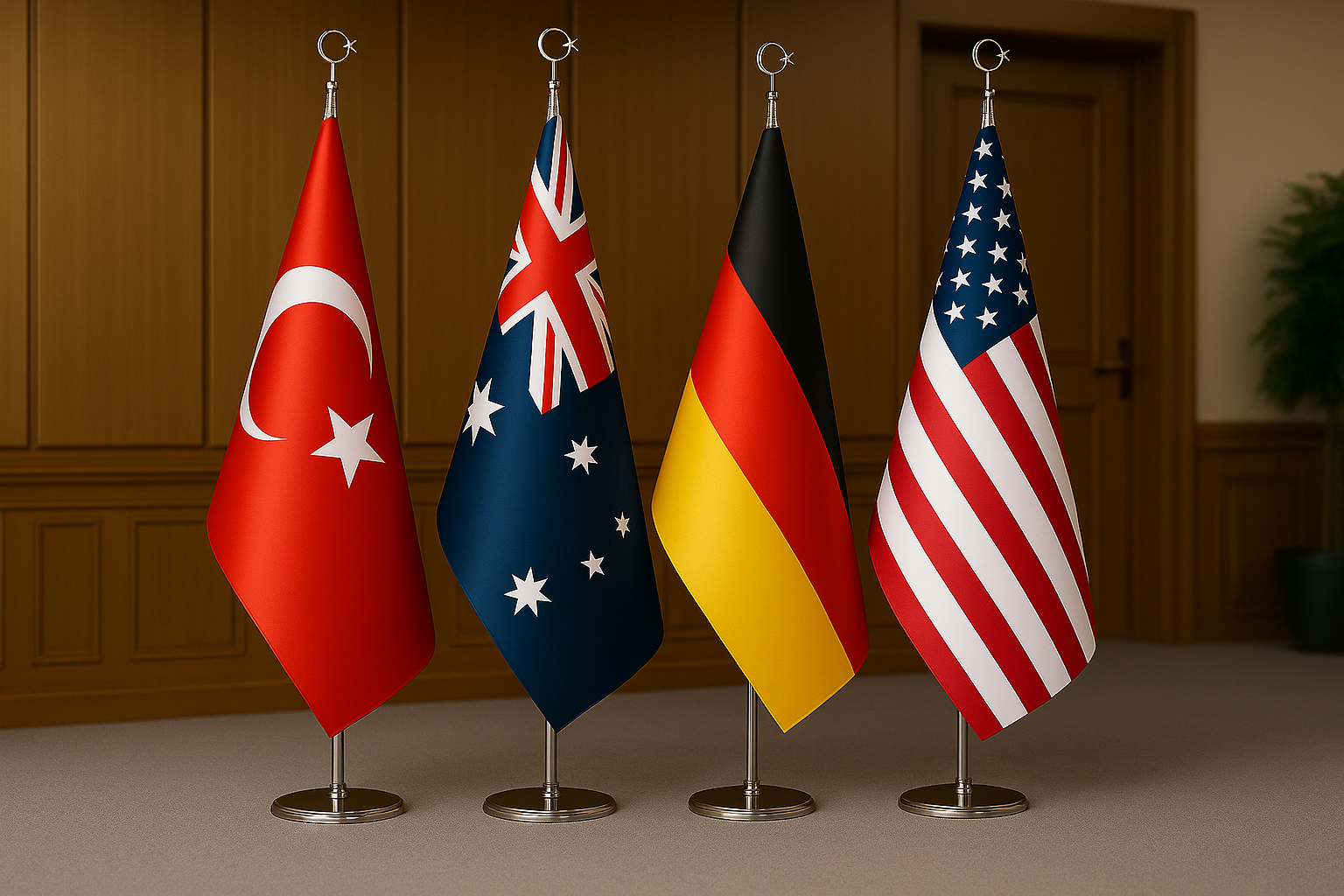

The cost of an Australia flag depends primarily on four variables: material, size, printing method, and order quantity — and understanding each one helps you buy smarter, whether you need a single desk piece or hundreds of flags for an event. Browse the full Oceania Countries Flags collection to compare all available Australia flag formats side by side before reading the breakdown below.
The Four Factors That Determine Australia Flag Pricing
Every Australia flag price comes down to four core drivers: material, size, printing method, and quantity ordered. These four levers interact with each other — a large flag in a premium material with full-color dye-sublimation printing ordered in small quantities will sit at the highest end of the range, while a compact handheld flag in standard polyester ordered by the case will cost a fraction of that.
Material is the single biggest cost driver, often accounting for more than half the price difference between two otherwise identical flags. After material comes size: fabric, thread, and printing ink usage all scale with square footage, and larger flags also require heavier-duty grommets, reinforced stitching, and stronger header canvas. Printing method adds another layer — dye-sublimation (where ink is thermally bonded into the fabric fiber) costs more to set up than digital inkjet-on-polyester but produces sharper, more durable color. Finally, order quantity spreads setup costs across more units, which is why bulk orders are priced so differently from single-unit retail purchases. If you are researching how quantity discounts work across comparable national flags, the article on buying Canada flags in bulk and what drives price covers the same cost logic in useful detail.
How Material Choices Affect the Price of an Australia Flag
Material is the clearest predictor of where an Australia flag sits on the price spectrum: a 100% woven nylon flag with dye-sublimated color costs noticeably more than a single-layer knitted polyester flag of the same size, and both cost more than a lightweight polycotton blend. The reasons are real and worth understanding before you buy.
 Nylon is the gold standard for outdoor flag longevity. It is tightly woven, naturally resistant to moisture, and carries dye-sublimation color exceptionally well — meaning the deep blue of the Australian Blue Ensign background, the Union Jack canton, and the Commonwealth Star remain vivid even after months of UV exposure. Independent testing on outdoor nylon flags typically shows 80% UV color retention over 6–12 months of continuous outdoor exposure, compared to 50–60% for standard knitted polyester over the same period. The higher raw-material cost of nylon (roughly 20–35% more per yard than comparable polyester) flows directly into the unit price, but that premium buys a flag that does not fade, fray, or pill as quickly. The Australia Outdoor Flag is manufactured in this category, making it the right choice for flagpoles, building facades, and any permanent display where dignity of presentation matters.
Knitted polyester is the most common material for mid-range Australia flags. It is lighter, slightly more transparent (which creates a pleasant "fly-through" effect in wind), and considerably cheaper to produce. A knitted polyester flag is an excellent choice for events, indoor displays, or situations where the flag will be rotated seasonally. Polycotton blends occupy the budget tier — they print well and feel natural to the touch, but they absorb moisture, making them susceptible to mold and color bleed in wet climates. For indoor desk and office applications, the material question shifts entirely: a Australia Desk Flag uses a finer, stiffer fabric mounted on a weighted base, and its cost reflects the base material and assembly labor more than yardage.
How Flag Size Changes the Price You Pay
Size is the second-largest cost driver: every increase in flag dimensions adds fabric, ink, stitching length, and reinforcement hardware, all of which accumulate quickly. A 3 ft × 5 ft (91 cm × 152 cm) flag uses roughly three times the fabric of a 2 ft × 3 ft (61 cm × 91 cm) version, and the price gap reflects that difference almost linearly.
The standard Australian national flag, as described by the Flags Act 1953 (Cth), uses a 1:2 length-to-width ratio — so a 3 ft × 6 ft (91 cm × 183 cm) configuration is technically the most "correct" proportion, though the international 2:3 ratio (3 ft × 5 ft) is widely accepted for commercial use and is what most buyers order. Larger outdoor formats — 4 ft × 8 ft (122 cm × 244 cm) or 5 ft × 10 ft (152 cm × 305 cm) — are common on government buildings, sports venues, and commercial properties in Australia and in large Australian diaspora communities abroad. These larger formats carry proportionally higher prices not just for fabric but for the industrial-grade stitching, triple-stitched fly end, and heavier brass grommets required to survive sustained wind loads. At the other end of the spectrum, handheld flags — typically 4 in × 6 in (10 cm × 15 cm) mounted on a 10-inch (25 cm) plastic staff — cost very little per unit precisely because they use minimal material and are produced in very high volumes.
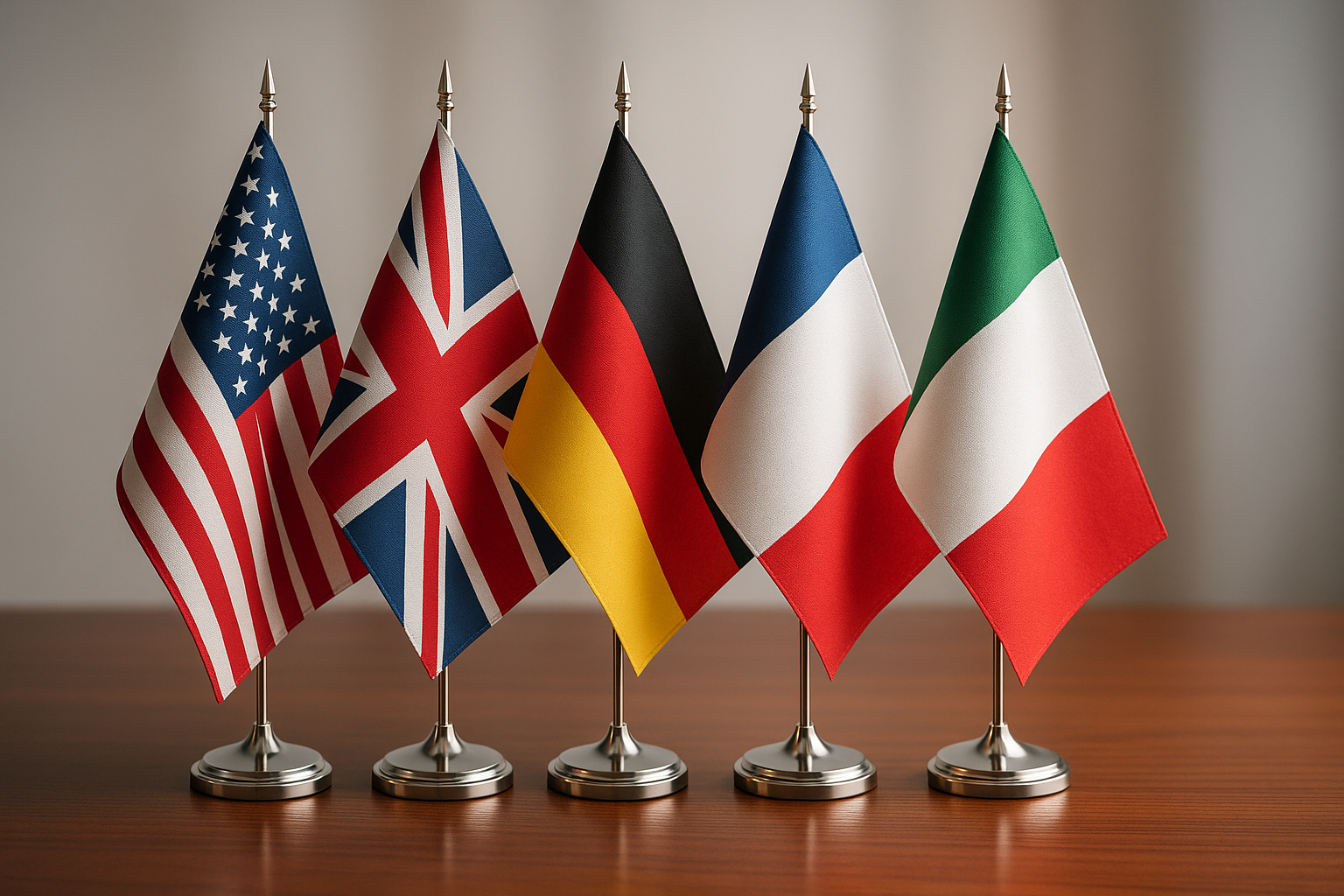
 Desk flags occupy their own size category entirely. A typical desk format measures 4 in × 6 in (10 cm × 15 cm) on a 10 in (25 cm) staff with a weighted chrome or black base. The Australia Desk Flag is ideal for conference tables, reception counters, diplomatic offices, and any workspace that needs to signal an Australian connection with precision and elegance. Because the flag fabric itself is small, the cost is dominated by the base material and finish rather than by yardage — which makes size comparisons between desk flags and outdoor flags essentially meaningless from a pricing standpoint. If you are equipping a full office suite or meeting room, the Country Desk Flags collection is worth browsing for multi-flag arrangements across all nations.
Current Australia Flag Price List
The table below reflects current pricing across available sizes and formats. Prices vary by material tier and configuration; all figures shown are for standard production runs without rush fees.
Current Price List
| Product | Size | Price | |
|---|---|---|---|
| Australia Outdoor Flag | 50 x 75 cm | $11.95 | Check the live price → |
| 60 x 90 cm | $12.95 | Check the live price → | |
| 70 x 105 cm | $13.95 | Check the live price → | |
| 80 x 120 cm | $15.95 | Check the live price → | |
| 100 x 150 cm | $16.95 | Check the live price → | |
| Australia Desk Flag | Silver | $12.25 | Check the live price → |
| Gold | $15.95 | Check the live price → | |
| Australia Handheld Flag | 15x22.5cm / 50 Units | $41.95 | Check the live price → |
| 20x30cm / 50 Units | $57.95 | Check the live price → | |
| 30x45cm / 50 Units | $57.95 | Check the live price → | |
| 15x22.5cm / 100 Units | $78.95 | Check the live price → | |
| 40x60cm / 50 Units | $87.95 | Check the live price → |
Prices as of August 09, 2026. All sizes and materials
How Bulk and Corporate Orders Lower the Per-Unit Price
Ordering Australia flags in bulk — typically 12 units or more for small events, 50+ for corporate programs, and 200+ for large-scale procurement — triggers meaningful per-unit price reductions because setup and overhead costs are spread across more items. The savings on quantity orders are not trivial: corporate buyers routinely achieve 20–40% lower per-unit costs compared to single-unit retail pricing.

Oceania Countries Flags Collection
Every Oceania national flag — including Australia — available in outdoor, desk, and handheld formats for retail, event, and bulk corporate orders.
Browse Collection →The cost mechanics behind bulk pricing are straightforward. Screen printing and dye-sublimation both require setup time, calibration, and color-matching work that happens once per run regardless of how many flags are produced. A run of 10 flags absorbs the same setup cost as a run of 500 — so the 500-unit order pays a tiny fraction of that overhead per flag. Material purchasing also scales: buying fabric by the roll rather than by the yard reduces input costs by 15–25%. For corporate clients, Australian embassies, trade offices, sports clubs, and university international student programs, these savings compound quickly across large orders. Bulk pricing is available for corporate orders of all sizes — contact the team to discuss volume pricing for your specific configuration and timeline.
Why a Cheap Australia Flag Costs More Over Time
A budget-tier Australia flag may look attractive at the point of purchase, but its true cost over a 12–24 month outdoor lifecycle is almost always higher than that of a quality nylon flag bought once. This is one of the most consistent patterns seen across flag procurement, and the math is simple.
A low-cost knitted polyester flag exposed to direct sunlight in a coastal Australian-climate analog (UV index 10–11, salt air, regular rain) typically shows significant color fading within 3–4 months and structural fraying at the fly end within 5–6 months. A quality dye-sublimated nylon flag under the same conditions lasts 12–18 months with normal care, and heavy-duty versions with double-stitched fly ends and reinforced grommets can reach 18–24 months. If you replace a cheap flag three times in 18 months, the cumulative spend — including shipping and installation labor — can easily exceed the one-time cost of a premium flag. Beyond cost, there is also a presentation argument: the Australian flag represents national identity and carries real legal protocols under the Flags Act 1953 (Cth), which specifically discourages display of a damaged or faded flag. Flying a deteriorating flag is not just an aesthetic problem; it conflicts with the spirit of the Act. For those who want to go deeper on how comparable countries price their flags at different quality tiers, the guide on France flag prices by size and material applies the same durability-cost framework and is worth reading alongside this article.
The Australia Handheld Flag is the one deliberate exception to the durability calculus: handheld flags are inherently short-use items for parades, sporting events, and celebrations, and for that purpose a lightweight, low-cost format is exactly right. The key is matching the product tier to the use case — not simply chasing the lowest unit price regardless of context.
What does the Australia flag actually look like — what are its colors and symbols? +
What is the correct ratio for the Australia flag flag — is it 1:2 or 2:3? +
How long does an Australia outdoor flag last? +
Is the Australia flag the same as other Oceania flags — how do I tell them apart? +
Can I order a custom-size Australia flag for a specific flagpole or building? +
What format should I choose — outdoor flag, desk flag, or handheld flag — for Australia Day events? +
Do Australia flags need to meet any official color standards? +
Choosing the right Australia flag format at the right price point comes down to knowing your use case and matching it to material, size, and quantity. For permanent outdoor display, invest in the Australia Outdoor Flag in nylon for maximum longevity. For office, diplomatic, or conference settings, the Australia Desk Flag delivers precision and professionalism in a compact format. For events and celebrations, the Australia Handheld Flag is the cost-efficient crowd solution. All formats are available through the Oceania Countries Flags collection, alongside flags for New Zealand, Papua New Guinea, and every other Pacific nation. Bulk pricing is available for corporate orders — reach out with your volume and delivery requirements for a tailored quote.


