
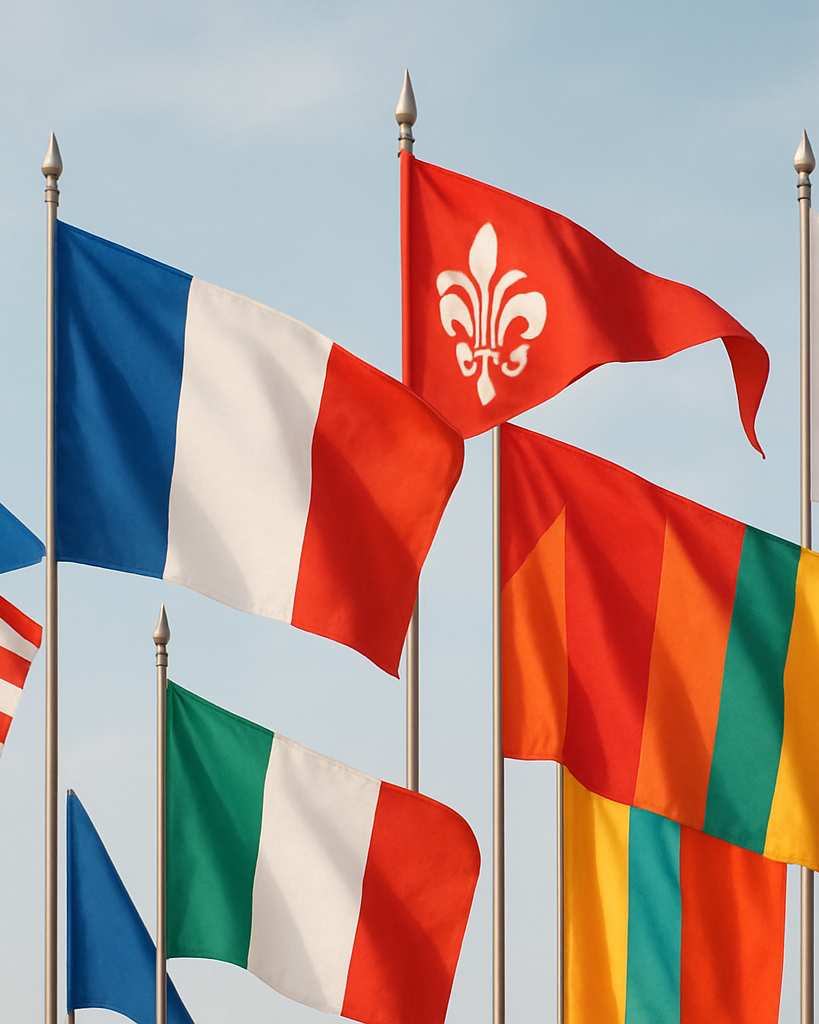
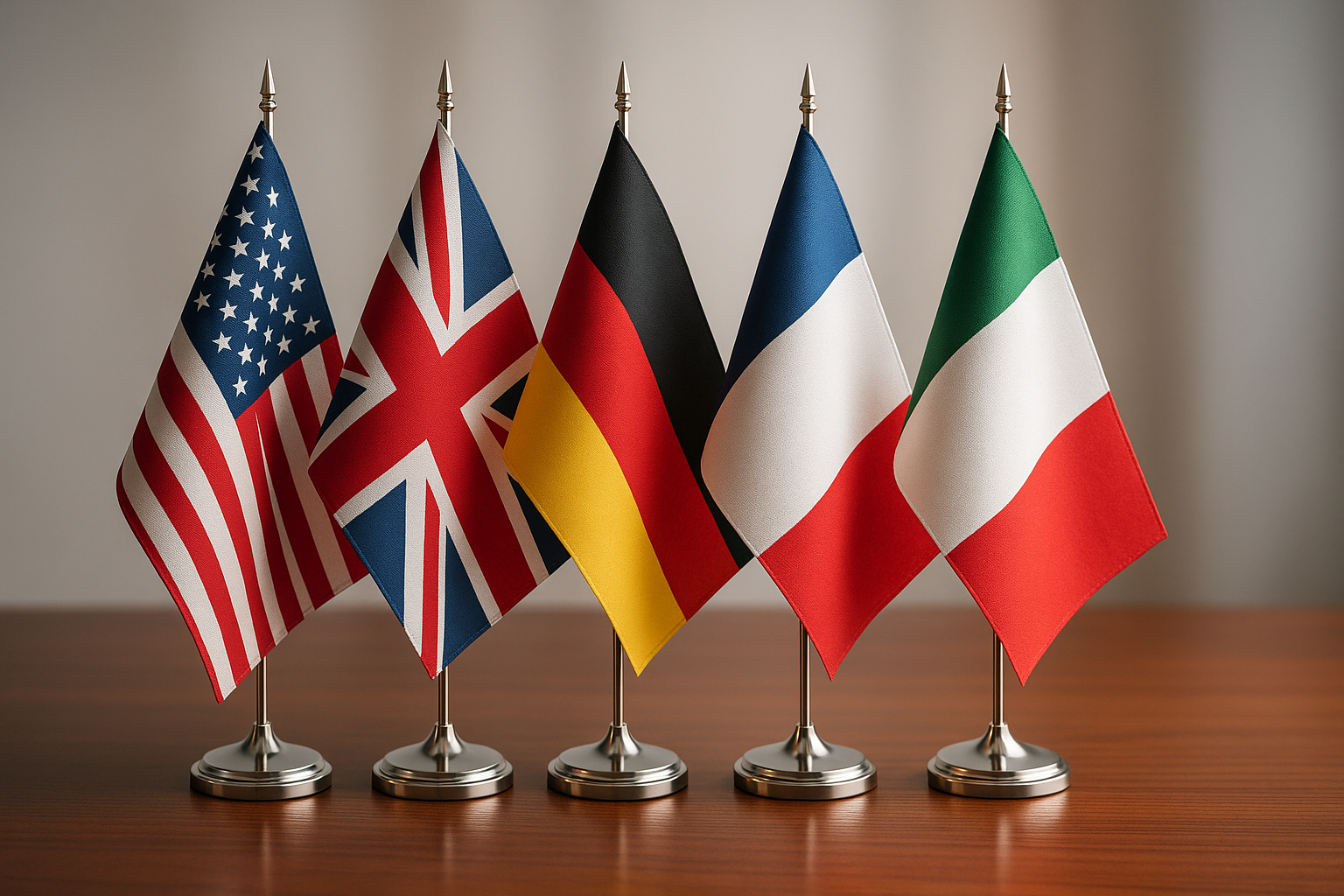
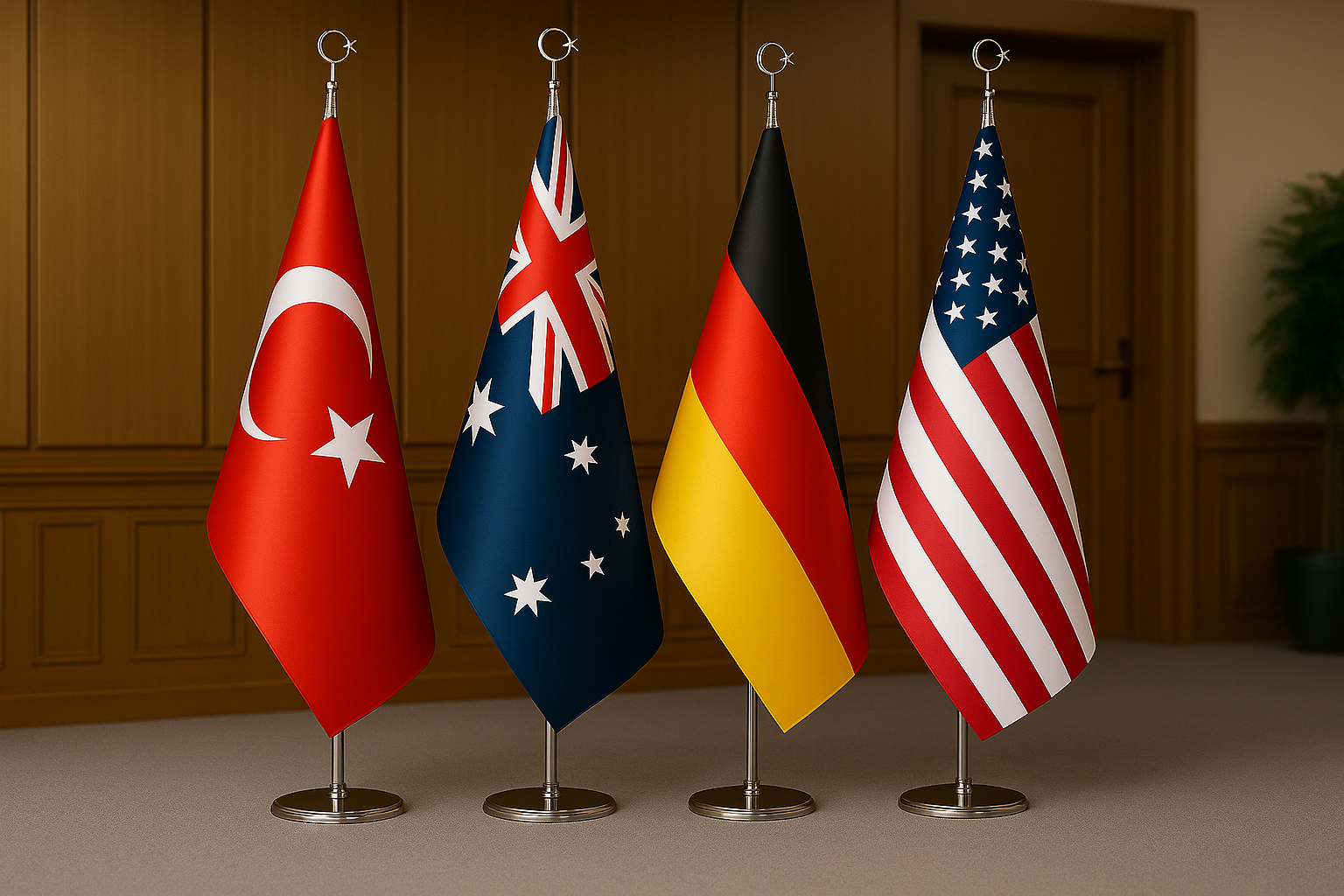


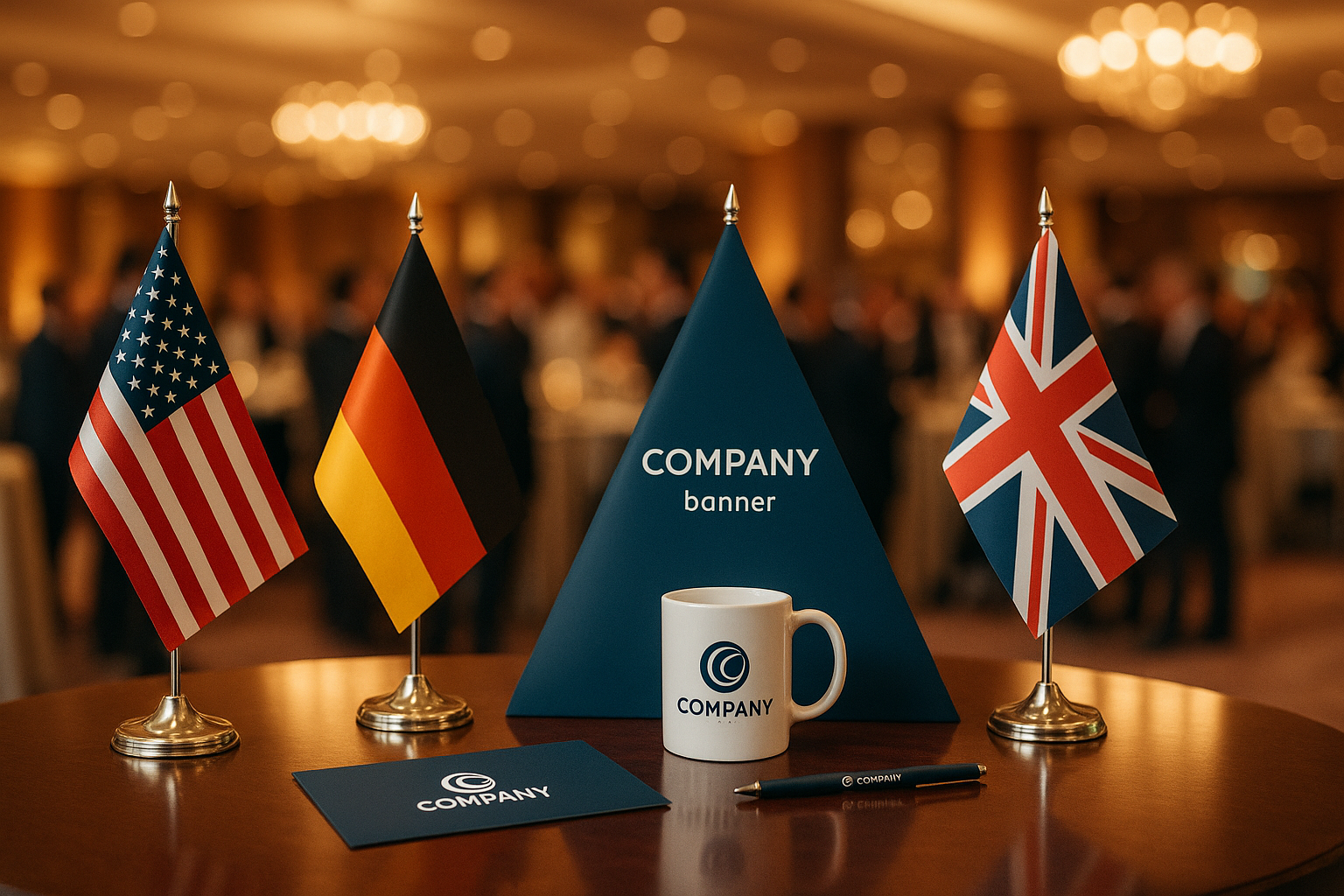

Vertical logo pole flags are one of the most effective outdoor branding tools available to businesses — they display your logo at eye level and above, are visible from a distance, and can be deployed at virtually any commercial location within hours. If you're planning a branded flag installation for your business, the Logo Printed Vertical Pole Flags collection offers custom-printed options built for commercial outdoor use, with durable materials that hold color through months of wind and sun exposure.
Which Vertical Pole Flag Format Is Right for Your Brand?
For most brand applications, a single-sided digitally printed vertical pole flag on woven polyester is the right choice — it balances visibility, durability, and cost-per-impression across both short-term events and permanent outdoor installations. The format you select will depend on how long the flags need to last, how much wind they'll face, and whether they're anchored or portable.
Vertical pole flags for branding typically fall into two functional categories: feather-style flags (also called blade or teardrop flags) and straight rectangular banner flags mounted on vertical poles. Feather flags have a curved silhouette that moves in light wind, making them highly noticeable at sidewalk level. Rectangular vertical banners offer a more formal, architectural look that suits corporate campuses, hotel entrances, and government-adjacent facilities. Both formats work well with logo printing, but the shape affects how your artwork is laid out — a vertical rectangle gives you more usable width for a wordmark, while a feather flag works better with a stacked logo or icon-and-tagline pairing.
 Material weight matters significantly for outdoor logo flags. A 115–150 gsm woven polyester is the commercial standard — light enough to fly in moderate wind (8–15 mph / 13–24 km/h) without tearing, but dense enough to prevent excessive bleed-through that would muddy your logo on the reverse side. UV-resistant inks rated at 80% color retention after 6 months of outdoor exposure are the baseline to ask for from any manufacturer. If your flags will be in a high-wind location such as a coastal property, a parking structure entrance, or an elevated plaza, specify reinforced hems and double-stitched pole sleeves, which extend flag lifespan from the standard 6–12 months up to 18–24 months under the same conditions. The Logo Printed Pole Flag is built to this commercial specification, with finished edges and a top-sleeve or side-sleeve mounting option depending on your pole hardware.
For a deeper comparison of flag formats and what hardware setup actually looks like at the installation level, the article on Feather Flag Pole Kits: What's Actually Included covers pole components, ground stakes, and weighted bases in detail — worth reading before you finalize your pole format.
How Many Flags Does Your Brand Installation Actually Need?
Most commercial brand installations require a minimum of three to six flags to create genuine visual impact — a single flag registers as an afterthought, while a row of three or more creates a branded corridor that anchors your location in a viewer's memory. The exact number depends on your frontage length, pole spacing, and the visual goal you're trying to achieve.
A practical rule for linear installations along a building facade or parking lot perimeter: place one flag every 10–15 ft (3–4.5 m) along the visible frontage. For a 50 ft (15.2 m) storefront, that works out to 4–5 flags. For a larger development with 200 ft (61 m) of road-facing exposure, you'd need 13–20 flags to maintain consistent visual density. If flags are being used to mark an entrance corridor or event approach route, two parallel rows — one on each side of the walkway — require double that count.
Corner installations benefit from a cluster of 3 flags set at slightly different heights to create depth. Event setups (product launches, grand openings, trade show exteriors) typically deploy 6–12 flags as a temporary surround, then reduce to a permanent installation of 3–4 flags afterward. Budget for at least one spare flag per 5 installed — wind damage, unexpected events, and cleaning cycles mean you'll want a ready replacement rather than scrambling for a reorder. This logistics planning is also relevant to property management deployments, which are covered in detail in the Outdoor Branded Pole Flags for Real Estate Developments guide.
Layout and Setup: Positioning Your Vertical Logo Flags for Maximum Brand Visibility
The most effective vertical logo flag layout positions flags so they are visible from the primary vehicle approach direction at a distance of at least 150 ft (45.7 m), which is the average reaction distance for a driver traveling 25–35 mph (40–56 km/h). Achieving this requires attention to flag height, pole placement relative to sight lines, and the orientation of your printed artwork.
Pole height is your most critical variable. Standard commercial vertical pole flags run on 13–20 ft (4–6 m) poles. At 13 ft (4 m), flags are visible above parked cars and pedestrian traffic. At 20 ft (6 m), flags clear single-story building signage and are legible from across a parking lot. For roadside installations visible from a 45 mph (72 km/h) arterial road, 20 ft poles with a flag body of at least 3 ft × 9 ft (0.9 m × 2.7 m) are the minimum for logo legibility. Your logo on the flag should occupy at least 30–40% of the flag's total area to be readable at distance — if your logo includes fine text elements smaller than 2 in (5 cm) on the finished flag, simplify to the icon or wordmark only.
For building entrances, mount flags so the bottom edge of the flag body is at least 8 ft (2.4 m) above the ground to clear pedestrian head height and comply with most local commercial signage clearance ordinances. Flags placed lower than 7 ft (2.1 m) in pedestrian areas can present a liability issue and may conflict with local codes. When in doubt, check your municipality's commercial signage ordinance — many cities classify large outdoor flags as temporary signage and require a permit for installations exceeding 30 days.
Budget Planning for Vertical Logo Flag Programs
Four things decide what a vertical logo pole flag program costs: the print method, the grade of the material, the finished dimensions, and how many units you order at once. Print method and material grade move the figure the most, and per-unit cost drops noticeably once an order reaches ten units or more. Pole hardware, ground stakes and weighted bases are quoted separately from the flags themselves, and a permanent installation costs more per point than a temporary one. Current pricing for each size and material is listed on the product pages.
Scale changes the maths. A small retail location running four to six flags on existing poles is buying flags only, so hardware never enters the budget. A mid-size commercial development running twelve to twenty flags is buying flags and mounting hardware together, which is where installation points start to matter. A corporate campus or franchise network running fifty or more flags across several sites gets the lowest per-unit figure, and a single coordinated bulk order beats site-by-site ordering every time. Replacement cycles belong in the same budget: outdoor logo flags in moderate climates last 12–18 months under typical conditions, while high-UV, high-wind or coastal environments shorten that to 8–12 months. Treat flags as a recurring line in the annual marketing budget rather than a one-time purchase.

Corporate Flags Collection
Custom-printed corporate flags for exterior and interior brand installations — designed for commercial-grade outdoor performance and consistent logo reproduction across multiple locations.
Browse Collection →One cost-efficiency lever that many brands overlook: standardizing on a single flag size across all locations. When every location in a franchise or retail network orders the same 2.5 ft × 8 ft (76 cm × 244 cm) flag format, you can stock spare flags centrally and ship replacements as needed, rather than custom-ordering a different spec each time a location needs a replacement. This standardization approach is particularly well-suited to the Corporate Flags collection, which is designed to support multi-location brand programs with consistent print standards.
When to Order: Lead Times and Timing Your Flag Installation
For custom logo-printed vertical pole flags, plan on a minimum of 10–14 business days from artwork approval to delivery for standard production runs, and 5–7 business days for rush production — but rush fees typically add 20–35% to the unit cost. Ordering 4–6 weeks before your planned installation date gives you buffer for proofing, revision, and shipping without paying a premium.
Seasonal timing matters more than most brands anticipate. Spring (March–May) and fall (September–October) are the busiest production periods for outdoor flag manufacturers, driven by grand opening season, fall retail launches, and event season. Orders placed in January–February or June–July typically move faster and may qualify for better pricing. If your installation is tied to a fixed event date — a grand opening, franchise launch, or trade show exterior — lock in your order at least 6 weeks out and get written confirmation of the production timeline before approving artwork.
Artwork submission is the most common source of delays. Submit vector files (.AI, .EPS, or high-resolution .PDF) with logo elements converted to outlines and all fonts embedded. A rasterized .JPG or .PNG of your logo will almost always require a redraw fee and adds 2–5 business days to the timeline. If your brand has a style guide, share it with the manufacturer — specifying Pantone colors (e.g., PMS 286 C for a specific blue) rather than RGB or HEX values is the most reliable way to get consistent color across a large flag order. FIAV-standard flag design principles recommend keeping the number of colors to five or fewer for outdoor applications, which also reduces reproduction risk.
For installations at properties with HOA oversight or commercial landlord review requirements, allow an additional 1–3 weeks for permit or approval processing before your target installation date. This protocol layer is explored in more depth in the article on Outdoor Flags for Apartment Complexes, HOA Communities, and Real Estate Developments, which covers compliance considerations for those specific venue types.
What is the best size for a vertical logo pole flag used outdoors? +
How long do custom-printed vertical logo flags last outdoors? +
Can I print a full-color logo with gradients on a vertical pole flag? +
Do I need a permit to install vertical logo flags outside my business? +
What file format should I submit for my logo artwork? +
Is there a minimum order quantity for custom vertical logo pole flags? +
Can vertical logo pole flags be used indoors as well as outdoors? +
Vertical logo pole flags deliver measurable brand presence when deployed with the right product format, quantity, layout, and timing — and the planning decisions you make before ordering have more impact on results than the flags themselves. For your next brand flag program, start with the Logo Printed Vertical Pole Flags collection to review available sizes and configurations, and explore the Corporate Flags collection for broader brand installation options including multi-location programs. The Logo Printed Pole Flag product page includes specifications for materials, mounting options, and available dimensions. Bulk pricing is available for corporate orders of 10 or more units — contact the Asya Bayrak team directly to discuss volume pricing, franchise program pricing, and coordinated multi-location rollouts.


