






NATO standard flag specifications define precise requirements for dimensions, materials, color accuracy, and finishing that ensure consistent identification across all member-nation military operations and official ceremonies. Understanding these international flag specs is essential for procurement officers, defense contractors, and flag manufacturers who need to meet strict military flag standards and flag compliance requirements across 32 member nations.
What Are NATO Standard Flag Specifications?
NATO flag standards are a set of formally documented technical requirements that govern the physical characteristics of flags used in alliance operations, installations, and official events. These standards align with broader STANAG (Standardization Agreement) protocols, which NATO uses to ensure interoperability across all member militaries. The NATO flag itself — a four-pointed compass star on a dark navy blue field — must adhere to a specific pantone color reference: Pantone 280C for the blue background and white (unprinted fabric) for the star and circle. Deviations in color, even minor ones that appear subtle to the human eye, can cause identification failures in low-light or high-speed visual scanning environments, which is why procurement documents are exhaustively precise. Any flag flying at a NATO installation or being carried in an allied military formation must meet these documented specifications or risk rejection during inspection.
Dimensional Requirements and Aspect Ratios
The standard NATO flag aspect ratio is 2:3, meaning a flag that is 3 ft wide (91 cm) must be exactly 2 ft tall (61 cm), though operational sizes range considerably depending on context. Indoor ceremonial flags used at headquarters or command posts typically measure 3 ft × 5 ft (91 cm × 152 cm), while outdoor garrison flags for permanent installations may reach 5 ft × 8 ft (152 cm × 244 cm) or larger. Vehicle-mounted flags — used on command vehicles, diplomatic transports, and parade staff cars — follow a reduced format of approximately 12 in × 18 in (30 cm × 46 cm) to maintain visibility without obstructing driver sightlines. Parade and hand-carried flags adhere to a 16 in × 24 in (41 cm × 61 cm) format with reinforced hoist edges. Each size category has associated tolerances, typically ±0.5 in (±1.27 cm) for larger formats and ±0.25 in (±0.64 cm) for smaller handheld versions, so manufacturers must maintain extremely tight quality control throughout the cutting and sewing process.
Approved Materials and Fabric Standards
Military flag standards require fabrics that balance durability, colorfastness, and weight appropriate for the intended use environment. For outdoor garrison flags exposed to sustained wind and weather, heavyweight nylon or polyester fabrics weighing between 200–210 gsm (grams per square meter) are the most commonly approved materials, offering at least 80% UV resistance to prevent fading over a 12-month minimum service life. Indoor ceremonial flags may use lighter woven polyester or even silk-look fabric at 120–150 gsm, since they are not subjected to the same environmental stressors. All approved materials must pass standardized colorfastness testing, including ISO 105-B02 (light fastness) and ISO 105-C06 (wash fastness), to ensure the Pantone 280C navy blue does not bleed, fade, or shift under operational conditions. Thread used in stitching must be colorfast polyester, and the header — the reinforced sleeve through which the flagpole is inserted or to which snap hooks are attached — must be constructed from canvas or heavy duck cloth with a minimum tensile strength of 200 lbf (890 N) per linear inch.
Hoist, Header, and Finishing Specifications
Proper finishing details are among the most frequently cited points of non-compliance during NATO flag inspections. The hoist side must be reinforced with a double-folded header at least 1.5 in (3.8 cm) wide, and brass grommets of a minimum diameter of 0.5 in (1.27 cm) must be set at the top and bottom of the header using industrial presses, not hand tools, to ensure consistent pull-out resistance exceeding 100 lbf (445 N). Fly-end finishing must include a hem sewn with a minimum of three rows of lock-stitching to resist fraying under sustained 40 mph (64 km/h) wind conditions. Some STANAG procurement documents also specify that flags intended for maritime or offshore platform use must include storm-reinforced fly ends with additional bar tacking at each corner, adding a secondary layer of durability. Rope-and-toggle arrangements, as opposed to simple grommet hoisting systems, are sometimes required for certain ceremonial formats and must use braided natural-fiber or synthetic rope that complies with load ratings outlined in the procurement specification. Manufacturers who produce flags for international country flag collections used in multi-nation ceremonies must ensure every finishing detail aligns with these standards to avoid rejection.
Color Accuracy and FIAV Compliance
Color accuracy in military flag standards is non-negotiable, and both NATO specifications and FIAV (Fédération internationale des associations vexillologiques) guidelines emphasize using internationally recognized color reference systems. The FIAV standards provide a framework for describing flag colors using both Pantone Matching System (PMS) references and CIE color space coordinates, enabling digital-to-physical color matching that remains consistent across different manufacturing facilities in different countries. For the NATO flag specifically, Pantone 280C (equivalent to approximately CMYK 100/72/0/18 and RGB 0/51/160 in digital contexts) must be matched to within a Delta-E tolerance of ≤2.0 under D65 standard illuminant conditions — a requirement tight enough that only commercial-grade sublimation printing or high-precision dye injection systems can reliably meet it. Colorfastness testing must also demonstrate that the printed or dyed blue retains at least 90% of its spectrophotometric values after 500 hours of xenon arc lamp exposure (simulating approximately 6 months of outdoor UV exposure). Member nations that supply flags for joint exercises frequently submit samples to a centralized NATO Quality Assurance office for color verification before bulk orders are accepted, making manufacturer certification a practical business necessity.
Flag Compliance Across Member Nations
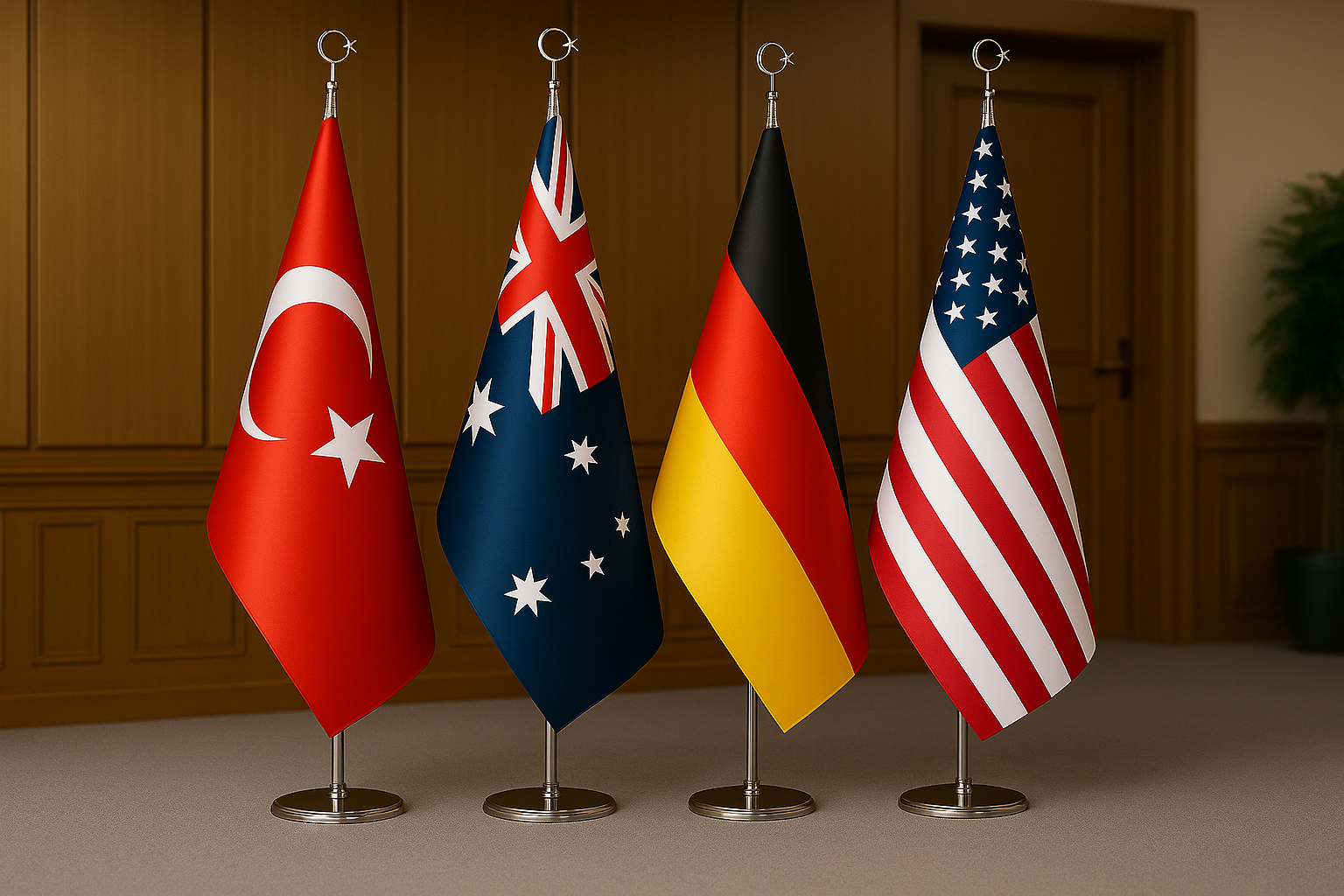
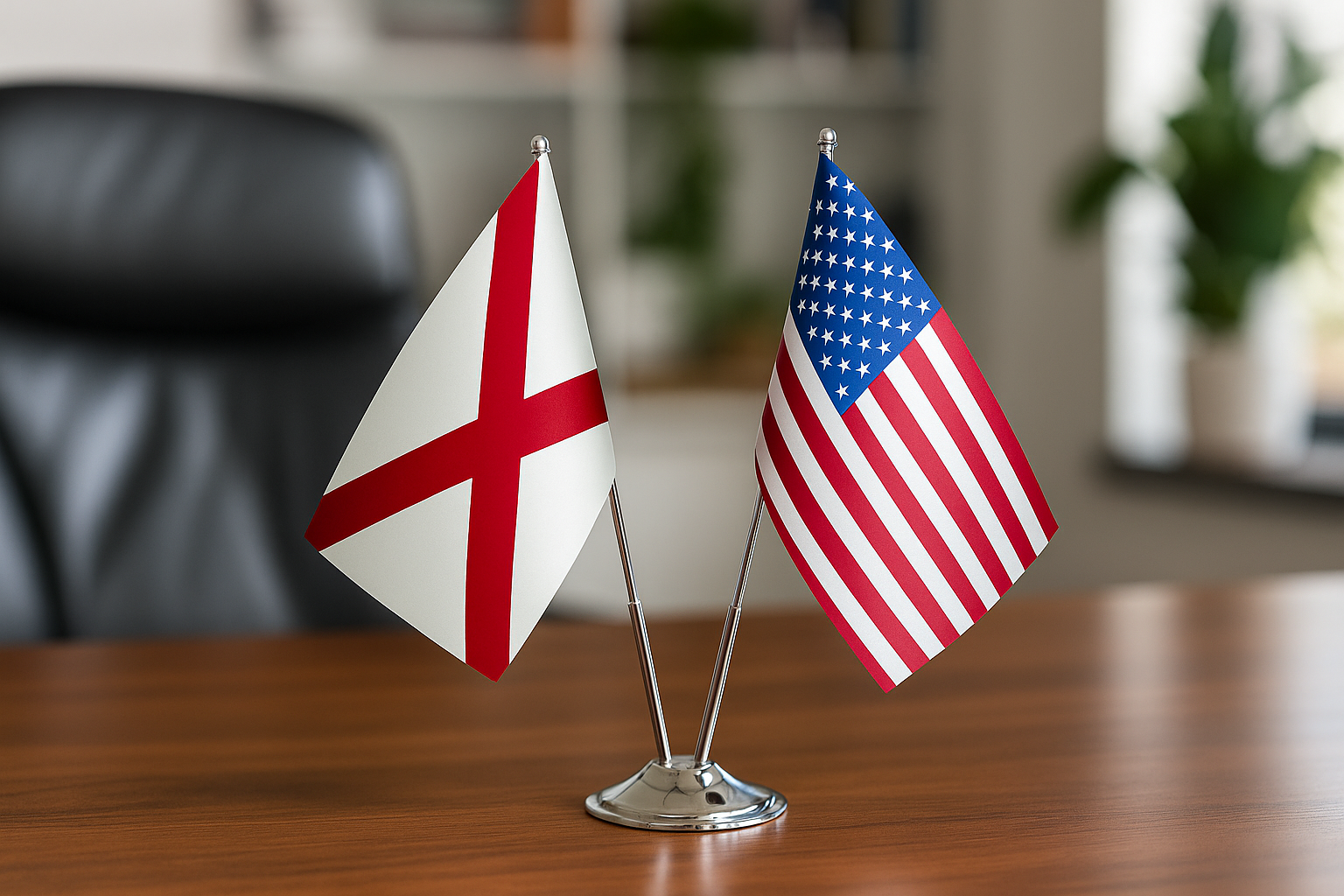
Flag compliance in the NATO context extends beyond the alliance flag itself to include the national flags of all 32 member countries, each of which must meet the same material, finishing, and color accuracy requirements when flown at NATO installations. Individual member nations are responsible for supplying their own national flags in compliant specifications, which means a US flag flown at a NATO headquarters must meet both US Flag Code (4 USC §§ 1-10) standards and NATO hosting-installation technical requirements simultaneously — including fabric weight, grommet type, and dimensional tolerances. This dual-compliance requirement is a common source of procurement confusion, particularly for allied nations that have historically used different aspect ratios for their national flags: the United Kingdom's Union Jack, for example, traditionally uses a 1:2 ratio, while NATO installation protocols require it to be displayed at a size proportional to the other member-nation flags present. The practical solution most procurement offices adopt is sourcing flags from manufacturers who are already familiar with both domestic vexillological standards and STANAG finishing requirements. Proper flagpoles and accessories — including the correct halyard, cleat systems, and anti-wrap spinning mechanisms — are equally subject to compliance review, since an otherwise perfect flag will fail inspection if it is mounted on non-compliant hardware.
Procurement, Certification, and Quality Assurance
Achieving and documenting NATO flag compliance requires a structured quality assurance process that begins before manufacturing and continues through delivery. Manufacturers seeking to supply NATO member governments or allied installations typically must obtain NATO Support and Procurement Agency (NSPA) vendor registration, which involves submitting material certifications, production process documentation, and flag samples for physical testing against published STANAG tolerances. Third-party laboratory test reports covering tensile strength, colorfastness, UV resistance, and dimensional accuracy are standard components of a compliant bid package, and bids submitted without them are routinely rejected during the administrative review phase. For corporate and institutional buyers outside the military supply chain — such as embassies, international organizations, and defense contractors maintaining multi-nation facilities — sourcing flags from manufacturers that already hold relevant certifications dramatically reduces the administrative burden. Bulk procurement orders for multi-nation flag sets should specify the exact STANAG reference number applicable to the procurement (STANAG 1008 governs characteristics of national flags, for example) to ensure the supplier provides documentation matched to the correct version. Flags with a documented service life of 6 months to 2 years depending on climate exposure are standard for budget planning purposes, and procurement officers should establish replacement cycle schedules accordingly to maintain continuous compliance throughout the contract period.
International Country Flags Collection
Browse precision-manufactured country flags built to meet international standards, ideal for NATO installations, embassies, and multi-nation ceremonies.
Browse Collection →Frequently Asked Questions
What is the official aspect ratio for the NATO flag? +
What Pantone color is used for the NATO flag background? +
Which STANAG covers national flag specifications for NATO use? +
What fabric weight is required for outdoor NATO-compliant flags? +
Can a US flag flown at a NATO base comply with both US Flag Code and NATO standards simultaneously? +
What grommet specifications are required for NATO-compliant flags? +
How long do NATO-compliant flags last in outdoor conditions? +
Do flagpoles and mounting hardware need to be NATO compliant as well? +
Meeting NATO standard flag specifications and international flag specs demands precision at every stage of design, manufacturing, and procurement — from fabric selection and color matching to grommet strength and fly-end stitching. Whether you are equipping a permanent military installation, outfitting a diplomatic facility, or managing a multi-nation ceremonial event, sourcing flags from a manufacturer with documented quality assurance processes is the only reliable path to consistent flag compliance. Explore the international country flags collection for precision-manufactured options built to meet exacting international standards, and review the full range of flagpoles and accessories to ensure your entire display system meets military flag standards from pole to fly end. Bulk pricing is available for corporate and government procurement orders — contact the Asya Bayrak team to discuss volume requirements, certification documentation, and customized compliance packages for your specific operational needs.