



Ghana's flag means red for the blood of independence martyrs, gold for the country's mineral wealth, green for its forests and farmland, and the black five-pointed star for African unity and freedom — making it one of the most symbolically loaded flags on the continent. If you're sourcing a physical flag, the African Countries Flags collection covers every format from outdoor to desk display.
What the Colors and the Black Star Actually Stand For
The three horizontal stripes — red, gold, and green — each carry a precise meaning enshrined since Ghana's first constitution, and the black star at the center is the flag's most politically charged element. Red represents the blood shed by those who fought for independence from British colonial rule. Gold references the country's extraordinary mineral wealth; Ghana was historically known as the Gold Coast precisely because of its gold deposits, which were among the richest in West Africa. Green stands for the forests and agricultural land that sustain the nation's economy and people. The black star, formally called the Lodestar of African Freedom, was chosen by Ghana's first president, Kwame Nkrumah, as a direct symbol of Pan-African unity — the idea that all people of African descent share a common destiny worth protecting.
The star's color is not incidental. Black was deliberately chosen to represent the African people themselves at a time when no other African flag carried such an explicit statement of racial and continental solidarity. Nkrumah drew inspiration from Marcus Garvey's Black Star Line shipping company, which in the 1920s used the black star as an emblem of Black economic self-determination. By placing that star at the center of a national flag, Ghana was making a statement far beyond its own borders — it was declaring itself the vanguard of African liberation.
How Ghana's Flag Came to Exist
 Ghana adopted its national flag on March 6, 1957, the same day it became the first sub-Saharan African country to gain independence from European colonial rule — a date celebrated annually as Independence Day. The flag was designed by Theodosia Okoh, a Ghanaian artist and sportswoman who was asked by Nkrumah's government to create a design that would be instantly distinguishable from any existing flag. Okoh's design drew on the colors of the Ethiopian flag (the oldest independent African nation) as a nod to Pan-African tradition, but added the black star to give it a uniquely Ghanaian and continental political meaning. The flag was briefly replaced between 1964 and 1966 with a version that substituted the gold stripe for white — a modification made during a one-party state period — but the original tricolor was restored immediately after the military coup that removed Nkrumah from power. For ceremonial settings such as embassies and government offices, the Ghana Official Indoor Flag, printed via high-definition sublimation on double-layer satin fabric and mounted on a chrome metal pole, reproduces these colors and the star with the precision those environments demand.
The 1964 alteration is worth understanding because it reveals how politically sensitive the flag's design has always been. White was substituted for gold to align with the ruling Convention People's Party's color scheme, effectively turning the national flag into a party symbol — a move that generated significant public opposition. The restoration of gold in 1966 was widely seen not just as a vexillological correction but as a democratic statement. Since then, the flag's design has remained constitutionally protected and unchanged, a remarkable consistency for a country that has experienced multiple changes of government.
Where the Pan-African Color Tradition Comes From
 Red, gold, and green became the foundational Pan-African colors because of Ethiopia, whose flag flew those three colors as early as the late 19th century — and Ethiopia was the only African nation to successfully repel European colonization at the Battle of Adwa in 1896. That resistance made Ethiopia a powerful symbol for independence movements across the continent, and its colors were adopted by diaspora organizations and later by newly independent nations as a deliberate statement of solidarity. Marcus Garvey's Universal Negro Improvement Association in the 1920s popularized the combination globally, and by the time Ghana gained independence in 1957, red-gold-green had become a recognized shorthand for African liberation politics. Nkrumah and Okoh did not invent the color combination — they inherited it and gave it new meaning by adding the black star. For outdoor display where these colors need to hold up against wind and UV exposure, the Ghana Outdoor Flag, woven from 110 g/m² Raschel knitted polyester, delivers vibrant, durable reproduction suited to flagpoles and exterior mounting. The Pan-African color tradition is also discussed in our article on the Burkina Faso flag and its shining star, another West African flag that shares this symbolic heritage.
Flags That Look Like Ghana's and How to Tell Them Apart
The flags most commonly confused with Ghana's are those of Bolivia, Ethiopia, Guinea, Mali, Senegal, and Cameroon — all of which use red, gold (yellow), and green in horizontal or vertical bands. The key differentiator for Ghana is always the black star at the center of the gold stripe; no other widely used national flag places a black star in that exact position. Ethiopia's flag uses a blue disc with a gold star on green-yellow-red horizontal stripes, so it shares the colors but differs in stripe order (Ghana: red-gold-green top to bottom) and emblem color. Bolivia's red-yellow-green tricolor is horizontal like Ghana's but carries no star and uses a different shade of red. Guinea's flag is a vertical tricolor in red-yellow-green with no emblem at all, making it straightforward to distinguish at distance. Cameroon and Senegal both use vertical green-red-yellow layouts with green stars — Cameroon's star is yellow, Senegal's is green — which places them in the same visual family but with clearly different structure. If you're displaying flags for educational or multicultural events and need to get these distinctions right, our article on using world flags at a school event covers practical labeling and display guidance.
One common online search is for a "kingdom of Ghana flag" — it's worth clarifying that the medieval Kingdom of Ghana (roughly 300–1200 CE) was a West African empire centered in modern-day Mauritania and Mali, entirely separate in geography and time from the modern Republic of Ghana. The kingdom predates flags as we know them by centuries and had no documented flag design. Kwame Nkrumah chose the name "Ghana" for the new republic in 1957 as a symbolic connection to that ancient African kingdom's power and prestige, not because of any territorial continuity. There is no historical "kingdom of Ghana flag" — the flag in use since 1957 is the only official Ghanaian national flag.
How the Ghana Flag Is Used and Sized Officially Today
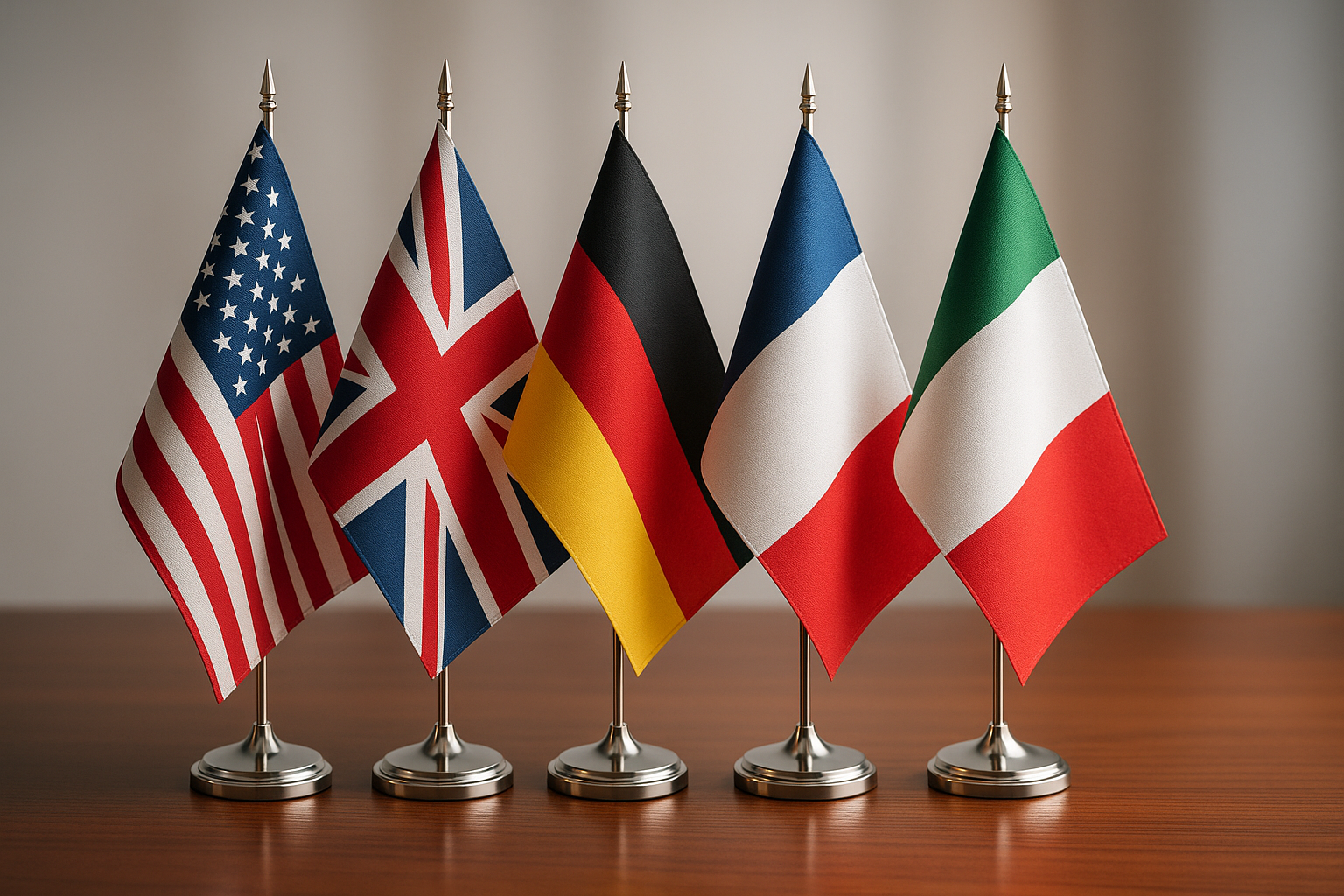
Ghana's flag is governed by the Ghana Flag Ordinance and subsequent constitutional provisions, which specify that the flag must always be displayed with the red stripe at the top, the gold stripe in the middle, and the green stripe at the bottom, with the black star centered in the gold band. The standard aspect ratio is 2:3 (width to length), consistent with FIAV (Fédération internationale des associations vexillologiques) recommendations for national flags. Flying the flag inverted — green on top — is considered a serious protocol violation and is not recognized as a distress signal in Ghanaian tradition the way it might be interpreted under other flag codes. For desk and office display, the Ghana Desk Flag mounted on a chrome metal pole with a weighted base in silver or gold finish keeps proportions and color rendering accurate for professional environments. For events, parades, or community gatherings, the Ghana Handheld Flag — made from 90 g/m² Raschel polyester on a stick — offers a durable, vivid option that holds up through repeated use. If you're deciding between formats based on setting and budget, our sibling article what to check when buying a Ghana flag walks through every format in detail including lifespan and cost comparisons.

African Countries Flags
Every African national flag in one place — outdoor, indoor, desk, and handheld formats built for accurate color reproduction and durable display.
Browse Collection →Did the medieval Kingdom of Ghana have its own flag? +
Why is the star on Ghana's flag black instead of gold or white? +
What was the white-stripe version of Ghana's flag and when was it used? +
Is the stripe order on Ghana's flag the same as Ethiopia's? +
What is the official aspect ratio of the Ghana flag? +
Who designed the Ghana national flag? +
Can the Ghana flag be displayed upside down as a distress signal? +
Ghana's flag carries more deliberate meaning per square inch than almost any other national flag — a black star that references Marcus Garvey, colors borrowed from Ethiopia, and a design created by a woman on the eve of a historic independence. Whether you're displaying it at an embassy, a school event, or a community celebration, accuracy in color and construction matters. Explore the full range in the African Countries Flags collection, choose the Ghana Outdoor Flag in durable 110 g/m² Raschel polyester for pole display, or the Ghana Official Indoor Flag on a chrome pole for formal institutional settings. Bulk pricing is available for corporate, diplomatic, and institutional orders — contact us directly for volume quotes across the full Country Flags collection.


