

When placing the Chinese flag at a business meeting, the flag of the People's Republic of China must always be treated with the same dignity and precedence as the host nation's flag, positioned to its right from an observer's perspective when only two flags are displayed. Understanding both Chinese protocol and international flag etiquette will help your organization avoid diplomatic missteps and project genuine respect toward Chinese partners and guests. For high-quality, protocol-ready options, browse the full Asian Countries Flags collection to find the right flag for every setting — from boardroom tables to entrance poles.
What the US Flag Code and International Protocol Actually Say About Foreign Flags
The US Flag Code (4 USC §§ 1–10) does not regulate how foreign flags must be treated on American soil, but it does establish a clear principle: when the US flag is displayed alongside a foreign national flag, both must be flown from separate staffs of equal height, and the US flag must be given the position of honor — to its own right. Under international diplomatic custom, mirroring this logic, the Chinese flag must never be subordinated in size, height, or placement relative to a commercial logo, corporate banner, or decorative element. The rule is simple — national flags of sovereign states are peers, and no national flag should fly higher than another at a bilateral or multilateral meeting.
International flag protocol is further informed by the FIAV (Fédération Internationale des Associations Vexillologiques) standards and widely adopted UN General Assembly guidelines. These frameworks affirm that when a foreign flag is displayed on the territory of another country, it should be treated with the same respect as the host nation's flag. For businesses hosting Chinese delegations, this means the Chinese flag must be in pristine condition, correct in its proportions and colors, and never reproduced in a distorted or decorative format.
How to Position the Chinese Flag Correctly in a Meeting Room
In a bilateral setting with only two flags, the guest nation's flag — in this case, China's — is placed to the right of the host nation's flag from the audience's viewpoint, which means to the left as the presenter faces the room. This is the internationally recognized position of honor for a guest flag. When more than two nations are represented, flags are typically arranged in alphabetical order by country name in the working language of the meeting — usually English — which places "China" near the front of most sequences.
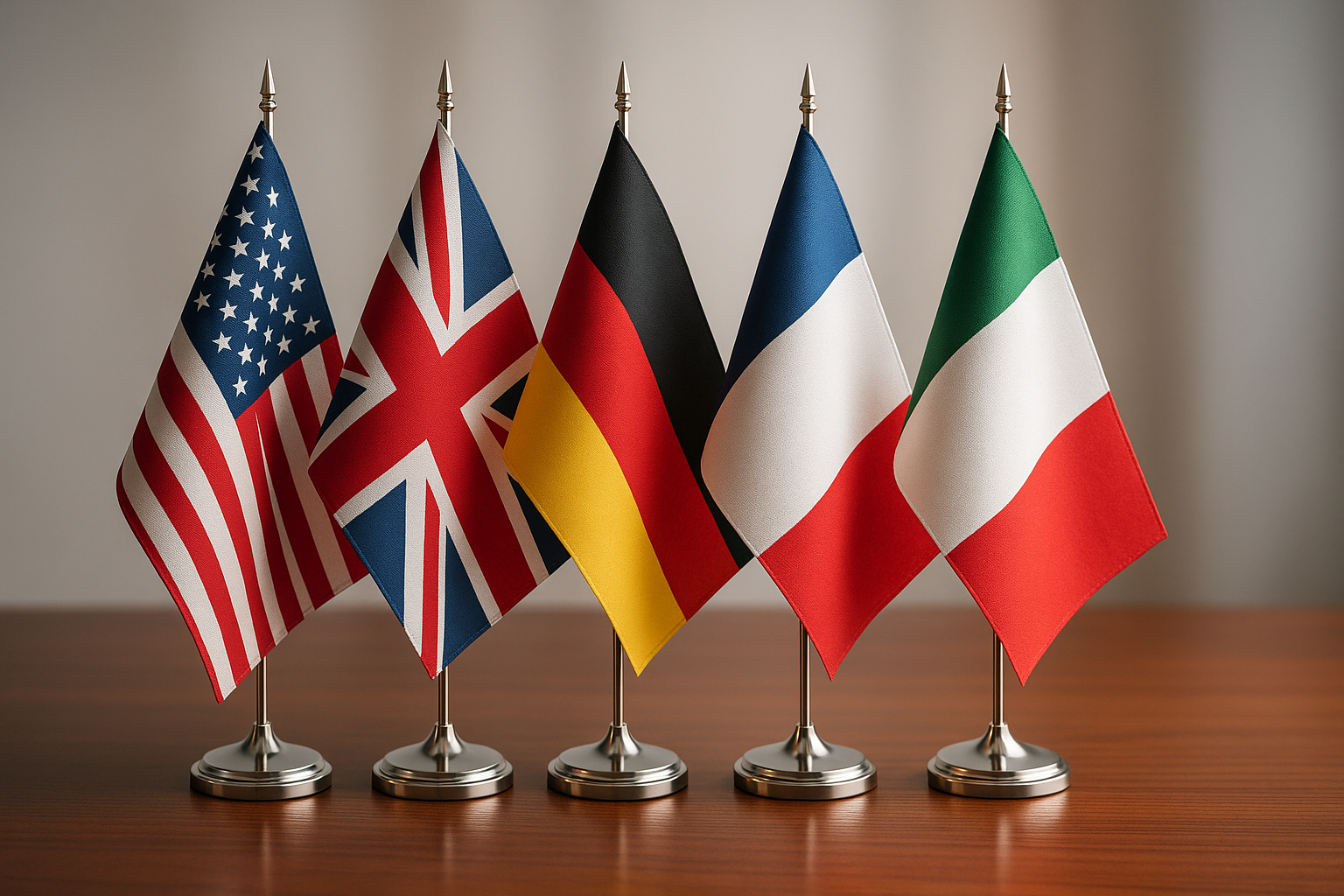
 Table flags used on conference room tables follow the same left-right logic: the host nation's small table flag sits to the speaker's right, and the guest nation's flag sits to the speaker's left, so that from the audience, China's flag occupies the honored right position. Flags displayed on staffs behind a podium must be of equal height — typically 8 ft (2.4 m) for indoor ceremonial staffs — and equal staff diameter. The Chinese flag's proportions are standardized at a 2:3 ratio, with the red field, large yellow star in the canton, and four smaller stars arranged in a curved arc — any flag that does not faithfully reproduce these details is not suitable for diplomatic or official business use. For outdoor events preceding or following an indoor meeting, the China Outdoor Flag, made from 110g Raschel knitted polyester for vibrant, durable display, is the appropriate choice for entrance poles and exterior flagpoles.
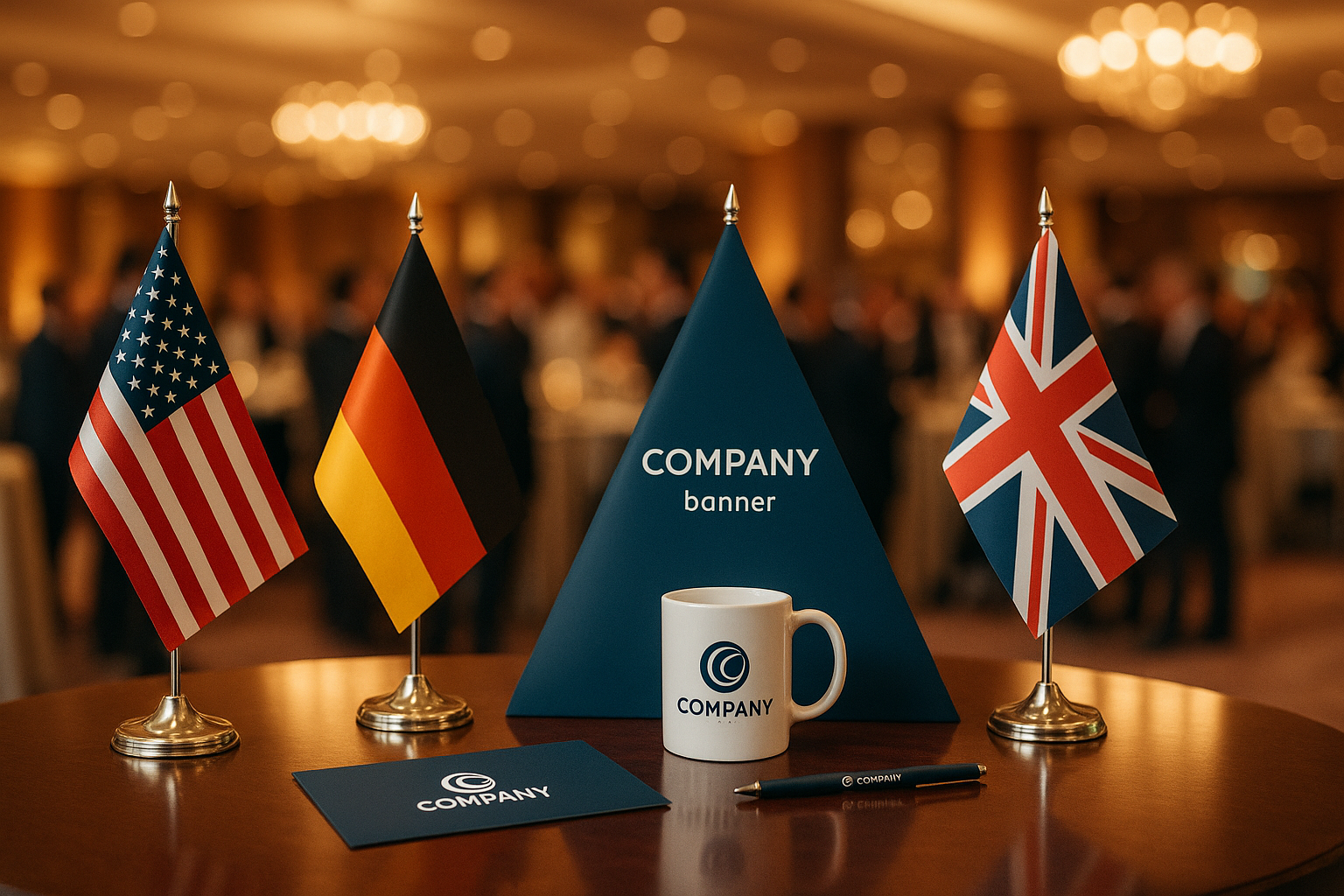
One common error in corporate settings is placing the national flag behind or below a company's branded banner or pull-up display. This is considered disrespectful under both US diplomatic norms and Chinese protocol expectations. National flags must always occupy a visually dominant, unobstructed position. If space is limited, it is better to display one flag prominently than to crowd multiple flags in a way that diminishes any of them.
What You Must Never Do With the Chinese Flag at a Meeting
The most serious protocol violations involve misrepresentation, disrespect, or improper use of the Chinese flag's design. The flag of the People's Republic of China — red with one large and four small yellow stars — must not be confused with historical flags: the Republic of China flag (used in Taiwan) features a completely different design with a blue canton and white sun, and the French Indochina flag used during the colonial era is an entirely separate historical artifact unrelated to the PRC. Using the wrong flag, even unintentionally, is a significant diplomatic error.
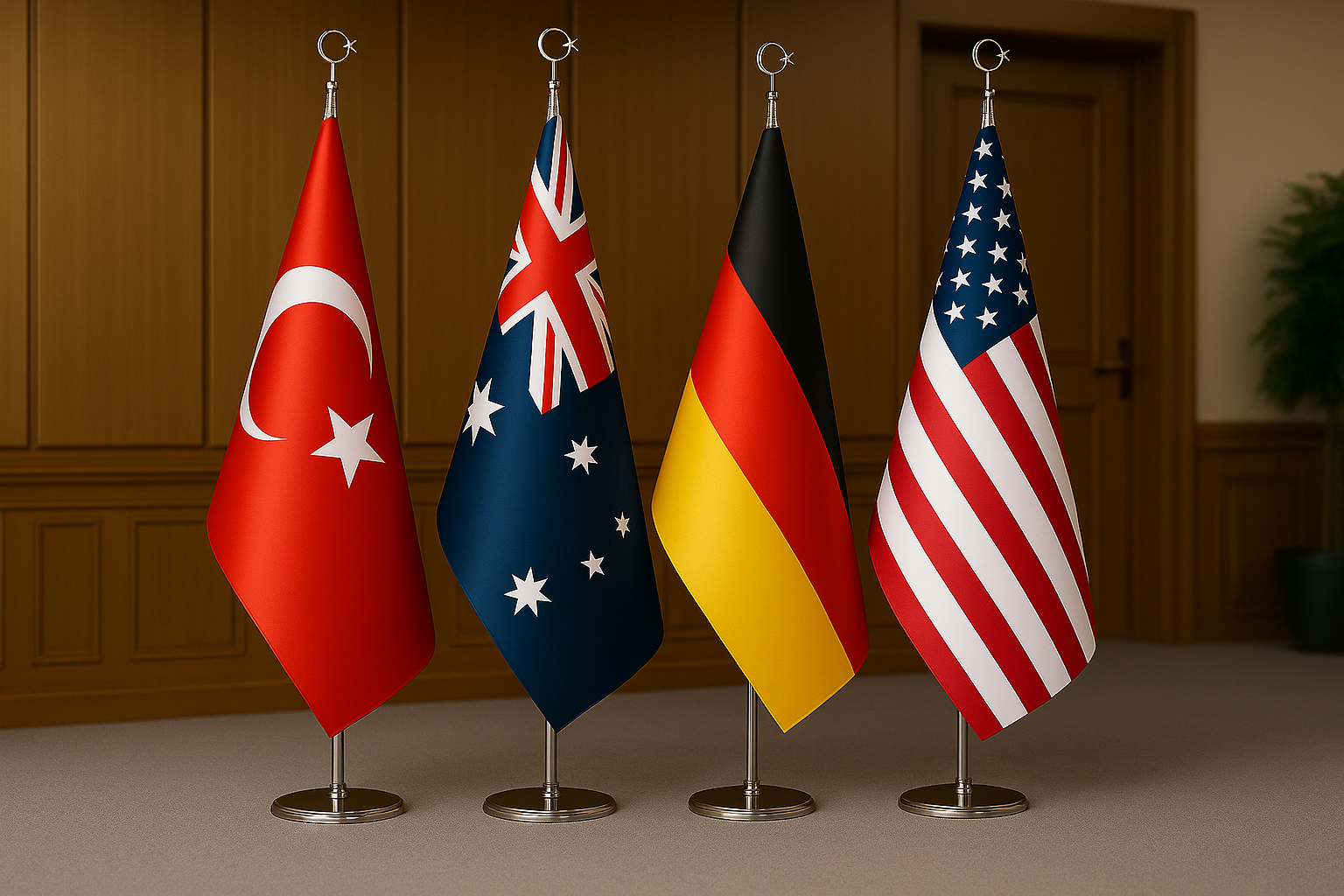
 Additional prohibitions under general international protocol include: displaying the flag in a worn, faded, or torn condition; printing the flag image on disposable items like napkins or tablecloths; using the flag as a backdrop or drape over furniture; and allowing the flag to touch the floor. The Chinese government's own flag law, adopted in 2020, codifies many of these protections domestically, but international partners hosting Chinese delegations are well advised to follow the same standards out of respect. For indoor meeting rooms, the China Official Indoor Flag, produced with high-definition sublimation printing on double-layer satin fabric and mounted on a durable chrome metal pole, ensures the design meets the visual fidelity expected in embassy-grade settings. Never substitute a printed paper flag or a low-resolution reproduction for an official meeting — the quality of the flag signals the quality of your regard for your guests.
Orientation is also non-negotiable. The Chinese flag must always be displayed with the red field and stars in their correct position — the large star in the upper-left canton, with the four smaller stars to its right in a curved arrangement. Displaying the flag sideways or inverted, even briefly for logistical reasons, is never acceptable in a formal setting.
Half-Staff Rules and When Ceremonial Protocols Apply to the Chinese Flag
Half-staff display of foreign flags on US soil is rare and specific: under 4 USC § 7, the US flag may be flown at half-staff by presidential proclamation, and in those cases, foreign flags displayed alongside it are typically lowered as well in a gesture of shared mourning. Businesses are not legally required to lower foreign flags, but doing so when hosting Chinese delegations during a period of Chinese national mourning is considered a meaningful diplomatic courtesy.
China observes national mourning days by official government proclamation — during these periods, Chinese organizations and missions lower the flag to half-staff, and international partners who are aware of such occasions may choose to follow suit. If your meeting coincides with a significant Chinese national holiday such as National Day (October 1) or the Spring Festival, the opposite applies: flags should be clean, crisp, and freshly mounted as a mark of celebration and respect. For events where guests carry small flags during welcoming ceremonies or cultural presentations, the China Handheld Flag — crafted from 90gr Raschel polyester fabric for vibrant color reproduction — is appropriate for guests and staff to wave during arrivals or photo opportunities.

Asian Countries Flags Collection
Every flag in this collection is precision-printed to national specifications, making it ideal for diplomatic meetings, trade events, and institutional display across all Asian nations.
Browse Collection →A Practical Protocol Checklist for Businesses Hosting Chinese Delegations
Running through a formal checklist before a meeting with Chinese partners or officials is the most reliable way to ensure full protocol compliance. Here is what to verify in advance:
- Flag condition: Inspect the Chinese flag for any fading, fraying, or tears. A flag that has been in use for more than 6 months of continuous outdoor exposure may need replacement — indoor flags typically last 1 to 2 years with proper care.
- Design accuracy: Confirm the large yellow star is in the upper-left canton and the four smaller stars are correctly oriented with one point facing the large star. Verify the red field is true red, not orange-toned or faded.
- Staff height and position: Ensure both the host and guest nation flags are on equal-height staffs. The Chinese flag occupies the right-hand position of honor from the audience's view.
- Table flag placement: For conference tables, confirm table flags follow the same left-right rule. Both flags must be the same size — typically 4 in × 6 in (10 cm × 15 cm) for desk flags.
- Outdoor approach flags: If flags are displayed at a building entrance, the host nation's flag is to the observer's left and the guest nation's flag is to the observer's right as they face the building.
- No commercial mixing: Remove corporate banners, branded retractable displays, and sponsor signage from the same visual plane as national flags.
- Storage and handling: After the meeting, fold and store the flag properly — never leave it crumpled in a bag or box. Both flags should be stored in equivalent conditions to signal equal respect.
If you frequently host delegations from multiple Asian nations, keeping a ready stock of correctly sized and printed flags is far more efficient than sourcing them case by case. For guidance on similar Asian flag specifications and proportions, the article on South Korea flag proportions and official colors offers a useful comparison for neighboring-country protocol. Similarly, if you host joint meetings involving South Asian partners, the India flag prices and standard sizes guide covers specification details you will need for correct display.
Frequently Asked Questions
Which side does the Chinese flag go on when displayed with the US flag? +
What is the correct size ratio for the Chinese flag? +
What was the Chinese flag used during World War II? +
What was the French Indochina flag, and is it related to the Chinese flag? +
Are Chinese flags made in the USA available for institutional use? +
Can you display the Chinese flag without the US flag in a US business setting? +
How often should a Chinese flag used in a boardroom be replaced? +
Correct flag protocol at business meetings is one of those details that costs little to get right and a great deal to get wrong. Whether you are equipping a single boardroom for an upcoming delegation visit or stocking an entire conference center for recurring international trade events, sourcing the right product is the essential first step. The China Official Indoor Flag on a chrome metal pole is ideal for formal diplomatic and institutional rooms, while the China Outdoor Flag in durable Raschel knit polyester handles entrance and exterior display with authority. For welcoming events and cultural presentations, the China Handheld Flag adds a personal touch that guests consistently appreciate. Bulk pricing is available for corporate orders — contact Asya Bayrak LLC directly for volume rates on multi-flag procurement for conferences, trade shows, and institutional facilities. Explore the complete Country Indoor Flags collection for every nation represented in your meeting calendar.