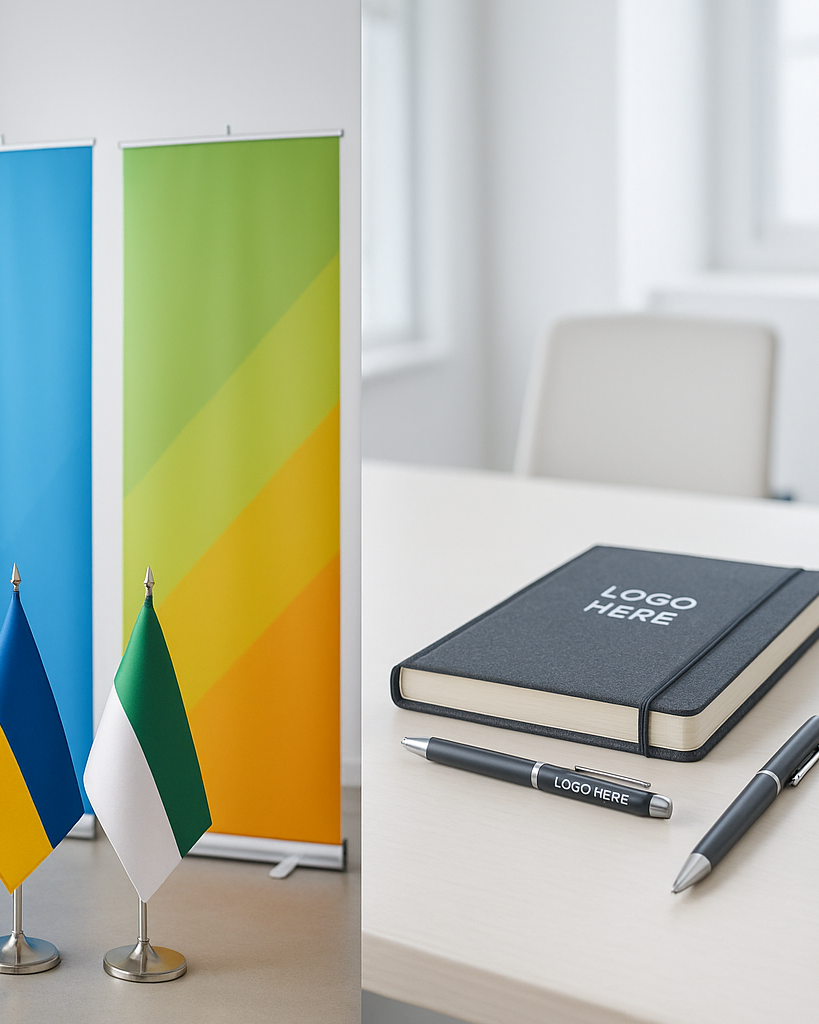






The most common roll-up banner sizes are 24 in × 80 in (61 cm × 203 cm) for standard single-person displays and 33 in × 79 in (84 cm × 200 cm) for wider visibility — with printable areas typically starting 2–3 in (5–8 cm) from the base cassette and ending 1 in (2.5 cm) from the top edge. If you need to order prints or complete stands, the full range of options is available in the Banners & Posters collection, where you can compare sizes and materials side by side before placing your order.
What Standard Roll-Up Banner Sizes Actually Are — and Where Each One Gets Used
Roll-up banners come in five practical size tiers that cover almost every commercial and event scenario. The 24 in × 80 in (61 cm × 203 cm) size is the most widely stocked format; it fits through standard doorways without disassembly, works well in booth corridors, and is the default for single-person step-and-repeat setups. The 33 in × 79 in (84 cm × 200 cm) format is often called the "wide standard" and suits trade show end-caps, retail entrances, or any display where horizontal real estate matters more than portability. A narrower 18 in × 80 in (46 cm × 203 cm) variant is used in narrow hallways, behind podiums, and flanking doorways in pairs. The 36 in × 92 in (91 cm × 234 cm) premium tall format is gaining ground at corporate events and step-and-repeat press walls where logo visibility from 10–15 ft (3–4.5 m) back is a requirement. Finally, the compact 11.8 in × 59 in (30 cm × 150 cm) tabletop format is used on reception counters and checkout lanes. Matching the right size to the right context is the single most important decision before you finalize artwork — everything from image resolution to font legibility depends on it.
How to Choose a Roll-Up Banner Size Based on Your Space, Pole Height, and Viewing Distance
The right banner size is determined by three measurements: the clear floor-to-ceiling height of your venue, the distance from which viewers will first see the banner, and the width of the available footprint. As a reliable starting rule, every 1 ft (30 cm) of viewing distance requires approximately 1 in (2.5 cm) of letter height to remain legible — meaning a headline intended to be read from 10 ft (3 m) needs to be printed at least 10 in (25 cm) tall on the finished banner.
 For indoor conference halls with 10 ft (3 m) ceilings, a 24 in × 80 in (61 cm × 203 cm) retractable standing banner fills the vertical space without overwhelming the room, and the 80 in height keeps the top panel at eye level for standing audiences. Outdoor or semi-outdoor setups — tent openings, parking lot entrances — generally call for the 33 in or 36 in wide formats because wind-induced sway is easier to manage on a wider base cassette. If you are ordering print artwork separately, the Roll-up Print Only product page lists exact bleed requirements and resolution specs for each size tier, which is critical to avoid upsize-printed pixelation. Small booth islands with a 6 ft × 6 ft (1.8 m × 1.8 m) footprint typically accommodate two 24 in banners flanking a table without crowding the aisle — a layout used consistently in trade show guideline documents from major exhibition centers. Always measure your floor plan and ceiling clearance before confirming a size; the cassette base adds roughly 3–4 in (7–10 cm) to the footprint depth.
The Relationship Between Pole Height and Printable Banner Size
The adjustable pole inside a retractable banner stand controls not just overall height but also how much of the graphic is visible — and mismatching pole height to banner height is the most commonly overlooked spec error. Most standard cassettes are designed for banners between 78 in and 92 in (198–234 cm) tall, and the pole telescopes to match; if you cut artwork shorter than the cassette expects, the bottom section will sag or buckle when the banner is retracted and re-deployed.
The printable area is not the full banner height. On a typical 24 in × 80 in (61 cm × 203 cm) retractable standing banner, the cassette mechanism consumes approximately 3 in (7.6 cm) at the base, leaving a true printable height of about 77 in (196 cm). The top-bar clip and hem account for another 0.75–1 in (2–2.5 cm). This means your usable print canvas is roughly 23 in × 76 in (58 cm × 193 cm) for safe-zone content — logos, phone numbers, and calls-to-action should never be placed closer than 2 in (5 cm) from any edge. For stand-and-repeat banner walls built from multiple units side by side, the printable area alignment between panels becomes critical: each cassette must be measured to confirm the edge-to-edge gap so pattern repeats register correctly across the full wall width.
Indoor, Outdoor, and Tabletop Roll-Up Banner Sizes Compared
Indoor, outdoor, and tabletop roll-up banners share the same cassette-and-pole mechanism but differ meaningfully in material weight, base design, and the size options that make practical sense for each environment. Indoor formats prioritize light weight and image quality, while outdoor and tabletop units prioritize base stability and weather tolerance.
 Indoor retractable banner stands are most commonly ordered in the 24 in × 80 in (61 cm × 203 cm) or 33 in × 79 in (84 cm × 200 cm) formats; the lighter 13–16 oz (370–455 g/m²) polyester or polypropylene materials used indoors produce sharper gradients and finer type at these dimensions. The Portable Roll-up Banner Stand is engineered specifically for repeated indoor setup and teardown, making it a practical choice for event marketers who transport displays weekly. Outdoor banners, by contrast, are typically printed on 15–18 oz (430–515 g/m²) vinyl with UV-resistant inks rated for 80% UV resistance and a 12–24 month outdoor lifespan; the most popular outdoor size is the wider 33 in or 36 in format because the broader cassette lowers the center of gravity. Tabletop roll-up banners cap out at around 11.8 in × 59 in (30 cm × 150 cm) and use lightweight bases specifically designed to sit flat on a 6 ft (1.8 m) banquet table without tipping; these are popular at hotel check-in desks, pharmacy counters, and real estate open-house events. If you are planning an event with multiple display types, the Standard Banner Sizes for Indoor Events guide covers how roll-up formats integrate with hanging banners and pipe-and-drape setups — a useful reference before you finalize a multi-format display order.

Banners & Accessories
Hardware, stands, and display accessories to complete any roll-up or retractable banner setup for trade shows, retail, and events.
Browse Collection →Sizing Mistakes That Cause Reprints, Blurry Graphics, or Wasted Space
The most expensive roll-up banner mistake is submitting artwork at the wrong canvas size or resolution — it almost always results in a reprint, and rush reprints before a trade show or event are costly and stressful. The five mistakes below account for the vast majority of size-related production errors, and each one is entirely avoidable.
- Designing to the full banner dimension instead of the safe printable area. As noted above, the cassette and top bar remove 3–4 in (7–10 cm) from total height. Any critical content placed in that zone will be hidden or clipped.
- Supplying artwork at 72 DPI instead of 150–300 DPI at final size. At 24 in wide, a 72 DPI file produces visible pixelation. Roll-up graphics require a minimum of 150 DPI at the actual output size; 300 DPI is preferred for fine-detail photography.
- Ignoring bleed requirements. Most roll-up banner printers require 0.5–1 in (1.3–2.5 cm) of bleed on all sides. Artwork without bleed prints with white hairlines at edges after trimming.
- Ordering a size that doesn't match the cassette already owned. Cassette widths are fixed — a 24 in cassette cannot accept a 33 in graphic. Always confirm your existing hardware dimensions before ordering print-only replacements.
- Choosing a width too narrow for a stand-and-repeat banner wall. A step-and-repeat pattern requires that logo/brand blocks repeat every 24–36 in (61–91 cm) across the full wall. If individual banner units are too narrow, the pattern breaks at the seam between stands and creates an unprofessional gap in photography backdrops.
For a detailed breakdown of how material weight and print method affect banner durability alongside price, the sibling article Roll-Up Banner Stand Prices and Print Options covers those variables thoroughly so you don't need to cross-reference multiple sources before ordering.
FAQ
What is the standard size for a retractable standing banner? +
What size should I use for a step-and-repeat banner stand backdrop? +
How much of a roll-up banner is actually printable? +
Can I use a banner stand as a full backdrop at events? +
What resolution should my artwork be for a roll-up banner? +
Is there a size difference between indoor and outdoor roll-up banners? +
Where can I find roll-up banner stands ready for quick local pickup or fast shipping? +
Whether you are setting up a single retractable standing banner for a product launch or building a multi-unit step-and-repeat wall for a press event, getting the dimensions right before artwork is finalized saves both time and reprinting costs. Start with the Portable Roll-up Banner Stand for a complete hardware-plus-print solution, or order replacement graphics alone through the Roll-up Print Only option if you already own a compatible cassette. For a broader look at display formats and accessories, the Banners & Accessories collection covers hardware, mounting options, and finishing choices across the full product range. Bulk pricing is available for corporate orders — contact us directly to discuss volume discounts on multi-unit stand-and-repeat banner configurations or branded event packages.