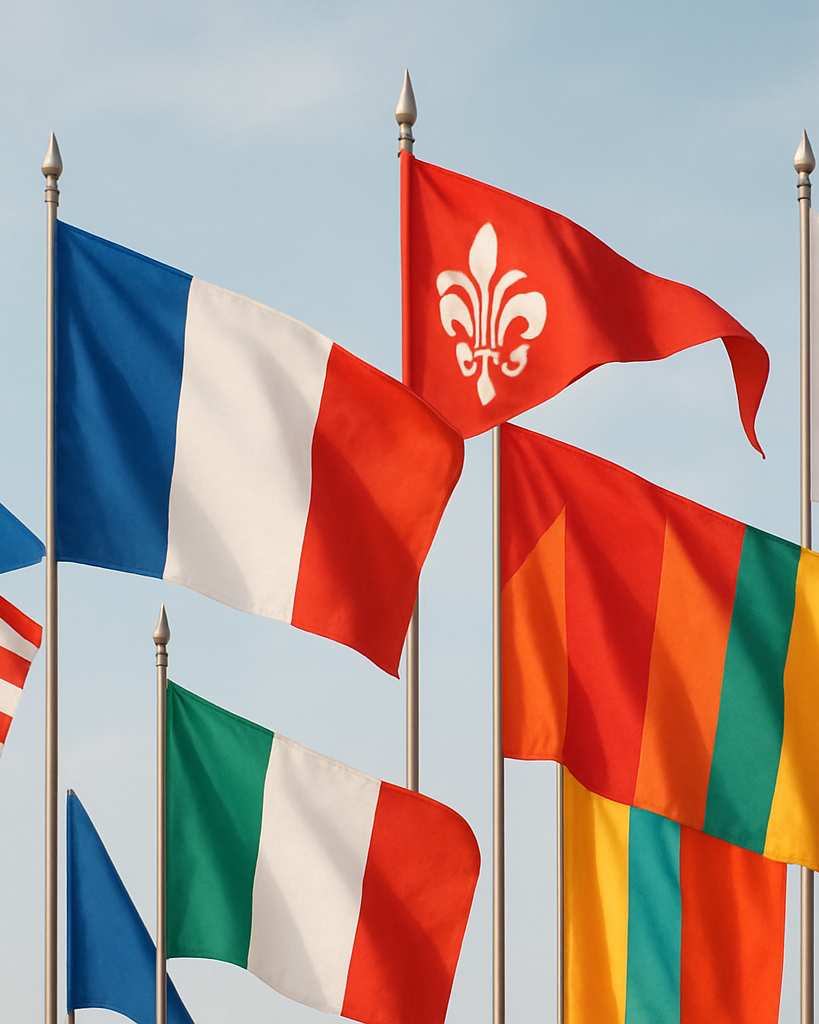




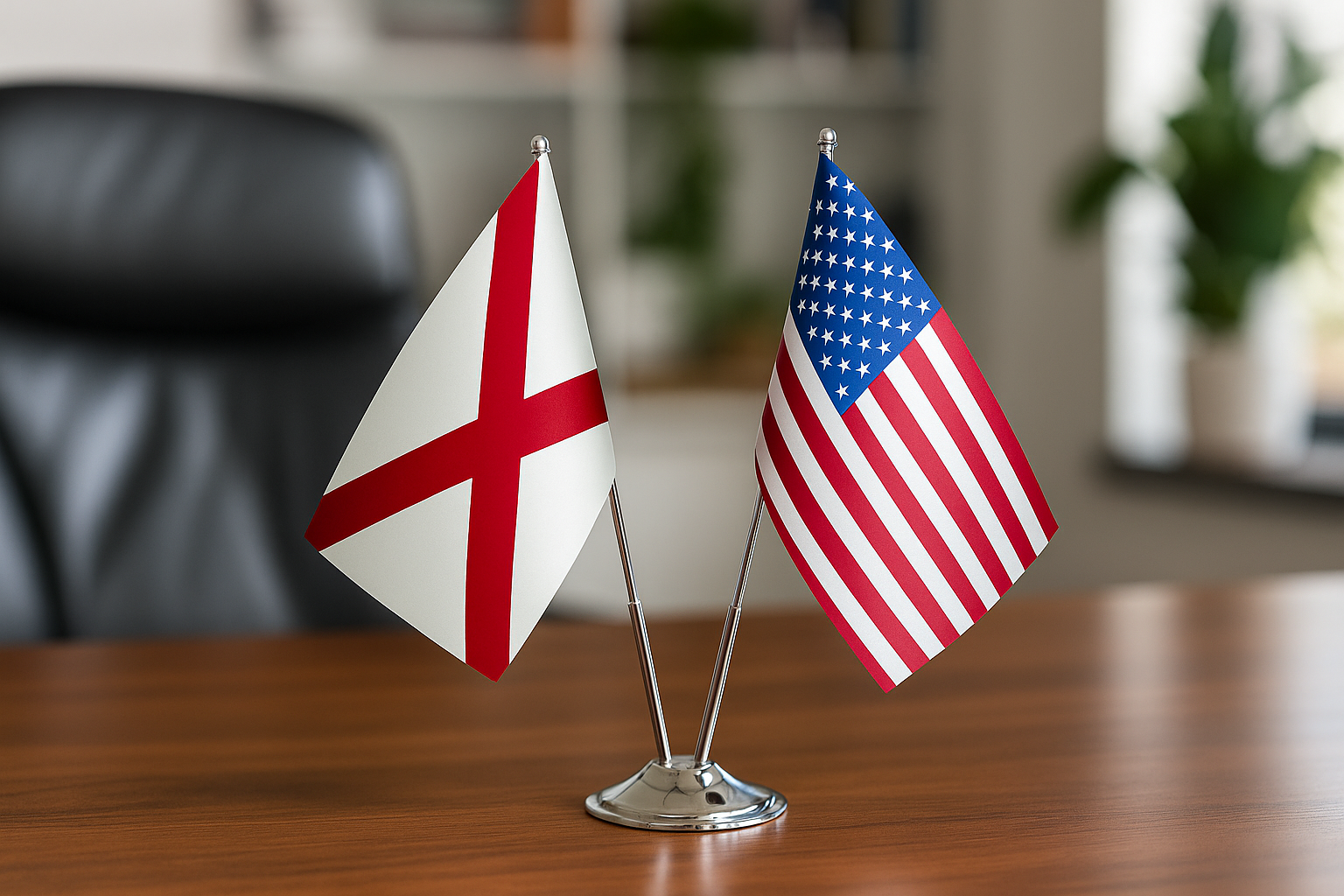
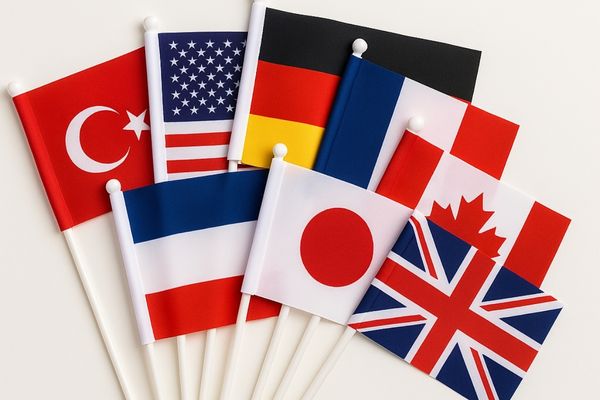




Flag colors meaning is rooted in centuries of symbolism: red typically represents valor or bloodshed, white stands for peace or purity, blue signifies loyalty or the sky and sea, green evokes nature and hope, and yellow or gold denotes wealth and prosperity — though every nation assigns its own specific intent to each hue. Understanding what flag colors symbolize unlocks a deeper layer of national identity, history, and aspiration encoded in fabric. From the bold tricolors of Europe to the pan-African palettes of West Africa, no color choice on a national flag is ever accidental. Explore the full range of national designs in the country flags collection to see these color traditions brought to life across hundreds of nations.
Why Flag Colors Are Never Random
Every color on a national flag was chosen deliberately, most often by founders, revolutionaries, or constitutional assemblies who wanted to encode their nation's values, geography, and history into a single visual statement. Vexillology — the scholarly study of flags — recognizes that color choice follows both cultural convention and deliberate political messaging, making flag colors one of the most concentrated forms of symbolic communication humans have ever devised.
The Fédération Internationale des Associations Vexillologiques (FIAV) documents flag standards globally, and historians have traced color symbolism in flags back to at least the 13th century in European heraldry. The rules of heraldry actually forbade placing "color on color" (e.g., blue on black) without a metal tincture (gold or silver) in between — a rule that still influences modern flag design. When the United States Congress codified rules around the American flag in the US Flag Code (4 USC §§ 1–10), it formalized the idea that flags carry official meaning, reinforcing the gravity of every design decision. Even today, when a new nation gains independence or a territory redesigns its banner, color selection is among the most debated aspects of the process, precisely because each shade carries weight that words alone cannot carry.
The Most Common Flag Colors and What They Symbolize
Red, white, blue, green, yellow, and black account for the overwhelming majority of colors used in the world's national flags, each carrying a constellation of meanings that shift slightly from one cultural context to another. No single "official" global dictionary of flag color meanings exists, but consistent patterns have emerged across centuries of heraldic tradition and national symbolism.
Red is the single most common flag color in the world, appearing on roughly 75% of all national flags. It most frequently symbolizes courage, valor, revolution, or the blood shed by those who fought for independence. In China's five-star flag, red represents the Communist revolution; in the American flag, it stands for hardiness and valor according to the original 1782 congressional resolution on the Great Seal. White is nearly as ubiquitous, representing peace, purity, honesty, or surrender in different contexts — though no serious national flag designer uses it to signal surrender. Blue ranges in meaning from loyalty, justice, and vigilance (United States, United Kingdom) to the sky and sea (Greece, Argentina). Green is especially prevalent among African and Islamic nations, where it can represent the fertile land, Islam, hope, or agricultural abundance. Yellow and gold signal wealth, mineral resources, sunlight, and generosity — think of Colombia's dominant yellow stripe, which directly references the gold that once made the region legendary. Black is less common but powerful: in many African flags it represents the African people and heritage, while in others it evokes the dark history of colonialism overcome.
Pan-African Colors: Red, Gold, and Green
The pan-African color palette — red, gold (or yellow), and green — is one of the most recognized flag color systems in the world, used by more than a dozen African nations to express shared heritage, resistance to colonialism, and continental solidarity. These colors trace directly to the flag of Ethiopia, Africa's oldest independent nation, and were adopted as a symbol of Black liberation and African pride during the late 19th and early 20th centuries.
 Senegal is a perfect illustration of pan-African color symbolism at work. Its tricolor of green, yellow, and red reads from left to right: green for hope and Islam (the majority religion), yellow for wealth and the country's natural resources, and red for the blood and sacrifice of those who fought for independence from French colonial rule. At the center sits a five-pointed green star, reinforcing Islamic identity and the unity of the African continent. The Senegalese flag is closely related in palette to the flags of Mali, Guinea, and Ethiopia — a visual declaration of solidarity across West and East Africa. If you need a high-quality, UV-resistant representation of this symbolism for diplomatic, educational, or commemorative display, the Senegal outdoor flag is manufactured to precise color standards so the green, gold, and red remain true even after extended outdoor exposure. For deeper reading on how these pan-African traditions play out across the continent, the blog post on Burkina Faso flag history and symbolism provides an excellent companion analysis.
The Rastafari movement expanded global awareness of these colors through music and art, cementing red, gold, and green as internationally recognized symbols of African identity and resilience. Nations as far apart as Ghana, Cameroon, and Zimbabwe all incorporate this palette, each adding their own emblems — stars, animals, tools — to differentiate their specific national narrative within the shared color language.
Yellow, Blue, and Red: The South American Palette
Much of South America's flag color vocabulary descends from the independence movements of the early 19th century, when liberators like Simón Bolívar and Francisco de Miranda chose colors that would unify newly freed nations against Spanish colonial rule. Yellow, blue, and red — the "Gran Colombia" colors — spread across Venezuela, Colombia, and Ecuador as a direct result of this shared revolutionary history.
 Colombia's flag is arguably the clearest example of deliberate, layered color meaning in the entire Western Hemisphere. The wide yellow stripe at the top — occupying half the flag's total area — represents the gold and natural wealth of Colombian soil, as well as the bright future the founders envisioned for the nation. The blue stripe in the middle symbolizes the two oceans flanking the country (the Pacific and the Caribbean/Atlantic) as well as the rivers and sky. The red stripe at the bottom stands for the blood of the patriots who died fighting for independence and sovereignty. Francisco de Miranda, who designed the tricolor around 1806, reportedly explained the colors poetically: yellow for the riches of the New World, blue for the ocean that separates it from Spain, and red for the courage required to cross that ocean and win freedom. You can display this rich symbolism with confidence using the Colombia outdoor flag, which is produced with colorfast dyes to keep the yellow vibrant and the red deep through a typical 6-month to 2-year outdoor lifespan. For a broader tour of South American flag symbolism, the detailed guide on Flags of South America Explained covers the full regional palette in context.
White and Blue: The Colors of Peace, Sky, and Sea
White and blue together form one of the most globally recognized color pairings in flag design, appearing in the flags of Greece, Israel, Argentina, Finland, Scotland, and many others — each with its own specific interpretation of what these two colors mean for their people. Across cultures, this pairing almost universally evokes clarity, peace, maritime identity, and divine or celestial connection.
Greece's alternating blue and white stripes are said to represent the waves of the Aegean Sea and the sky above it, with nine stripes corresponding to the syllables of the Greek independence motto. Israel's white and blue echo the design of the Jewish prayer shawl (tallit), grounding the flag in religious tradition rather than geography. Argentina's "celeste" (sky blue) and white were chosen by General Manuel Belgrano, who reportedly looked up at the sky on the day he first raised the banner and declared those the colors of the new republic. Finland's blue cross on white speaks to the thousands of lakes and the snow that define the Finnish landscape. This pattern — deriving color meaning directly from the natural environment — is one of the most ancient and universal instincts in flag design, predating formal vexillology by centuries.
How Color Meaning Changes Across Cultures
The same color can carry opposite meanings in different national or cultural contexts, which is why understanding flag colors requires reading each flag within its own historical and geographic setting rather than applying a universal decoder. Green means Islam and agriculture in many Middle Eastern and African flags, but in Ireland it represents the Catholic Gaelic tradition in contrast to the orange of Protestant settlers — two entirely different symbolic registers for the same hue.
Black provides another sharp example: in Germany's black, red, and gold tricolor, black represents the dark era of oppression overcome during the 19th-century liberal revolutions. In the flag of Papua New Guinea, black is one half of a field representing the night sky, contrasted with red for the nation's traditional art and culture. White, meanwhile, symbolizes purity and peace in most Western traditions, but historically in some East Asian cultures it has been associated with mourning — a reminder that flag designers working for international audiences must carefully consider how their color choices will be read across different cultural lenses. The European country flags colors and meanings article explores how even neighboring European nations assign distinctly different values to shared colors like red and white.
Country Flags Collection
Every flag in this collection is manufactured to authentic color specifications so the symbolism you've just read about is faithfully rendered in durable, UV-resistant fabric.
Browse Collection →Frequently Asked Questions About Flag Colors
What is the most common color found on national flags? +
What do the colors of the American flag mean? +
What do the pan-African colors red, gold, and green represent? +
Does green on a flag always represent Islam? +
Why do so many South American flags use yellow, blue, and red? +
Is there an international standard for what flag colors must mean? +
What does black represent on national flags? +
How do I make sure a flag I purchase has accurate colors? +
Understanding what flag colors symbolize gives every display — whether on a 3 ft × 5 ft (91 cm × 152 cm) desk flag or a full-sized 4 ft × 6 ft (122 cm × 183 cm) outdoor banner — a depth of meaning that goes far beyond decoration. When you choose a flag for diplomatic, educational, ceremonial, or commemorative purposes, you are participating in a tradition of color symbolism that stretches back centuries. Browse the complete country flags collection to find flags manufactured to authentic color standards for nations across every continent. For specific national designs, the Senegal outdoor flag and the Colombia outdoor flag are excellent examples of how powerfully color symbolism translates into physical, displayable form. Bulk pricing is available for corporate, government, and educational orders — contact us directly for volume quotes and custom specifications.