


The national flag of the United Arab Emirates features four colors — green, white, black, and red — arranged in a bold vertical red stripe on the hoist side and three equal horizontal bands across the fly, each color carrying a distinct meaning rooted in Arab history and pan-Arab solidarity. Whether you are a diplomat, an event organizer, or simply a proud UAE resident abroad, understanding what this flag represents adds real depth to displaying it — and you can find precision-made options in the MENA Countries Flags collection, which covers the full range of Middle East and North Africa national flags built to outdoor-grade specifications.
What the Colors and Symbols of the UAE Flag Mean
Each of the four colors on the UAE flag is drawn from the Pan-Arab color palette and carries a specific symbolic meaning: red for valor and unity of the seven emirates, green for fertility and prosperity, white for peace and neutrality, and black for the defeat of enemies. Together they communicate both the federation's founding ideals and its aspirations as a modern nation-state.
The red vertical stripe — positioned on the hoist, closest to the flagpole — is deliberately the most prominent single element. It unites all four colors at a single point, symbolizing that the strength of the federation flows from solidarity among its member emirates: Abu Dhabi, Dubai, Sharjah, Ajman, Umm Al-Quwain, Ras Al-Khaimah, and Fujairah. The green band runs along the top, representing the country's commitment to agriculture and its hope for a prosperous future — a particularly meaningful symbol given the UAE's historic reliance on date farming and its modern agricultural ambitions. The white middle band stands for peace, an intentional diplomatic message at the federation's founding during one of the most turbulent periods in the Middle East. The black band at the bottom traditionally represents the oil wealth that fueled the UAE's rapid transformation from a cluster of desert sheikhdoms into a global economic powerhouse, though classical Pan-Arab heraldry interprets it as signifying the defeat of adversaries.
There is no coat of arms, no star, and no crescent on the national flag itself — it is deliberately simple, ensuring it is recognizable at a distance and inclusive of all seven emirates without favoring any single ruling house's emblem.
The History Behind the United Arab Emirates Flag
The UAE flag was officially adopted on December 2, 1971, the same day the federation was formally established — making the flag and the nation exactly the same age. Its design was selected through a national competition won by Abdulla Mohamed Al Maainah, then a 19-year-old Emirati, whose entry struck the judges as both historically grounded and forward-looking.
The backdrop to the flag's creation is the rapid political transition that followed Britain's withdrawal from the Persian Gulf in 1971. Nine Trucial States — the British-protected sheikhdoms along the Gulf coast — had been negotiating a unified federation since the late 1960s. Seven of those states agreed on terms and formally merged on December 2, 1971; Bahrain and Qatar chose to become independent nations separately. The new UAE needed immediate symbols of sovereignty, and a flag was among the first priorities. Al Maainah's design was chosen precisely because the Pan-Arab colors were already embedded in the region's political consciousness, having appeared in Egyptian, Jordanian, Syrian, Iraqi, and other Arab flags for decades — they signaled the UAE's identity as an Arab state without requiring any new political invention. The flag has remained unchanged since 1971, a notable mark of political continuity in a region where many flags have been revised after revolutions or regime changes.
 Since 1971, the UAE flag has flown over every government building, military installation, and official diplomatic post without a single design revision — a record of consistency that speaks to the federation's political stability. For exterior display, fabric choice and construction quality matter enormously: UV degradation, salt-air corrosion near coastal sites like Dubai Marina or Abu Dhabi Corniche, and the region's intense heat all shorten flag lifespan if the material is substandard. A professionally sewn United Arab Emirates Outdoor Flag built from 200-denier nylon or heavy-duty polyester will typically achieve 6 months to 2 years of reliable outdoor service, far outlasting budget alternatives. The flag is finished with a canvas header and brass grommets sized for standard American flagpoles, making it compatible with the most common display hardware used in US-based UAE diplomatic missions and cultural centers. Color fastness to at least 80 UV-resistance ratings is the baseline you should ask about when sourcing a flag intended for permanent outdoor installation.
Where the Pan-Arab Symbols Come From
The four colors — red, green, white, and black — originate from the poetic verse of Safi al-Din al-Hilli, a 13th-century Arab poet who wrote: "White are our deeds, black are our battles, green are our fields, red are our swords." Those four lines became the foundational color vocabulary of Arab nationalism and were first systematized into flag design by the Arab Revolt of 1916.
During World War I, Sharif Hussein bin Ali launched the Arab Revolt against Ottoman rule under a banner that combined red, green, white, and black. The British-backed revolt's flag directly inspired the flags of Hejaz, Syria, Iraq, Jordan, and Palestine in the 1920s and 1930s — a lineage that eventually reached the Gulf states when they began constructing their own national identities in the mid-20th century. The FIAV (Fédération Internationale des Associations Vexillologiques) catalogues the UAE flag under code 100110, confirming its classification as a national flag flown on land, at sea on government vessels, and in civil contexts. Unlike flags with canton symbols or complex charges, the UAE flag's strength lies in its minimalism: the four colors are sufficient to make it instantly identifiable worldwide, and no additional heraldic element is needed to communicate the nation's identity.
Flags Commonly Confused With the UAE Flag
The UAE flag is most frequently confused with the flags of Jordan, Sudan, and Kuwait — all of which use the same four Pan-Arab colors in horizontal-stripe-plus-vertical-stripe arrangements. The key differentiator for the UAE flag is the plain red vertical stripe with no additional symbols and three unadorned horizontal bands.
Jordan's flag looks similar at a glance but adds a seven-pointed white star inside a white circle on a red triangle at the hoist — immediately distinguishing it once you know to look. Sudan's flag also uses green, white, and black horizontal bands with a red triangle on the hoist, but the proportions and shade of green differ. Kuwait's flag shares the green-white-black horizontal scheme with a black trapezoid on the hoist instead of a red stripe. Yemen's flag uses red, white, and black horizontally with no vertical element at all. A practical rule: if you see a plain, unadorned red vertical stripe next to three clean horizontal bands of green, white, and black, you are looking at the UAE. This distinction matters for protocol-conscious displays at multinational events, embassies, and trade conferences where flying the wrong flag causes diplomatic embarrassment. For event organizers managing multiple Middle Eastern flags simultaneously, the Country Flags collection provides a reliable single-source solution for accurate, color-correct national flags.
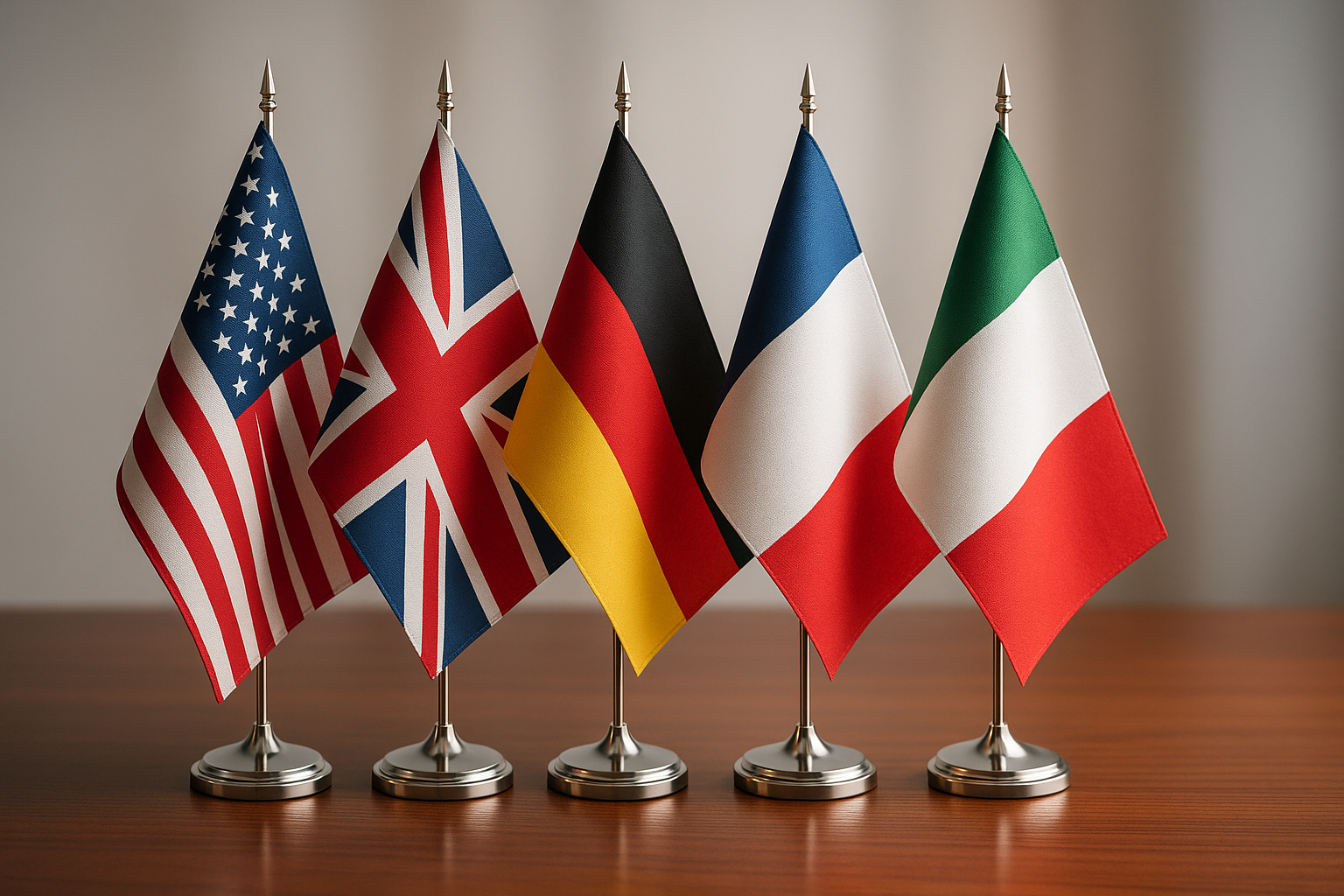
 At parades, sporting events, and National Day celebrations on December 2nd, handheld flags are the most visible way individuals show solidarity with the UAE. A well-made United Arab Emirates Handheld Flag on a sturdy wooden or plastic stick ensures the colors remain vivid and the fabric does not fray after a single use — important when you are ordering in bulk for a large gathering or community event. The standard handheld size runs approximately 4 in × 6 in (10 cm × 15 cm), which is large enough to be clearly visible in photographs but easy to wave without fatigue. For desktop or office display, Country Desk Flags offer a more formal presentation format on a small base, appropriate for executive offices, hotel lobbies, and conference tables hosting UAE delegations. Both handheld and desk formats should replicate the correct 1:2 aspect ratio (height to length) mandated by UAE federal specifications, ensuring the proportions of the red stripe and the three bands remain accurate.
Official Use, Proportions, and Size Standards Today
The UAE federal government mandates an aspect ratio of 1:2 — meaning the flag is exactly twice as long as it is tall — and specifies that the red vertical stripe on the hoist must equal one quarter of the total flag length. These proportions are binding for all official government and diplomatic use.
In practice, standard commercial sizes align with the 1:2 ratio across all formats: a 3 ft × 6 ft (91 cm × 183 cm) flag, a 4 ft × 8 ft (122 cm × 244 cm) flag, and the widely used 3 ft × 5 ft (91 cm × 152 cm) format. While the 3×5 ft size deviates slightly from the strict 1:2 ratio — it is closer to 1:1.67 — it is accepted in commercial and ceremonial contexts outside of official government flagpoles. For formal diplomatic missions operating under US Flag Code protocol (4 USC §§ 1-10), the foreign flag must never be displayed in a position of superior prominence to the US flag; both flags should be of equal size when flown side by side. UAE National Day on December 2nd, Commemoration Day on November 30th, and the accession anniversaries of each emirate's ruler are the primary dates when flag display intensity peaks — event planners typically order 30–60 days in advance to ensure delivery before those dates. Outdoor flags intended for year-round pole display in climates similar to the UAE's (intense UV, high heat, occasional sandstorm abrasion) should be sourced in 200-denier nylon, which balances weight, color retention, and tear resistance better than standard polyester at equivalent price points. For guidance on matching flag size to pole height — a question that applies equally across national flags — the approach described in our article on Argentina flag sizes and how to pick one provides a transferable framework. Similarly, readers sourcing multiple country flags for a multinational display will find the flag size selection logic in Germany flag size by pole height directly applicable.

MENA Countries Flags
Every flag in this collection is manufactured to correct proportions and official color specifications, covering the full Middle East and North Africa region — including the UAE — in outdoor, handheld, and desk formats.
Browse Collection →What do the four colors on the UAE flag represent? +
When was the UAE flag first adopted? +
What is the official size ratio of the national flag of the United Arab Emirates? +
Where can I get a flag for the United Arab Emirates made to correct specifications? +
How is the UAE flag different from the Jordan or Kuwait flag? +
What occasions call for displaying the UAE flag? +
How long does a UAE outdoor flag typically last? +
The UAE flag is one of the most recognizable national symbols in the world — its four colors, stable design since 1971, and clean geometry make it instantly identifiable on any continent. For precise, durable display whether you need a full pole-mounted United Arab Emirates Outdoor Flag, a festive United Arab Emirates Handheld Flag for National Day events, or a broad selection of Middle East national flags, the MENA Countries Flags collection covers every format and size you need. Bulk pricing is available for corporate orders, diplomatic missions, and event management companies requiring large quantities of correctly specified flags for professional display.


