
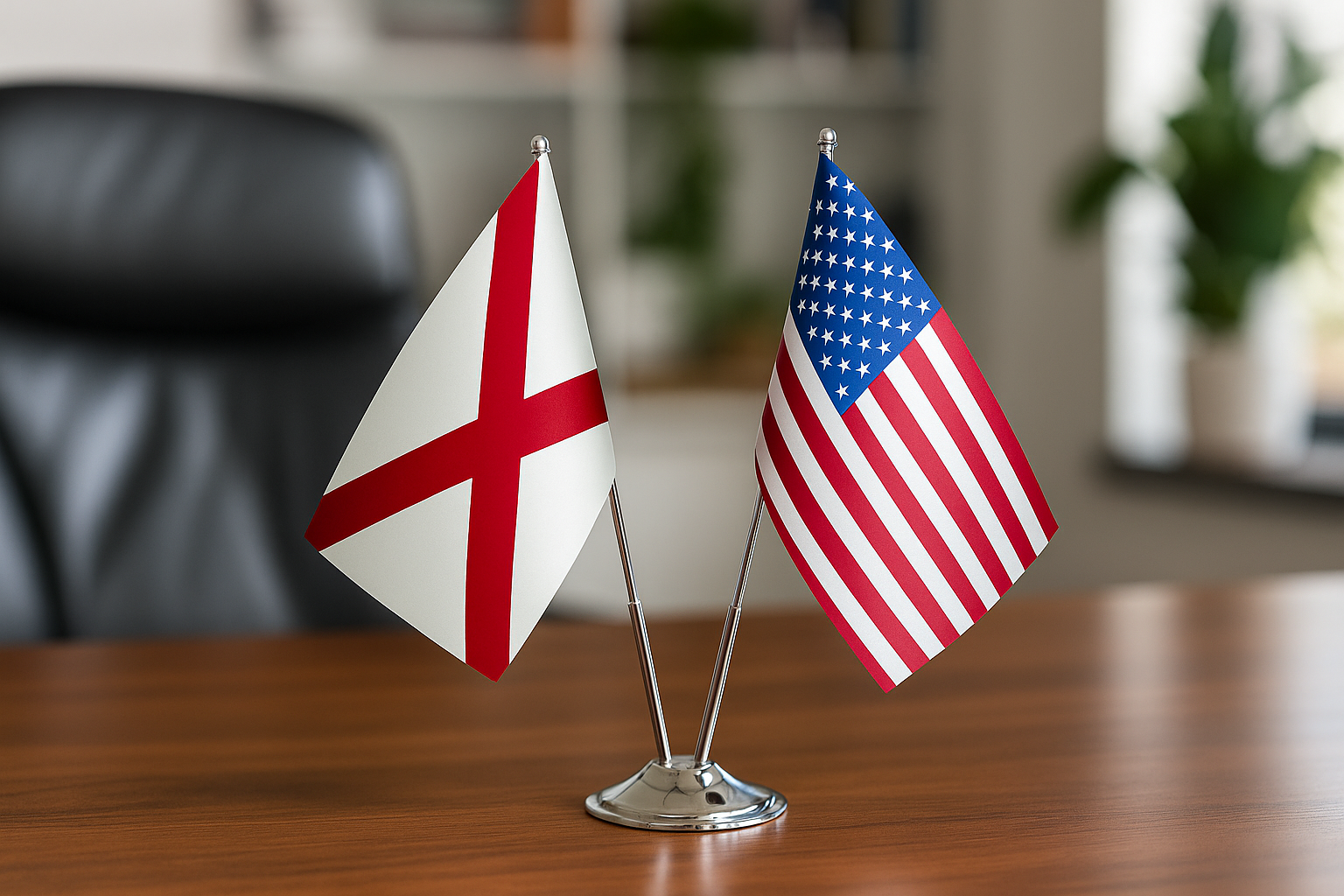




To figure out how much bunting you need, measure the total length of the space you want to decorate — fence line, roofline, storefront, or table edge — and plan for roughly 10–15% extra to account for draping, sag, and corner wrapping. Whether you're dressing a 50 ft (15 m) parade route or a 12 ft (3.7 m) stage backdrop, getting this calculation right before you order saves money, last-minute scrambling, and awkward gaps in your display. The Country Bunting Flags collection offers pre-assembled continuous strings in multiple lengths, making it much easier to match your measurement to a real product rather than guessing.
The Simple Bunting Length Formula Everyone Should Know
The core calculation is: Total Bunting Needed = Span Length × 1.10 to 1.15 — multiply your measured span by 1.10 for a taut, neat look or by 1.15 if you want a relaxed, festive drape. This formula applies whether you're working with triangular pennant strings, rectangular flag bunting, or fabric swags, and it holds for both indoor and outdoor installations. For a standard 100 ft (30.5 m) storefront, you'd order between 110 ft and 115 ft (33.5–35 m) of continuous bunting. Always round up to the next available product length rather than down — a slightly longer string is easy to tuck or tie off; a short one leaves a visibly bare end that undermines the entire effect.
When your space has corners, doorways, or columns to wrap, add 2–3 ft (0.6–0.9 m) per turn. A venue with four corners on a perimeter display, for example, needs an extra 8–12 ft (2.4–3.7 m) just for those wrap points. Vertical drops from a roofline to a ground anchor should be measured as live string length, not as the height of the building — rope bunting hangs in a slight catenary curve, so the actual string needed is always a little longer than the straight-line distance between two anchor points. When in doubt, add 5% on top of your corner allowances.
How to Measure Different Venue Types
The right measurement approach depends entirely on your venue geometry — a flat fence line, a circular tent perimeter, or a multi-story building facade each requires a slightly different technique. For straight runs, a tape measure and a notepad are all you need; for curved or irregular spaces, a flexible measuring tape or even a length of string walked along the route gives you the most accurate baseline. Here's how to handle the most common scenarios:
- Straight fence or wall: Measure total linear feet, add 10%. Simple.
- Perimeter of a tent or pavilion: Walk the full perimeter with a measuring tape. Multiply by 1.12 to account for corner wraps at each tent pole.
- Roofline or gutter run: Measure the eave length. Add 3 ft (0.9 m) per anchor point where you'll tie off at a downspout or bracket.
- Stage backdrop (horizontal + two verticals): Add the top horizontal span to twice the drop height, then multiply by 1.10.
- Table skirting: Measure front + both sides of the table. A standard 6 ft (1.8 m) banquet table needs about 13–14 ft (4 m) of bunting to cover the front and sides with a gentle gather.
- Multi-story building facade: Divide the facade into sections between windows or columns; measure each section separately and sum them. Order by section rather than one giant continuous roll so installation teams can work independently.
Flag Size, Spacing, and How They Affect Total Quantity
Individual flag size and the gap between flags directly determine how many flags fit per foot of bunting — and therefore how much visual impact each foot of string delivers. Rectangular flags (typically 4×6 in / 10×15 cm per panel on standard strings) are spaced more tightly than triangular pennants, which usually run about 6–8 in (15–20 cm) base width with 1–2 in (2.5–5 cm) gaps. The denser the flag coverage, the more color-saturated and formal the look; wider spacing feels lighter and more casual.
 The 3 Hilal Rectangular Flag Bunting is a great example of how consistent panel sizing simplifies the calculation process — because each flag and each gap is uniform, you can predict exactly how many flags will appear in a 10 ft (3 m) run without counting individual pennants by hand. For event planners ordering for a specific look (say, one flag visible per 8 in / 20 cm of span), knowing the panel-plus-gap measurement of your chosen product lets you back-calculate exactly how many string lengths to order. Rectangular bunting strings also hold their shape better in wind than triangular pennants, making them a practical choice for outdoor festivals, car dealership lots, and stadium entrances where gusts are a factor. If you're comparing flag styles before committing to a length, the guide on triangular vs rectangular bunting flags breaks down the visual and structural trade-offs in detail.
A Practical Bunting Length Calculator (Step-by-Step)
Working through these five steps functions as a manual bunting length calculator that covers virtually any installation scenario without needing a spreadsheet or app. Grab a notepad and a tape measure and work through each step before you place your order.
- Step 1 — Measure raw span: Record every linear foot of surface to be decorated. Use a physical tape measure; don't estimate from memory.
- Step 2 — Count attachment points and corners: Add 2.5 ft (0.75 m) per corner or wrap point to your raw span total.
- Step 3 — Apply drape factor: Multiply the adjusted span by 1.10 (taut) or 1.15 (relaxed drape).
- Step 4 — Add safety buffer: Add 5% to the result from Step 3 as an error margin for measurement mistakes or damaged sections.
- Step 5 — Round up to the nearest available string length: Check the product's available length increments and always go to the next size up.
Example: You're decorating a straight 80 ft (24.4 m) fence with two end posts (2 corners). Raw span = 80 ft. Add 2 corners × 2.5 ft = 85 ft (25.9 m). Apply 1.12 drape factor = 95.2 ft (29 m). Add 5% buffer = 99.9 ft — order 100 ft (30.5 m) of bunting. That's the entire calculator in practice.
Ordering for Multiple Zones or Large Events
For events spanning multiple zones — a festival with a main stage, food court, and entrance arch, for example — calculate each zone independently and place one combined order rather than measuring the whole site as one continuous run. Zone-by-zone ordering gives installation crews manageable string lengths, prevents tangling, and makes it easy to replace a single damaged section after the event without pulling down an entire 300 ft (91.5 m) display.
Bulk orders almost always reduce per-foot cost significantly, and if you're coordinating a recurring event (annual parade, monthly farmers market, seasonal storefront), ordering 20–30% more than your immediate need and storing the surplus pays for itself within one or two events. For international events or diplomatic venues where country-specific flags matter, the detailed planning advice in country bunting for events and venues covers protocol considerations alongside quantity planning. Storage tip: roll bunting strings around cardboard tubes rather than folding them — folding creates permanent crease marks in the fabric that are visible during display.
Country Bunting Flags Collection
Pre-assembled continuous string bunting featuring national flags — ideal for international festivals, embassies, hotels, and multi-nation sporting events where accurate flag representation is essential.
Browse Collection →Common Mistakes That Lead to Ordering Too Little (or Too Much)
The single most common ordering mistake is measuring only the straight-line distance between two end anchor points rather than the actual path the bunting will follow — this consistently produces shortfalls of 15–25% on any installation with curves, columns, or vertical drops. The second most frequent error is forgetting to account for the header rope (the plain cord on each end of a string beyond the first and last flag), which can be 12–18 in (30–45 cm) per end and is needed to tie off securely without sacrificing a flag panel.
On the over-ordering side, event planners sometimes double their measurement "just to be safe" and end up with hundreds of feet of surplus bunting that can't be stored cleanly or returned. A disciplined 10–15% buffer, applied consistently with the formula above, is the professional standard. If you need more guidance on hanging methods before finalizing your length — because how you hang bunting changes how much you need — the comprehensive guide on bunting flags uses and how to hang them covers catenary curves, zip-tie spacing, and pole mounting techniques that directly affect your measurement calculations.
Weather, Wind, and Material Considerations
Outdoor installations in windy or wet climates may require slightly shorter working lengths than indoor displays, because fabric bunting stretches under sustained wind load — particularly knit polyester, which can elongate 3–5% over a long event day. If you're using bunting in a coastal or high-wind environment, plan your drape factor closer to 1.10 (taut) rather than 1.15, and use attachment points every 8–10 ft (2.4–3 m) rather than the standard 12–15 ft (3.7–4.6 m) to reduce sag and flag flapping. UV-stabilized polyester bunting rated at 80%+ UV resistance will hold its color for 6 months to 2 years outdoors depending on sun exposure, so factor replacement cycles into your long-term quantity planning as well.
For indoor events — trade shows, school gymnasiums, banquet halls — you can use the full 1.15 drape factor freely, since there's no wind stress and the softer hang looks more elegant in enclosed spaces. Nylon bunting (slightly heavier than polyester) drapes more gracefully indoors but should be avoided outdoors in rain-prone regions because it absorbs moisture and takes longer to dry, which can cause color bleeding on lower-quality prints.
Frequently Asked Questions
How much bunting do I need for a 100 ft fence? +
Is there a simple bunting length calculator formula I can use? +
How does flag size affect how much bunting I need? +
Should I order extra bunting as a backup? +
Does outdoor wind affect how much bunting I need to order? +
How do I calculate bunting for a tent or pavilion perimeter? +
What is the best way to store leftover bunting after an event? +
Ready to Order the Right Amount?
Now that you have a reliable bunting length calculator method and a clear understanding of how venue type, drape factor, and wind conditions all affect your final order quantity, you're equipped to place a confident, waste-free order. For country-specific flag strings sized for international events and diplomatic displays, browse the full Country Bunting Flags collection — each product page lists exact string lengths to make it easy to match your calculated number. For a versatile rectangular panel option, the 3 Hilal Rectangular Flag Bunting delivers consistent panel sizing that simplifies the per-foot calculation process described in this guide. If you're still deciding on the right flag style for your space, the guide on bunting flags uses and how to hang them walks through installation techniques that affect how much string you'll actually need in practice. Bulk pricing is available for corporate orders, event management companies, and municipalities — contact the Asya Bayrak team directly to discuss custom lengths, volume discounts, and production timelines for large-scale deployments.